
East-West or North-Facing Solar: Match the Roof to Household Demand
Compare east-west and north-facing solar against household demand, shade and seasonal estimates to choose a roof layout for useful generation throughout the day.
Compare east-west and north-facing solar against household demand, shade and seasonal estimates to choose a roof layout for useful generation throughout the day.

North-facing solar and an east-west split answer slightly different design questions. Compare how much electricity each feasible layout produces and when your household can use it.
A broad generation window is not automatically better than a stronger midday peak. The better fit comes from the roof, seasonal shade and actual demand, including the cost of the proposed arrangement.
A solar design comparison should show those differences rather than choosing a direction from a slogan.
Solar Victoria explains that maximising annual generation and matching generation to household use are different objectives. Eastward and westward roof areas can contribute at different parts of the day.
Solar Victoria orientation guidance.
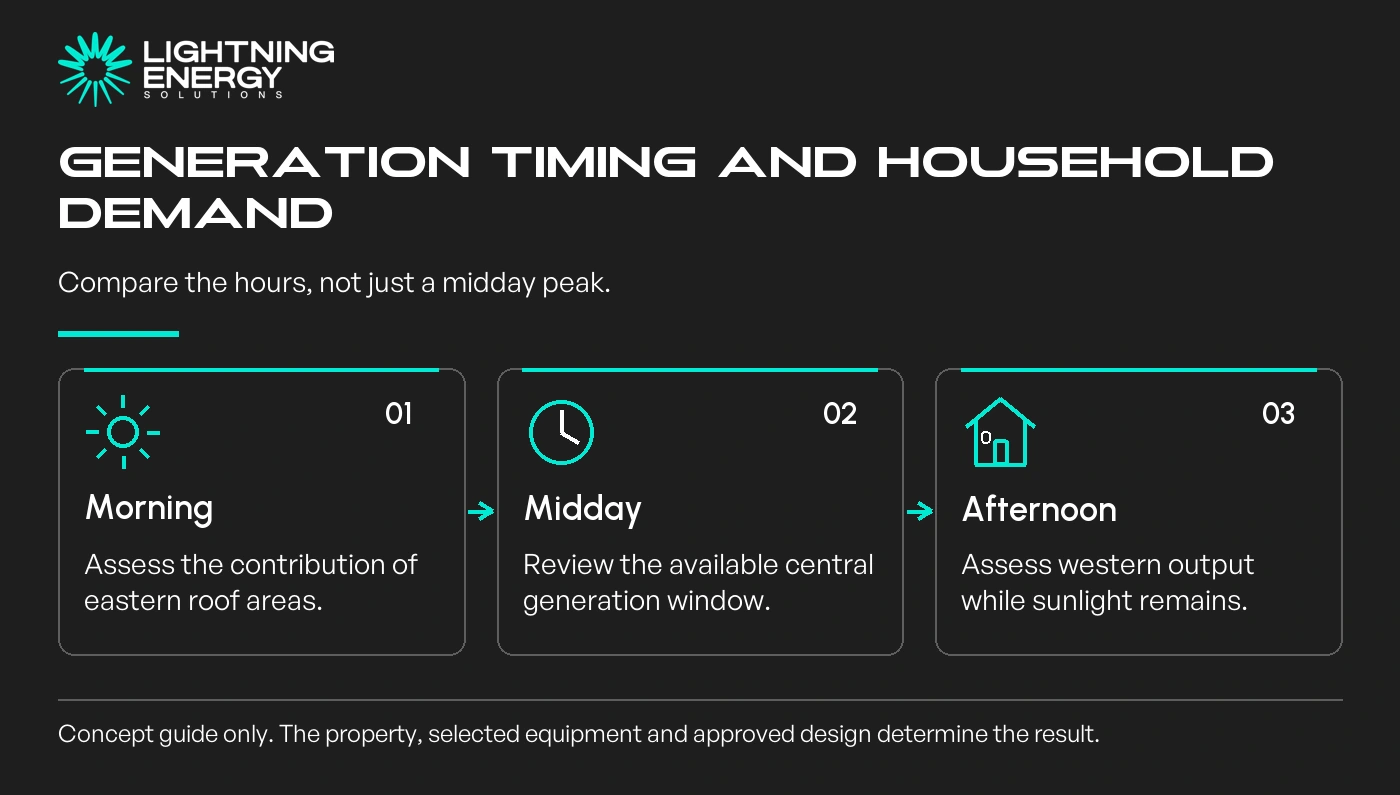
Those tendencies do not create electricity before sunrise or after sunset. A household returning late at night should not count a west-facing array as direct supply for that late-night demand.
Write down the hours that matter to your home. An afternoon home office or necessary cooling load creates a different comparison from a house that stays empty until dark.
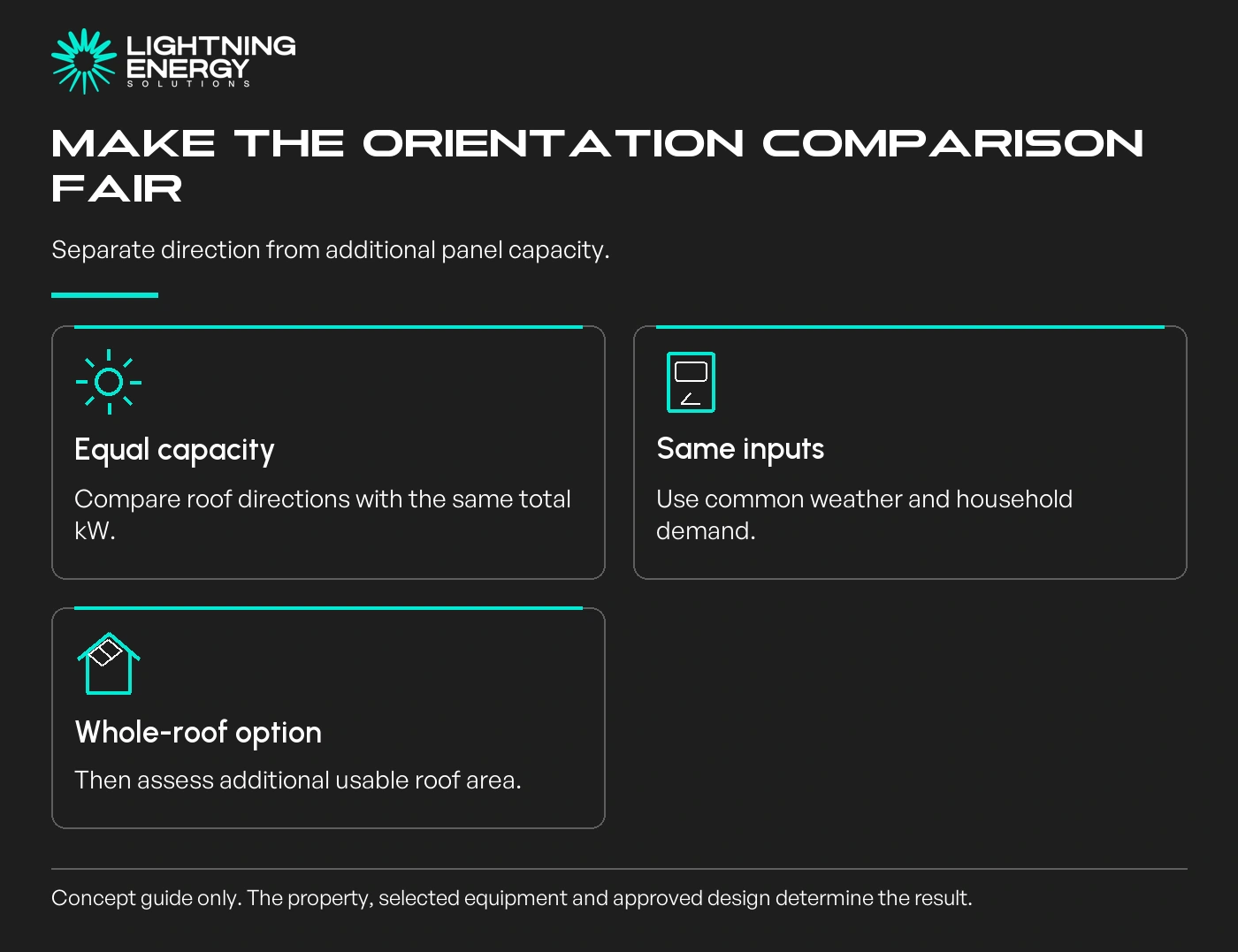
Ask for an equal-capacity comparison where the roof allows it. If one proposal has extra panels, show separately how much of the difference comes from those panels rather than their direction.
An illustrative household could compare a north-facing group with an equal-capacity split between east and west. The comparison should use the same weather assumptions and household data.
Then ask whether either design can use more suitable roof area. This second comparison tests the practical whole-roof result instead of confusing it with orientation alone.
SunSPOT explains how to compare panel-group estimates by position and through the year.
SunSPOT system comparison guidance.
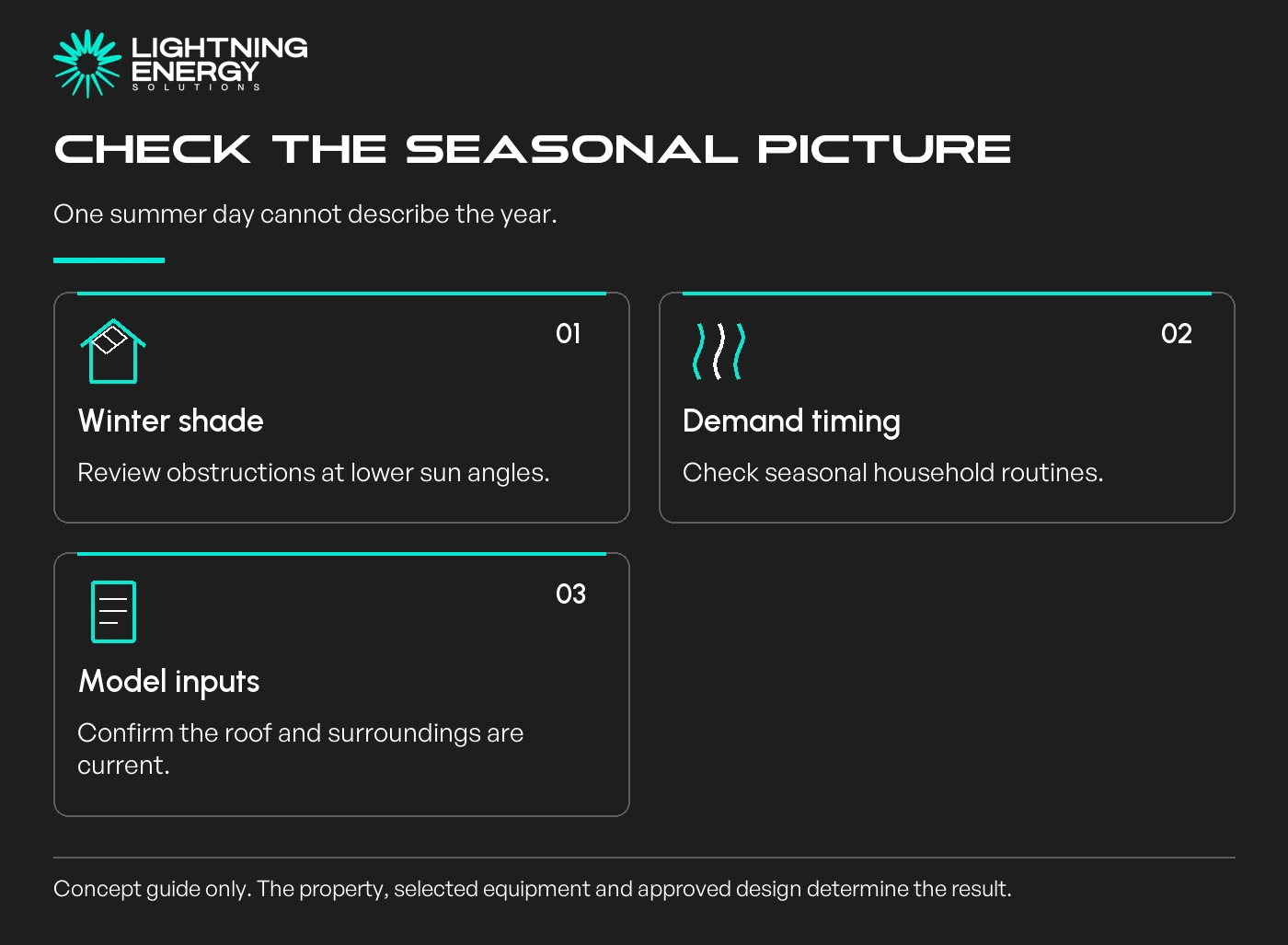
A useful proposal includes seasonal estimates and shade assessment. The timing that looks attractive in summer may change when winter shadows reach another part of the roof.
The Melbourne winter guide explains why a seasonal view matters when interpreting generation.
Ask which trees, buildings and roof features were included in the model. If aerial imagery is old or a nearby building has changed, have the input corrected before relying on the estimate.
Avoid treating an illustrative curve as a forecast for your address. A diagram can explain the timing concept without containing measurements or predicted yield.
Panels on different faces need a supported electrical design. Ask the installer to explain how the selected inverter and panel groups handle the proposed layout.
Our inverter guide explains the main equipment roles. Extra roof faces are a reason to check the design, not a reason to assume one technology is always necessary.
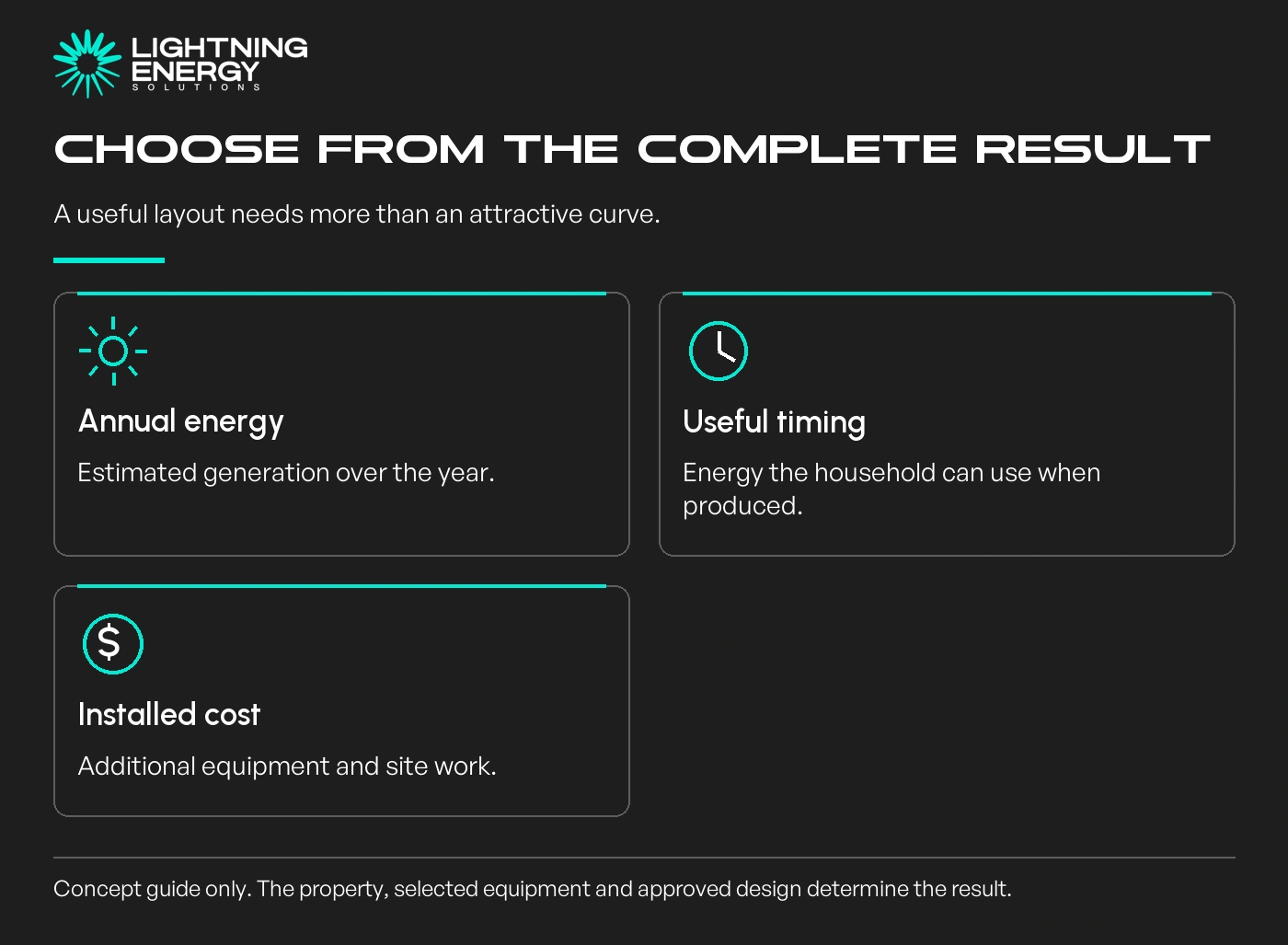
Compare installed cost and the expected value of electricity used or exported. A layout with appealing timing can still be poor value if it sacrifices useful production or requires disproportionate work.
Do not move a healthy existing array merely because another orientation sounds fashionable. First assess whether the potential improvement is worth the physical work and cost.
For a new system, keep suitable east and west roof faces in the discussion. Equally, retain a good north-facing option when the household comparison supports it.
Contact Lightning Energy with your roof information and usage records. Ask for the timing, annual energy and cost of each supported layout to be presented separately, then choose from the complete picture.
Available times
Book a consultation and we'll map solar, storage, hot water, and the rebates around your bills and your goals.
Question 1 of 6