
Cheap or Premium Ducted Air Conditioning: Comparing What the Quote Buys
Compare cheaper and premium ducted quotes against the same room brief, separating useful equipment, controls and installation differences from brand claims.
Compare cheaper and premium ducted quotes against the same room brief, separating useful equipment, controls and installation differences from brand claims.

A premium ducted quote is worthwhile only when the extra cost buys something useful for your home. A cheaper quote is good value only when it still covers the necessary equipment, design and installation work.
Compare both against one agreed room brief. Otherwise, you may be comparing different jobs rather than different prices for the same result.
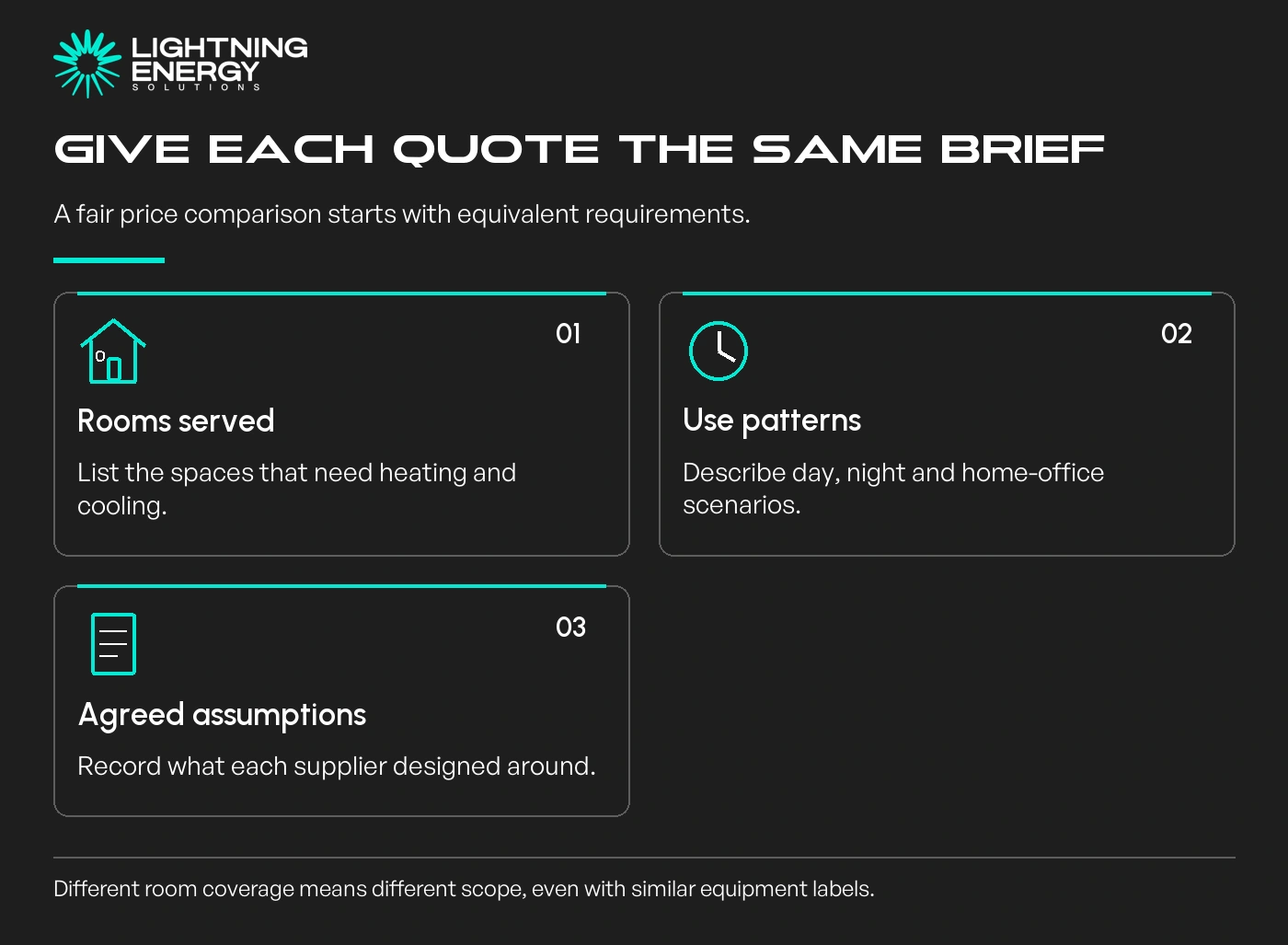
List the rooms that need heating and cooling, normal occupancy and any future changes. Define the day and night combinations you expect to use rather than asking for an unspecified whole-house system.
For an illustrative family home, a quote serving every bedroom independently differs from one grouping the bedroom wing. Neither label tells you which arrangement better matches the household routine.
YourHome explains that appropriate sizing and zoning can improve the fit between a system and the spaces being used.
YourHome heating and cooling guidance.
Start with an air conditioning assessment and ask both suppliers to state their assumptions. A lower quote based on fewer served rooms needs to be recognised as a different scope.
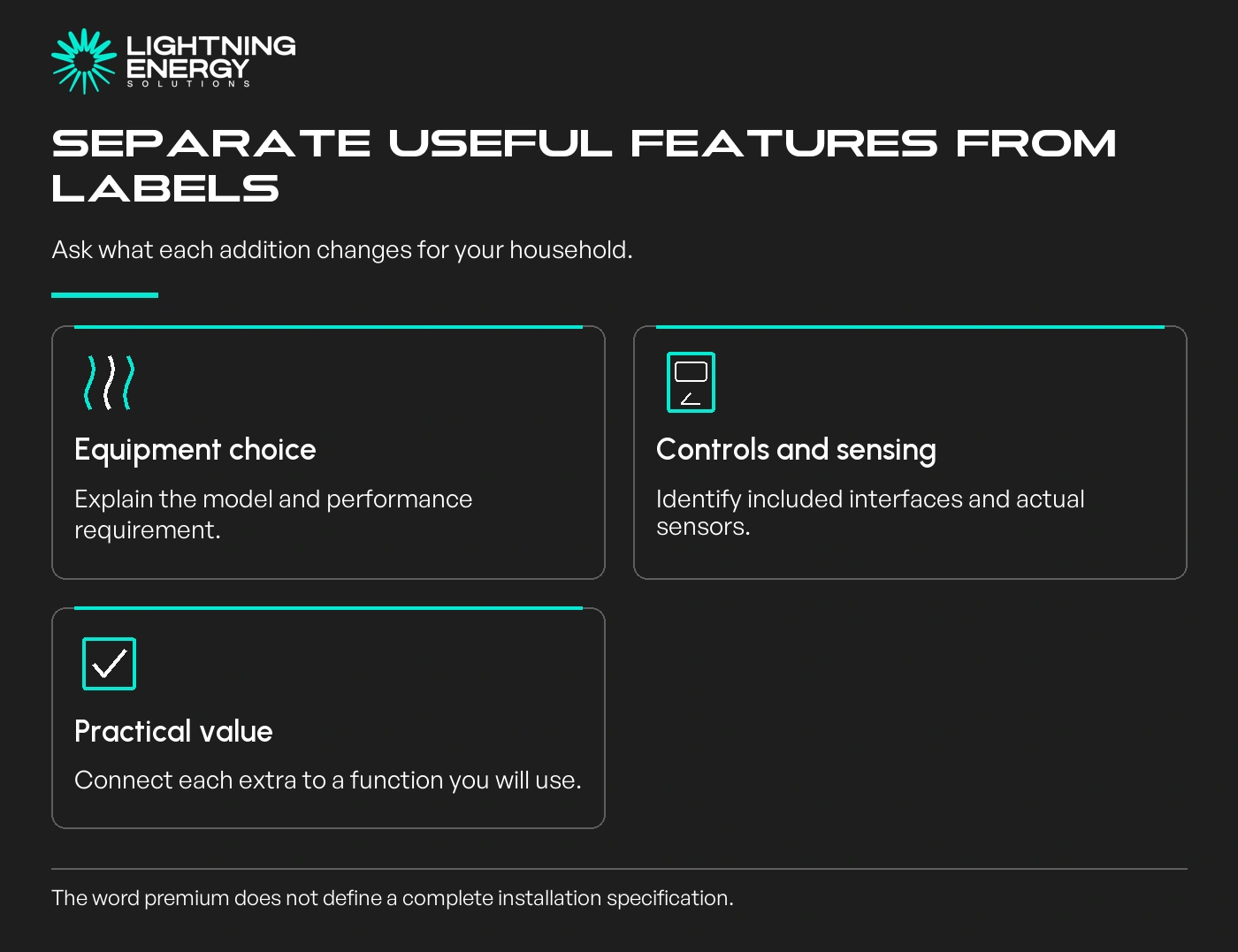
Request exact indoor and outdoor models, current Australian specifications and an explanation of why each pair was chosen. Compare heating performance relevant to the assessed winter conditions.
A feature can have value without being essential. Additional sensing, a particular indoor-unit form or a control interface may solve a real requirement; a longer feature list may also contain functions you will rarely use.
If AirTouch or another zoning platform is included, confirm the interface, number of controlled zones and actual room sensors. Do not assume the touchscreen alone creates independent room temperature control.
AirTouch’s installer manual shows why groups, sensors and airflow settings belong to a commissioned design.
Compare ducted package options with those details visible. Avoid ranking equipment solely by nominal capacity or the word “premium” in a range name.
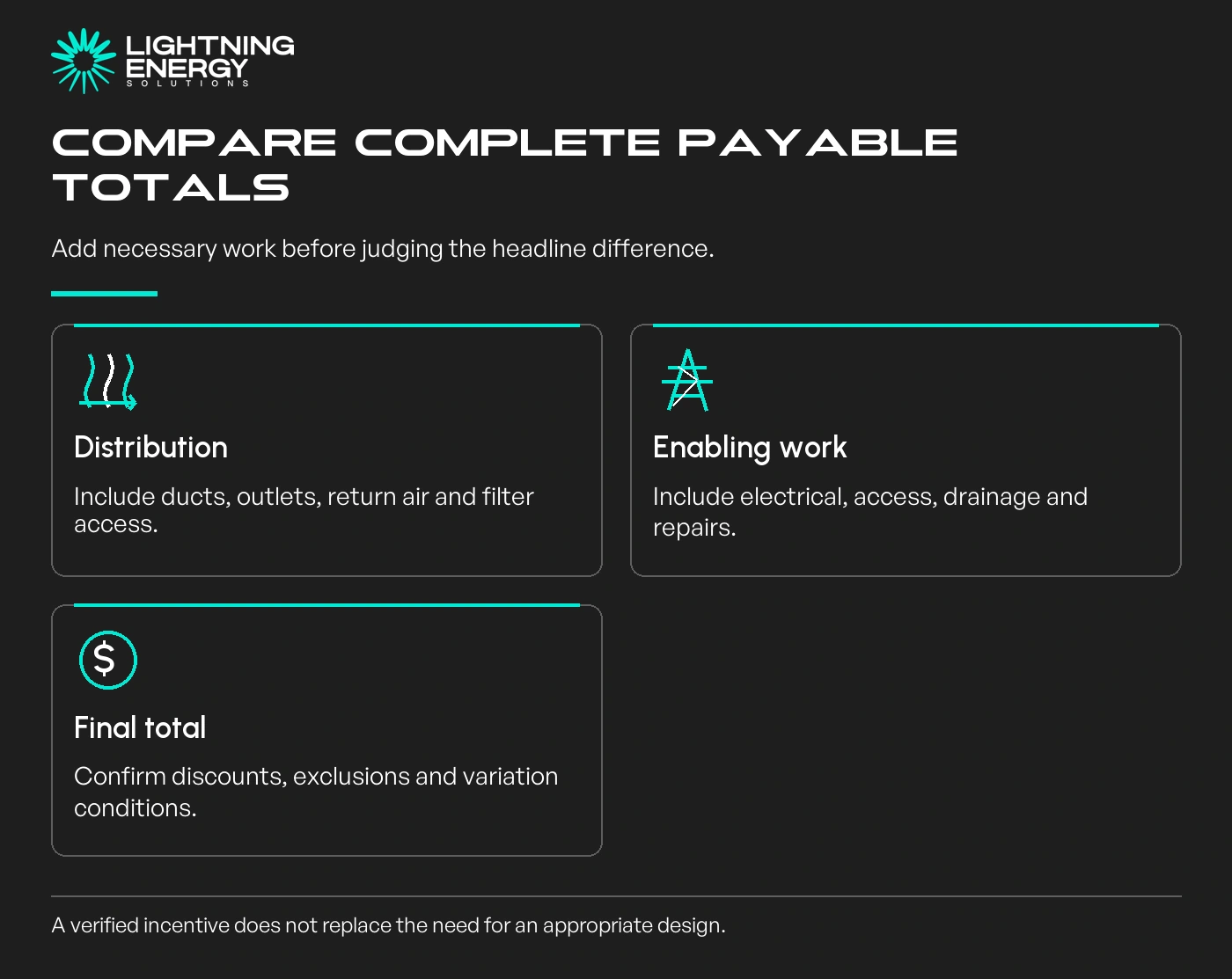
Itemise ducts, insulation, outlets, return air, filter access and control wiring. Ask whether existing components are retained and on what assessment that decision relies.
Add electrical supply work, lifting, difficult access, drainage, old-equipment disposal and repairs to affected surfaces. A cheaper equipment line can be offset by omitted essential work.
Keep mains and switchboard requirements separate from a routine circuit allowance. Only the assessed work can establish the appropriate scope.
Ask for exclusions, provisional allowances and variation rules in writing. Compare the amount payable after confirmed eligible discounts rather than subtracting an assumed rebate yourself.
The Victorian discount guidance requires an eligible upgrade and the provider process. An incentive does not establish installation quality.
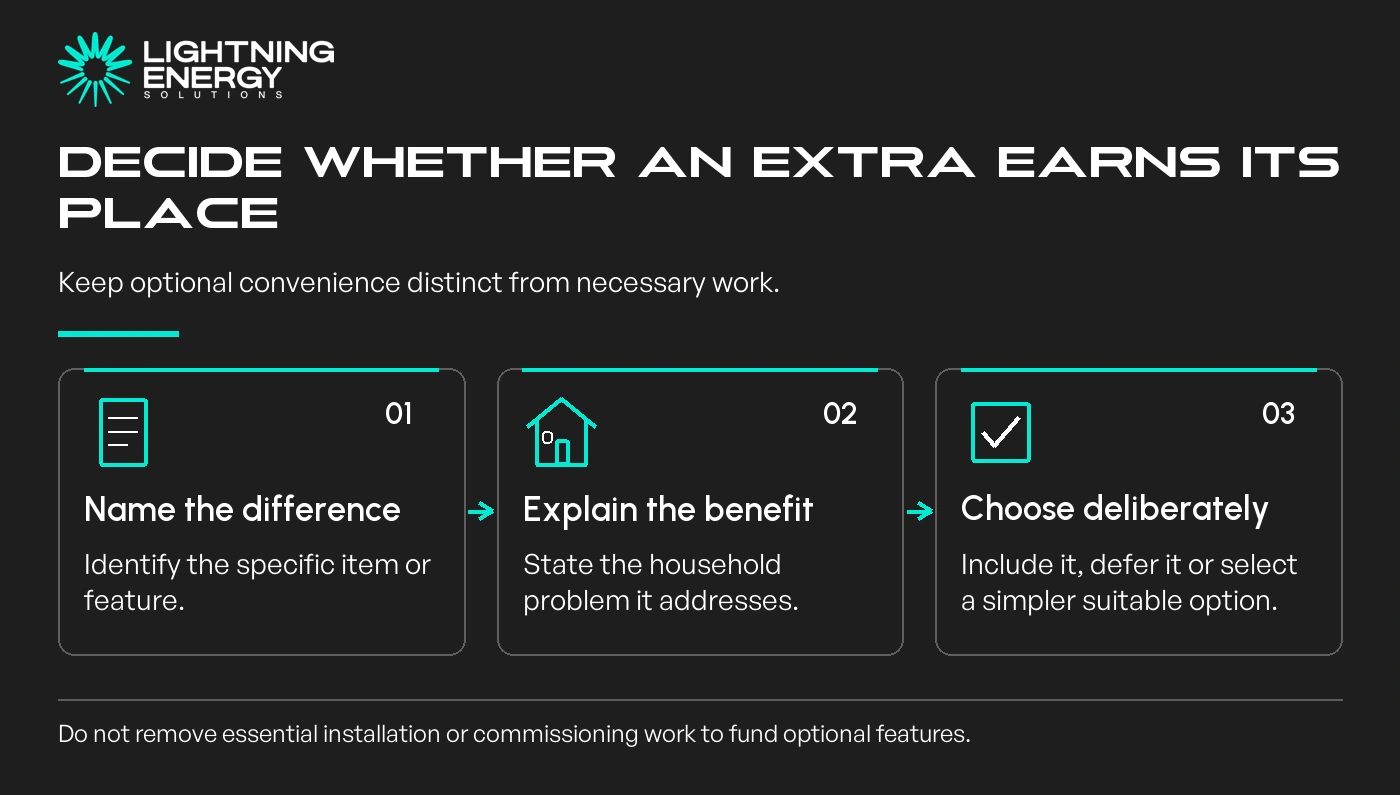
Ask each supplier to explain the largest differences in a short comparison. Useful answers identify the work or function, the household problem it solves and what happens if it is omitted.
For example, an extra room sensor may support the agreed zoning design. An app upgrade may be less important if a simple local schedule already meets your needs. Treat those as separate decisions.
Do not cut essential design, electrical or commissioning work to fund optional conveniences. Ask whether a modest control package still delivers the required comfort and owner functions.
Review workmanship terms, manufacturer cover and the local service process. A vague promise of lifetime support is difficult to compare with documented responsibilities and a clear contact.
If the existing system remains suitable, replacement may not be the best immediate use of the budget. Consider whether a diagnosed repair or building improvement addresses the actual concern first.
Bring complete proposals to a quote comparison. The aim is to pay for a suitable, clearly specified result and understand every meaningful difference before choosing.
Available times
Book a consultation and we'll map solar, storage, hot water, and the rebates around your bills and your goals.
Question 1 of 6
