
Bifacial Solar Panels on a Tiled Roof: What Rear-Side Light Can Change
Understand what bifacial panels can gain from rear-side light on a tiled roof, and why mounting conditions matter more than a generic percentage claim.
Understand what bifacial panels can gain from rear-side light on a tiled roof, and why mounting conditions matter more than a generic percentage claim.

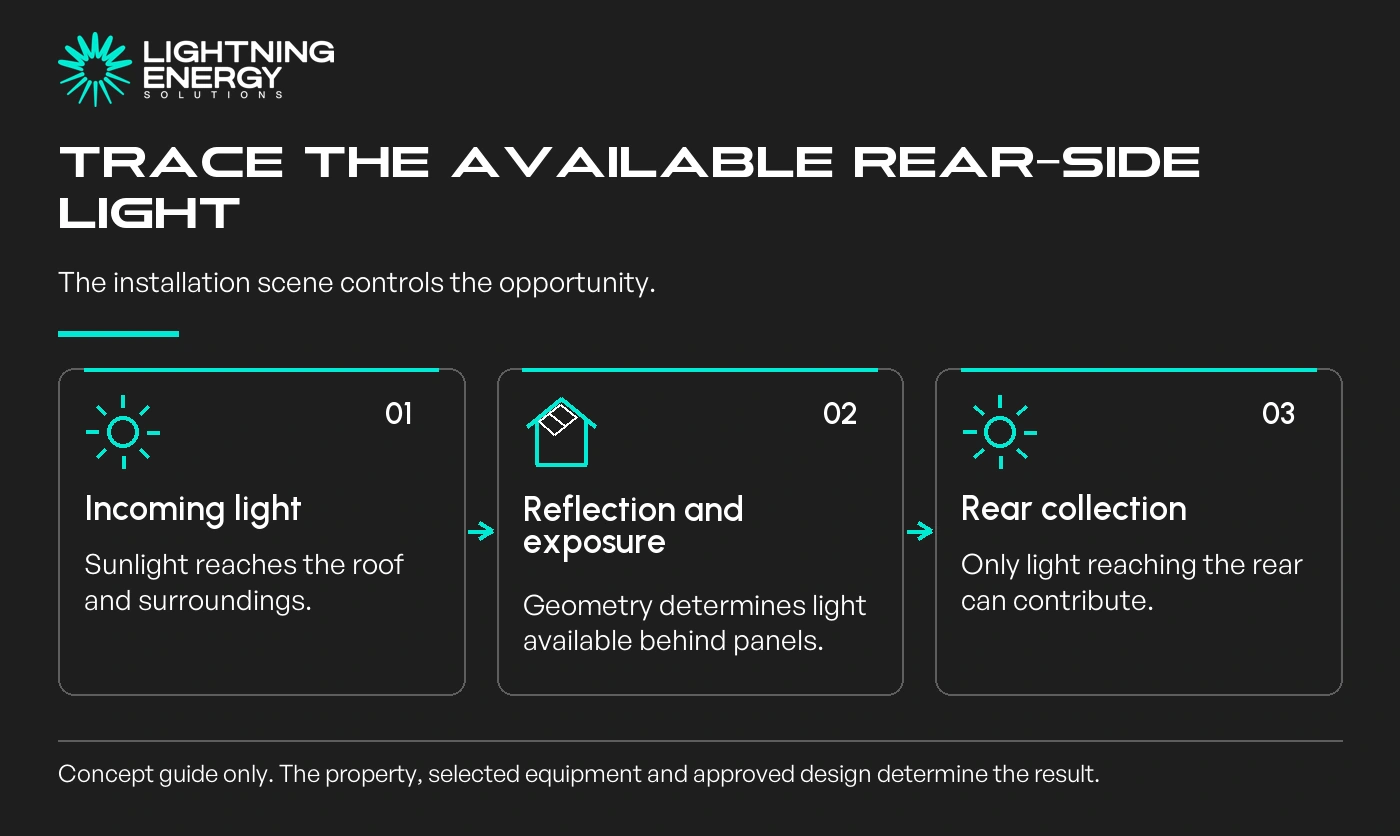
A bifacial panel can use light reaching its rear as well as its front. On a roof, the useful question is how much light can actually reach that rear surface in the proposed installation.
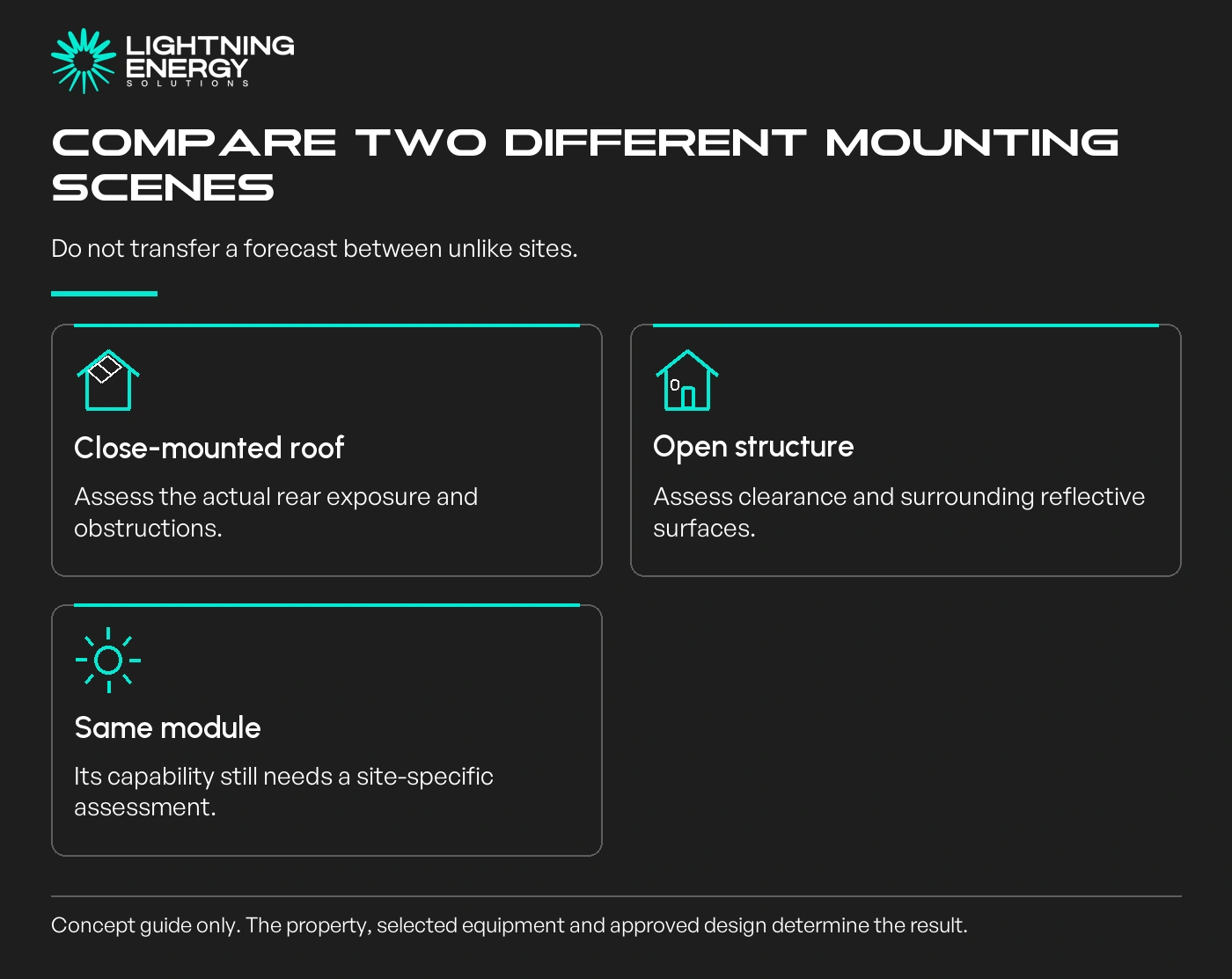
Do not assume the word bifacial guarantees a particular percentage increase. A close-mounted tiled roof and an open carport offer different surroundings, and neither should inherit the other’s forecast.
A solar design should explain the panel choice and any rear-side gain assumed in the generation estimate.
Rear-side exposure depends on the physical scene around the panel. Reflective surfaces, mounting geometry and obstructions all matter to the light available behind the module.
The US national laboratory’s bifacial modelling toolkit includes reflective surfaces, layout and shading when assessing rear irradiance. It does not treat the product label as a complete yield prediction.
National laboratory bifacial modelling guidance.
For a tiled roof, ask where the model expects rear light to come from. A drawing that shows the roof immediately beneath the panel should be reconciled with any optimistic rear-gain assumption.
Bifaciality describes a technical characteristic of the product. The gain from installing that product in a particular location requires another assessment of the light and layout.
The laboratory’s modelling inputs include surface reflectivity, clearance, row spacing, tilt and orientation. Those details explain why a result from another installation cannot simply be copied across.
Bifacial modelling input explanation.
Imagine an illustrative comparison between a close-mounted roof and a more open structure. Use it to identify different light paths, not to assign either one an invented output uplift.
If a quote uses a percentage, ask for its source, the geometry it assumes and whether it applies to the annual system result or a narrower test condition.
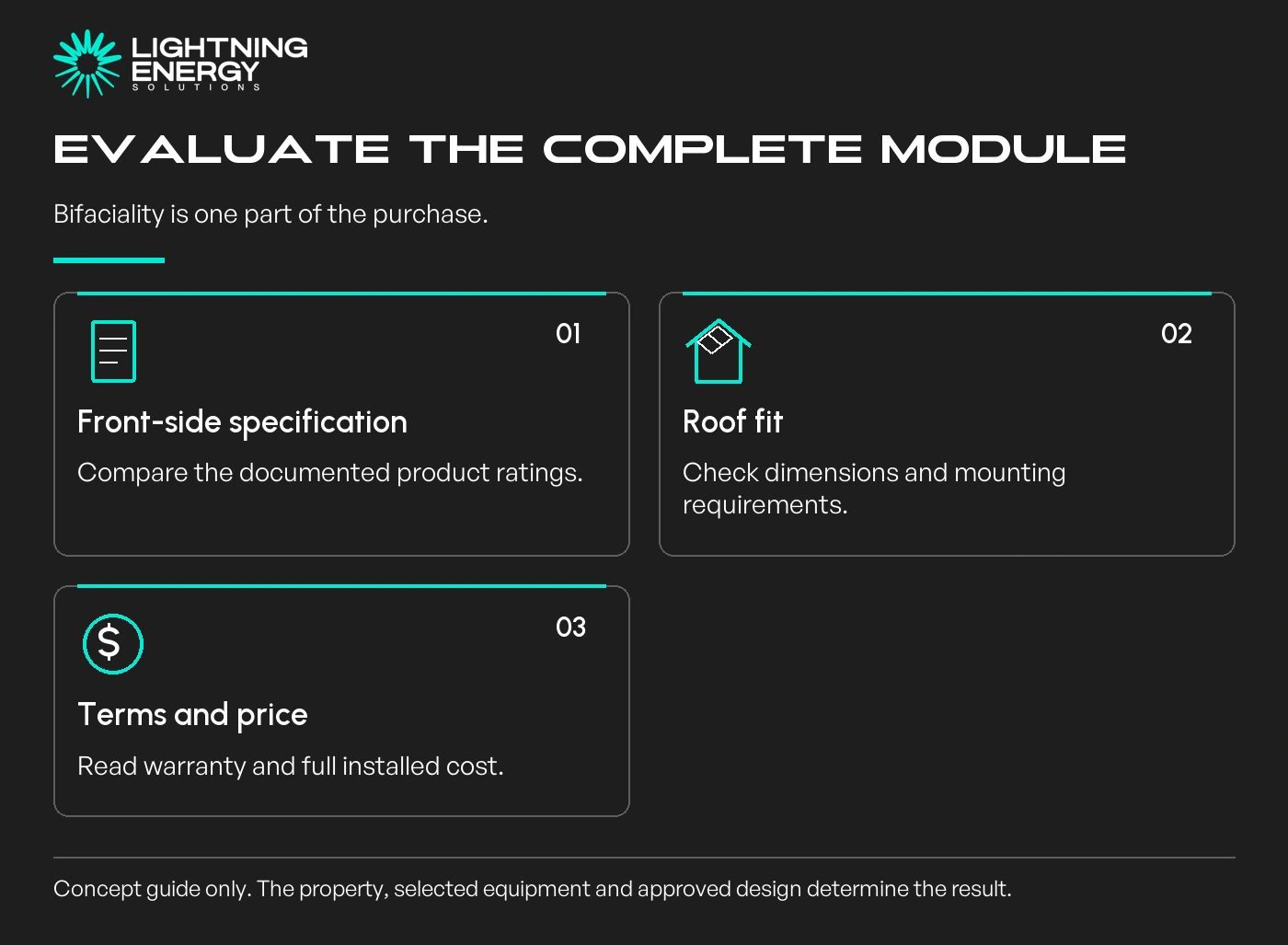
A bifacial panel may still be a suitable choice even where the additional rear contribution is modest. Compare its front-side rating, dimensions, mounting requirements, warranty and full installed price.
Our panel-selection guide provides the broader comparison. Rear-side capability is one feature among several.
Do not reject a well-suited module solely because the roof cannot exploit its rear fully. Equally, do not pay a large premium based on a gain that has not been justified for the design.
Raising or rearranging panels to chase rear illumination changes more than light exposure. Ask the designer about the supported mounting, roof loads, access and any additional work.
The roof-planning checklist is relevant when installation changes also affect roof responsibilities.
A generation improvement needs to be compared with the cost and implications of the complete mounting arrangement. Do not alter an installed frame or panel position yourself.
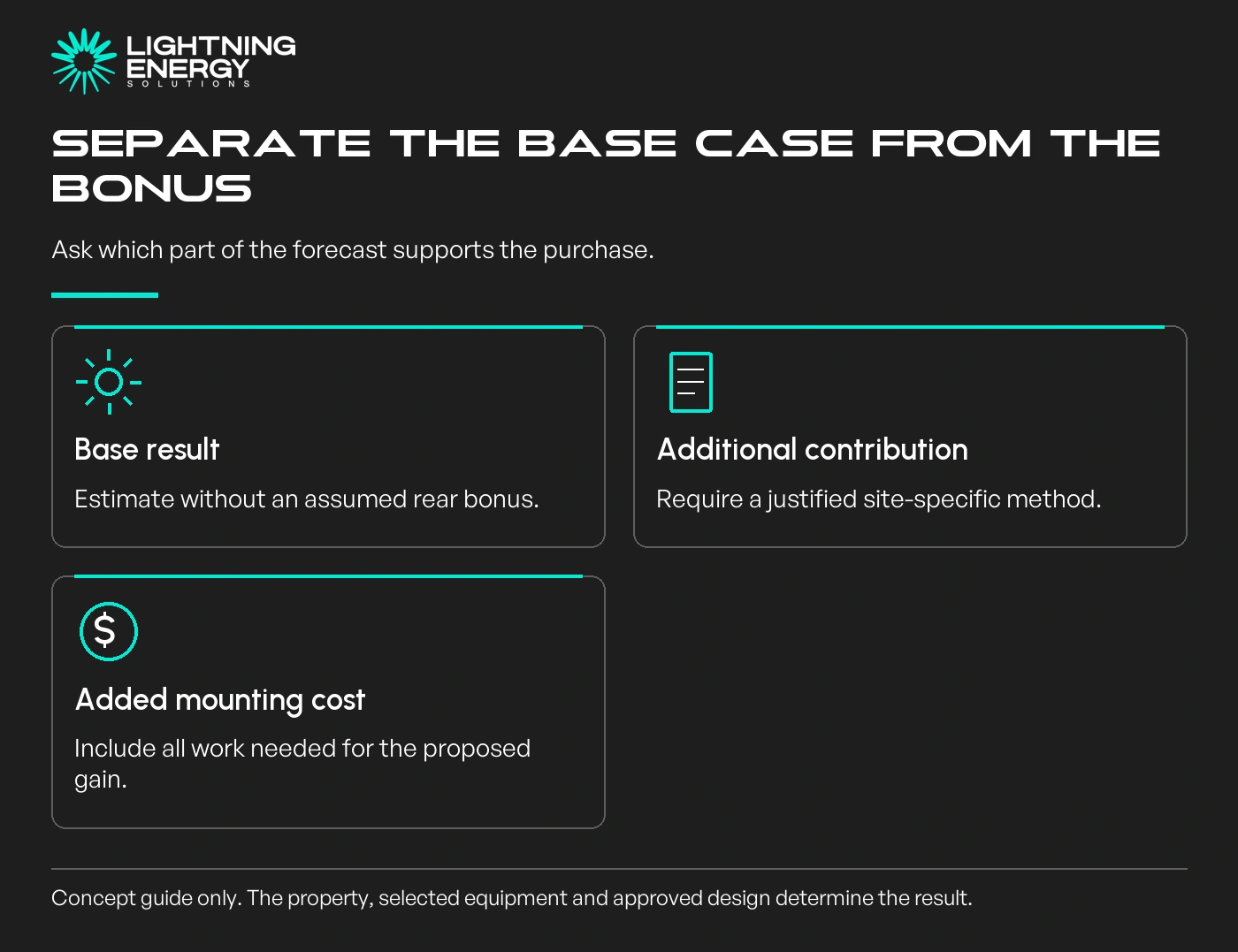
Request a comparison showing the result without an assumed rear bonus, then any separately justified additional contribution. This makes the purchase less dependent on a hard-to-check marketing number.
If the case remains sensible on that basis, the panel can stay on the shortlist. If it only works with an optimistic gain from an unrelated site, ask for better evidence or another option.
Contact Lightning Energy with the exact module and roof layout. Ask how rear light was assessed and which parts of the decision remain worthwhile even if the additional contribution is limited.
Available times
Book a consultation and we'll map solar, storage, hot water, and the rebates around your bills and your goals.
Question 1 of 6