
Does a Large Home Battery Require Three-Phase Power?
A large battery does not automatically need three-phase power. Separate stored energy from output, household supply and the backup arrangement you want.
A large battery does not automatically need three-phase power. Separate stored energy from output, household supply and the backup arrangement you want.

A battery with a large energy capacity does not automatically require three-phase electricity. The answer depends on the inverter arrangement, charging and discharge power, household supply and the loads you want to support.
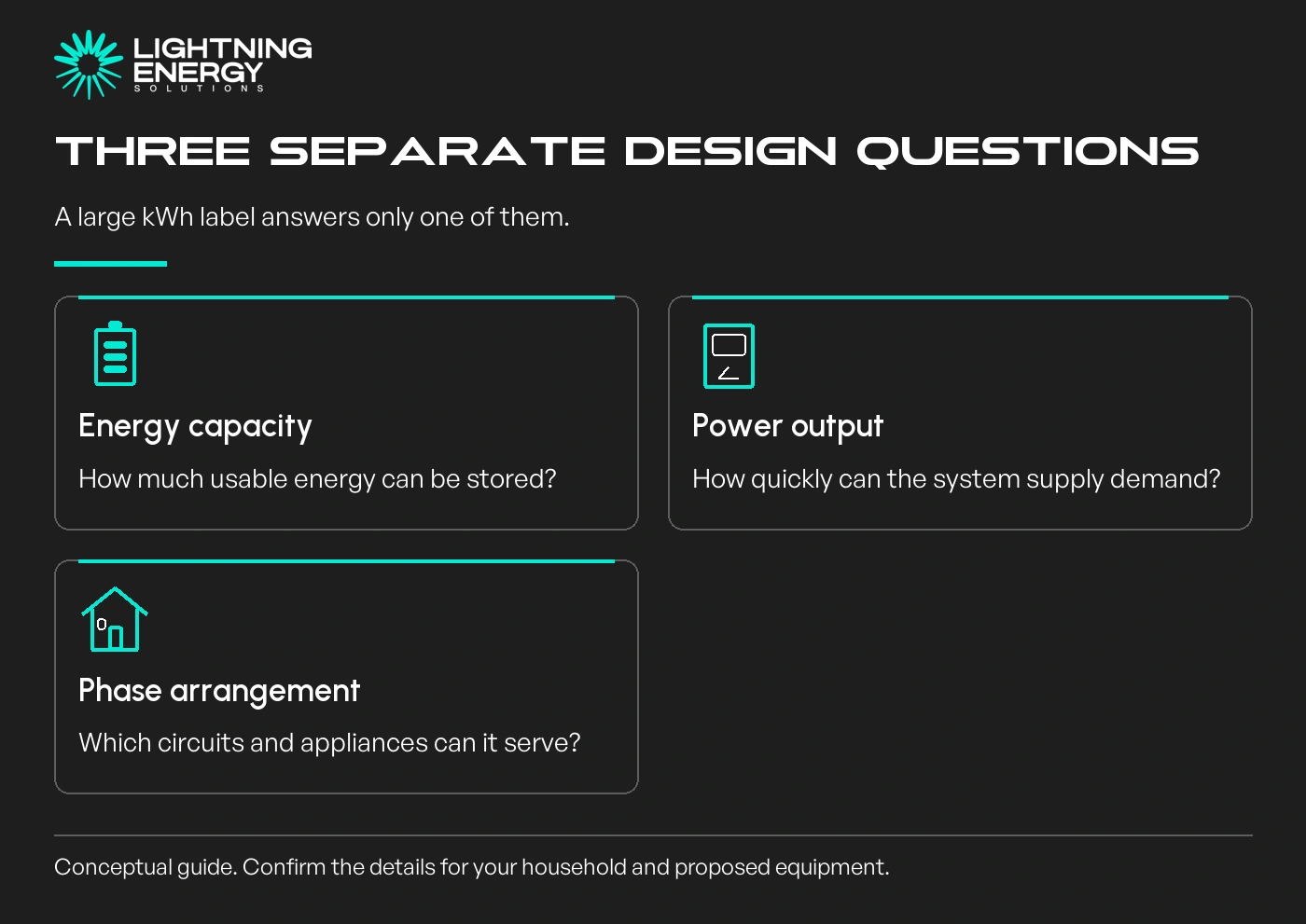
First clarify what large means. A high kWh figure describes stored energy; a high kW figure describes power. Those are separate design decisions even when they appear in the same product advertisement.
Have a qualified electrician identify the existing supply and assess the proposed equipment. Do not infer phase count or available capacity from an electricity bill alone or from the number of visible switches.
The assessment should consider the switchboard, mains, existing solar and planned major appliances. A battery purchase is not a substitute for checking the home's electrical capacity.
Our mains and electrification guide explains why simultaneous demand needs its own assessment.
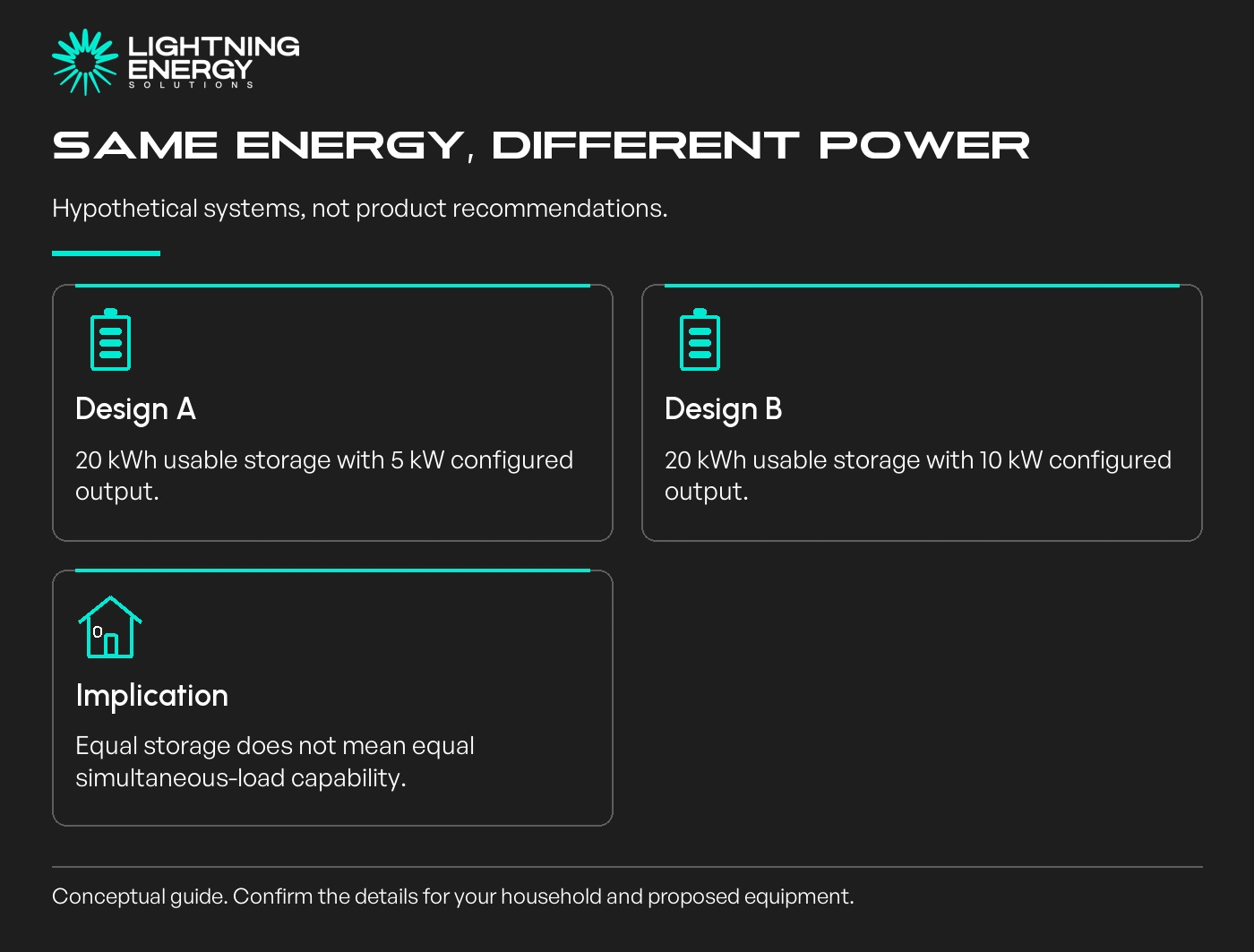
Consider two hypothetical designs that both store 20 kWh usable energy. One has a configured 5 kW output limit and the other 10 kW. Their energy capacity is equal, but they cannot necessarily support the same simultaneous demand.
Adding energy behind an existing inverter may extend operation without increasing that inverter's power rating or changing its phase arrangement. Product-specific expansion rules determine the result.
Tesla's Australian Powerwall 3 documentation illustrates that distinction between energy capacity, expansion and configured output. It should not be read as an automatic approval for every site or desired load.
Tesla Australian system specifications.
If the objective is longer overnight coverage at modest demand, extra energy may be the relevant requirement. If the objective is starting or running a large appliance, output and phase compatibility may be more important.
Manufacturers offer different architectures. Enphase's Australian FlexPhase planning guide, for example, distinguishes supported single-phase and three-phase arrangements and their design limits.
Enphase Australian planning guide.
Do not assume a battery on one phase automatically backs up all circuits or a three-phase appliance during an outage. Normal grid-connected operation and isolated backup need separate explanations.
Our blackout backup guide helps define which household loads actually need supply when the grid fails.
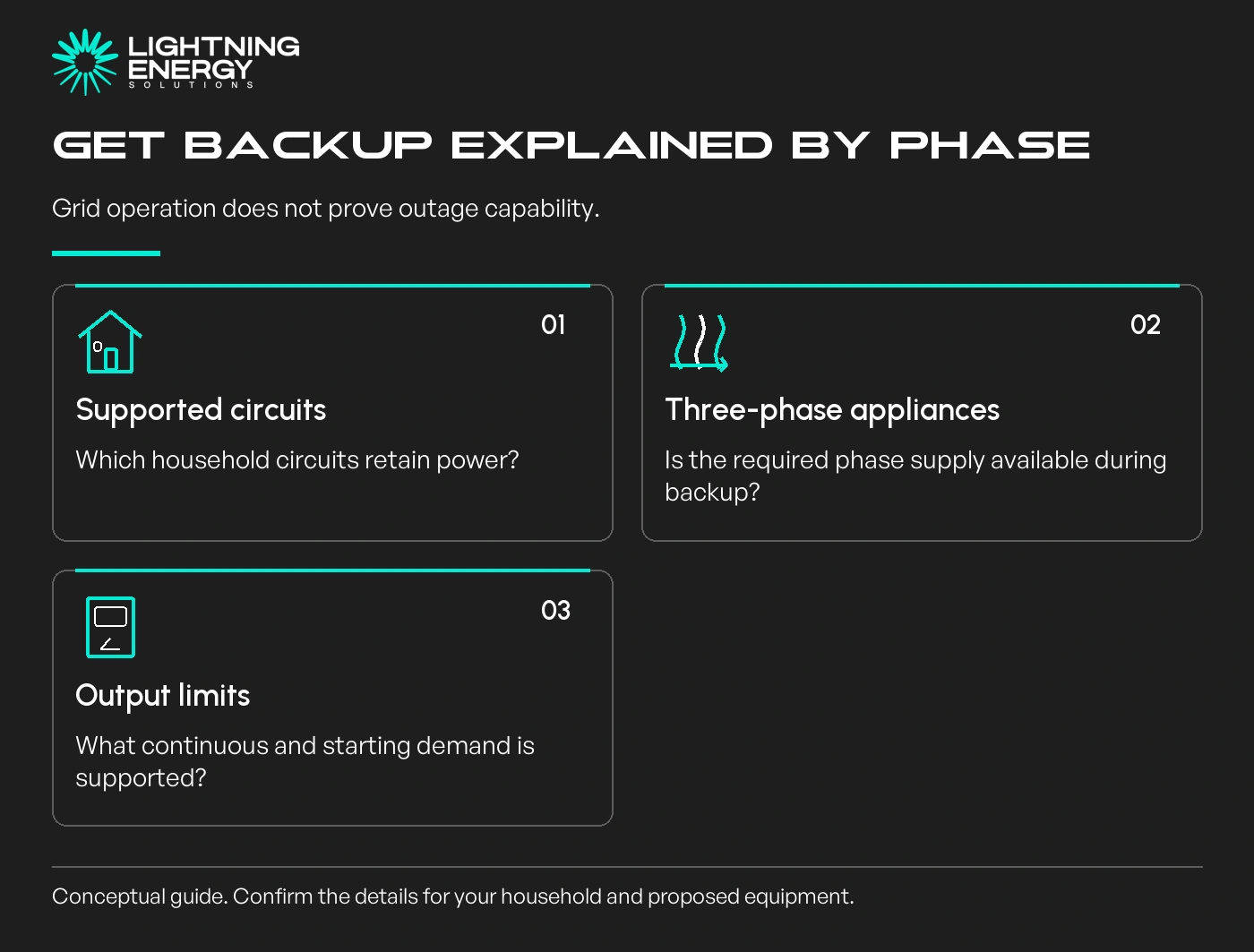
Ask the installer to identify the proposed phase arrangement in plain language: what is connected, what is backed up and what limits apply to each relevant phase or appliance.
The distributor's connection requirements also matter. Proposed inverter ratings, existing equipment and export arrangements need assessment under the rules applying to your address.
Powercor publishes connection guidance for installers. Other Victorian distribution networks have their own processes, so a generic statewide maximum should not be assumed from a neighbour's installation.
Powercor connection information.
A permitted export limit is not the same as battery energy capacity. Nor does an approved inverter size guarantee that the household's entire mains and backup design needs no further work.
If three-phase power is proposed, ask what specific requirement it solves and request its complete scope and cost separately from the battery. Include associated electrical and network work where applicable.
A battery assessment can compare retaining the current supply with a supported upgrade design. Do not pay for three-phase solely because a salesperson describes the battery as big.
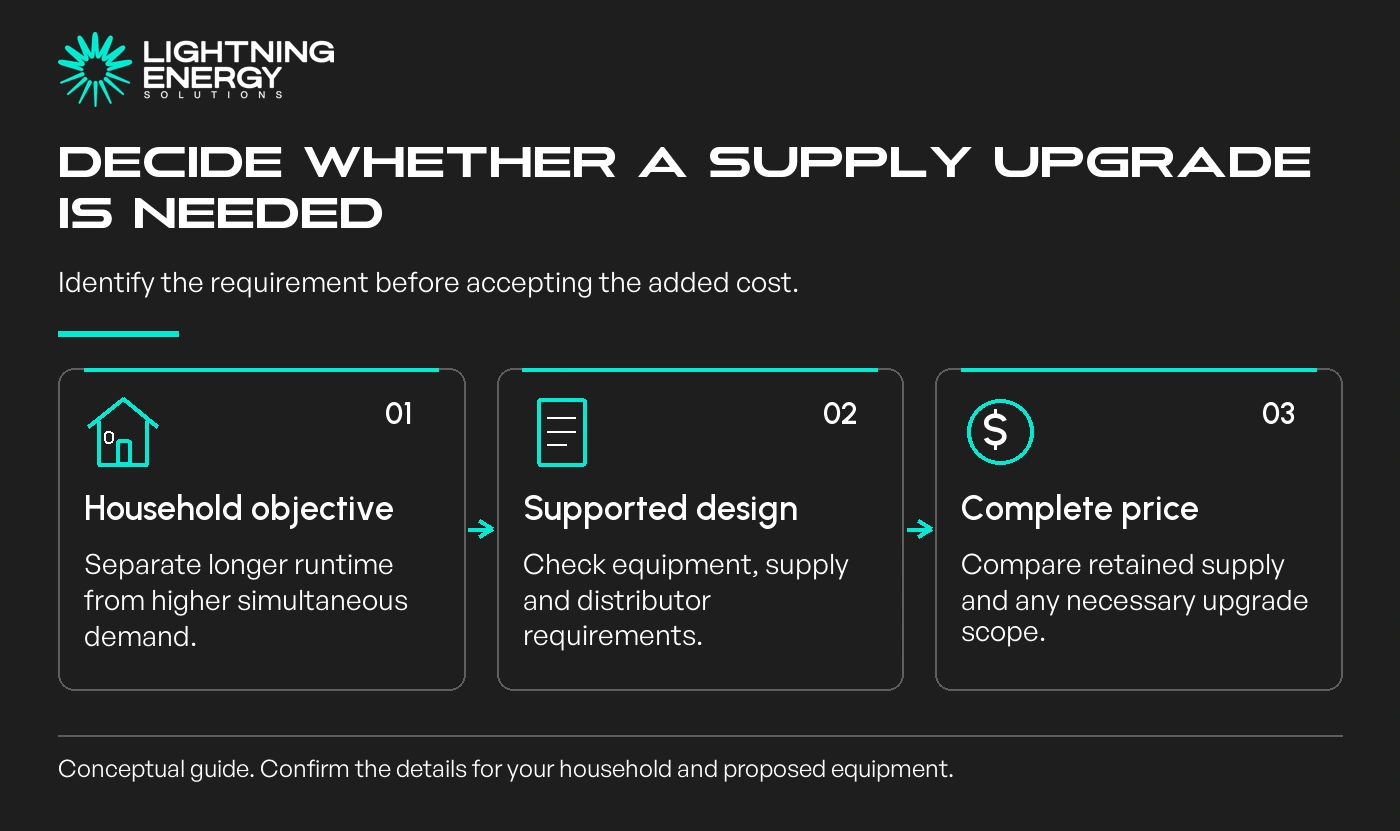
Conversely, do not insist on retaining single-phase where the assessed loads or selected equipment need a different solution. Choose the arrangement around the actual household objective and approved design.
Plan your battery upgradeSend your existing equipment details and planned major appliances. We can assess energy capacity, power and backup needs separately before deciding whether a supply upgrade belongs in the quote.Available times
Book a consultation and we'll map solar, storage, hot water, and the rebates around your bills and your goals.
Question 1 of 6
