
Installing Ducted Air Conditioning in an Occupied Home
Plan a ducted air conditioning installation while living at home, including access, service interruptions, safe work areas, removal, repairs and handover.
Plan a ducted air conditioning installation while living at home, including access, service interruptions, safe work areas, removal, repairs and handover.

A ducted installation in an occupied home needs a practical household plan as well as an equipment design. Agree which areas the trades need, when services may be unavailable and how the house will be left between work stages.
Do not rely on a universal one-day promise. Access, electrical work, old-system removal and building repairs can change the sequence and duration.
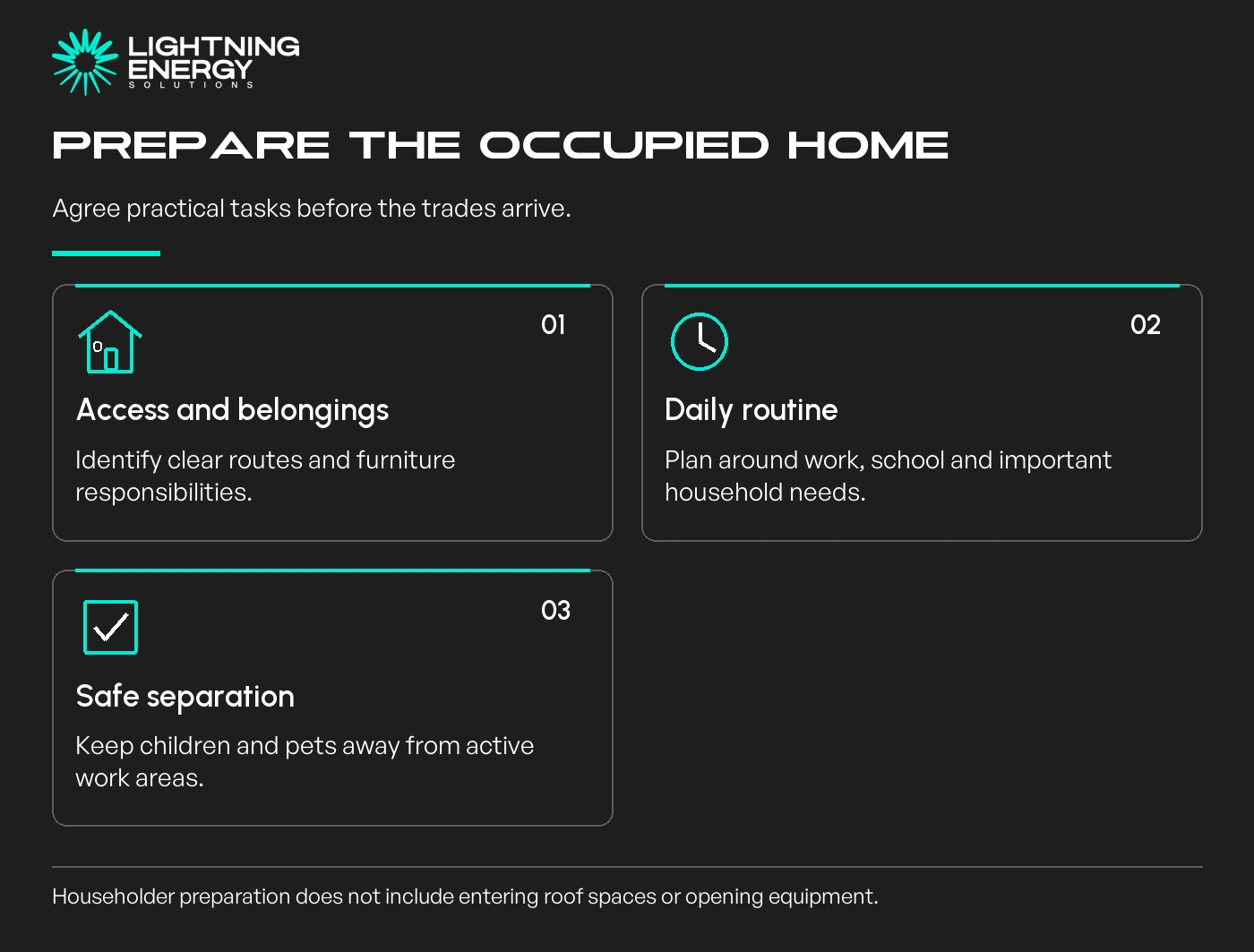
Walk through the proposed access points with the installer and identify furniture, storage or household items that need moving. Ask who moves them and which areas must remain clear.
Discuss roof access, any required ceiling openings and the route used to bring in equipment. The plan should identify how floors, walls and belongings will be protected.
For an illustrative household working from home, a ceiling opening near the study may make that room unsuitable during part of the work. Planning another workspace is easier than discovering the conflict after arrival.
Tell the air conditioning team about children, pets, mobility requirements and any need to preserve access through the house. Ask how active work areas will be separated.
Do not enter roof spaces to prepare for the trades. Agree safe preparation tasks at normal household level.
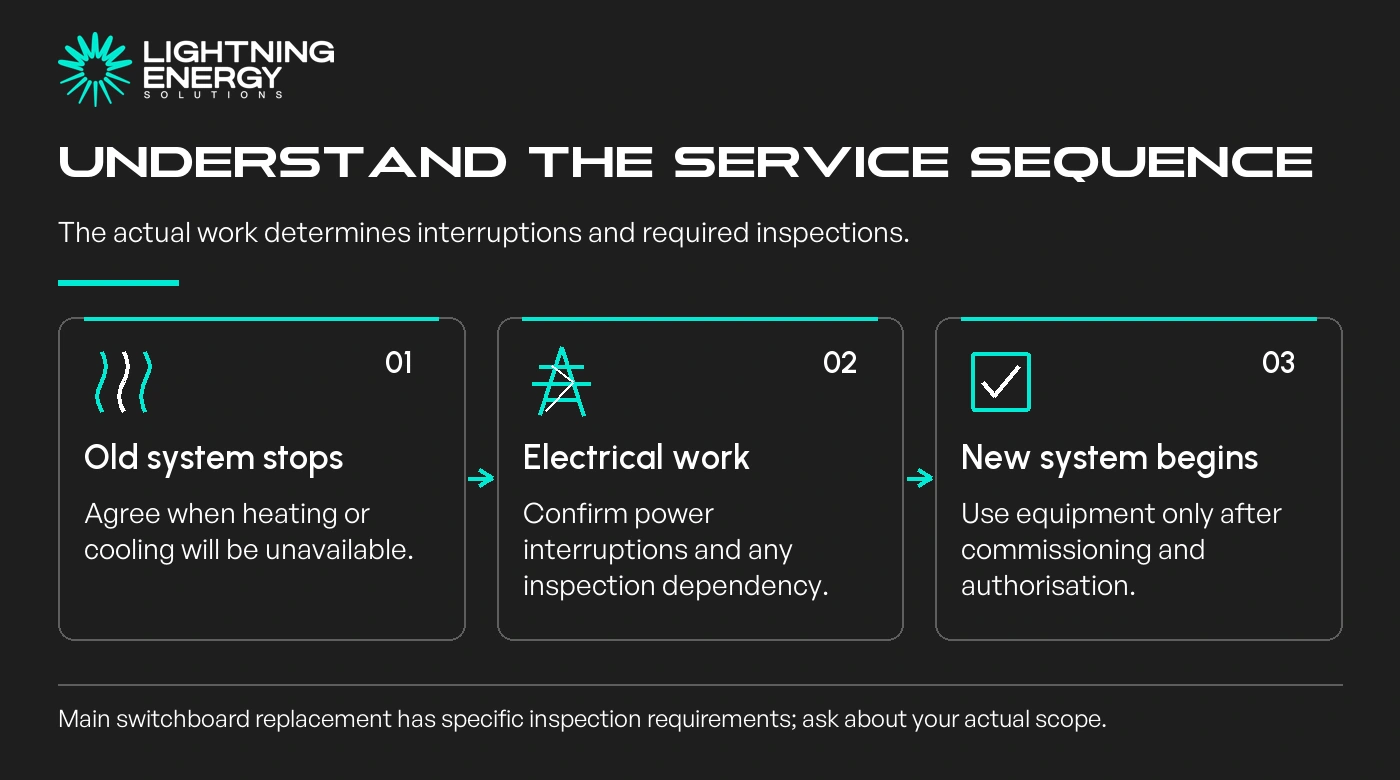
Ask when the old heater will be unavailable and when the new system is expected to be ready for use. Obtain a contingency plan if another trade or inspection is needed before commissioning.
Electrical work may require a power interruption. Where a main switchboard is replaced, Energy Safe Victoria’s guidance requires it to remain off until the required inspection is completed.
Energy Safe inspection guidance.
That requirement should not be generalised to every minor air conditioning job. Ask the electrical contractor which certification and inspection requirements apply to the specific work.
Use the electrical planning guide to separate appliance installation from any larger supply upgrade. Include important household power needs in the scheduling discussion.
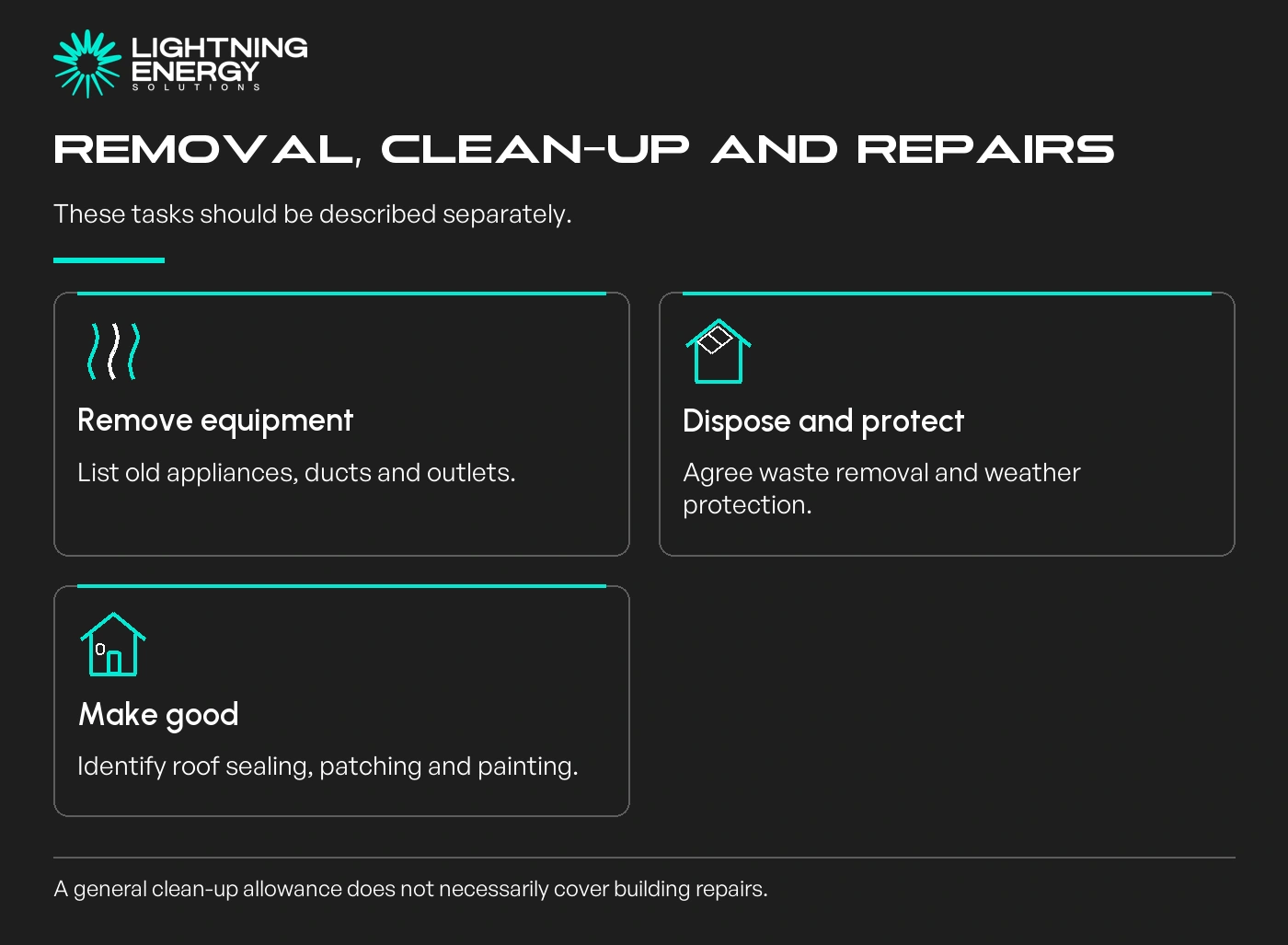
Identify the old appliances, ducts, outlets and controls being removed or retained. Ask where removed materials will be placed and when waste leaves the property.
A gas-to-ducted-reverse-cycle changeover commonly involves a different duct design. Ask the contractor to assess the ductwork and return grille against the new equipment’s requirements and include the work in the installation plan.
YourHome heating and cooling guidance.
The final ducted package scope should identify roof sealing, patching, painting and any work left to another contractor. Clean-up does not automatically include all building repairs.
Ask how concealed damage or suspect materials will be handled if discovered. An agreed stop-and-assess process is more useful than a promise that every older home will be straightforward.
Confirm how the property will be secured and protected from weather if work spans more than one day.
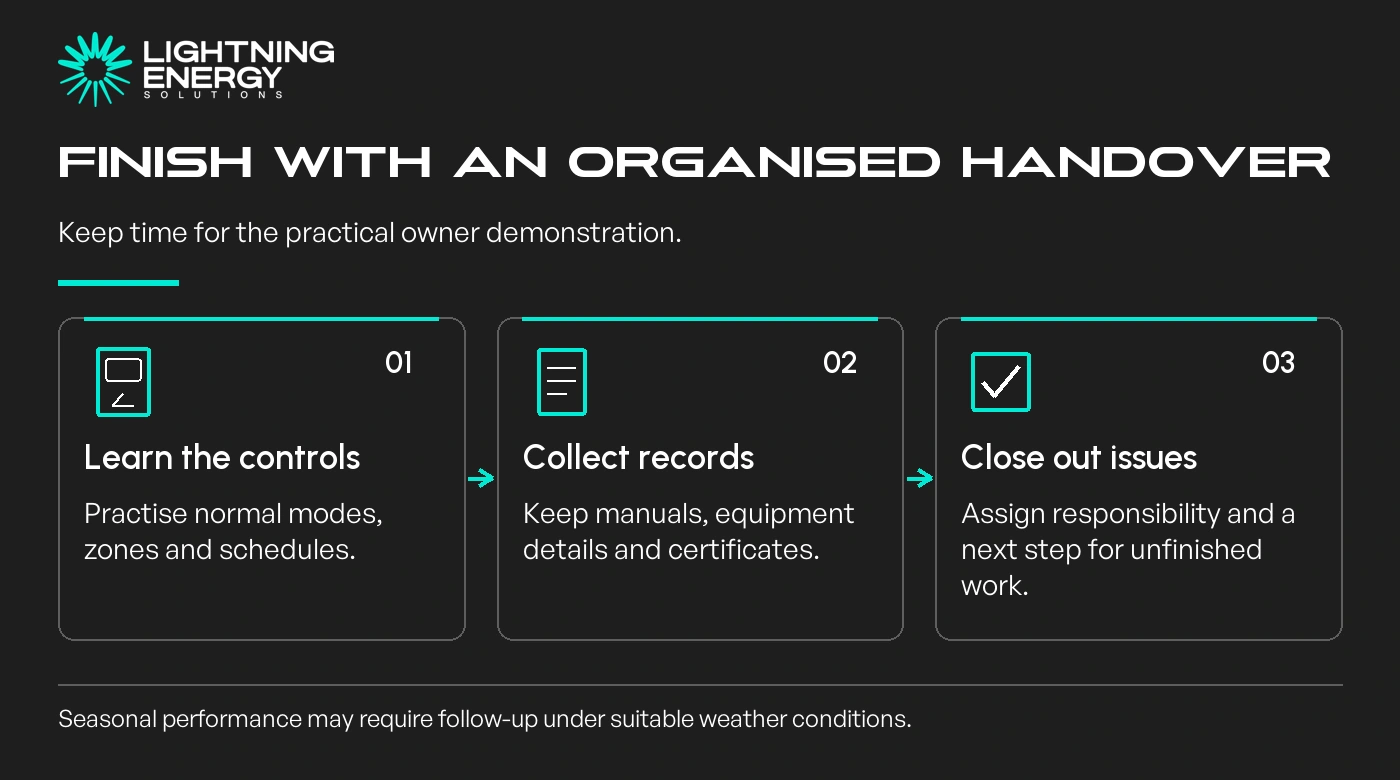
Avoid planning an immediate departure at the expected finishing time. You need an opportunity to see the controls, understand normal zone operation and review the agreed scope.
Ask the installer to demonstrate the room combinations you will use, locate accessible filters and explain normal winter operation. Record anything that needs a later seasonal performance check.
Collect model details, manuals, warranty information, commissioning records and the required certificates. Electrical installation work requires a Certificate of Electrical Safety.
Energy Safe certificate guidance.
Keep an itemised list of unresolved work, with the responsible person and next step. Do not treat cosmetic repairs or missing documents as forgotten details once the system begins operating.
If the household cannot reasonably remain during a particular stage, discuss that early. A temporary change of arrangements can be preferable to compromising the work area or rushing essential checks.
Share your access constraints and household routine when you plan the installation. A written sequence makes it easier to live around the work and know when the complete job is ready for handover.
Available times
Book a consultation and we'll map solar, storage, hot water, and the rebates around your bills and your goals.
Question 1 of 6
