
Ducted Heating Struggling on Cold Nights: What to Record
Record cold-night ducted heating performance, room temperatures, settings and defrost behaviour so a technician can investigate comfort problems with useful evidence.
Record cold-night ducted heating performance, room temperatures, settings and defrost behaviour so a technician can investigate comfort problems with useful evidence.

If ducted reverse-cycle heating struggles on cold nights, record how the whole system behaves before concluding that it is too small. Equipment, controls, airflow and building heat loss can all affect room comfort.
A clear observation log helps a technician separate a brief normal interruption from a persistent performance problem. It also reduces the temptation to change several settings at once.
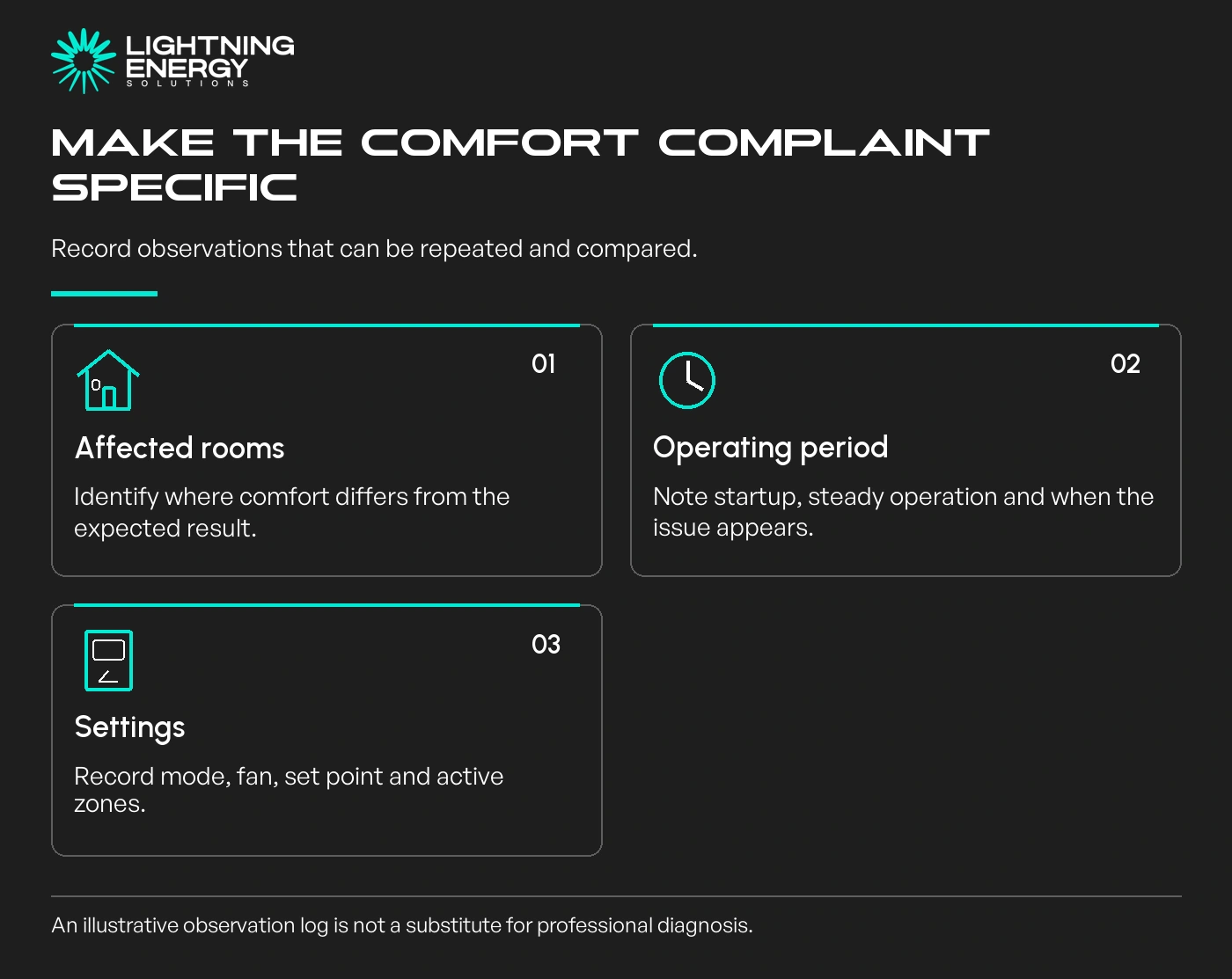
Start with the exact model and controller, then note when the problem occurs. Record the affected rooms, approximate outdoor conditions and whether the system had been running or was starting from a cold house.
Write down the normal set temperature, fan setting, active zones and door positions. If you measure room temperature, use the same sensible location away from outlets and direct sun each time.
For an illustrative household, bedrooms may stay cool while the hallway near the controller reaches its target. That is a different observation from every room remaining cold together.
Our air conditioning assessment needs that distinction because one symptom may concern distribution or sensing while another points to a broader load or equipment question.
Do not treat a cold outlet immediately after startup as a complete performance test. Watch what happens over the normal operating period described by your manual.
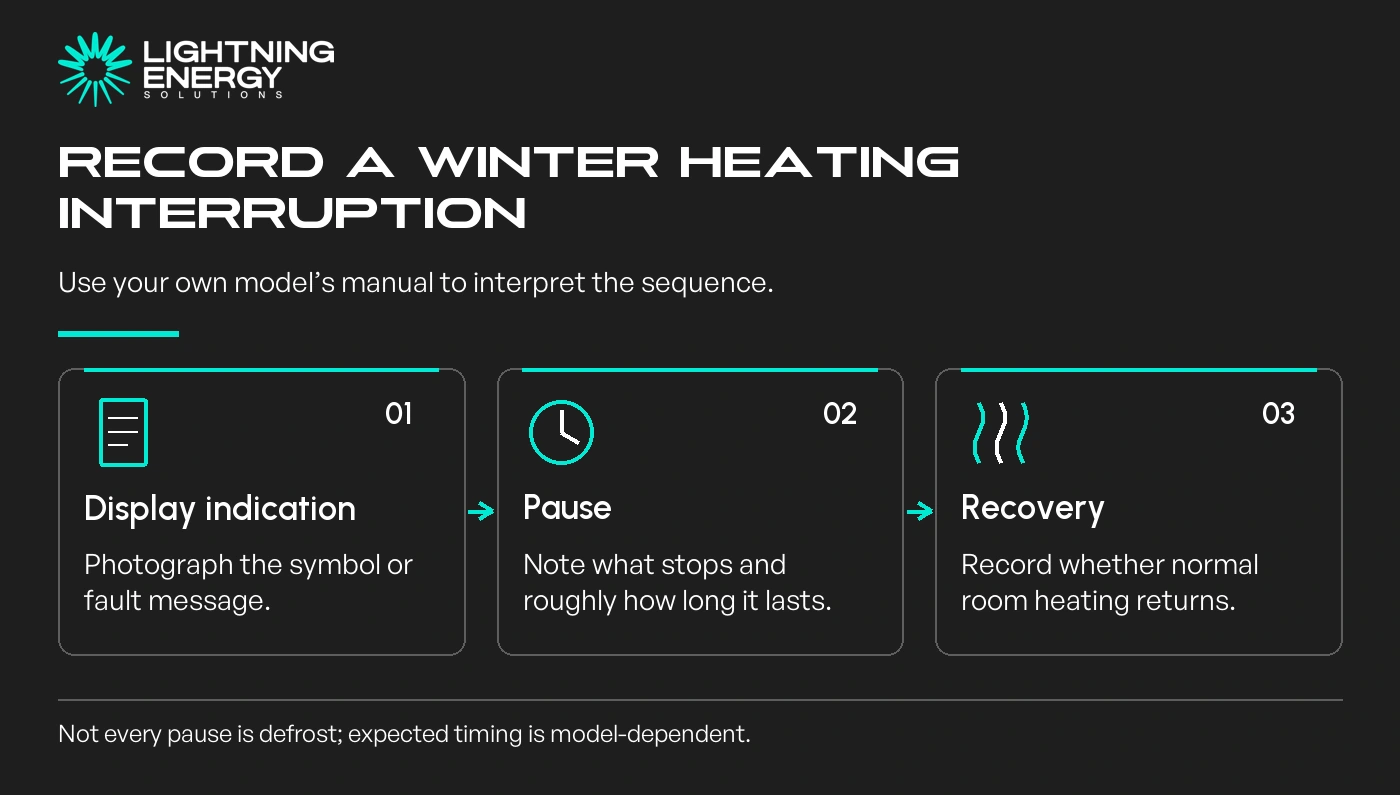
Reverse-cycle units can pause room heating during outdoor-coil defrost. Some also delay the indoor fan during hot start to avoid a cold draught.
Daikin’s troubleshooting guidance explains common heating interruptions. Your own model determines the applicable indications and expected sequence.
Note the displayed symbol, approximate pause and whether heating recovers. Do not assume all repeated stops are defrost, or copy another model’s timing as a universal fault threshold.
If a warning or fault code appears, photograph it and contact the service provider. A controller message is more useful than a description that the unit “keeps turning itself off”.
Avoid repeatedly isolating power or entering installer settings in an attempt to defeat normal control sequences. Preserve the evidence for the person diagnosing the system.
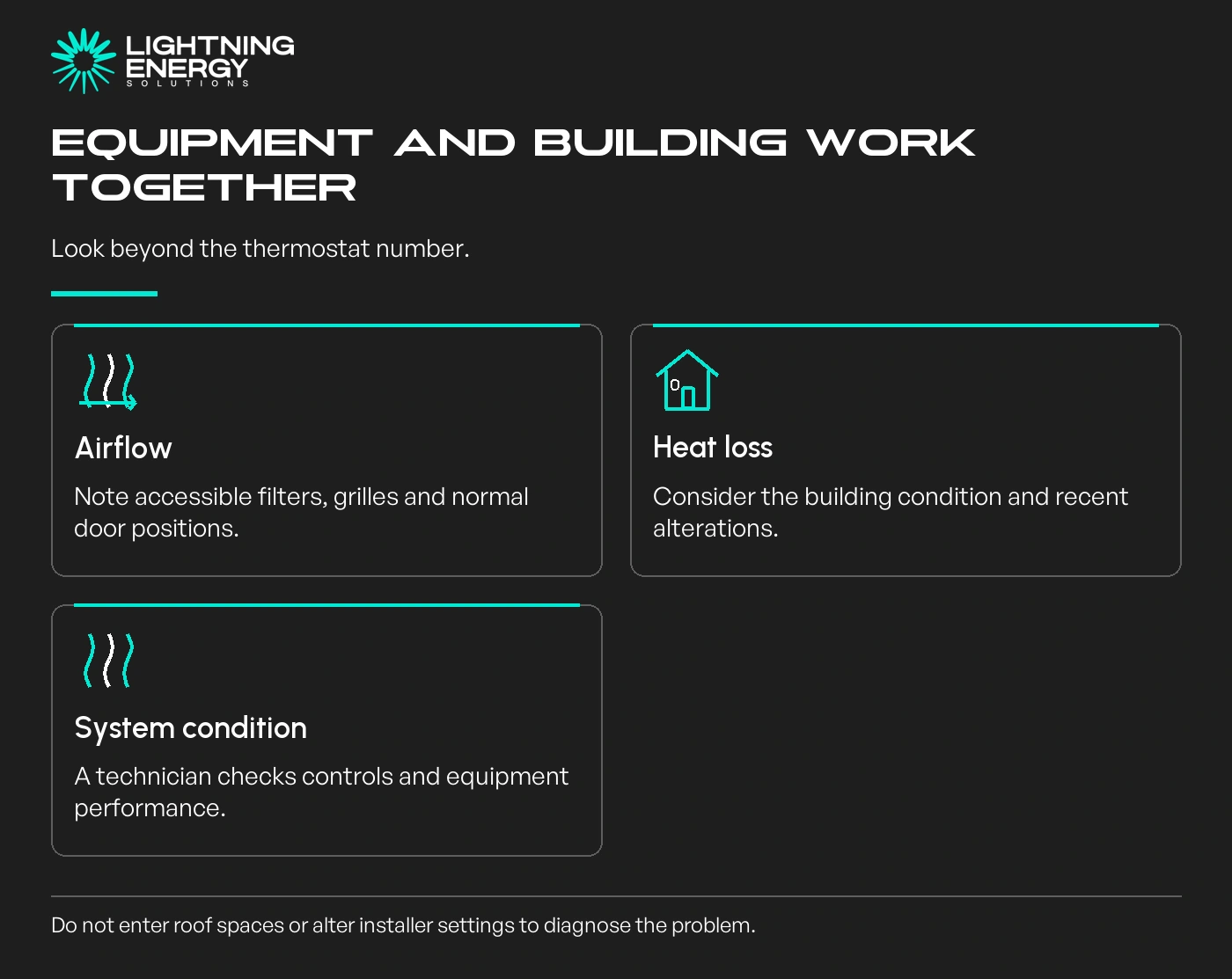
Inspect accessible filters and clear ordinary obstructions only as the owner manual directs. Do not remove covers, reach into equipment or enter roof spaces to investigate ducts.
Daikin’s owner troubleshooting guidance includes basic operating checks and circumstances requiring service.
Note whether furniture blocks a return grille or whether door positions differ from the commissioned arrangement. Report these observations rather than improvising new vents or closing multiple supply outlets.
Building heat loss also matters. YourHome discusses insulation, sealing and appropriate heating design as parts of the same comfort problem.
If the concern includes increased electricity use, compare the same dates with the winter solar pattern.
Lower generation and greater heating demand can occur together.
Send the log and model details to the installer or qualified service technician. Ask what checks will distinguish a control, airflow, equipment or building-load issue.
If the system has never met the agreed room requirement, provide the original quote and commissioning records. If performance has recently changed, identify when it last worked normally.
Stop using equipment with smoke, a burning smell or an apparent electrical hazard. Do not continue a monitoring exercise when there is a safety concern.
Avoid accepting a larger replacement as the only answer without an explanation of the findings. An unnecessary capacity increase may leave the underlying distribution problem unresolved.
Where replacement is justified, compare ducted designs against current room use and assessed cold-weather needs, including any renovations since the old system was selected.
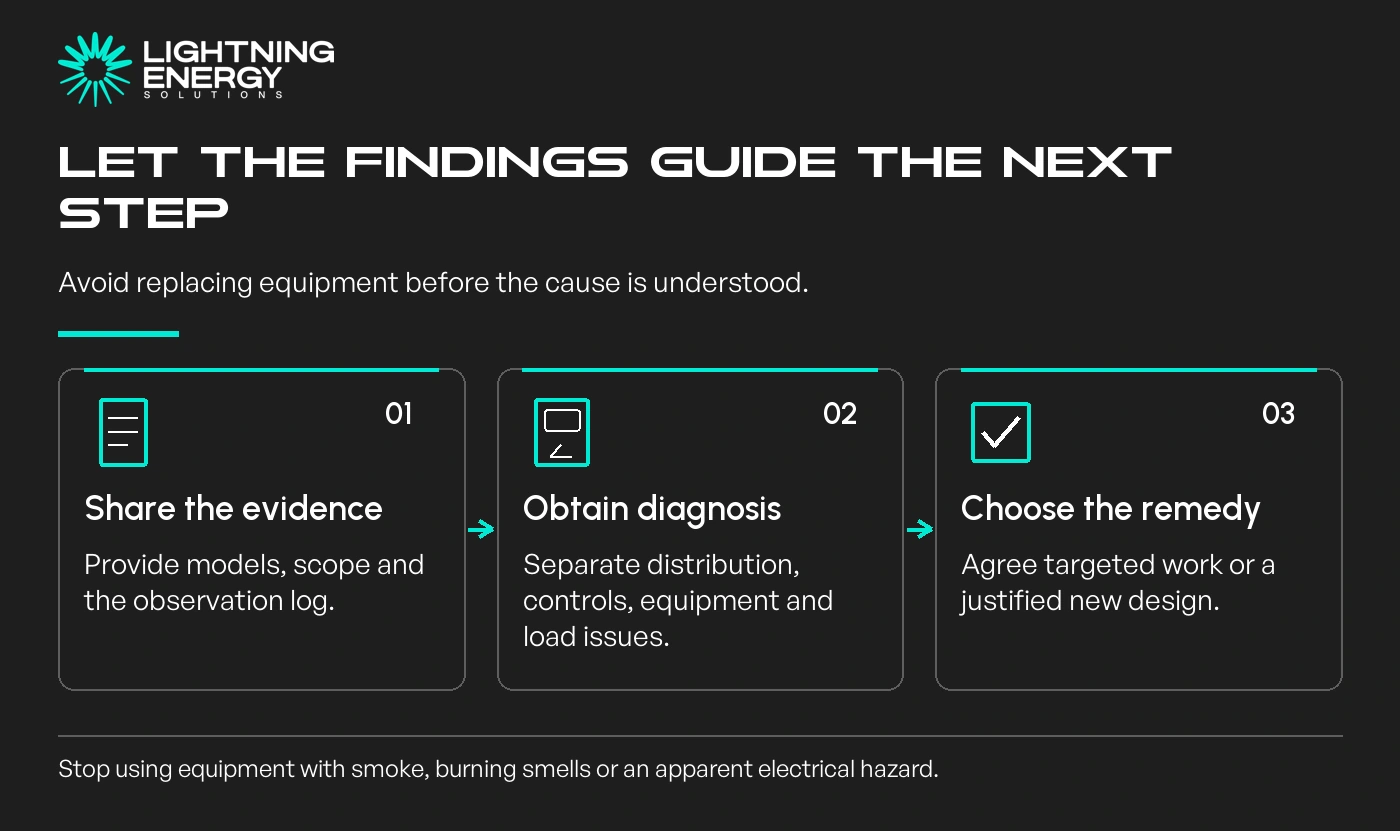
Share a short log, controller photos and the affected-room plan when you request an inspection. Useful evidence makes the next decision a diagnosis rather than a guess about capacity.
Available times
Book a consultation and we'll map solar, storage, hot water, and the rebates around your bills and your goals.
Question 1 of 6
