
Coal Site, New Purpose: Understanding Eraring’s Proposed Battery Expansion
Origin's proposed Eraring North battery brings a familiar industrial site into a different energy conversation.
Origin's proposed Eraring North battery brings a familiar industrial site into a different energy conversation.

Origin's proposed Eraring North battery brings a familiar industrial site into a different energy conversation.
The new proposal would add substantial storage near the Eraring power station and existing battery development in New South Wales.
The scale attracts attention. I think the more useful question is what a battery of this kind can do, what still needs approval, and why stored energy is different from a fuel supply.
Source: federal referral.
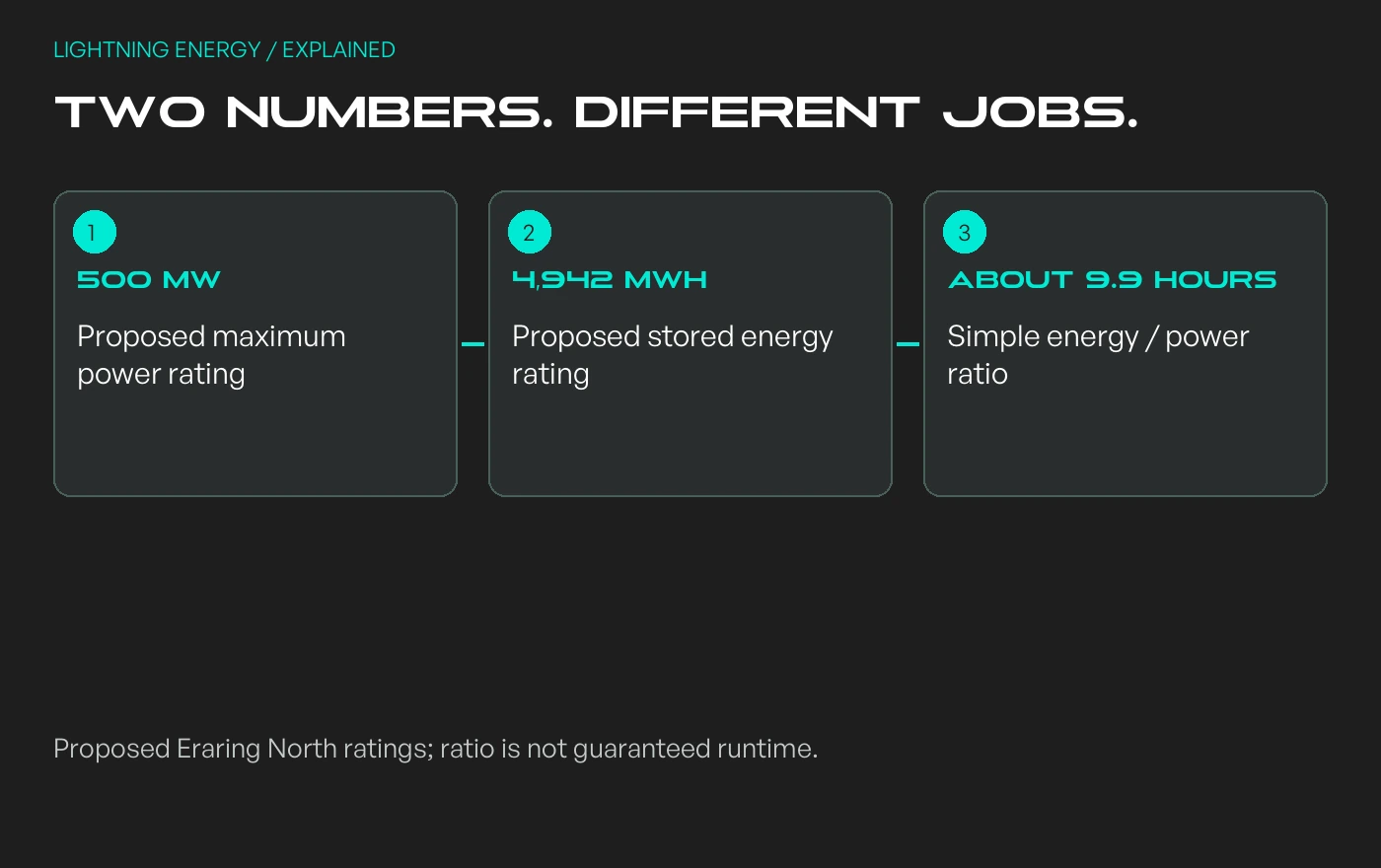
The proposed Eraring North development is rated at 500 MW and 4,942 MWh. It is a planning proposal, not an operating battery. The federal referral sets out its scope.
Source: NSW planning register.
The project also appears in the NSW planning register. Assessment, detailed design, procurement and construction remain relevant steps.
I would avoid a headline claiming the coal station has already been replaced. An announcement of storage capacity does not establish that replacement generation and all required grid services are ready.
Megawatts describe power: how quickly electricity can be delivered. Megawatt-hours describe an amount of energy. Dividing the proposed 4,942 MWh by 500 MW gives about 9.9 hours as a simple nameplate ratio.
That calculation is an illustration, not a guaranteed dispatch duration. Operating reserves, losses, usable capacity and the final design can change what is available in practice.
The distinction matters because a battery can be powerful but brief, or deliver a lower output for longer. When comparing projects, I would put both numbers beside the headline rather than ranking size using whichever figure looks largest.
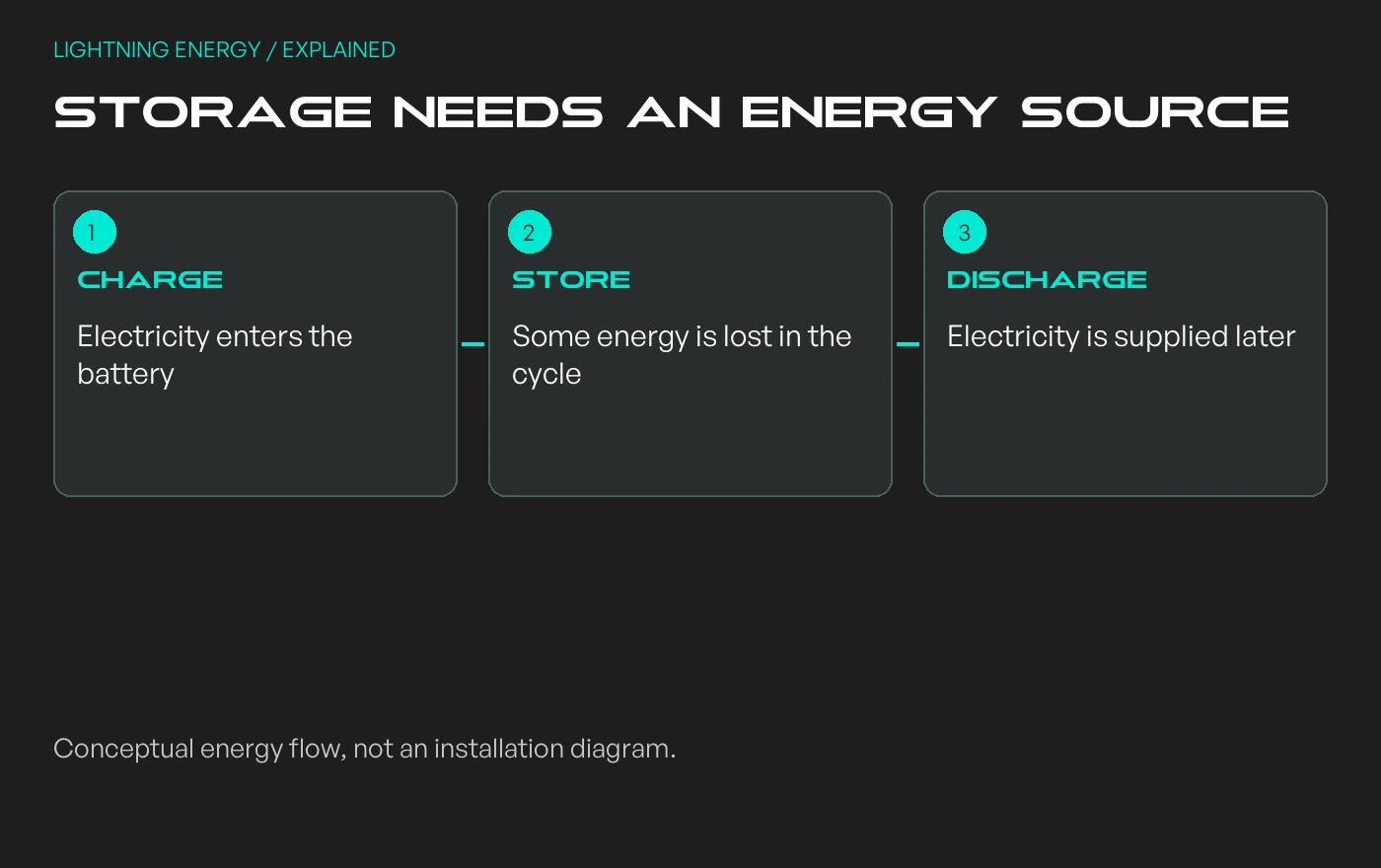
Storage must first receive energy. It can then discharge at another time, with some losses along the way. It is not a new primary fuel source and cannot generate an unlimited supply by itself.
A former power-station precinct may offer useful infrastructure and connections, but a new project still needs its own technical and environmental assessment. Location is an opportunity, not automatic approval.
The same basic energy balance applies to home batteries. Storage complements solar generation; it does not remove the need to understand how the battery will be charged through different seasons.
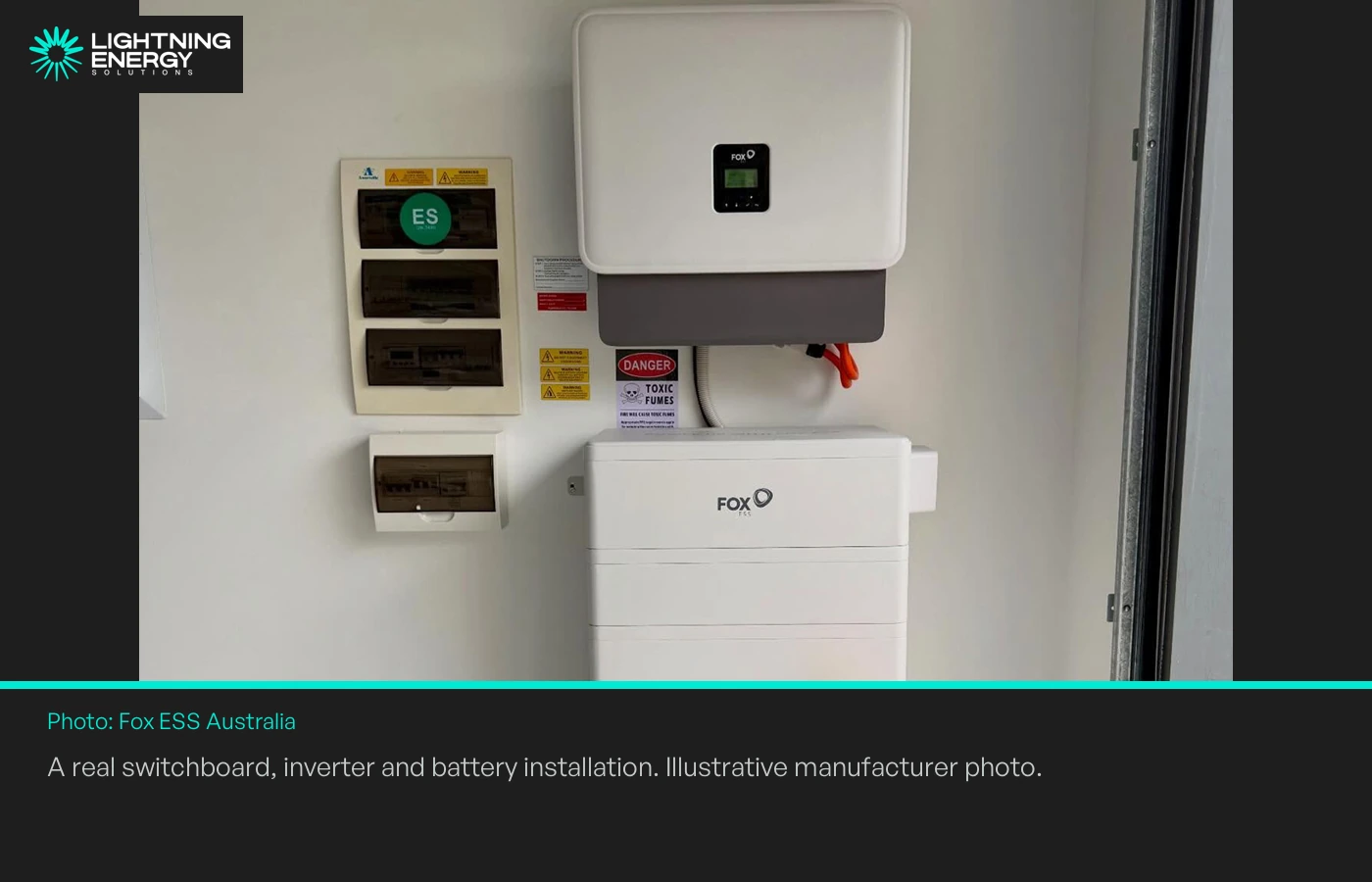
Ask three separate questions: how much energy is usable, how much power can be delivered at once, and what will actually be backed up during an outage? A single capacity number cannot answer all three.
Large loads such as air conditioning make this distinction especially important. Starting behaviour, simultaneous loads and intended runtime affect the system design.
I would not buy a home battery because a grid project is getting bigger. I would buy only when its role, installed scope and financial trade-offs suit the property.
Grid-scale news helps explain the technology; your interval data helps explain the decision.
Source: Wikimedia Commons.
Source: CC BY 3.0.
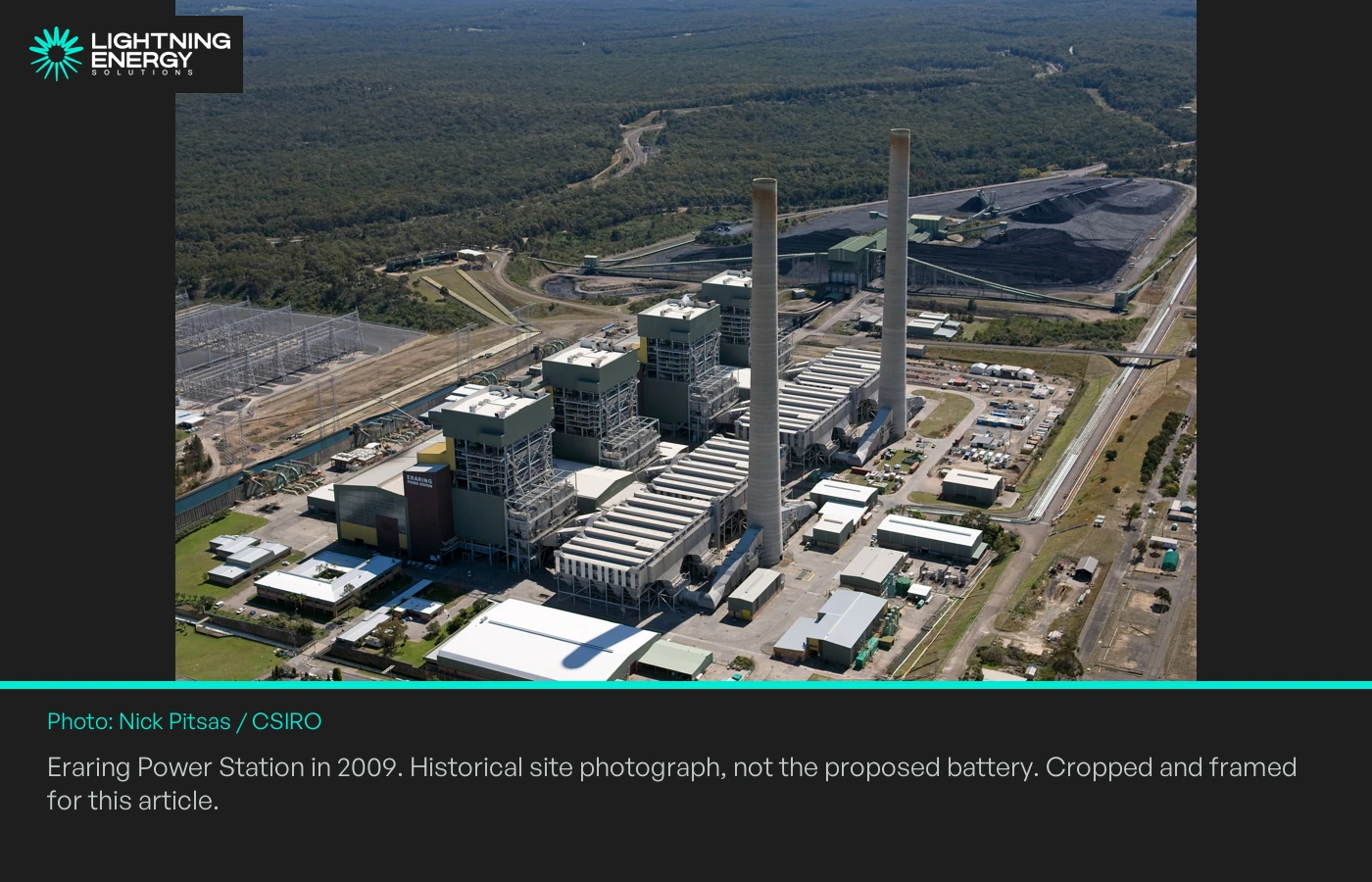
Historical feature photograph: Nick Pitsas / CSIRO, 2009, via Wikimedia Commons, CC BY 3.0. Cropped and framed; no endorsement implied.
Research checked 6 October 2026. Project plans and policy timelines may change. The linked sources distinguish announcements, proposals and operating results.
Available times
Book a consultation and we'll map solar, storage, hot water, and the rebates around your bills and your goals.
Question 1 of 6