
Gas Ducted Versus Reverse-Cycle Noise: What Changes Inside the House?
Understand how indoor heating noise may change when moving from gas ducted to reverse-cycle, and make fans, ducts, outlets and vibration part of the design brief.
Understand how indoor heating noise may change when moving from gas ducted to reverse-cycle, and make fans, ducts, outlets and vibration part of the design brief.

Changing from gas ducted heating to reverse-cycle can change the sound inside the house, but it does not guarantee silence. Both ducted approaches move air through equipment, ducts and room outlets.
Describe the sounds that currently bother you and where they occur. That gives the replacement designer a problem to address rather than a vague request for the quietest brand.
Note whether the sound is a broad airflow rush, a whistle at a grille, a rattle, a vibration through a wall or a start-and-stop disturbance. Record the room and operating circumstances.
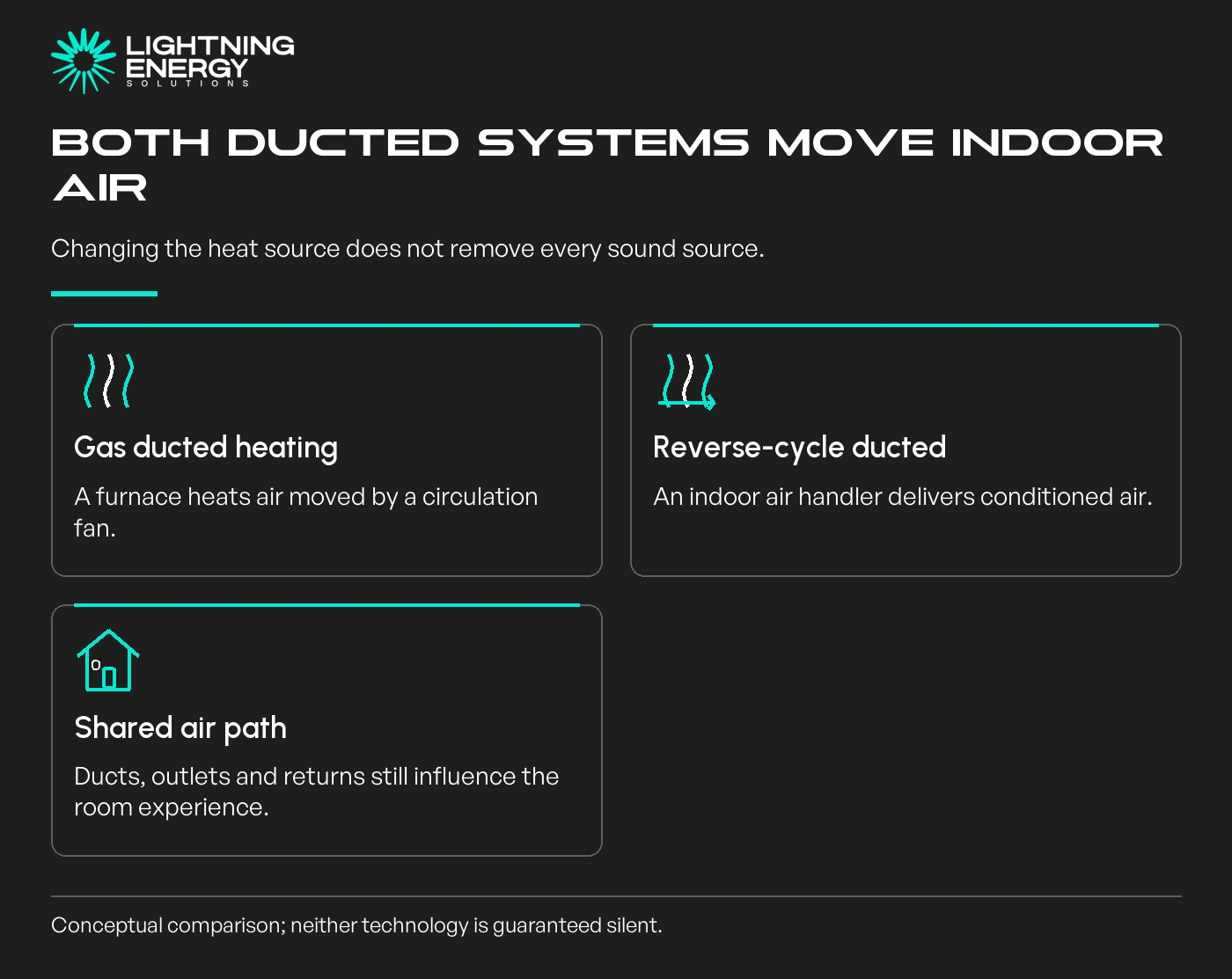
Gas ducted heating uses a furnace and circulation fan. Reverse-cycle ducted heating has an indoor air-handling unit and an outdoor refrigerant system; changing the heat source does not remove indoor fan and airflow sound.
Government heating-system descriptions.
For an illustrative home, a noisy hallway return and a bedroom rattle may have different causes. Replacing the heating appliance without considering those locations may leave part of the complaint unresolved.
Bring those observations into the air conditioning brief, along with the bedrooms and working spaces where low disturbance matters most.
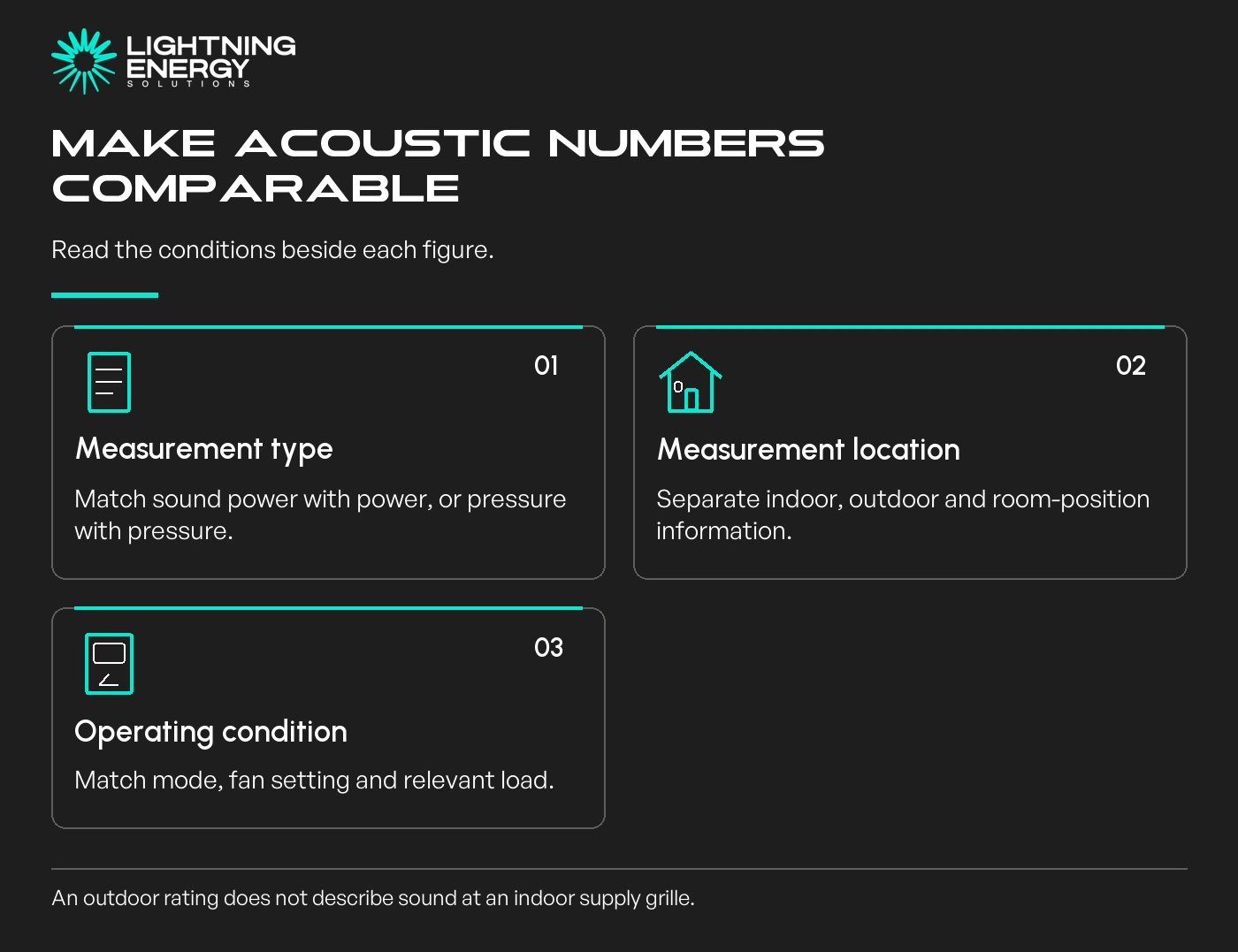
Ask whether any quoted acoustic figure is sound power or sound pressure, indoor or outdoor, and measured in heating or cooling. Also identify the fan setting and test conditions.
Daikin’s acoustic explanation distinguishes sound emitted by equipment from sound measured at a position.
An outdoor-unit rating does not describe what you will hear at an indoor bedroom outlet. Similarly, a low-fan specification is not a promise about full-output operation on a cold morning.
Ask the designer how the required heating load and planned zones affect normal fan operation. Avoid reducing fan speed outside the approved design merely to obtain a quieter demonstration.
When comparing ducted packages, keep the same household operating scenario in view. Different room coverage and airflow requirements can make brochure-only comparisons misleading.
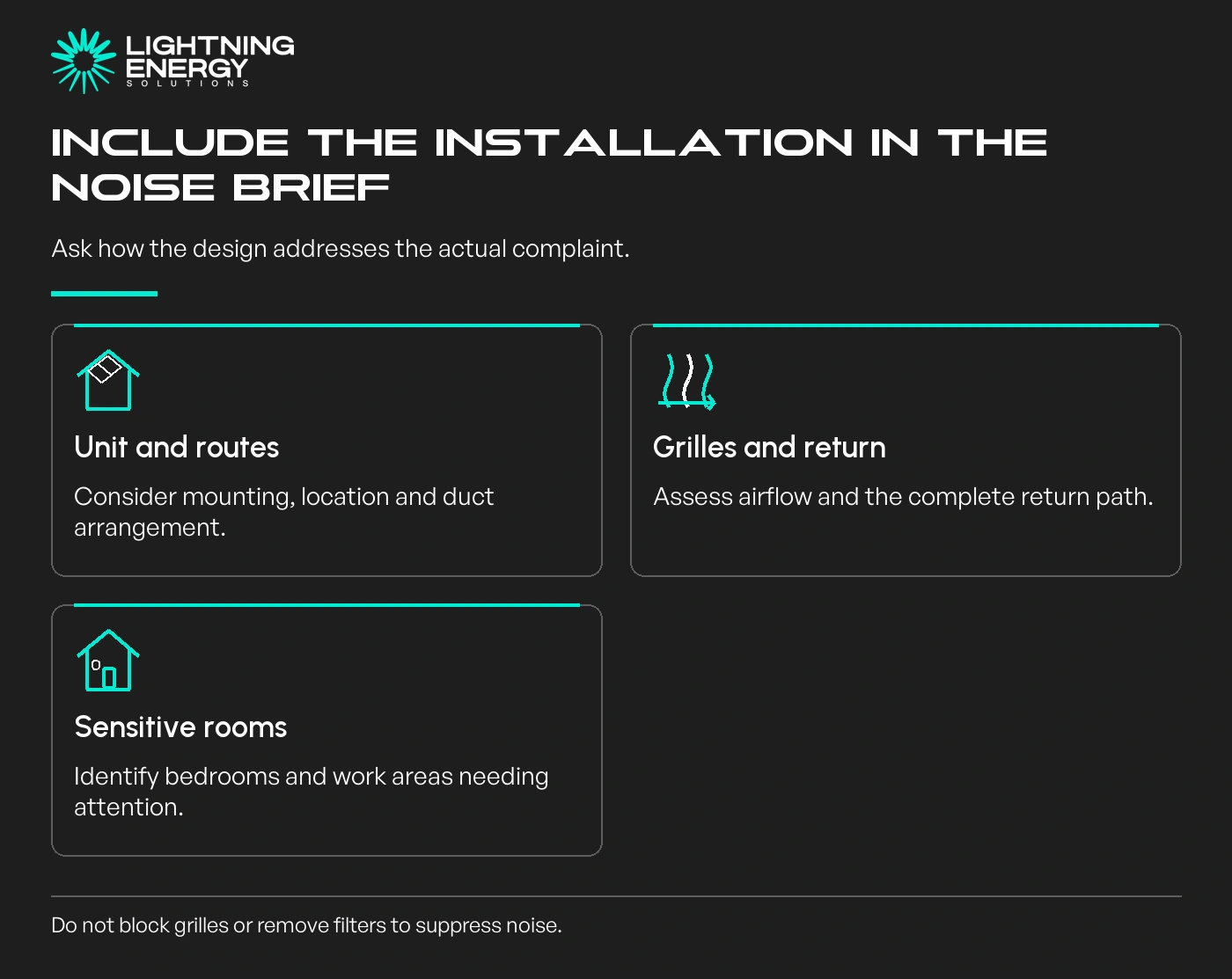
The indoor unit’s location, duct routes, return arrangement and outlet selection all deserve discussion. Ask which installation measures address the specific noise concerns you have recorded.
YourHome emphasises appropriate duct distribution and return paths as parts of central-system performance.
YourHome heating and cooling guidance.
If old gas ducts or outlets are proposed for reuse, require an assessment against the new system’s requirements. The quote should identify required duct and return-air changes rather than assuming the old layout is suitable.
YourHome heating and cooling guidance.
Do not cover return grilles, stuff materials inside ducts or remove filters as a noise remedy. Report the symptom and let the qualified installer identify the cause and appropriate treatment.
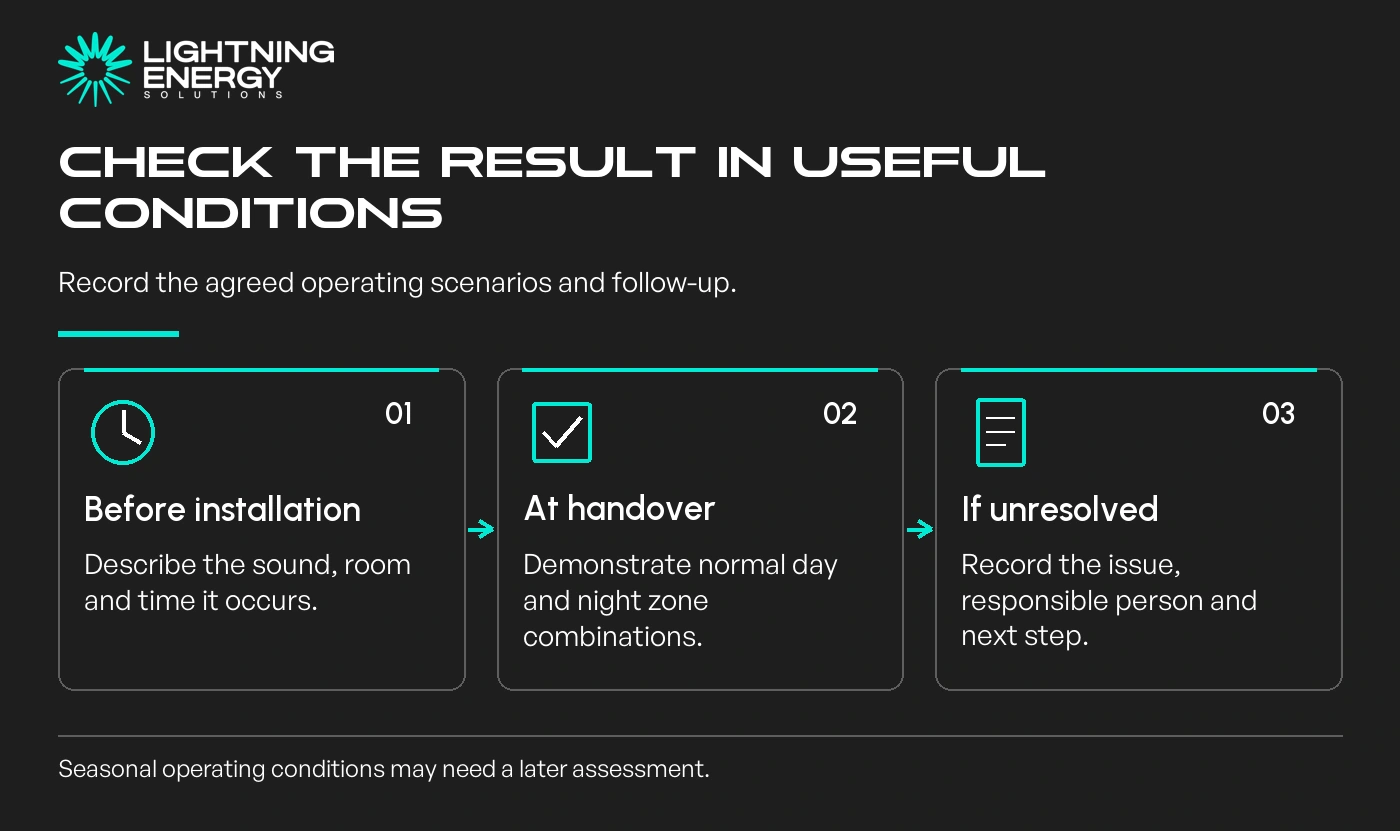
Ask for a handover demonstration of the day and night room combinations, using the normal door positions discussed during design. Identify unexpected rattles, whistles or strong vibration while the installer is present.
Record any concern that cannot be resolved immediately and agree the next step. A mild installation day may not reproduce the heating demand of a cold winter evening.
EPA Victoria’s household noise guidance also highlights equipment location and maintenance when reducing disturbance.
Include the outdoor unit in the wider electrification plan, particularly when future hot water equipment will share a narrow service area.
Do not replace an otherwise suitable system solely on a promise that a different technology is always quieter. Diagnose an existing fault or installation issue first, then compare a complete remedy with replacement.
Send a room plan and a short description or recording of the sound when you request advice. The useful goal is an appropriate design and a clear response to specific disturbances, not an unsupported silence guarantee.
Available times
Book a consultation and we'll map solar, storage, hot water, and the rebates around your bills and your goals.
Question 1 of 6
