
Everything Electric Sydney 2026: Home EV Charger Prices and Solar Features
Compare zappi GLO and Evnex E2 Flex prices, solar upgrades and installation questions after Everything Electric Sydney 2026.
Compare zappi GLO and Evnex E2 Flex prices, solar upgrades and installation questions after Everything Electric Sydney 2026.

Everything Electric Sydney put affordable home charging in the spotlight. The practical question for a buyer is what the advertised price includes: a charger, solar controls, installation or all three.
The event ran at Sydney Showground from 18–20 September 2026, according to the official venue listing. This is a desk-researched follow-up, checked on 5 November 2026.
SolarQuotes’ event report highlighted the myenergi zappi GLO and Evnex E2 Flex. We checked their Australian product pages to separate current specifications from show-floor headlines.
The Australian zappi GLO page lists $999 including GST. It specifies 7 kW single-phase charging, a 6.5 m tethered Type 2 cable and app-based control without a screen on the unit.
myenergi describes solar-surplus and home-energy integration. Ask the installer to confirm the sensing, settings and compatibility required for your household.
A broad integration claim does not guarantee support for every Australian electricity plan.
The Evnex Australian store lists the E2 Flex at $799 including GST, with up to 7.4 kW single-phase charging and a 5 m Type 2 cable.
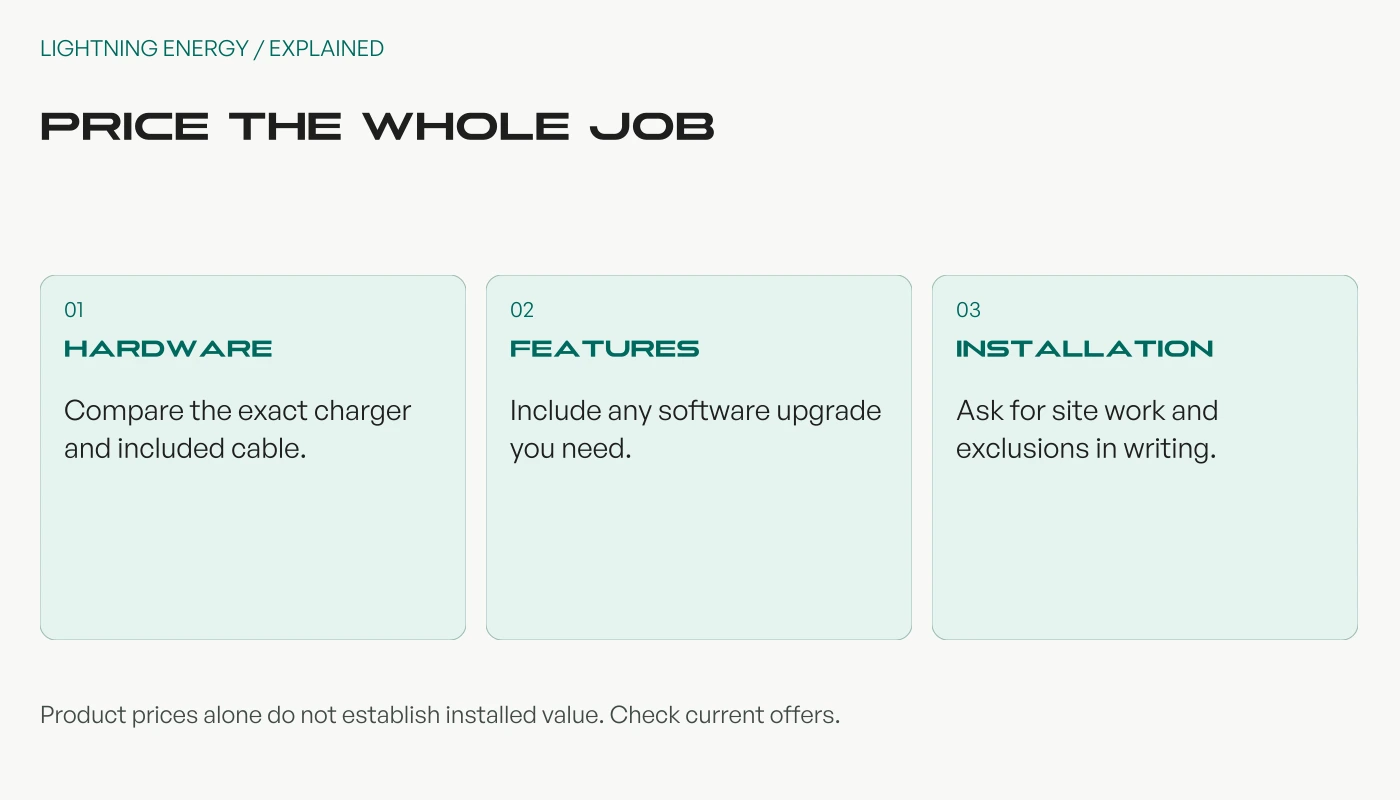
Scheduled charging is included; automatic solar diversion is a separate $349 software upgrade.
That makes the listed Flex hardware-plus-solar-upgrade total $1,148 before installation. It is $149 above the GLO’s listed unit price, but this arithmetic alone does not establish which installed system is better value for your home.
These are the listed product prices checked on 5 November, not Lightning Energy installation offers. Confirm current checkout prices, delivery and a written installation scope. Promotional discounts can change the comparison.
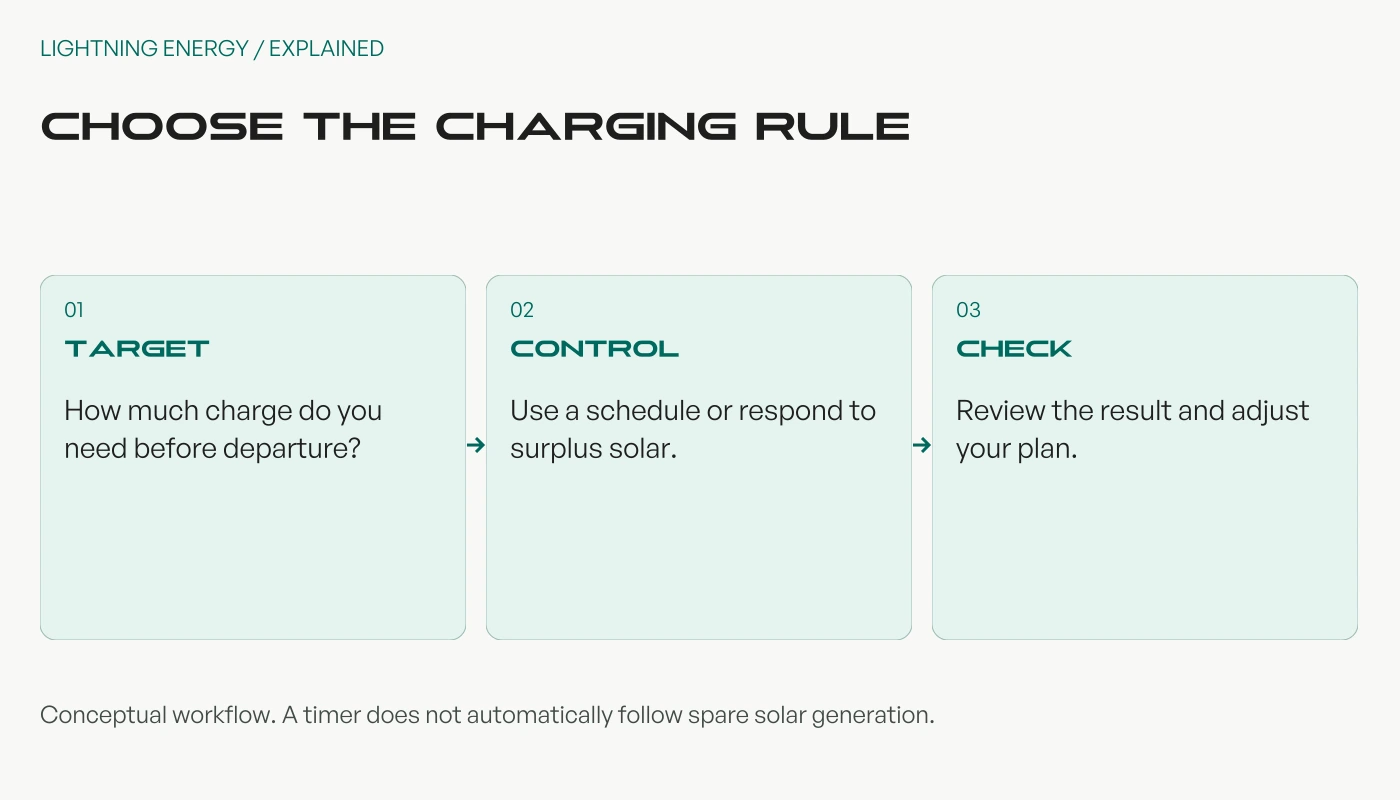
A charging schedule tells the car when it may charge. Solar diversion adjusts charging around available surplus generation. A sunny afternoon does not necessarily mean your charger is using only spare solar.
For example, a household may be using solar for air conditioning, cooking or hot water at the same time. The charger needs suitable measurement and control if you want it to respond to the electricity left over.
The Flex can use household solar like another appliance without buying the upgrade. The extra software enables automatic solar management. That distinction matters when comparing a headline “solar-ready” offer with solar diversion included.
Our guide to EV charging and battery priorities explains the decision. Start with when your car is parked at home, then compare your available solar and tariff.
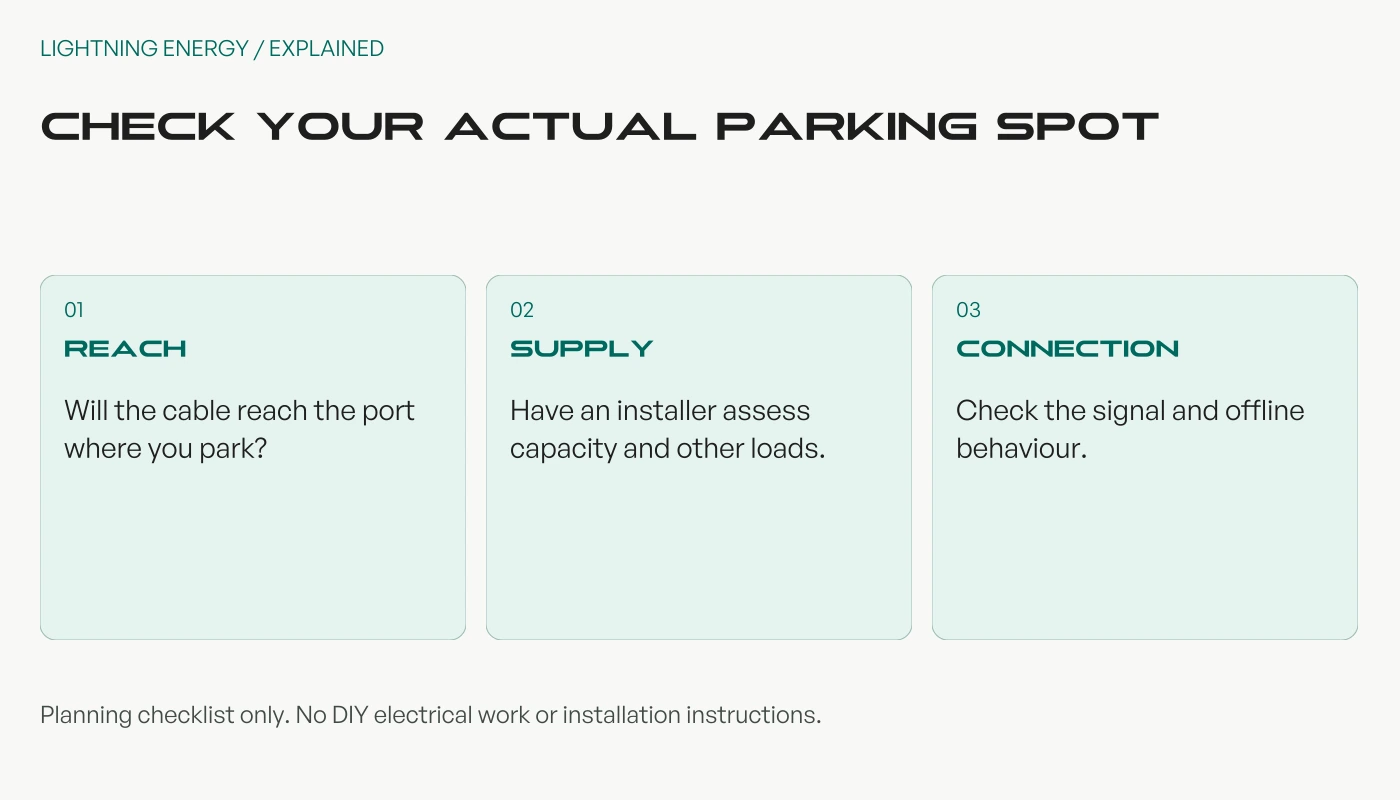
Photograph the parking position, intended charger location and switchboard for your installer. Confirm that the cable reaches the car’s charging port without depending on how you happened to park during a demonstration.
A 7 kW or 7.4 kW label is not a guaranteed rate in every home. Your vehicle’s AC charging limit, the available electrical supply and other household loads all belong in the assessment.
Compare the cost of the complete installation, including any required switchboard work and load management. Ask for exclusions in writing. A low hardware price can still accompany a more involved site installation.
Our home charger placement guide is a starting point for that discussion.
Choosing equipment comes after establishing where the car will charge and what the property can support.
The GLO’s screen-free design puts control in the myenergi app. Consider who will use it, whether they are comfortable with an app and how access will be handed over to another household member.
Evnex says the Flex uses Wi-Fi. After more than 28 days offline, some smart functions stop being available, while basic plug-and-play charging continues. Test signal strength where the unit will actually be installed.
Ask the installer to demonstrate normal charging, a changed schedule and the expected behaviour if connectivity drops out. Keep the commissioning records and support details with your invoice.
The Sydney show also covered street charging. Ausgrid’s current kerbside charging page describes trials and work with charging operators using existing network assets.
That does not mean a charger will be installed outside any particular home. Check the actual locations, operator prices, access rules and parking restrictions near you before making a charging plan.
For an apartment, first establish who controls the parking space and shared electrical infrastructure.
Our guide to EV charging in apartments covers the questions to take to the owners corporation.
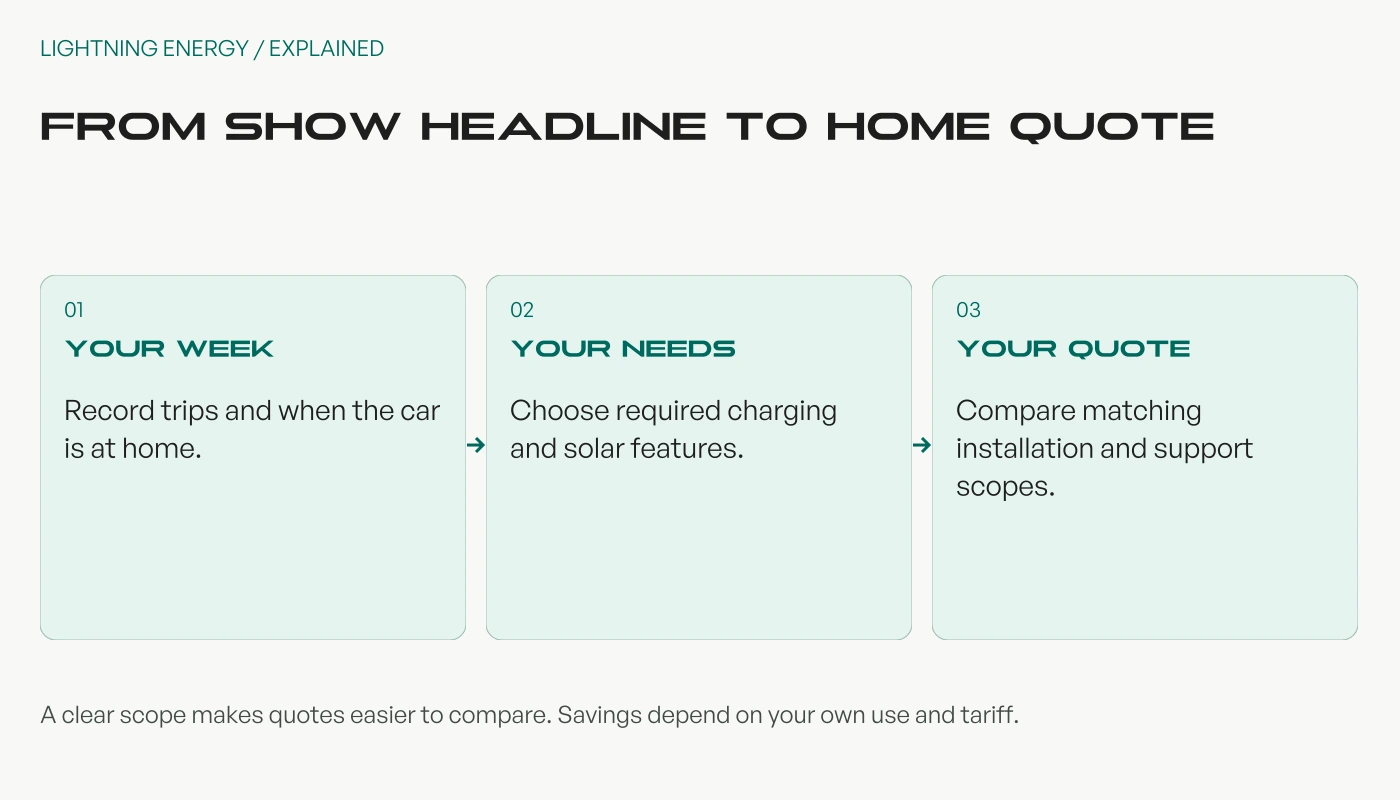
We would compare these chargers against a normal week of travel. Record when the car is home, the energy it needs before the next trip and whether that overlaps with solar generation or cheaper electricity hours.
Then request two quotes with the same scope. Include the required solar features, cable reach, installation work, commissioning and support. That gives you a clearer comparison than a product-only price.
This article does not rank long-term reliability or claim a hands-on test of either charger. Manufacturer specifications establish the advertised features; the installation design and your use determine how those features help.
Contact Lightning Energy with your vehicle model, parking photos, existing solar details and electricity plan. We can discuss a charging assessment and the scope an installation quote should cover.
Available times
Book a consultation and we'll map solar, storage, hot water, and the rebates around your bills and your goals.
Question 1 of 6
