
Heat pump drainage: where do condensate and relief water go?
Condensate and relief-valve discharge are different water flows. Ask your heat pump installer to explain where each goes and what to observe after handover.
Condensate and relief-valve discharge are different water flows. Ask your heat pump installer to explain where each goes and what to observe after handover.

Water near a heat pump is not enough information to diagnose a leak. Condensation, relief-valve discharge and an actual plumbing fault are different possibilities.
The installation should have an assessed drainage arrangement for the selected equipment. At handover, ask the installer to identify each visible discharge point and explain what is normal for that model.
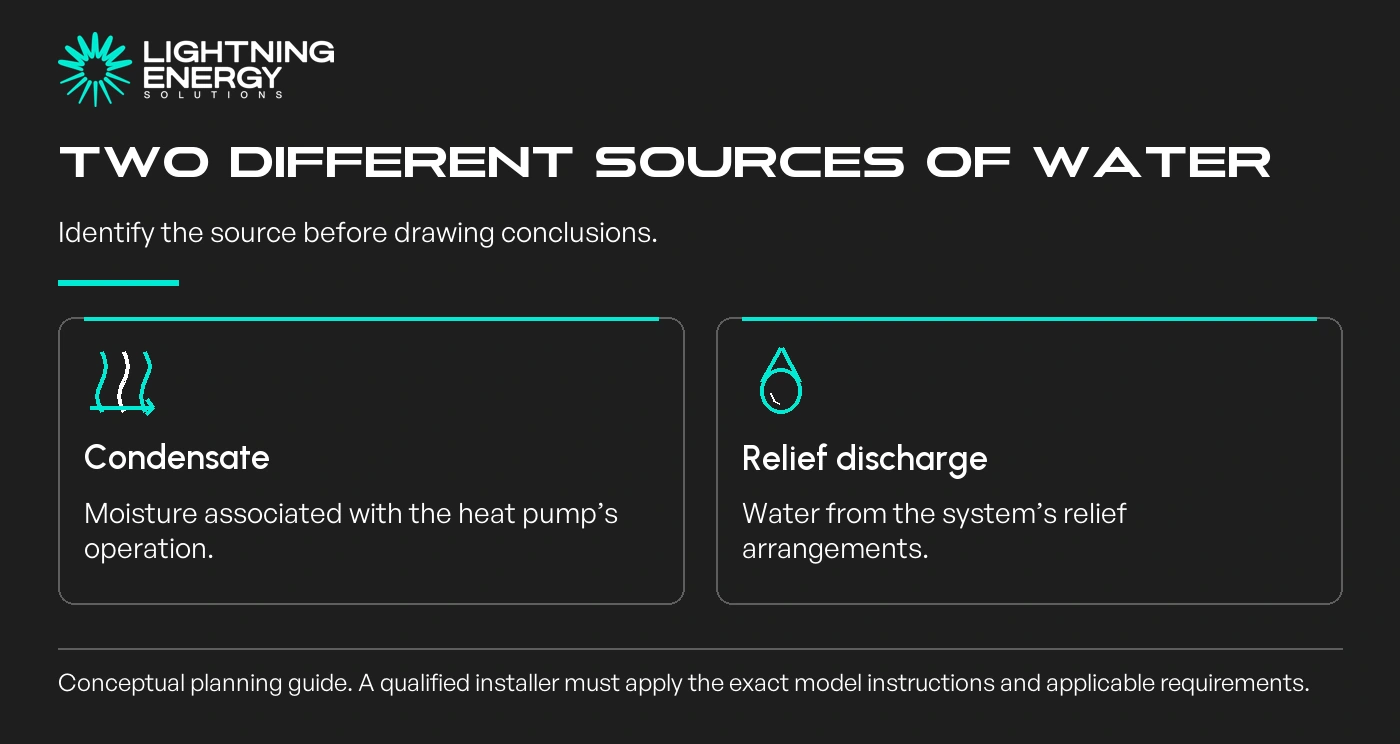
Condensate comes from moisture collecting as the heat pump works with surrounding air. It is separate from the household’s stored hot water and its pressure-relief arrangement.
Relief valves perform a different function in the water system. Their discharge must not be treated as an inconvenient drip to plug or redirect casually.
Haier Monoblock installation guide. This identifies condensate and relief drainage separately.
It also warns against blocked drains. See the Haier range for product context. Other products need their own installation instructions applied.
If you are comparing heat pump systems, ask each installer to include drainage in the scope rather than assuming the existing heater’s arrangement can simply be reused.
A short hose pointing toward the ground is not a complete explanation. Ask the installer to show the proposed discharge route and why it is suitable for the site and appliance.
Consider nearby paths, walls, foundations and areas used by children or pets. The responsible installer should account for relevant temperature, flow and drainage requirements.
For an illustrative site, a narrow side passage also serves as the main access to the garden. The design should address water management before the passage becomes wet during ordinary operation.
This is a planning discussion, not a guide to joining pipes. Combining discharge lines or modifying relief arrangements requires the appropriate professional design and installation.
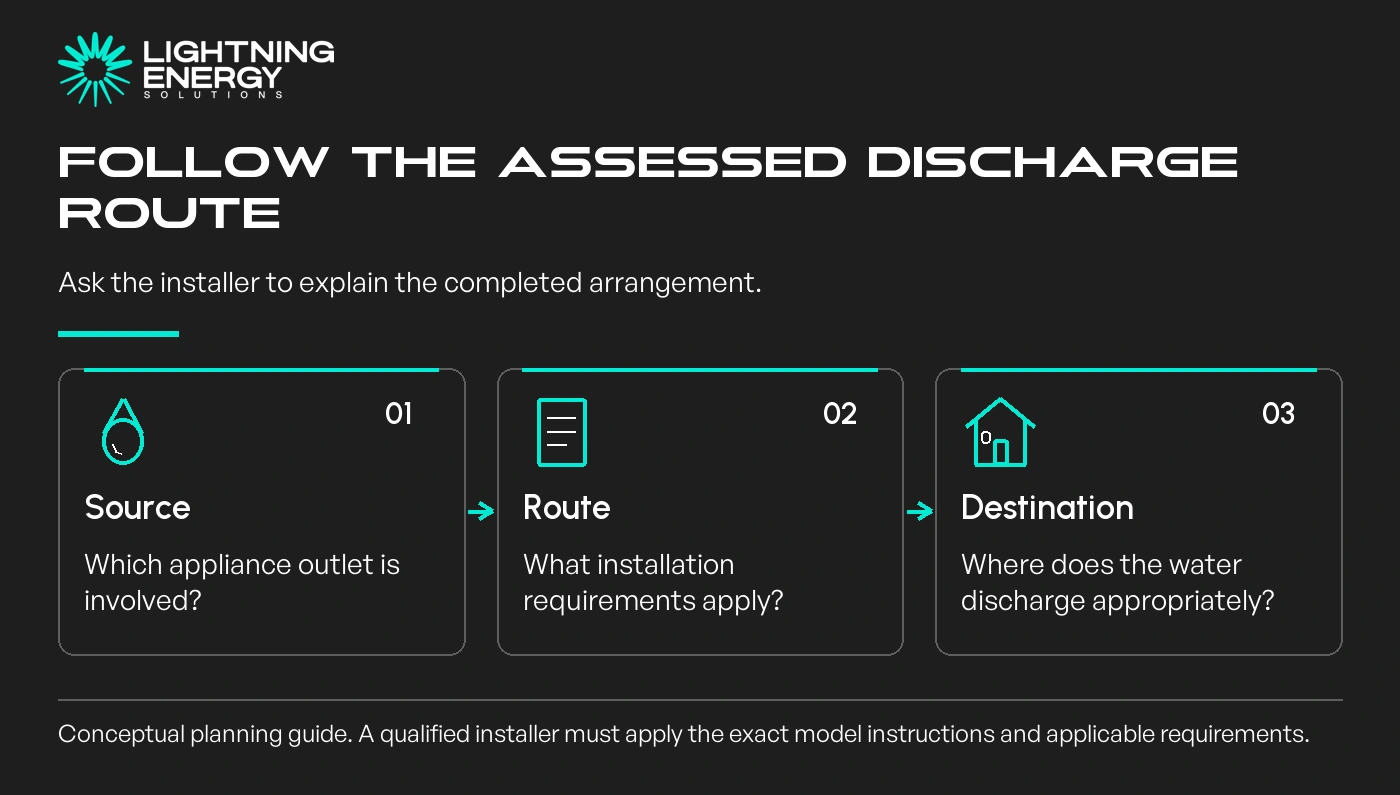
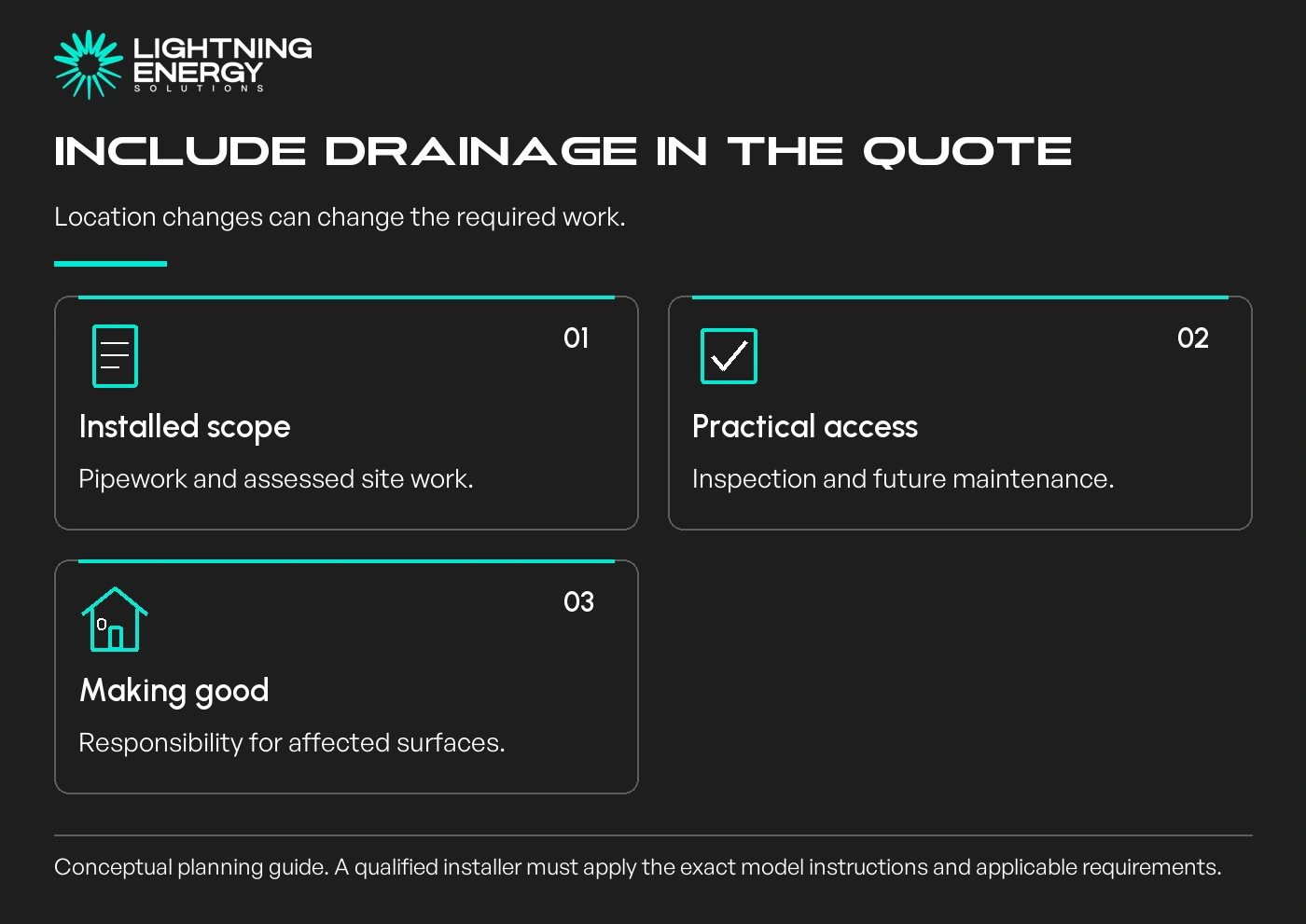
Ask whether the price includes all necessary pipework, any assessed drainage work and making good. Identify any provisional item before installation day.
If the proposed heater location changes, revisit drainage with it, including any whole-home upgrade plan.
A position that improves airflow or noise may require a different route for water discharge.
Include access for inspection and maintenance. An arrangement hidden behind permanent storage can make it harder to notice a developing problem or complete later service work.
The installer-selection process should include discussion of the site and scope. Solar Victoria’s installer guidance.
Keep the accepted scope with the equipment schedule.
Ask the installer to demonstrate the owner checks permitted by the manual. Record the difference between expected operation and the symptoms that should prompt a service call.
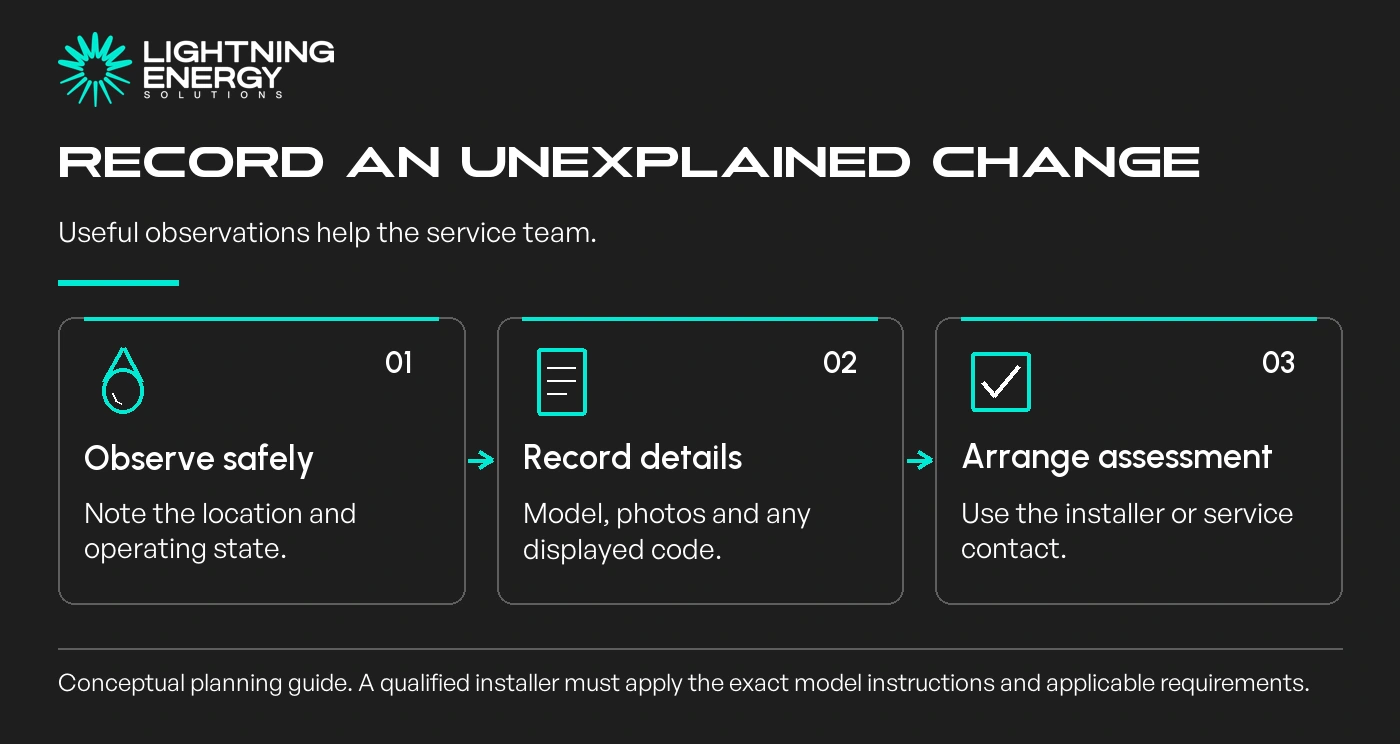
If you notice a change, record where the water appears, whether the appliance is operating and any displayed fault code. Photographs taken from a safe position can help the service team.
Avoid concluding that every puddle is harmless condensation. Equally, an expected discharge does not by itself establish a failed tank. The source and operating circumstances matter.
Use our service request page to arrange assessment when behaviour is unexplained. Do not remove covers, cap an outlet or interfere with a safety valve.
A simple labelled site photo can be more useful than trying to remember a verbal explanation months later. Ask the installer to identify the relevant outlets and service contact at handover.
We would expect drainage to be resolved as part of a completed installation, with clear responsibility for any outstanding work. Leaving it as an informal owner task creates avoidable confusion.
Contact Lightning Energy with the model details and observations if you need help assessing a proposal. The useful starting point is the actual route and site, rather than a generic plumbing sketch.
Available times
Book a consultation and we'll map solar, storage, hot water, and the rebates around your bills and your goals.
Question 1 of 6