
Heat Pump Hot Water Handover: What to Check Before the Installer Leaves
Use a heat pump handover checklist covering owner controls, timers, first hot water, equipment records, required certificates, maintenance and fault support.
Use a heat pump handover checklist covering owner controls, timers, first hot water, equipment records, required certificates, maintenance and fault support.

Before a heat pump installer leaves, ask for a working demonstration and a clear record of what has been installed. A quick instruction to download an app is not a complete handover.
You should know how to use the normal controls, when hot water will be ready and who to contact if something is wrong. Leave technical commissioning and safety settings to the responsible trades.
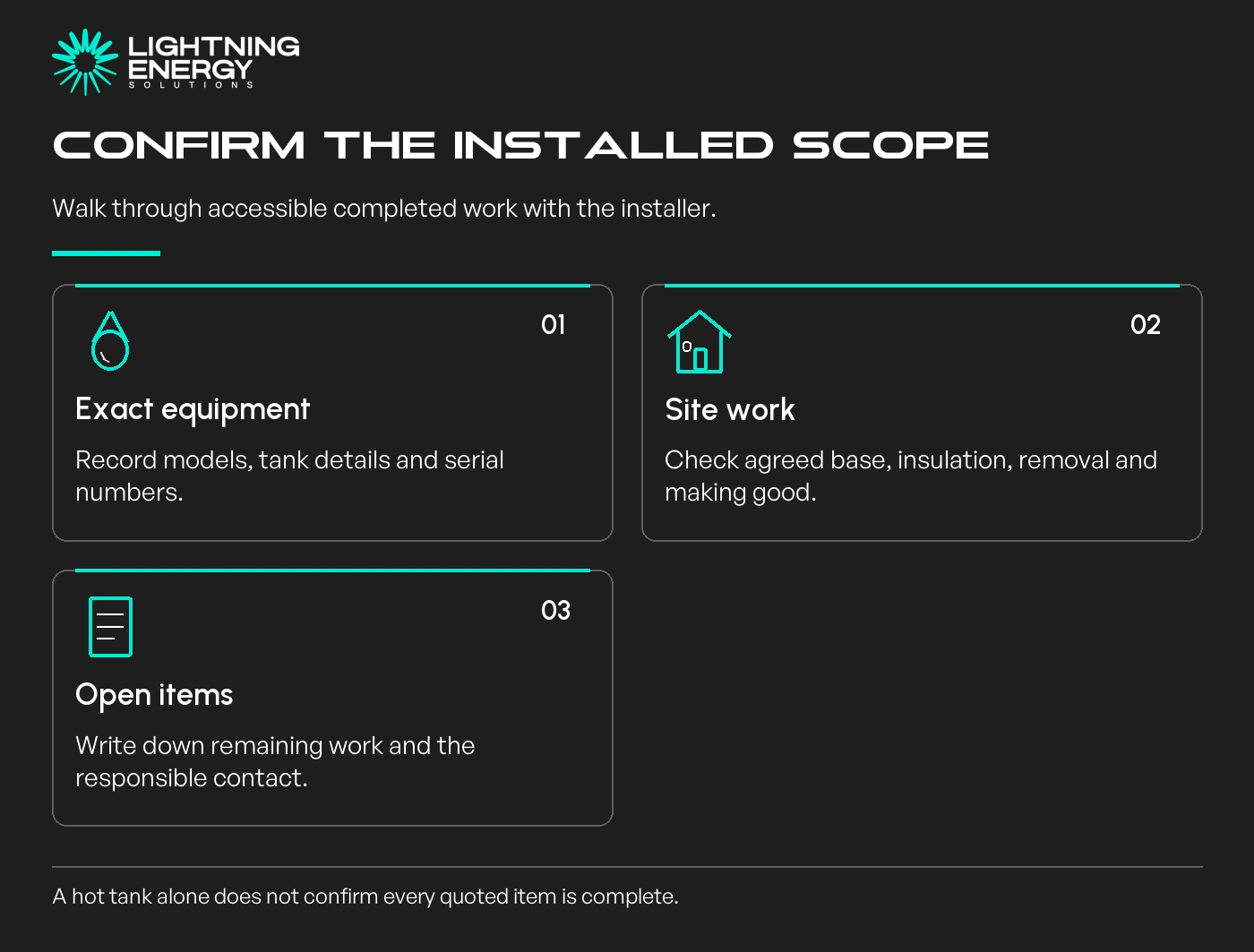
Compare the model and tank details with the accepted quote. Ask the installer to explain any agreed substitution and record the actual serial numbers.
Walk through the accessible parts of the installation together. Confirm that the promised base, pipe insulation, removal and making good are complete, with outstanding items written down.
Ask where normal condensate and relief discharge go, and how to recognise a problem. Do not test valves, open covers or alter pipework without the specific owner instructions and installer demonstration.
For an illustrative replacement, a working tank does not resolve an old heater left in the side path if disposal formed part of the quote. Record a date and responsible contact for the remaining work.
Our heat pump installation information is a starting point; your signed scope is the relevant record of what this installation includes.
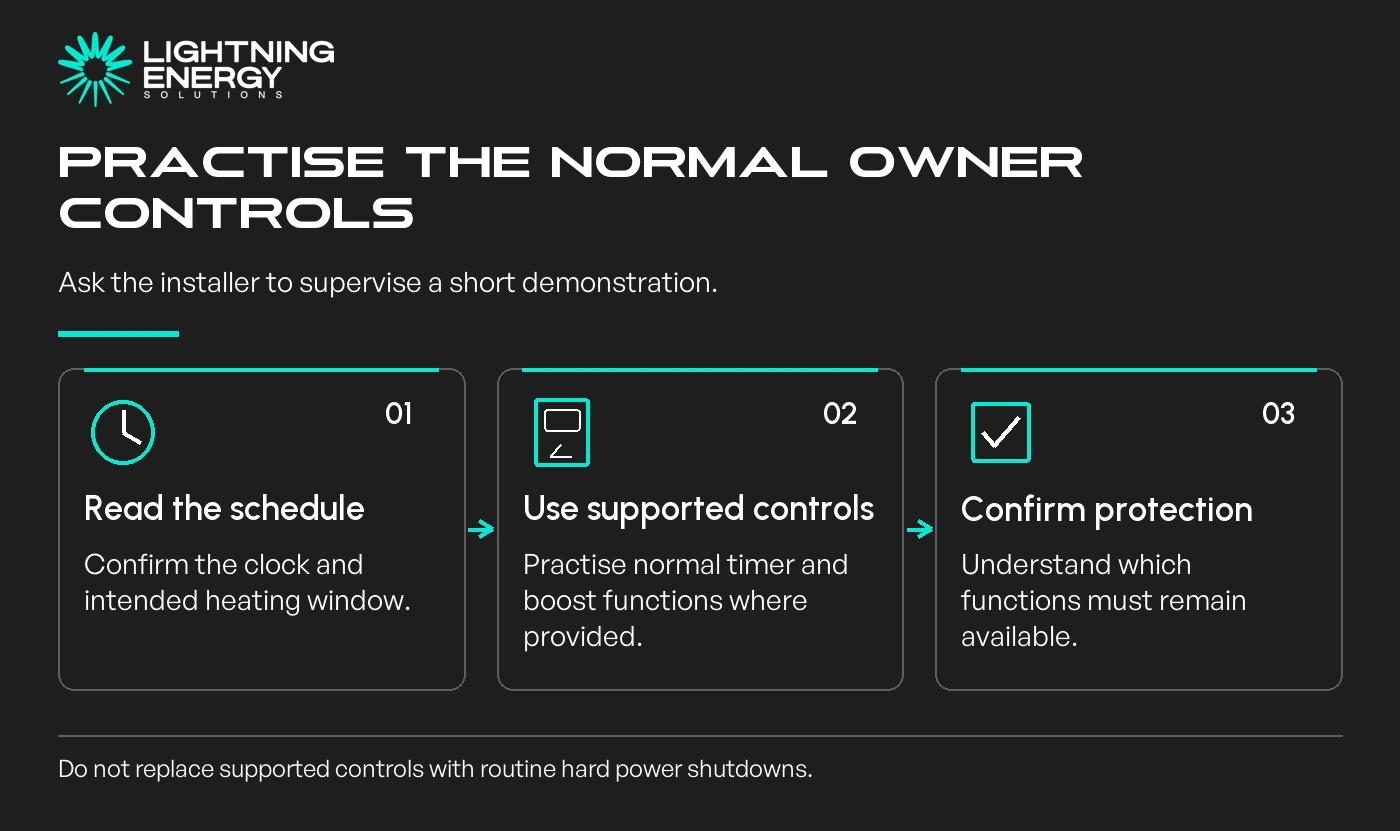
Ask the installer to show the current time, normal heating window and any supported owner boost function. Then operate the normal controls yourself while they are present.
For a solar household, discuss the daytime operating schedule, including how winter demand or visitors may change it.
A programme-compliant timer must not prevent the system’s required protective functions or necessary heating outside the selected window. Solar Victoria addresses these capabilities in its current product requirements.
Hot water control requirements.
Do not substitute a household power timer or routine hard shutdown for the manufacturer’s supported controls. Ask how the chosen settings preserve the model’s hygiene and protective operation.
Confirm who can access the app and what still works if home internet is unavailable. Record the owner login securely, without sharing passwords in a group email.
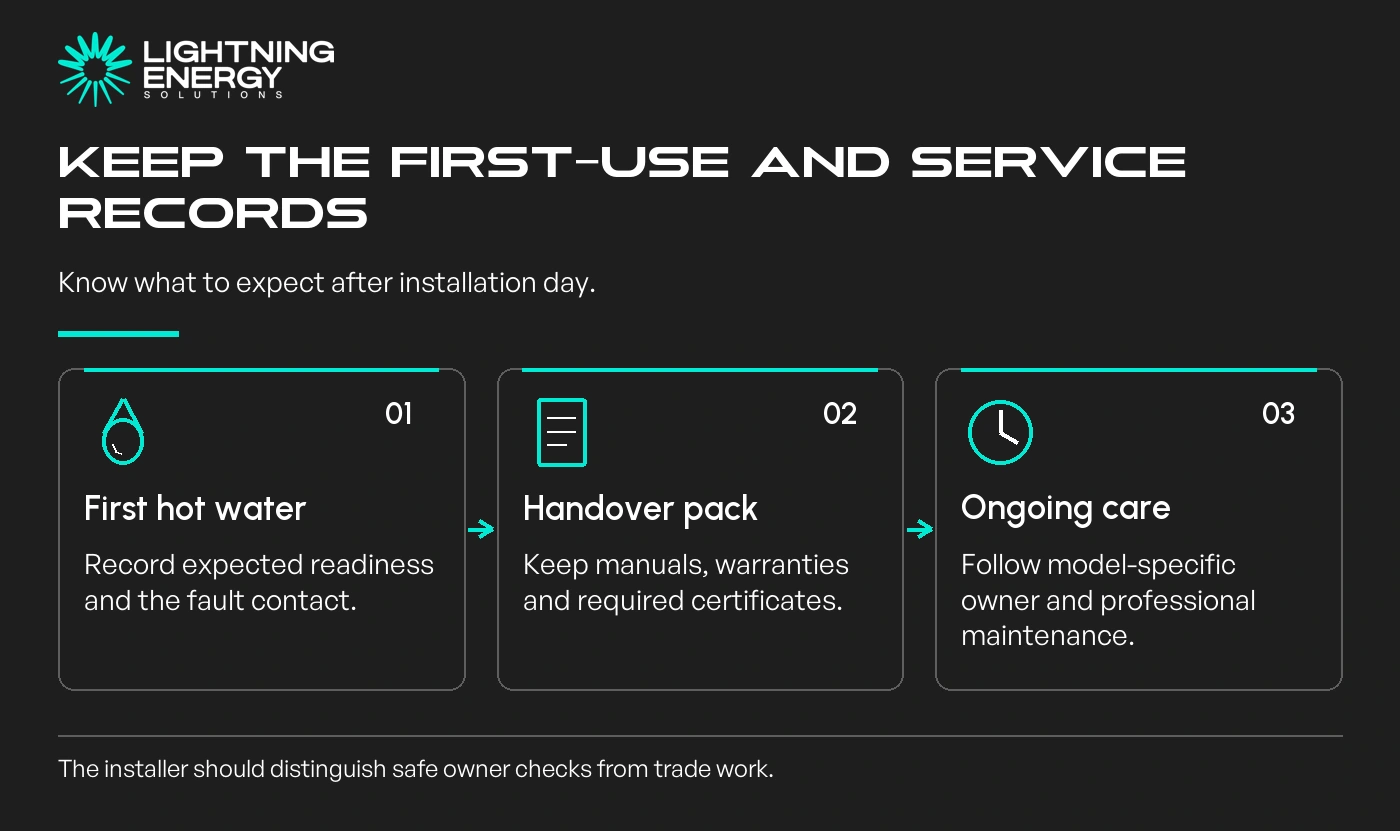
Ask when the first heating cycle should finish and what to do if hot water is still unavailable. The answer should account for the actual tank state and commissioned settings, not a generic promise.
Request the owner manual, warranty terms, invoice, model records and required compliance documentation. Electrical installation work requires a Certificate of Electrical Safety in Victoria.
Energy Safe Victoria’s certificate guidance.
Have the installer distinguish safe owner checks from professional servicing. Note the maintenance schedule and any site-specific requirements rather than assuming every heat pump needs the same tasks.
Keep these records with other home electrification documents. Future service is easier when the exact equipment and responsible businesses are known.
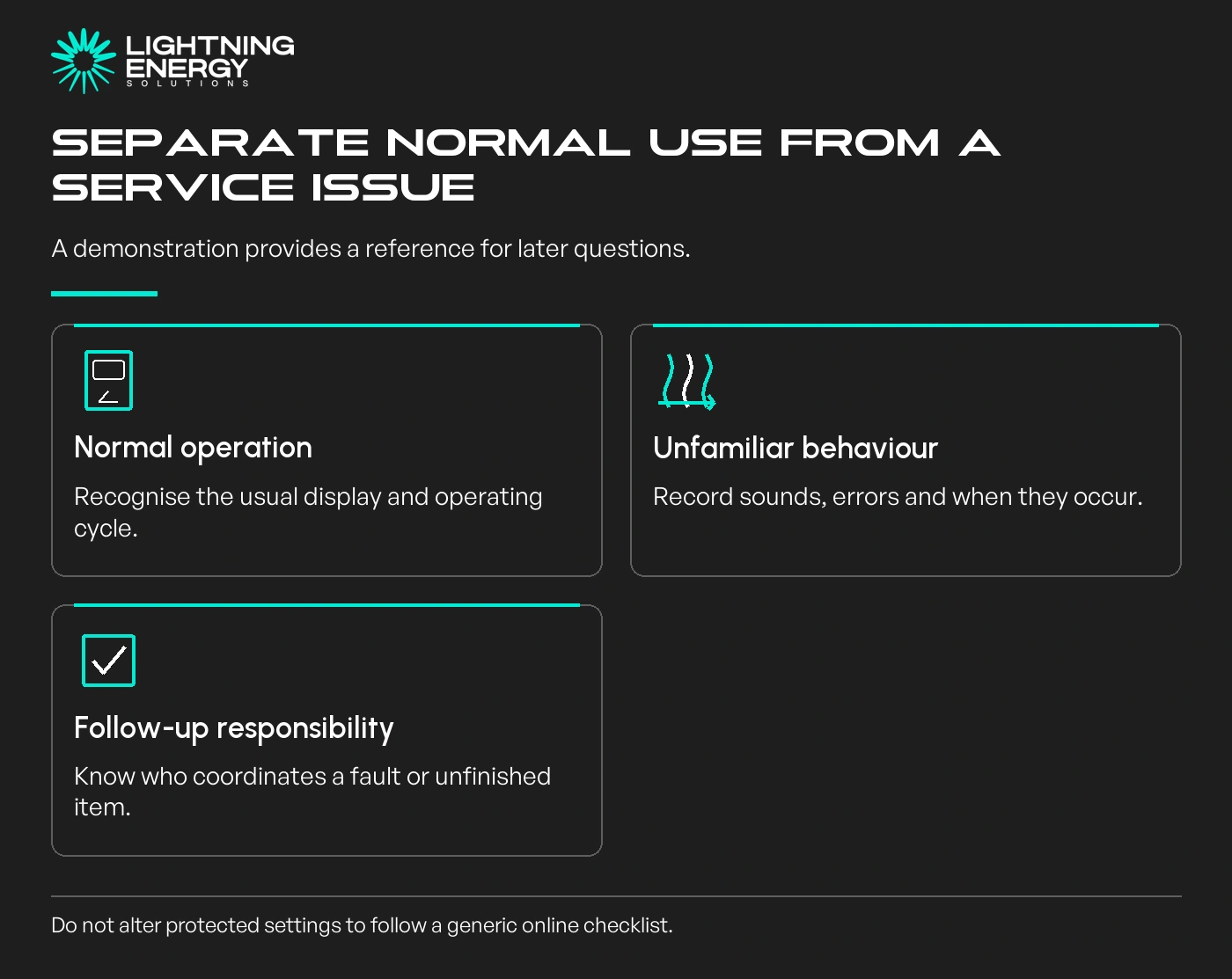
Save a contact for hot water problems and a separate emergency route where appropriate. Ask who coordinates a fault involving more than one trade or equipment supplier.
Record any missing document or unfinished work, the person responsible and the agreed follow-up date. Do not describe an unresolved commissioning concern as merely cosmetic to close the job quickly.
If the system makes an unfamiliar sound or displays an error, ask for an explanation while the installer is there. A normal operating demonstration gives you a useful reference for later changes.
There is no need to memorise a technical manual on the driveway. Ask for the key operating steps in writing and enough time to practise the supported owner controls.
Do not change protected settings to make the system match a generic online checklist. The handover should explain the specific equipment installed at your property.
If handover information is missing, request a documented follow-up with the model and installation details. A complete record supports safe everyday use and a clear service response.
Available times
Book a consultation and we'll map solar, storage, hot water, and the rebates around your bills and your goals.
Question 1 of 6
