
Home Battery or Mortgage Offset: Compare the Opportunity Cost
Compare a home battery with keeping cash in your mortgage offset using the same budget, realistic energy benefits, interest assumptions and time horizon.
Compare a home battery with keeping cash in your mortgage offset using the same budget, realistic energy benefits, interest assumptions and time horizon.

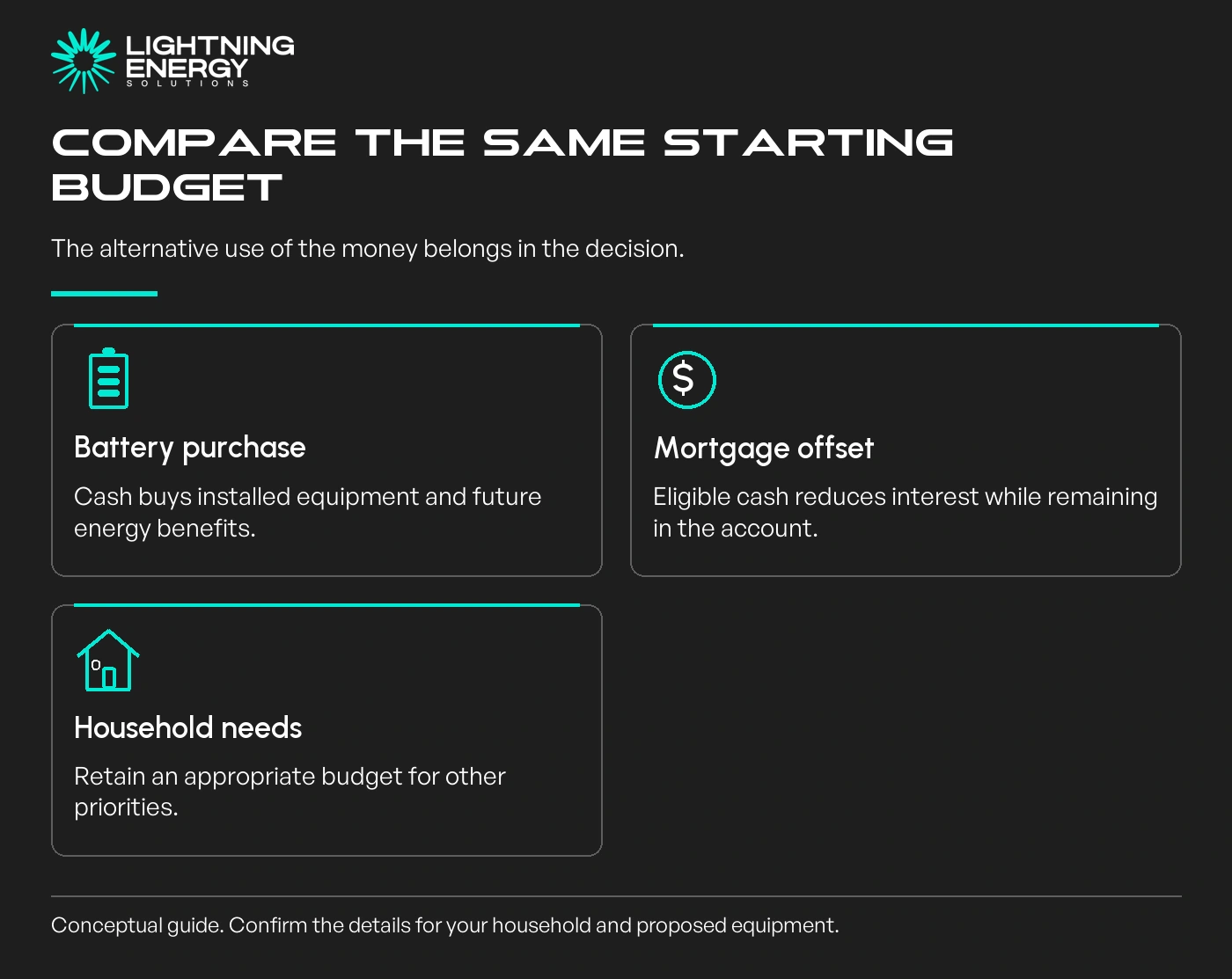
Buying a battery uses money that could remain available for other purposes, including a mortgage offset. Comparing those alternatives is useful, but a battery savings estimate and a mortgage interest rate are not directly interchangeable.
Start with your actual additional battery cost after confirmed incentives and required installation work. If solar is being installed too, separate the solar-only cost and benefits from the extra storage investment.
ASIC Moneysmart explains that an offset account reduces the loan balance on which interest is calculated. Check whether yours is a full or partial offset and whether fees or a higher loan rate affect the benefit.
Moneysmart mortgage offset guidance.
ASIC also recommends checking that the account is correctly linked and still reducing interest after mortgage changes. The word offset on a bank product does not replace checking the actual arrangement.
Our battery cost guide helps establish the installation amount to compare. Use the final quote, not an advertised battery-only price.
Suppose a hypothetical battery costs $10,000 and that money could remain in a fully effective offset against a loan charging 6% for a year. The simple interest effect is approximately $600 over that year.
That illustration assumes the full balance stays available to offset throughout the year, the rate remains constant and the linked loan balance is sufficient. Real lenders calculate interest under their own account terms.
Now suppose an independently checked battery model estimates $850 in first-year net operating benefit. Comparing $850 with $600 shows only a $250 first-year difference under those assumptions.
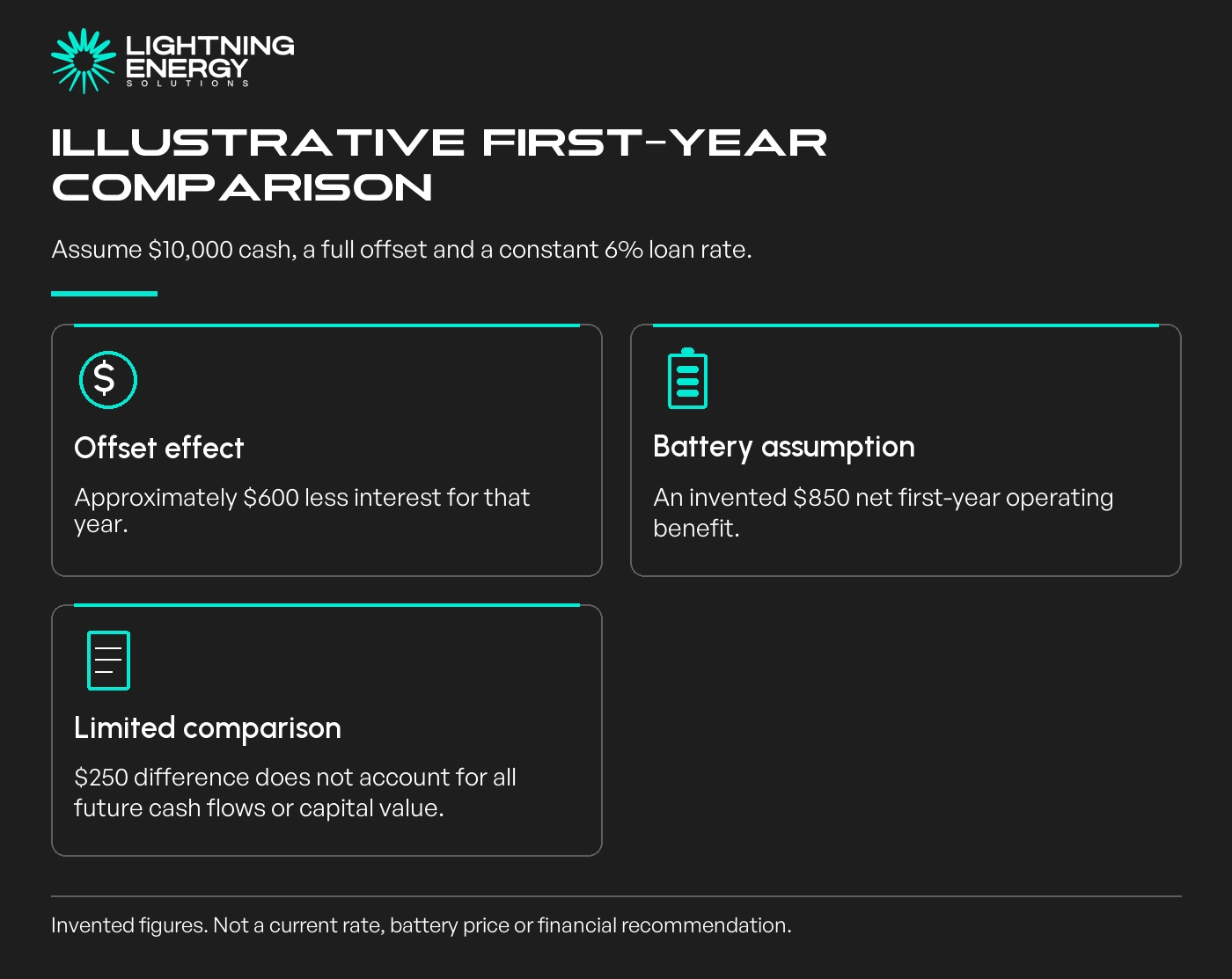
It does not prove the battery is the better investment. The battery uses the purchase capital, while cash retained in the offset remains an accessible asset subject to account terms.
Longer-term cash flows and remaining equipment value still matter.
The figures are invented to explain the comparison, not current prices, rates or a recommended return threshold.
Estimate the improvement against the same home without the battery. Do not attribute savings already delivered by existing solar to the new storage purchase.
Allow for conversion losses, forgone solar export credits, realistic seasonal use, fees and any expected service costs. Treat uncertain trading rewards separately from the household's ordinary bill reduction.
Our battery value guide covers that baseline. One excellent summer month is not a sound annual forecast.
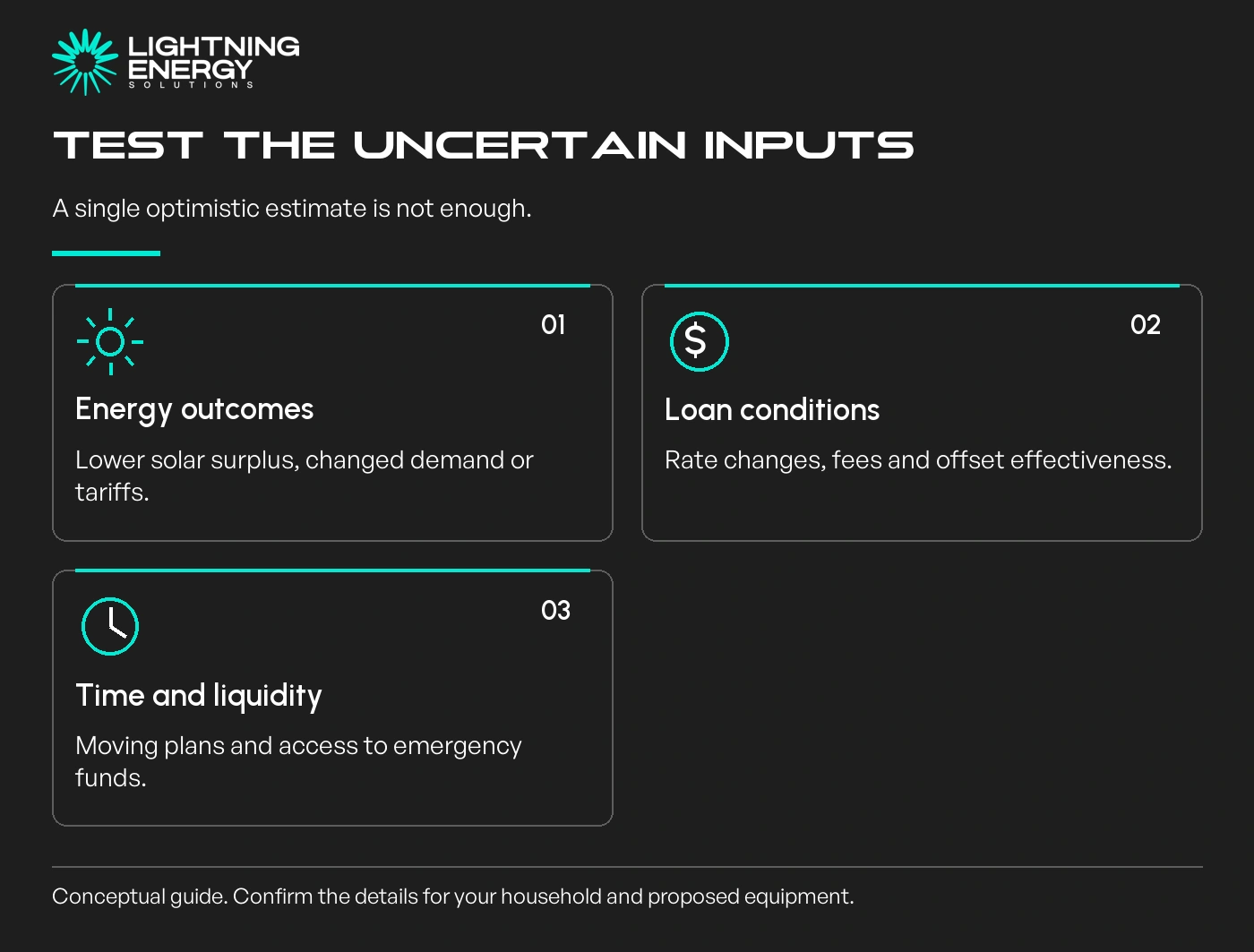
Test lower battery benefits and changed mortgage rates rather than relying on one favourable scenario. Consider whether you may move before the assumed benefit period or need cash for essential repairs.
Keeping funds available can matter as much as the expected return. A battery cannot normally be turned back into the original purchase cash quickly or without cost.
If a comparison uses discounted cash flows, apply a consistent method and avoid counting the same financing effect twice. A suitably qualified adviser can help with the household's mortgage, tax and financial circumstances.
Outage support may be worth paying for even when it does not win a narrow financial comparison. Put a considered value on the actual backed-up loads instead of treating resilience as an unlimited cash saving.
A battery assessment can establish what that backup would provide. It should not be used to justify an installation beyond the household's affordable budget.
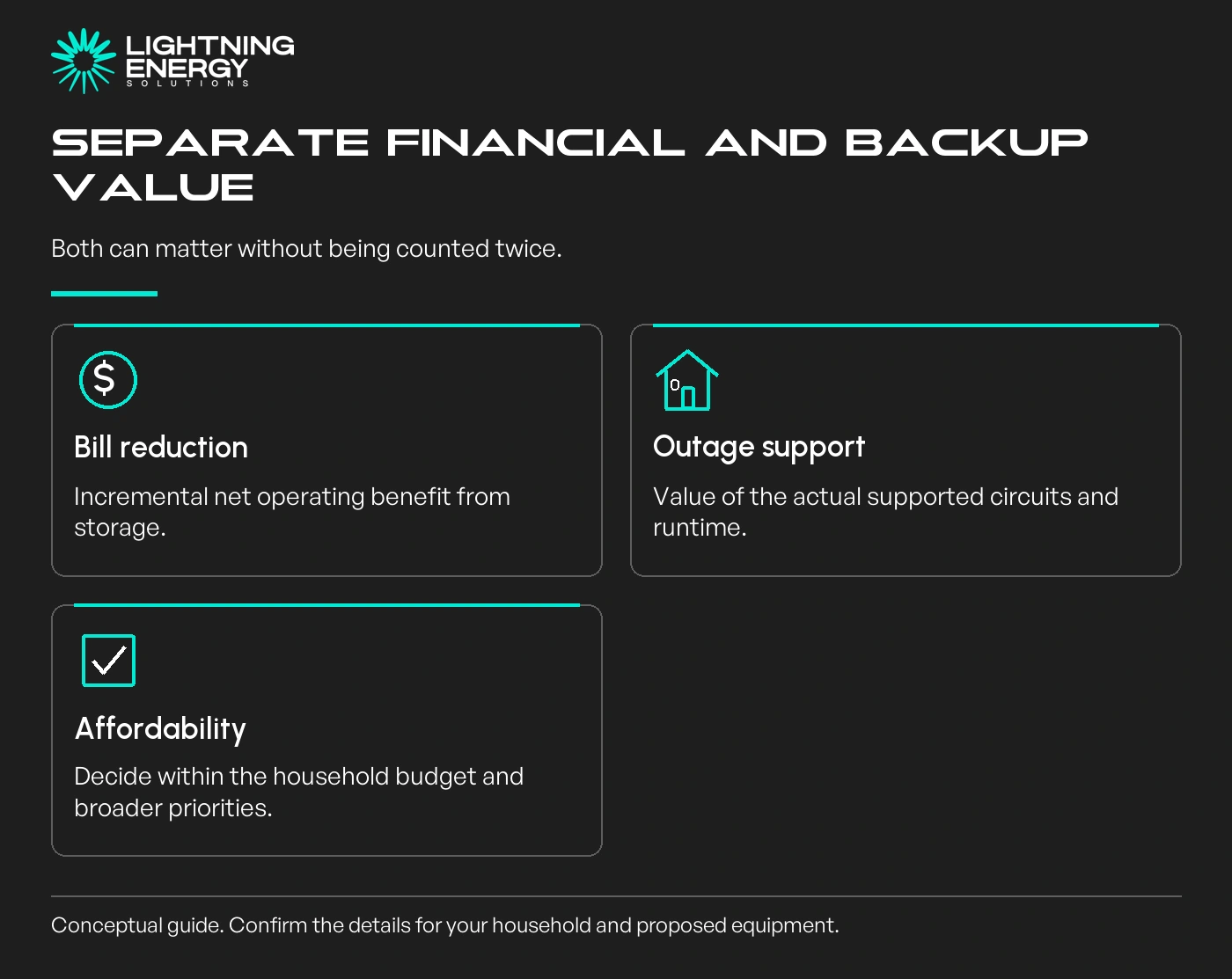
There is no universal answer that a battery always beats an offset or vice versa. Decide using the same starting budget, a realistic time horizon and clear treatment of uncertainty and accessible savings.
Plan your battery upgradeBring the final battery cost and your energy data. We can explain the installation's energy and backup case so you can compare it with your other financial priorities.Available times
Book a consultation and we'll map solar, storage, hot water, and the rebates around your bills and your goals.
Question 1 of 6
