Home Battery Cost in 2026: What You'll Actually Pay After the Federal Discount
Most battery price guides quote the sticker price. That's not what you pay. Here's what a home battery actually costs installed in 2026, after the federal discount, broken down by size and brand, with the extras you need to budget for and how to spot a quote that's hiding something.
LLukeLightning Energy25 August 2026 · 17 min read
Most people searching 'home battery cost' aren't looking for an explainer on how the federal program works. They want to know what it's going to cost them. So here it is, upfront: an 8kWh battery system installed in Victoria in 2026 runs somewhere between $5,000 and $7,000 after the federal discount comes off. A 13.5kWh Tesla Powerwall 3 lands between $6,500 and $9,500. If those numbers are lower than you were expecting, that's the point. The discount is real and it's meaningful.
But there's a gap between what gets quoted and what people actually end up paying. And there's a difference between the cheapest installed price and the cheapest battery over 10 years. That's what this article is really about. I'll give you the numbers, show you what goes into them, and be straight with you about what to watch for.
The number you're actually looking for
Let me give you the real installed price ranges with the federal discount already taken off. These are genuine numbers from real quotes, not manufacturer RRP or advertised pricing.
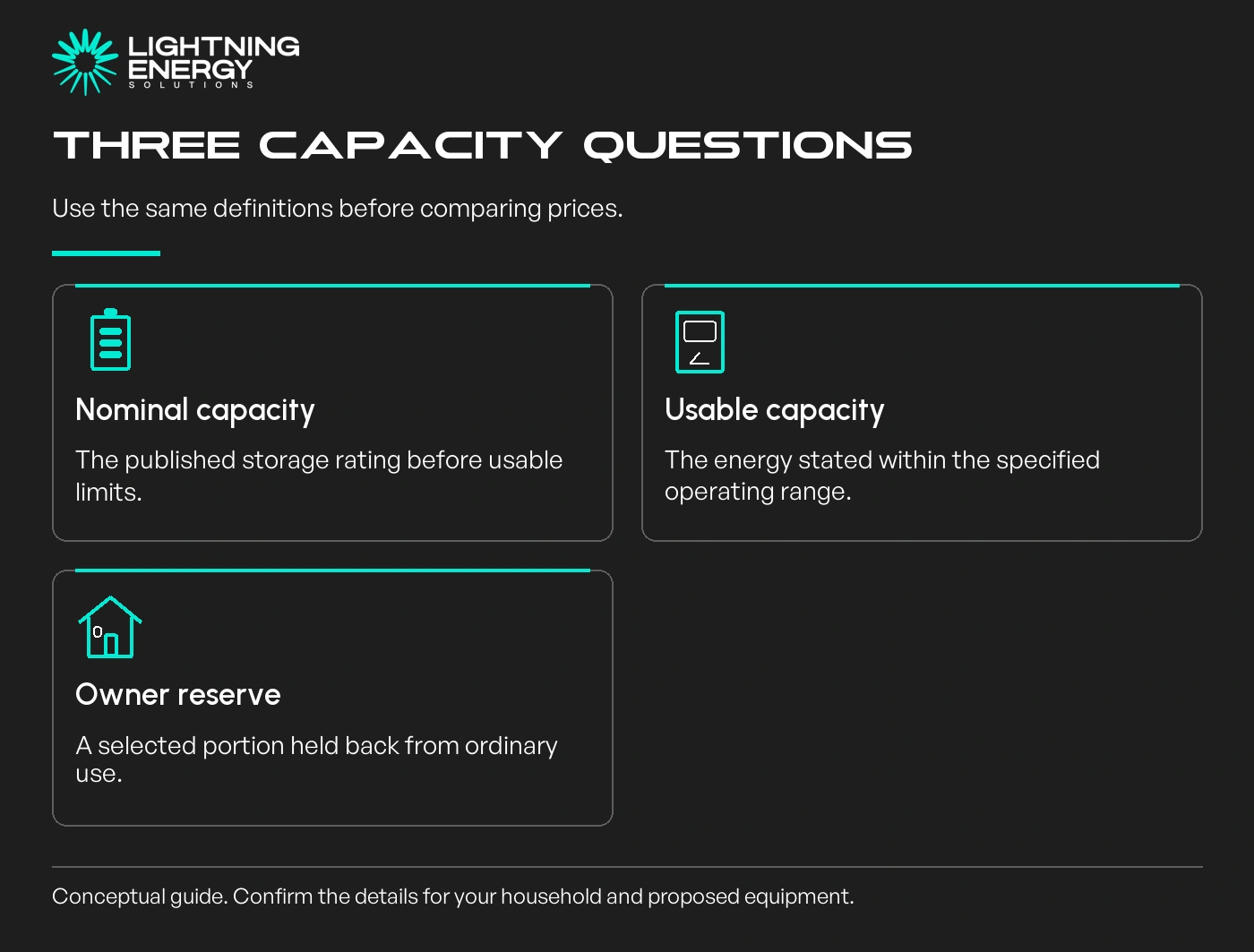
An 8kWh system
$5,000–$7,0008kWh installed, after rebateStandard residential job in Victoria. Includes labour, cabling, and commissioning.
This covers most standard Victorian households. One 8kWh module, a compatible hybrid inverter if you don't already have one, and a straightforward single-phase install. The range reflects switchboard condition and how clean the cabling run is.
A 13.5kWh system (Tesla Powerwall 3)
$6,500–$9,50013.5kWh (Powerwall 3) installed, after rebateBuilt-in inverter, Backup Gateway included.
The Powerwall 3 has a built-in solar inverter, so that's one less separate piece of hardware on the job. The Backup Gateway is included, not an add-on. The lower end of that range is a clean, uncomplicated install. The higher end reflects a more involved switchboard or a three-phase property.
Two SigenStor modules stacked together. The right size if you've got an EV or consistently high evening usage. Worth knowing: the federal rebate steps down above 14kWh, so the second module gets proportionally less off the invoice. Make sure you genuinely need the capacity before committing to the extra cost.
The spread on each of those is real. An 8kWh job can come in at $5,000 or $7,500 depending on what the install actually involves. So let me show you what moves that number.
What 'installed' actually includes
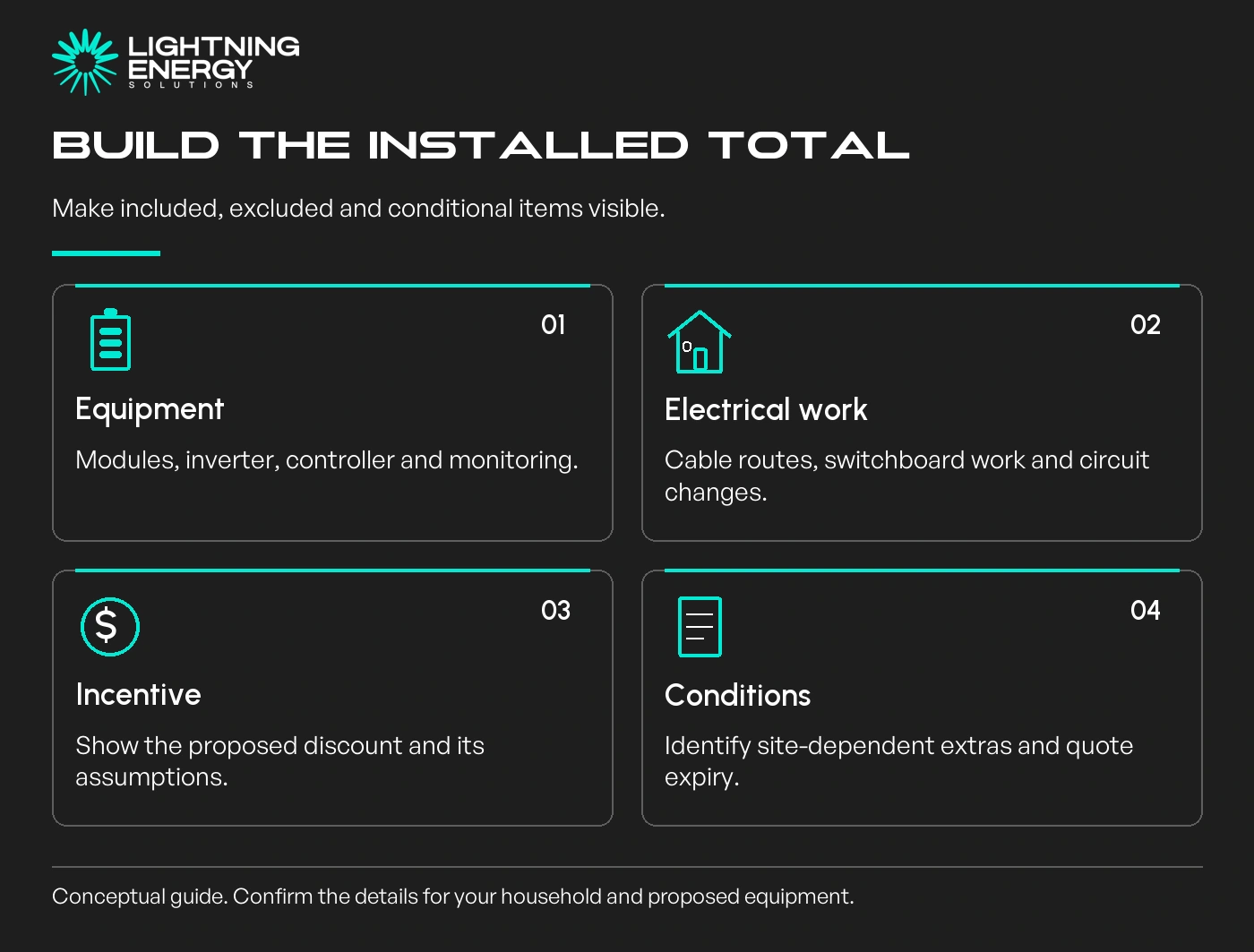
Most battery pricing you find online is hardware-only. The battery module, sometimes the inverter. That's not installed. Installed means the whole job, and here's what goes into it:
The battery module itself
A hybrid inverter, if you don't already have a compatible one (this alone adds $1,500 to $3,000 to the job)
Labour: typically a full day for a standard install, longer for complex jobs
Switchboard assessment, and any upgrade work required
Cabling and conduit between the inverter, battery, and switchboard
Electrical certificate and grid connection notification
Commissioning and monitoring setup
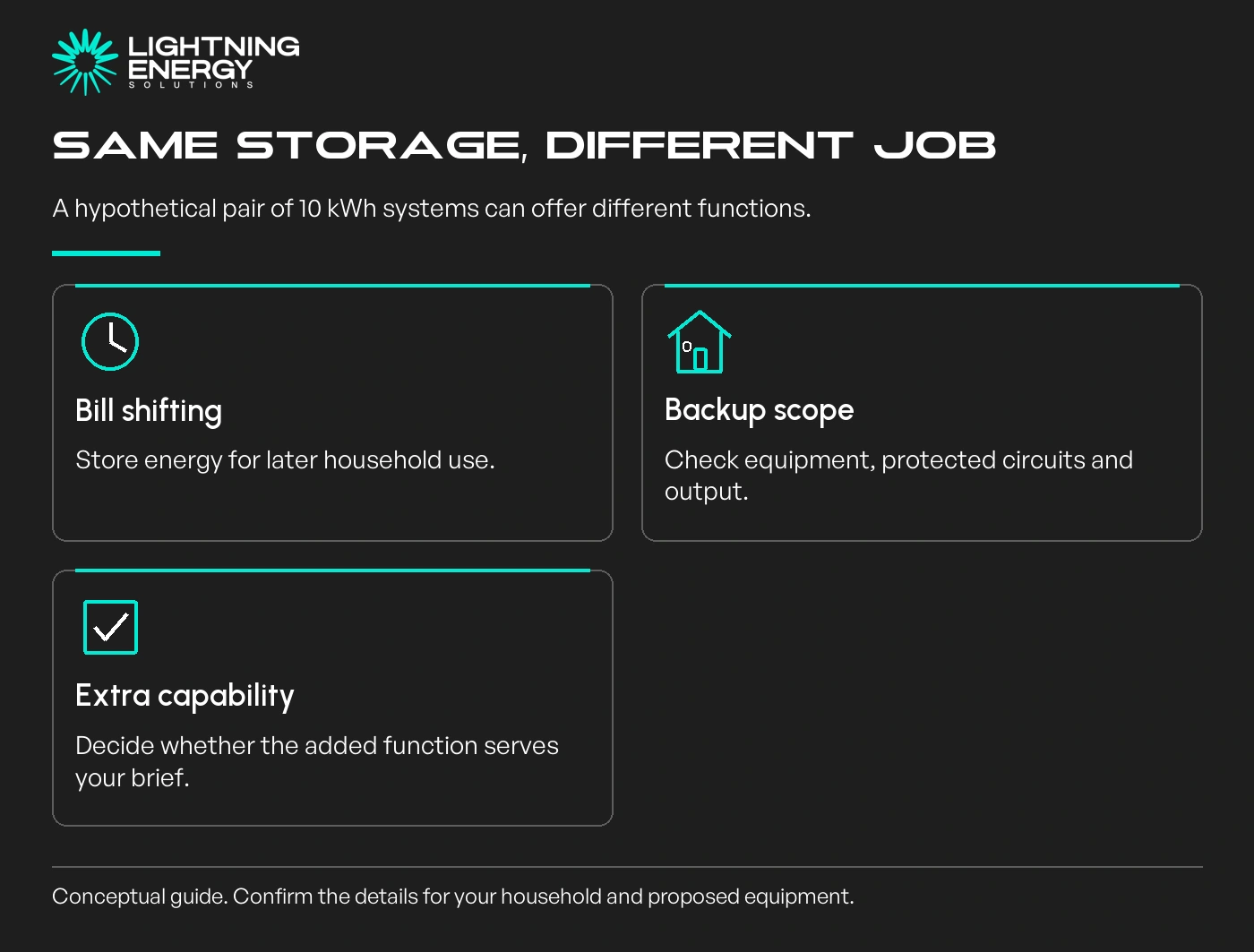
A bare 8kWh battery module might sit at $3,500 to $4,500 as a component. The same job installed is $7,000 to $9,000 before the rebate comes off. That gap is real, and it's where a lot of comparison shopping goes wrong. People see two prices and think they're comparing the same thing. They're not.
A finished install: battery, hybrid inverter, and switchboard in one clean wall setup.
What the federal discount actually takes off
I'm not going to go deep on the program mechanics here. I've covered it properly in the Cheaper Home Batteries Program article if you want the full picture. But here's what the discount actually takes off your invoice, by system size.
These numbers assume an STC price of around $37, which is where it's been sitting through mid-2026. It moves between $35 and $40, so your actual figure will be close but not identical.
8kWh battery: approximately $2,000 off your invoice
10kWh battery: approximately $2,500 off
13.5kWh (Tesla Powerwall 3): approximately $3,400 off
16kWh (2 x 8kWh modules): approximately $3,850 off
The rate is tiered, not flat. The first 14kWh gets the best rate (around $252 per kWh). Above that it steps down to around $151 per kWh, then lower again above 28kWh. So the rebate keeps coming as you go bigger, but it adds noticeably less per kWh. The sweet spot for value is under 14kWh. Above that, make sure you genuinely need the extra capacity.
Does the rebate mean you can afford a better battery?
This is a conversation I have with customers more than almost any other right now, and it's worth saying clearly.
Before the federal program, a Tesla Powerwall 3 at roughly $13,000 installed was about $5,000 more than a comparable 8kWh alternative. That gap made the decision for most people. The Powerwall was the premium choice and they went with something cheaper.
After the rebate, the gap closes. The Powerwall 3 comes down by roughly $3,400. An 8kWh system comes down by roughly $2,000. The net difference shrinks to about $3,000 to $3,500. For some people, that still settles it. But for someone who's planning to stay in their house for 15 years, wants genuine backup capability, and would have stretched to the Powerwall anyway: the rebate made that decision a lot easier. So yes, in some cases the discount genuinely tips a premium product into reach. Don't just apply it to the cheapest option and move on. Apply it to the right option for your situation, and see what that number looks like.
“
Don't just apply the rebate to the cheapest option. Apply it to the right option for your situation, then see what the number looks like.
What I install, and what it actually costs
I keep a short list on purpose. These are the batteries I install, the reasons why, and honest installed price ranges for each after the federal discount. All are CEC approved, all qualify for the rebate, and all have genuine Australian support behind them.
A standard battery install day: one electrician, one day, your garage wall.
The SigenStor is where I start with most customers who aren't sure whether 8 or 16kWh is right for them. Start with one module, add a second later when your usage grows or you add an EV. You don't need to commit to the full size upfront, and you don't need a new inverter when you expand. We've got 30 in stock right now, so lead times are realistic. The Sigenergy support here in Australia has been solid.
If you've already got a GoodWe hybrid inverter, this is the obvious next step. Keeps everything on one warranty and one support conversation if something goes wrong. LFP chemistry is the right call for longevity, IP66 means it can go indoors or outdoors, and the installed cost is genuinely good value for what you're getting.
I've got two of these on my own house alongside a 12kW solar system, so I'm not recommending this from a brochure. The built-in solar inverter means a cleaner install and one less potential failure point. The Backup Gateway is included, not an optional extra. Storm Watch, time-of-use charging, and the app all work the way they're supposed to. After the $3,400 rebate, you're looking at $6,500 to $9,500 installed depending on your setup. It costs more. It also genuinely delivers more. I haven't had a customer regret a Powerwall 3.
Quoted price vs what you actually end up paying
We get calls every week from people trying to make sense of a quote that tells them almost nothing. Something like '$7,200 supply and install', no brand listed, no kWh capacity, no mention of whether the inverter is included, and not a word about the switchboard. They're trying to compare it against our quote, which itemises everything, and they can't work out why there's a $2,000 gap. Usually it's the inverter. Sometimes it's that the other quote hasn't even factored in the switchboard yet.
And that's before the day-of surprises. Here's what commonly moves the final invoice away from the number you signed on.
Your switchboard might need an upgrade
If your switchboard is old, undersized, or doesn't have spare breaker positions, it needs work before a battery can connect. This isn't optional. It's a safety and compliance requirement. Depending on the board, that adds $500 to $2,500 to the job. We always assess the switchboard before we quote. If another installer hasn't asked to look at it, ask them how they've actually priced that risk.
Where you want the battery changes the price
The further the battery sits from your inverter and switchboard, the more cable and conduit the job needs. If you want it in a shed or a detached garage, that changes the price. Make sure the quote is based on where you actually want it installed, not a default location the installer assumed.
Your existing inverter might not play ball
If you're adding storage to an existing solar system, not every inverter can talk to a battery. DC coupling is the cleaner option but needs a compatible hybrid inverter. AC coupling always works but adds a separate battery inverter to the bill. This needs to be clear in your quote before you agree to anything, not something you find out on install day.
Single phase or three phase?
Three-phase properties are more complex to install on. The hardware costs more and the labour takes longer. Typically adds $500 to $1,500 to the job. If your property is three-phase, make sure your quote reflects it from the start, not as a variation after you've signed.
An older switchboard may need upgrading before a battery can connect. A good installer tells you upfront.
The real cost of buying cheap
I say it to almost every customer who comes to us after chasing the cheapest quote first: BUY CHEAP, BUY TWICE! It's not just a saying. I've watched it play out enough times that I now bring it up before we even start talking about brands.
It's not the labour, it's the brand
The $2,000 difference between our quote and the one down the road usually isn't labour. It's the battery brand, and what's actually sitting behind that brand in Australia. Cheaper components, a warranty that looks solid on paper but has no real local claims process, and in some cases a distributor that won't exist in three years.
What actually happens when it goes wrong
I've watched this play out with customers who came to us after the fact. Someone buys a battery from a low-cost installer. Three or four years later, a cell group fails or the inverter throws a fault. They call the installer. The installer has closed. They contact the brand. The Australian distributor has changed hands, or closed, or the warranty process requires shipping hardware to an overseas service centre. What looked like a $2,000 saving at purchase has turned into an $8,000 problem: either a full system replacement at today's prices, or a costly retrofit to integrate different hardware.
That's not a hypothetical. It's a pattern I've seen more than once in this industry. The batteries I install all have genuine Australian warranty support behind them. When something goes wrong, there's a local team to call and a clear process to follow. That matters less in year one than it does in year four. Every battery I put on a wall has someone I can actually call.
So when does buying cheap actually make sense?
I'll be straight with you on this. If you're only planning on living at your home for another couple of years and just want to cut your bills before you move, or you're genuinely planning to upgrade the whole system in five years anyway, then a cheaper option might be the right call for your situation. I'm not going to sit here and tell you paying more is always the answer. That wouldn't be honest.
But if this is a long-term investment in your home, and for most people it is, then going cheap is the most expensive option on the table. Cutting costs on the product or the installation to save $2,000 upfront will almost certainly cause problems down the track. That saving only works if everything runs perfectly for a decade. With a budget brand and a rushed install, that's not something you can count on. Most of our customers have one goal: buy once, do it properly, and not think about it again for 15 years. If that's what you're after, the cheapest quote is almost never the one that gets you there.
“
The cheapest installed price isn't the cheapest battery over 10 years.
What a fair quote actually looks like
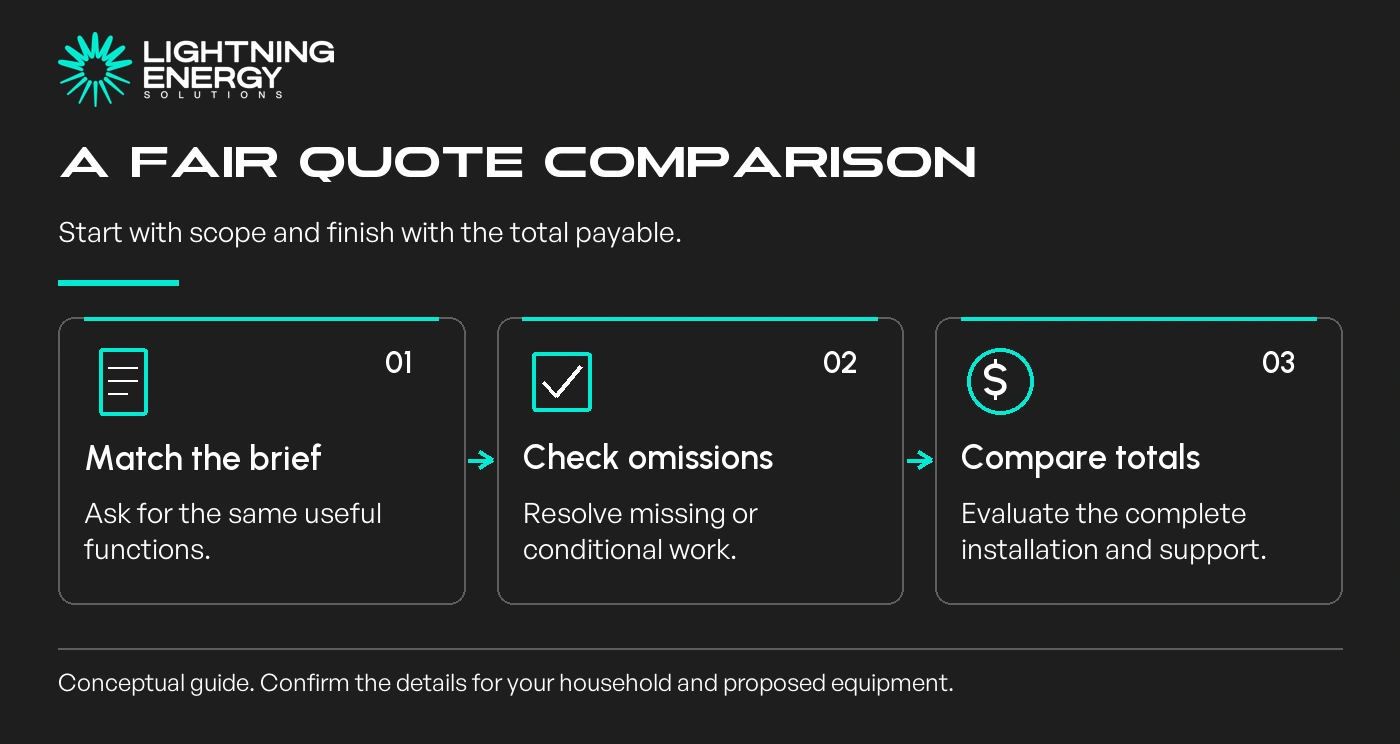
So let's talk about what should be in any battery quote worth signing. Here's what I'd look for:
The STC rebate shown as its own line item. Gross price, minus the discount, equals your net price. If it's a single number, ask for it broken out.
Brand name, model name, and kWh capacity. Not '8kWh lithium battery.' The actual product.
Whether a new hybrid inverter is included or excluded, stated explicitly.
Switchboard assessment: either confirmed it's been done, or the cost flagged as conditional.
Warranty terms for both the battery product and the installation workmanship.
And here are the red flags worth walking away from:
'From $X' pricing with no specification or model number
Hardware-only pricing described as a complete installed quote
No mention of the STC rebate or how it's been applied
Reluctance to itemise the quote when you ask
No switchboard assessment and no conditional pricing for it
A quote that checks those boxes is one you can genuinely compare against another quote. Anything less and you're carrying the risk of surprises, not them.
Does it actually pay off at these prices?
Short answer: usually yes, if you've already got solar and you're currently exporting cheap daytime power. Feed-in tariffs across most of Australia are sitting at 3 to 5 cents per kWh right now. Evening grid prices are 28 to 33 cents. If your solar is generating 6 to 8kWh per day that you're currently exporting and buying back at night, that's roughly $1.50 to $2.00 per day in avoided cost once a battery captures it. At $6,000 to $7,000 installed after rebate, payback lands somewhere in the 8 to 10 year range on current tariffs.
Check your last few bills first. If you're exporting a lot and importing at night, the numbers usually work.
That's not a spectacular return on paper. But it's a real one, the battery outlasts that timeline, and grid prices have moved in one direction for years. If your evening usage is higher, or your tariff rewards load-shifting well, payback shortens. Check your last three electricity bills. Look at your import and export numbers. If you're exporting a lot during the day and pulling a lot back at night, the maths is obvious. If you're not exporting much, sort your solar first. The economics are completely different without a working system behind it.
Is this price going to change?
Yes, and not in your favour.
The federal rebate steps down every six months. The next reduction is January 2027. Based on the current STC trajectory, that's likely to reduce the discount on a typical 10kWh system by roughly $300 to $500. Not enormous, but real. The rebate is at its highest right now, and it won't be this high again.
Battery hardware prices themselves have been stable. LFP cell costs plateaued in 2024 and haven't moved much since. So the installed price isn't going to fall because batteries get cheaper in 2026 or 2027. The only lever moving is the rebate, and it moves down. If you're seriously considering a battery and were planning to do it in the next six months anyway, there's a genuine reason not to sit on the other side of January.
My honest take
Look, at these post-rebate prices, a battery genuinely makes sense for most Victorian households that already have solar and are exporting a decent amount during the day. I've watched demand shift significantly since this program launched and I get why. Customers aren't being talked into it. They're doing the maths themselves and coming to us ready to move.
The thing I'd push back on is going bigger than you need just because the rebate exists. An 8kWh system handles most Victorian households well. If you've got an EV or you're planning to get one, 16kWh starts making sense. But don't size up to chase the rebate dollars. Above 14kWh the discount steps down, so the extra kWh cost more and return less.
And don't buy cheap because the quote looks better. The hardware sits on your wall for 10 or more years. Make sure there's someone in Australia you can actually call if something goes wrong. A $2,000 cheaper quote from a brand with no local support isn't a saving. It's a deferred cost.
Honest advice from someone who installs these for a living: get a few quotes, make sure they're genuinely comparable (same inverter situation, same switchboard scope, same brand and model), check your bills first, and don't let anyone rush you into it.
Book a consultation and we'll map solar, storage, hot water, and the rebates around your bills and your goals.
Lightning EnergyPlan your next energy upgrade.
⚡
Hi, I’m Lightning Energy’s project guide. I’ll ask a few practical questions, explain what usually matters for your project, and help you decide on a useful next step — no guesswork or sales pressure.
First, what kind of property are we planning for?