
Iran War and Electrification: What It Means for Melbourne Homes
Fuel disruption is strengthening the case for electrification. Five original charts explain the global shift, grid constraints and practical choices for Melbourne homes.
Fuel disruption is strengthening the case for electrification. Five original charts explain the global shift, grid constraints and practical choices for Melbourne homes.

The Iran war has brought fuel security into the electrification conversation.
For a Melbourne household, the practical question is how much petrol and gas you could replace, without buying equipment that does not suit your home.
I would use this moment to make a plan.
A crisis is a poor reason to rush into a large purchase, but a good reason to understand which parts of your energy use you can change.
ABC News examined the international shift in its 4 October report.
This article takes a local view, using fresh charts drawn from the original energy research.
Electrification means using electricity for jobs previously done by burning fuels.
Think of a car journey, a warm living room or a tank of hot water.
The useful outcome stays familiar; the equipment and energy source change.
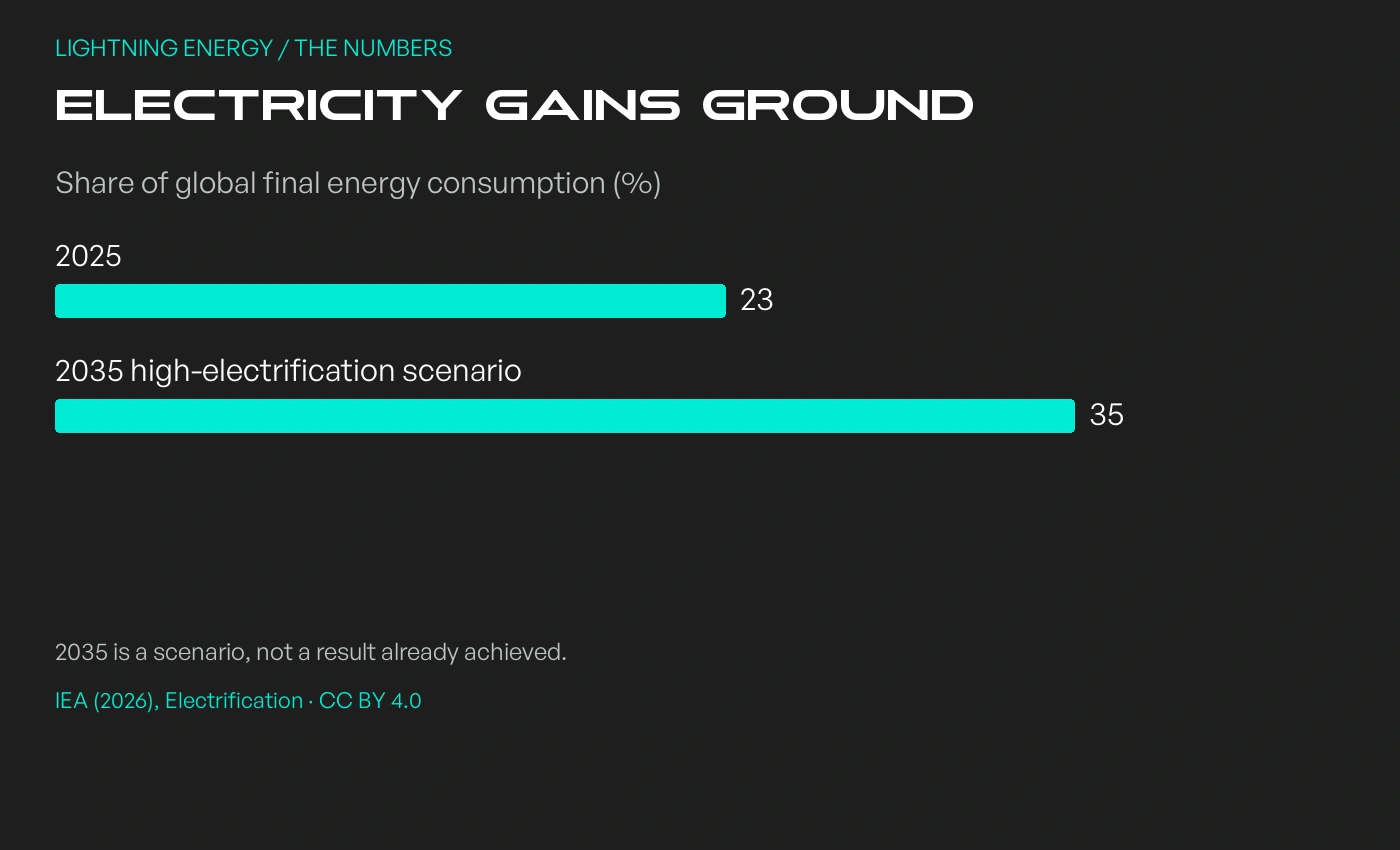
The IEA puts electricity at about 23% of global final energy consumption in 2025.
Its High Electrification Scenario reaches 35% in 2035.
That is a modelled pathway, not an outcome already achieved or a binding rule for Australian homes.
The IEA report also explains the efficiency advantage.
Electric motors waste less energy as heat, while heat pumps move heat rather than producing all of it directly from fuel.
That does not make every electric appliance cheap to operate.
The tariff, building, operating hours and installation still matter.
Compare the cost of delivering the same comfort or travel, rather than comparing a unit of gas with a unit of electricity.
The IEA links the Strait of Hormuz shock with renewed interest in electrification and domestic energy supply.
A petrol vehicle needs an ongoing fuel supply.
An electric vehicle can use electricity from several sources, including locally generated renewable power.
Replacing fuel consumption can reduce that particular exposure to international supply disruption.
There are still dependencies.
Electric equipment needs materials, manufacturing, servicing and reliable electricity.
Solar panels on a roof do not make a household immune to energy prices, cloudy weather or blackouts.
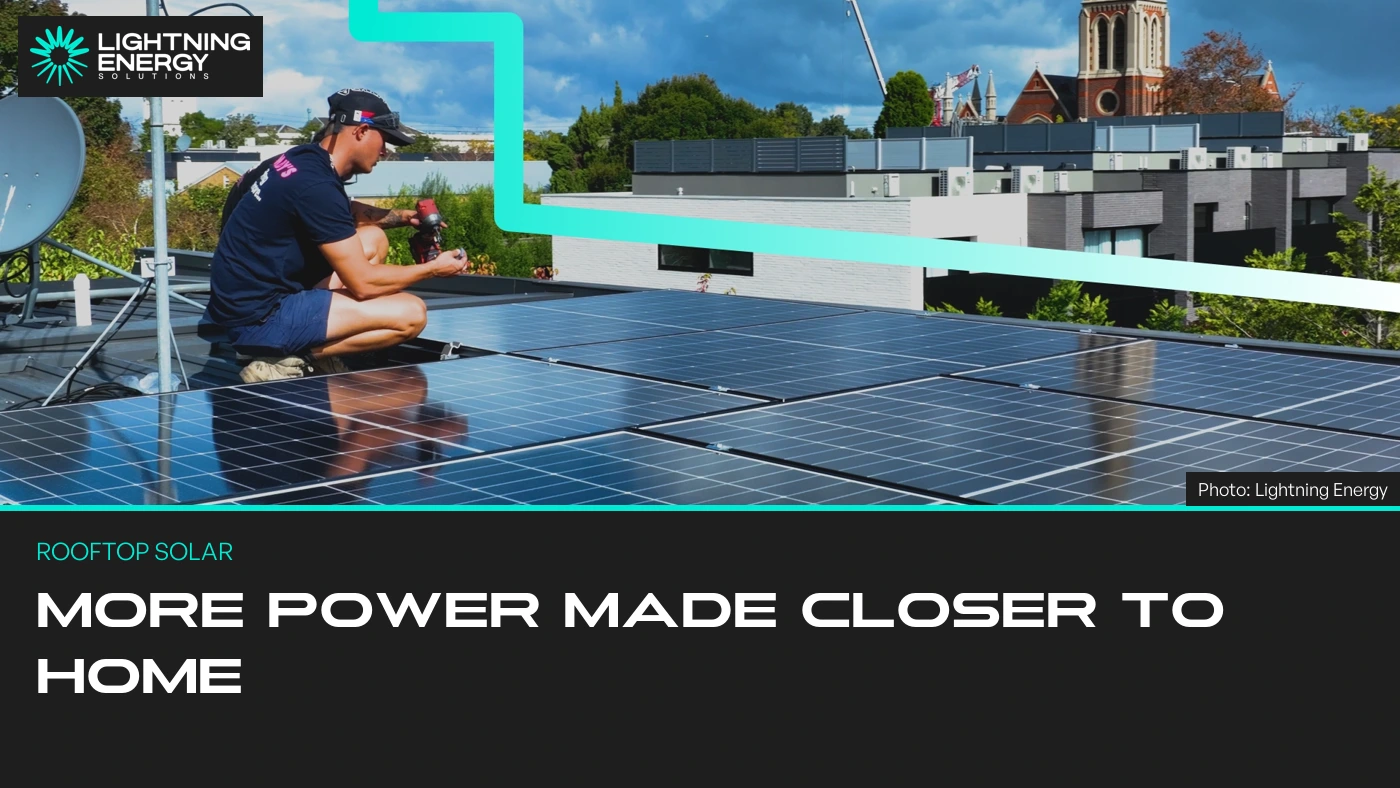
For an owner with a suitable roof, solar can provide part of the electricity needed by new appliances.
The useful figure is the generation available when those appliances run, after the rest of the home has taken its share.
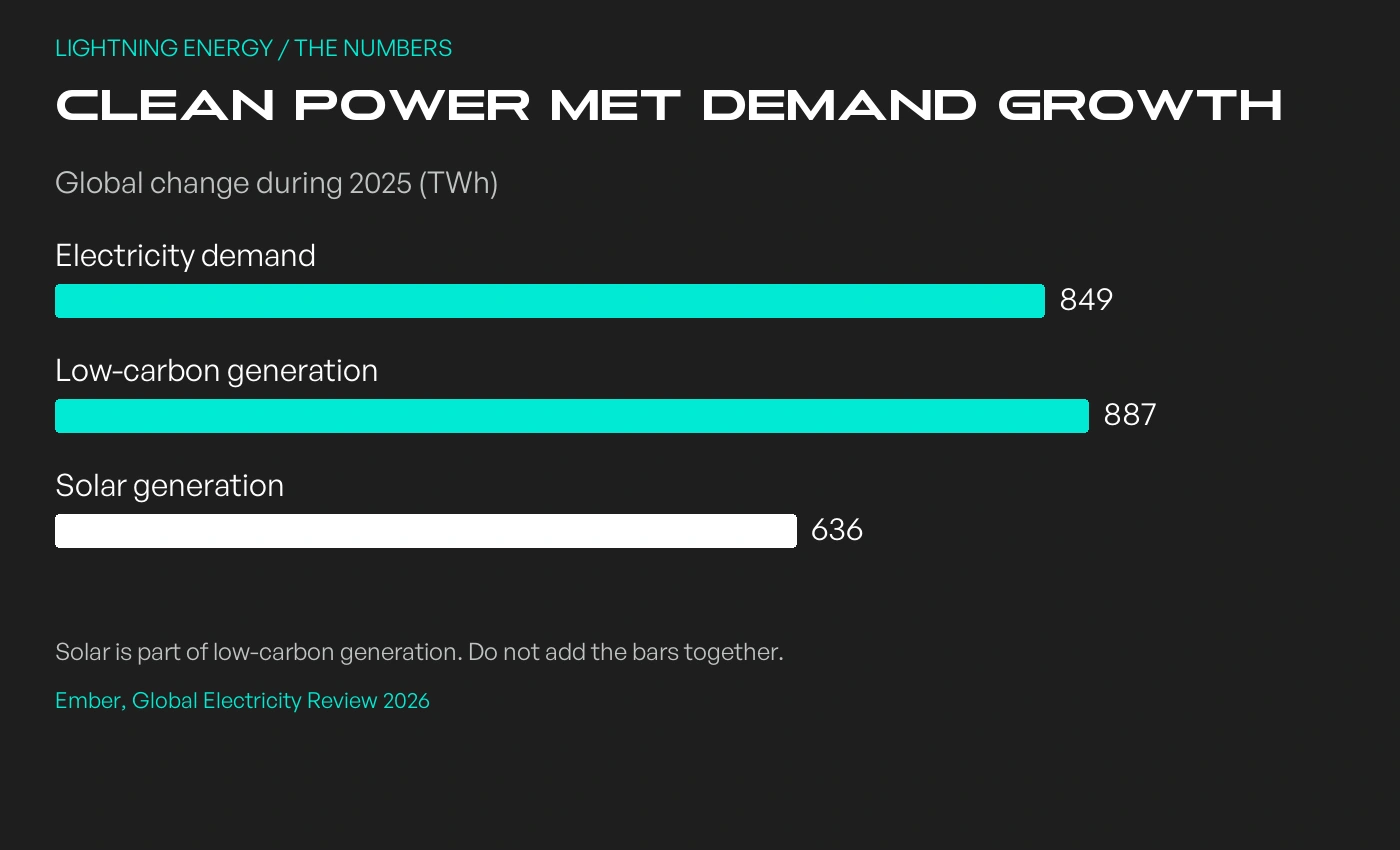
Ember’s 2026 global review reports that low-carbon electricity generation grew by 887 TWh in 2025, compared with 849 TWh of demand growth.
Solar contributed 636 TWh of that generation increase.
Those categories matter.
A gigawatt measures power capacity; a terawatt-hour measures energy generated over time.
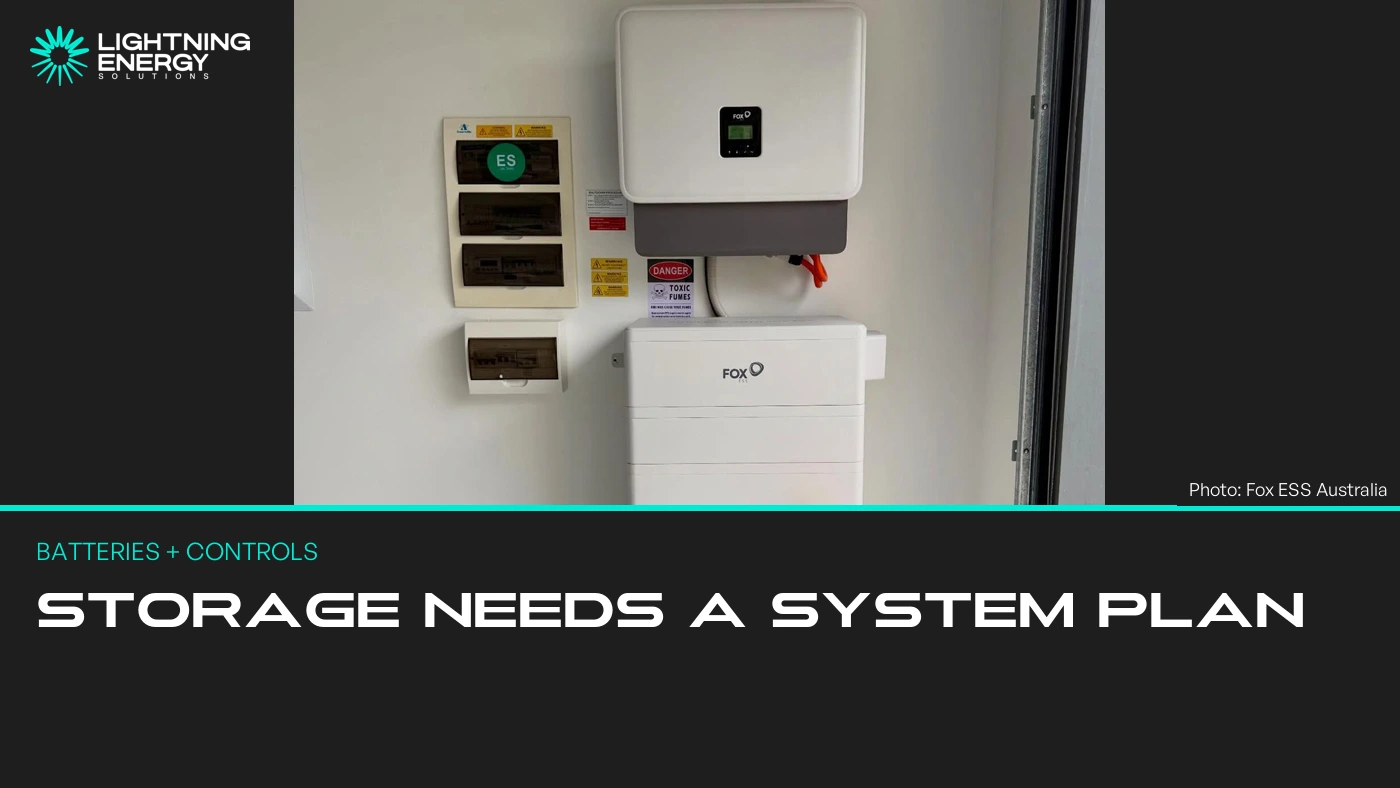
A battery also needs an energy capacity and duration before you can describe how much electricity it can shift.
At home, the same distinction separates a battery’s output limit from how long it can support a load.
A large-looking storage unit is not enough information to decide whether it can run heating through an outage.
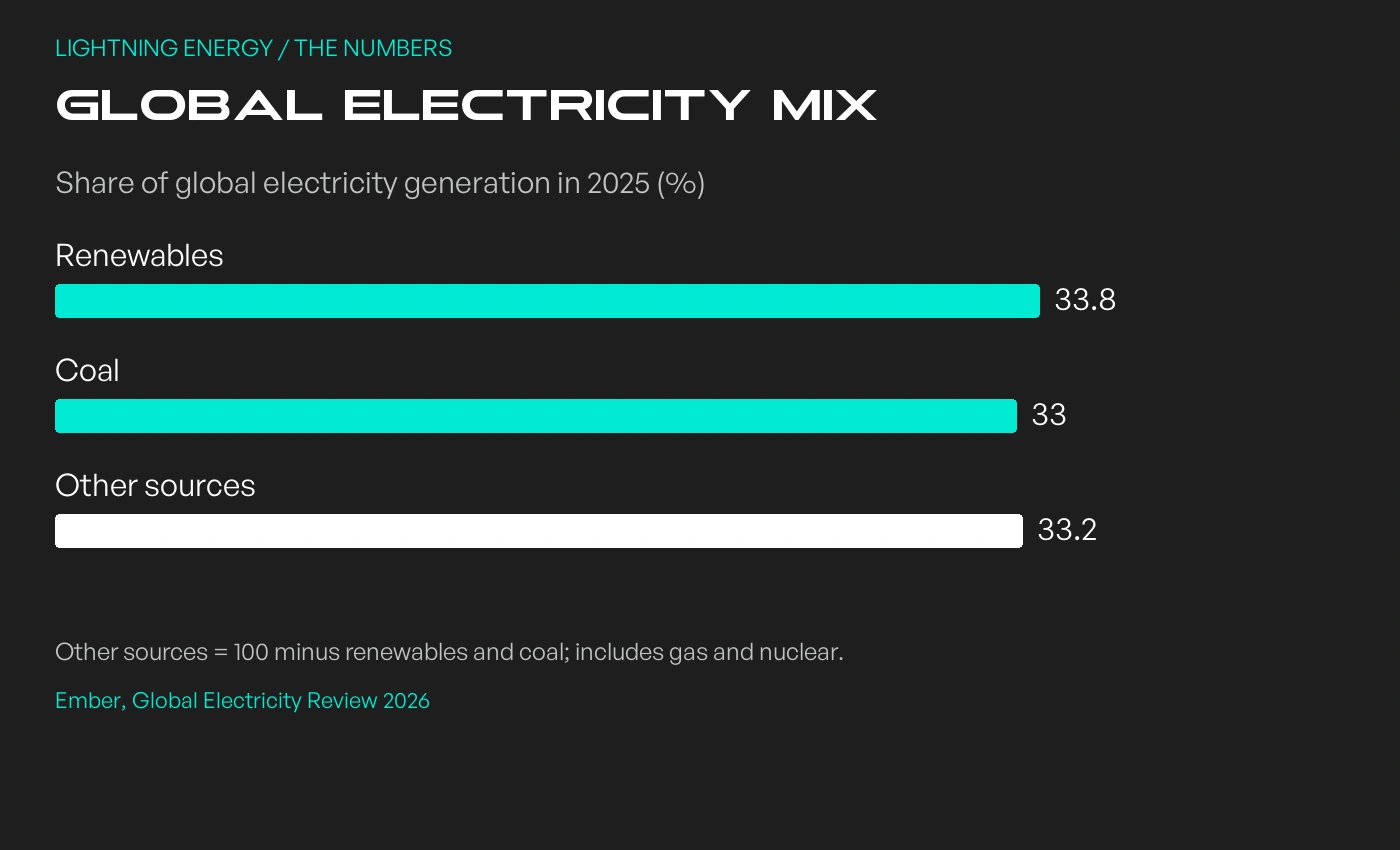
Ember estimates renewables supplied 33.8% of global electricity in 2025, just ahead of coal at 33.0%.
The remaining 33.2% includes gas, nuclear and other sources.
The global transition is substantial, but far from complete.
The IEA’s high-electrification pathway estimates annual avoided fuel-import spending of more than US$400 billion by 2035, using 2025 import prices.
Most of the reduction comes from oil.
These are modelled national import effects.
The report’s import analysis is the source used here.
It does not mean a Melbourne household receives a fixed discount, or that an installer can turn a global estimate into a guaranteed payback period.
For your place, the useful comparison includes the installed cost, energy plan, finance costs if any, maintenance and equipment you were already going to replace.
Retained gas supply charges also need to stay in the calculation.
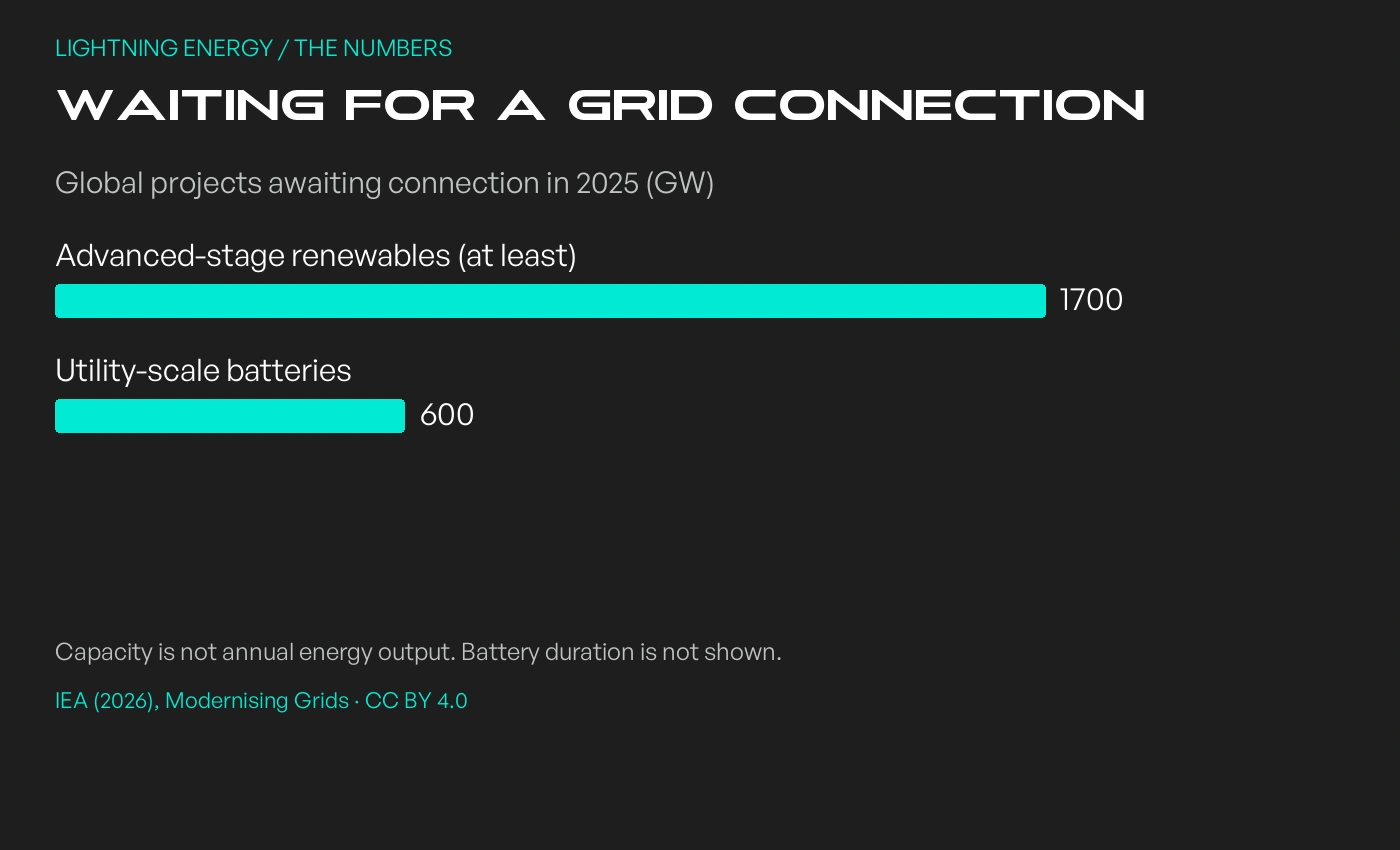
At least 1,700 GW of advanced-stage renewable projects and 600 GW of utility-scale batteries awaited connection in 2025.
Building equipment and connecting it are different milestones.
IEA September 2026 grid report.
The report argues for both network expansion and better use of existing infrastructure.
That includes improved monitoring and ways to direct electricity through available network capacity.
Household batteries cannot replace every transmission upgrade.
At the property level, connection approval, export limits and the switchboard remain part of the design.
A system can make good technical sense while still requiring network approval or electrical work before it can operate as intended.
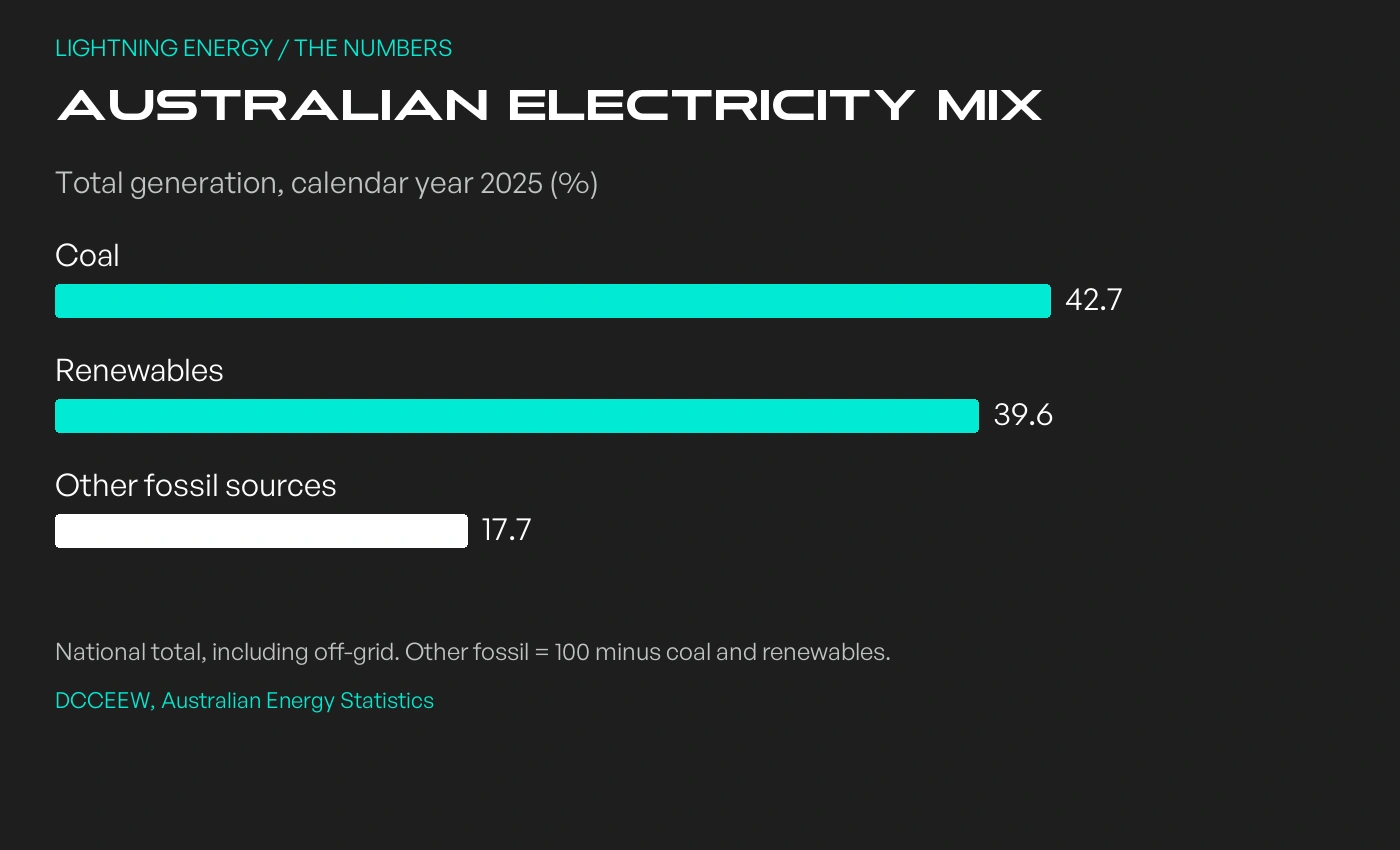
The Australian Government’s current generation summary puts coal at 42.7% and renewables at 39.6% of total electricity generation in calendar 2025.
These national figures include off-grid generation.
They should not be swapped directly with figures covering only selected electricity markets.
Nor is a national generation share the renewable percentage of your particular retail plan or the hourly electricity used by your home.
Start with the next sensible replacement.
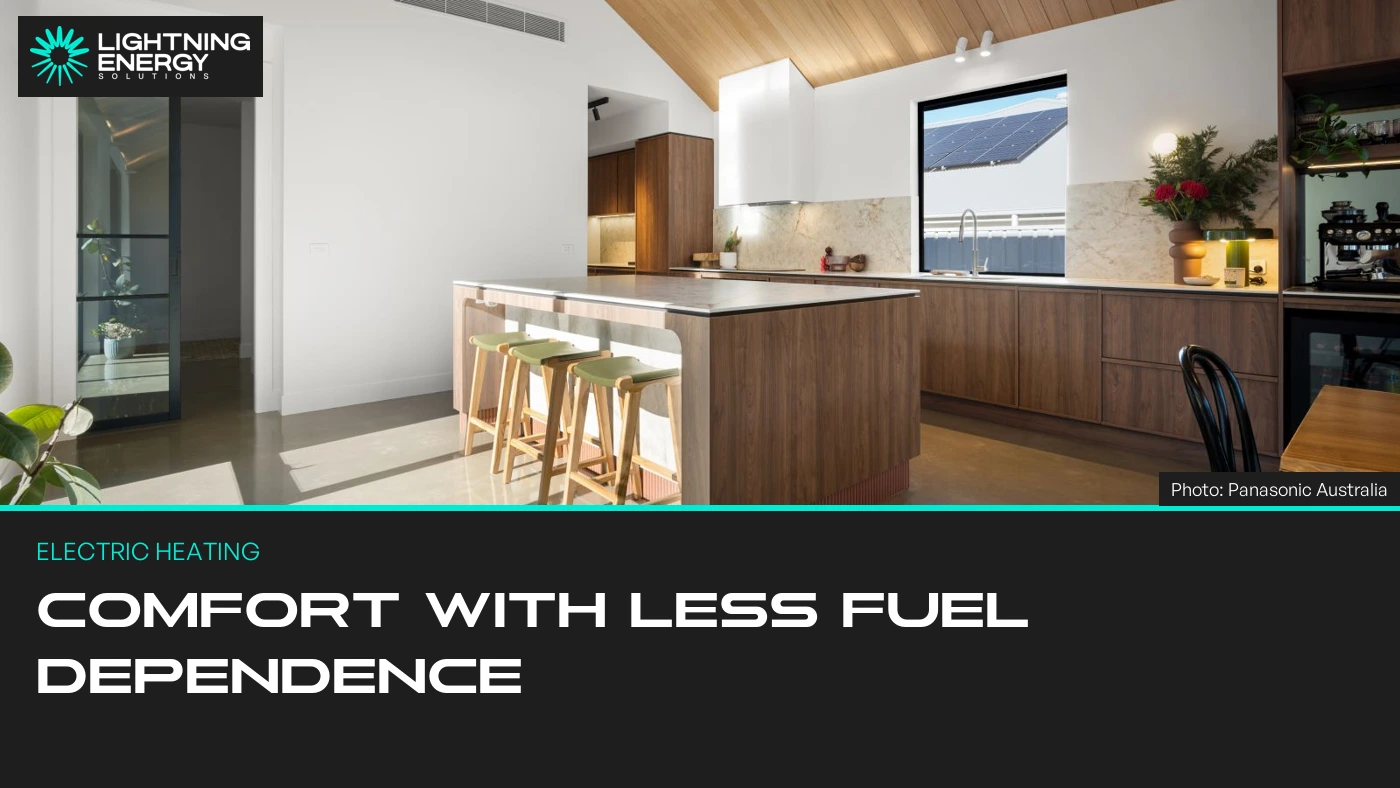
If a heater or hot-water system is approaching replacement, investigate an electric alternative before it fails.
That gives you time to compare the full scope without an emergency decision.
For heating and cooling, I would first look at the rooms you actually use, insulation, draughts and the condition of existing ducts.
A bigger unit is not a substitute for understanding why a room loses heat.
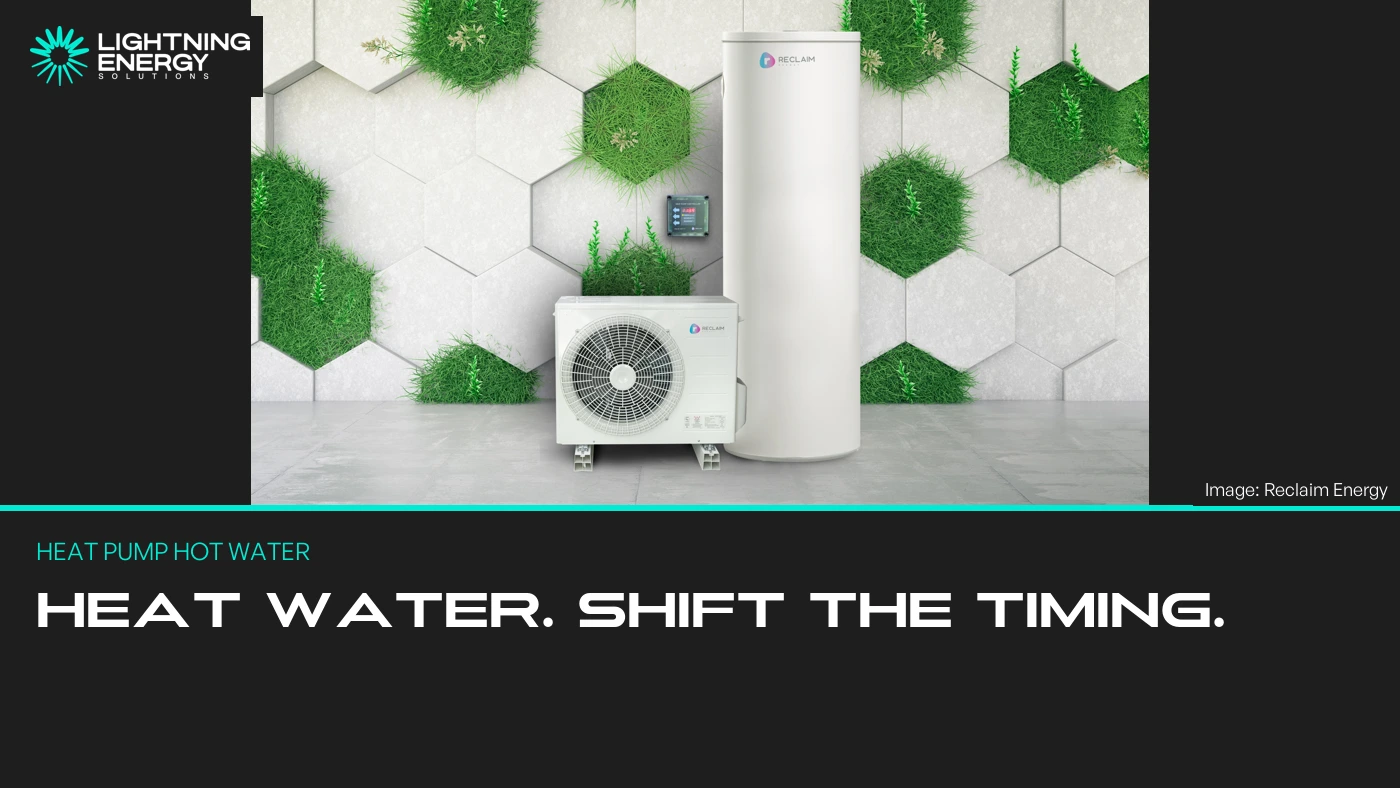
For heat-pump hot water, the plan needs enough stored hot water, a suitable location and controls that preserve the manufacturer’s hygiene and protective functions.
A solar-friendly timer must still meet household demand.
If an EV is on your shortlist, think about parking and charging access before choosing a charger.
Public charging may be part of the answer for an apartment or rental; a private driveway should never be assumed.
I would be cautious about replacing every functioning appliance at once.
A renter, a household with limited upfront cash or someone moving soon may need a staged plan.
Equipment should earn its place in that plan.
Bring your recent bills, existing equipment details and plans for the house to Lightning Energy.
We can work through the likely electrical scope and current incentive options, then put the upgrades in a sensible order.
Research checked 4 October 2026.
Charts are original Lightning Energy designs; sources and scenario boundaries are given beside each one.
Photography is from Lightning Energy or the credited manufacturers.
No ABC or news-agency photographs are reproduced.
Available times
Book a consultation and we'll map solar, storage, hot water, and the rebates around your bills and your goals.
Question 1 of 6