
Is Your Older Solar System Underperforming? Build a Like-for-Like Check
Assess an older solar system with matched seasons, complete monitoring data and the original design, then separate normal variation from faults needing review.
Assess an older solar system with matched seasons, complete monitoring data and the original design, then separate normal variation from faults needing review.

An older solar system should be assessed against a reliable, comparable baseline before deciding it needs replacement. A lower bill credit or one disappointing month does not prove the panels have worn out.
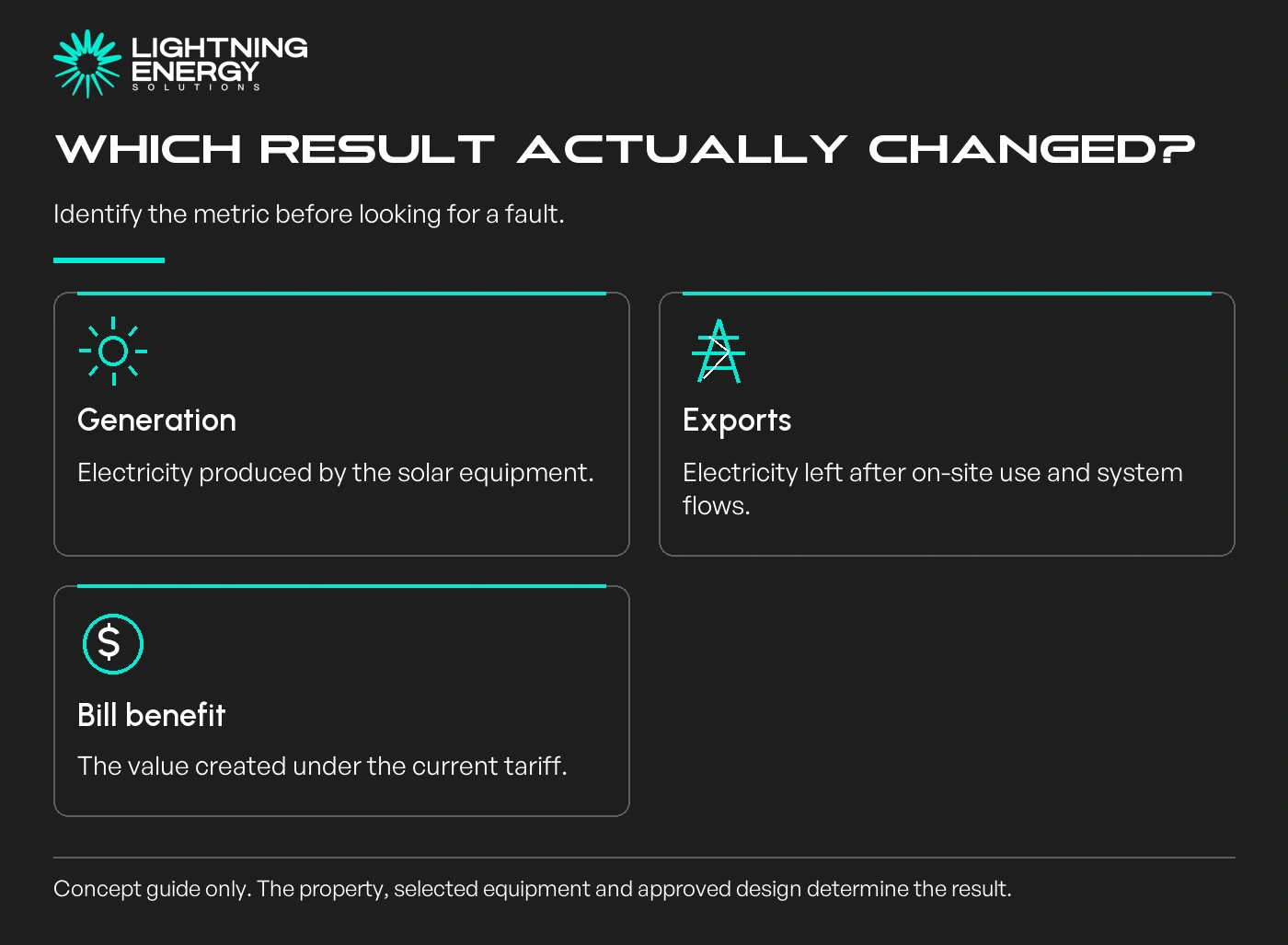
Start by checking what has actually fallen: generation, exports or financial savings. Those are different measures, and each can change for a different reason.
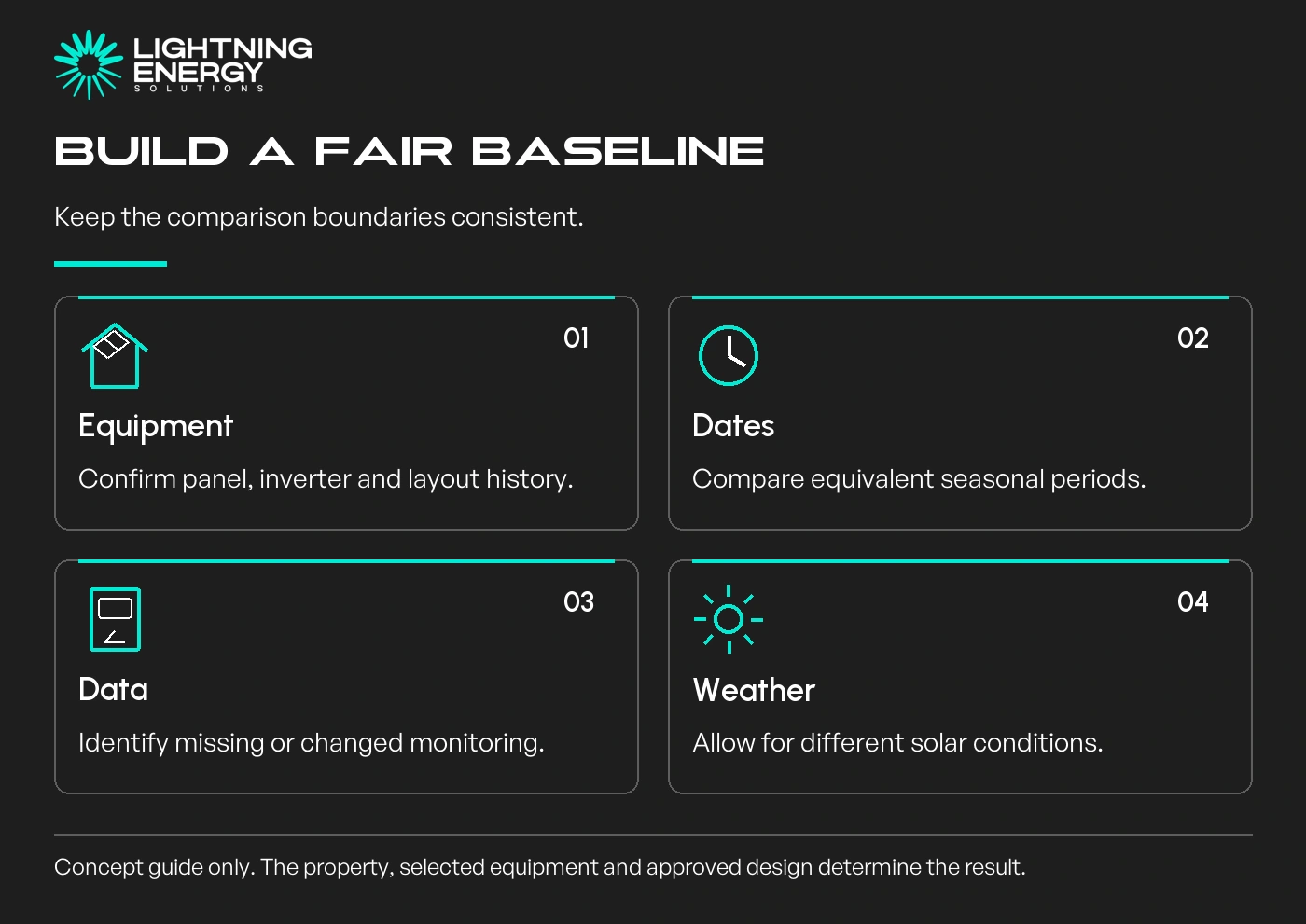
Find the original panel count, model numbers, inverter rating, roof layout and generation estimate. Add records of equipment replacement, extensions, changed settings or periods when the system was off.
A previous year's app total is useful only if the data is complete. Missing communications can create gaps even when the equipment continued generating electricity.
The government monitoring guide explains the difference between generation and grid flows.
Make sure the two periods use the same measurement source and date boundaries.
If battery storage has been added, monitoring boundaries may have changed. Ask the installer which figure remains directly comparable with the old generation record.
A winter month and a summer month are not a fair ageing test. Compare equivalent periods and check whether one contained unusually cloudy weather or several days with missing data.
Our Melbourne winter solar guide explains why seasonal changes can be substantial without a fault.
BOM's solar-exposure glossary describes weather measurements that can provide context.
Horizontal solar exposure is not the same as electricity produced by your particular tilted, shaded roof.
A professional performance assessment can account for these differences more carefully. A simple year-on-year percentage alone cannot identify which component, if any, needs attention.
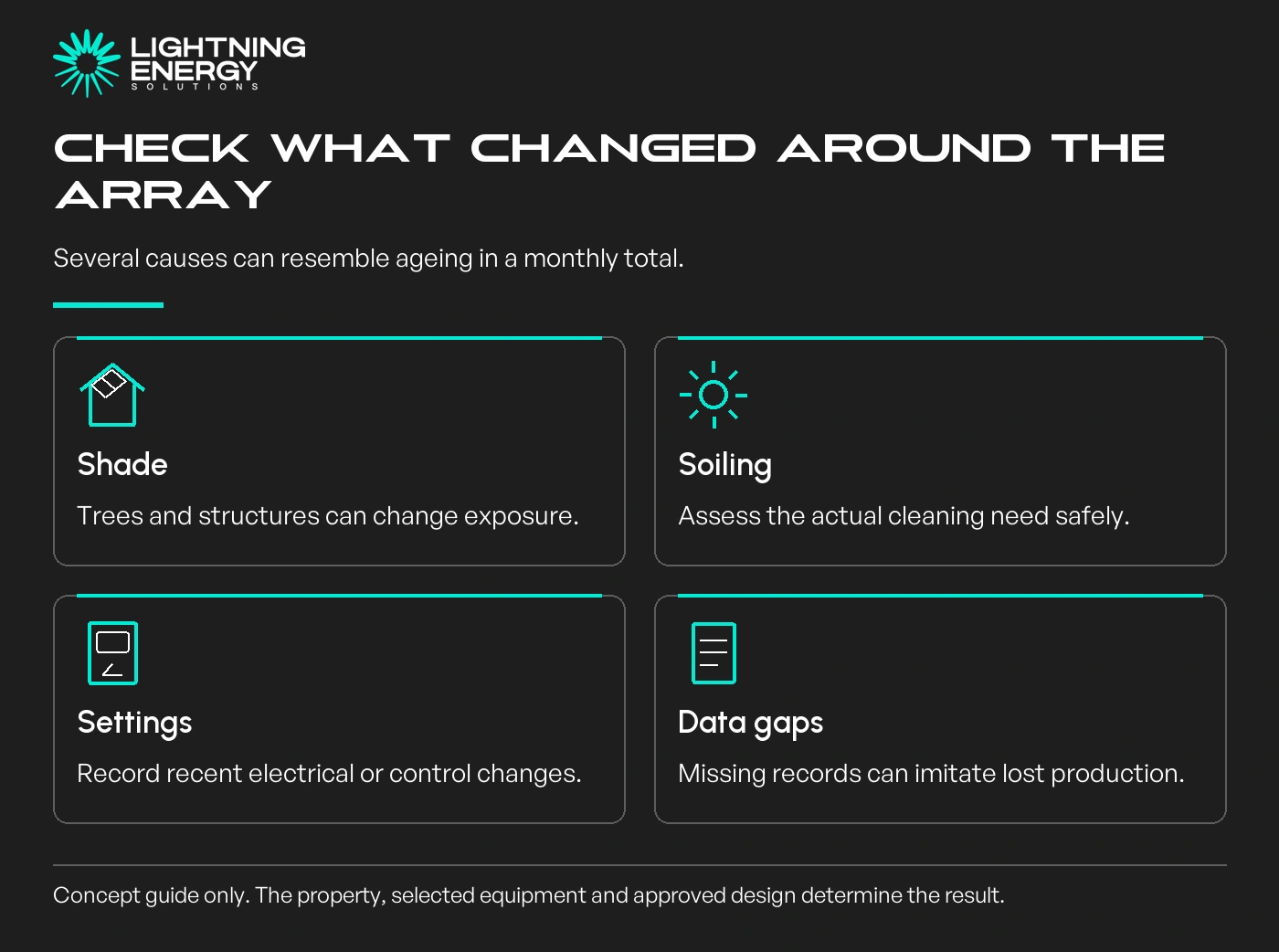
Trees grow, nearby buildings change and roof equipment can introduce shade. Compare the current surroundings with the original layout and any photographs taken when the system was installed.
Our shade-assessment guide explains why the time and location of shade matter. One ground-level photograph may miss a seasonal obstruction.
Soiling is another possibility, but do not assume cleaning will restore a promised percentage.
Solar Victoria's maintenance guidance distinguishes cleaning needs from broader professional servicing.
Check accessible app status messages and record their times. Leave rooftop access, electrical inspection and internal testing to qualified people; do not open an inverter to investigate a lower total.
Equipment can change over time, but a sudden step down deserves a different investigation from a modest, weather-adjusted trend. Neither automatically establishes a successful warranty claim.
A panel performance warranty concerns specified output under defined conditions. It is not a guarantee that the entire system will produce an unchanged annual total at your property.
Imagine a home exporting less after an adult starts working from home. If generation remains similar while daytime consumption rises, the reduced export is not evidence of panel degradation.
Conversely, a repeated generation drop accompanied by an error message should not be dismissed merely because the system is old. Provide the installer with the records needed to diagnose it.
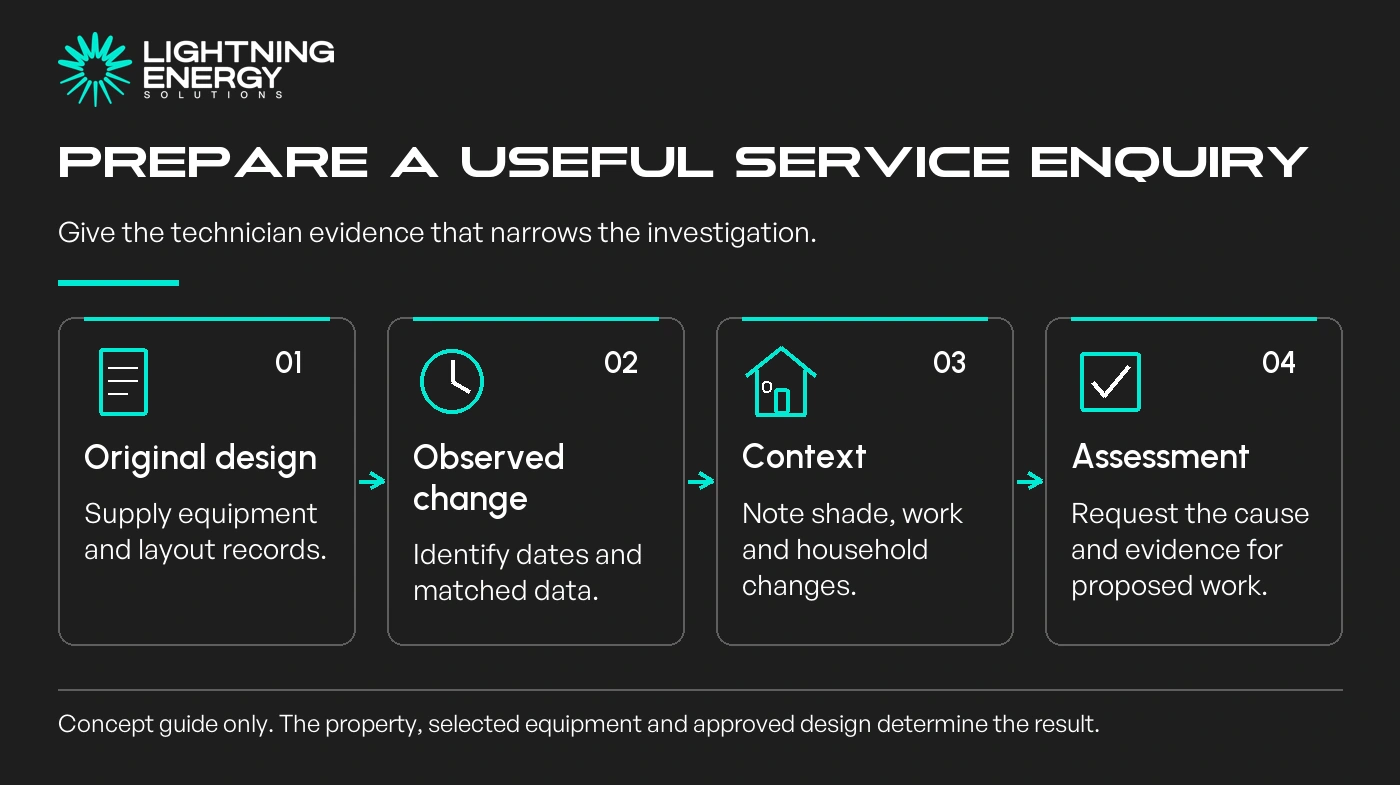
Send the system details, comparable generation records, dates of observed changes and relevant status messages. Include a note about changed shade, new appliances or recent electrical work.
Ask the technician to distinguish data gaps, environmental causes, configuration and hardware faults. Request a clear explanation of any proposed replacement and the evidence supporting it.
There may be a repair or monitoring correction rather than a reason to replace the full array. Equally, roof work or unavailable replacement parts can affect the practical options once the fault is understood.
For a review of an existing solar installation, bring the original documents and the best available history. A like-for-like comparison gives you a much stronger starting point than the system's age alone.
Available times
Book a consultation and we'll map solar, storage, hot water, and the rebates around your bills and your goals.
Question 1 of 6
