
Like-for-Like Air Conditioner Replacement or a Full Ducted Redesign?
Decide whether an air conditioner replacement can follow the old layout or needs a fresh ducted design after renovations, changed room use or persistent comfort problems.
Decide whether an air conditioner replacement can follow the old layout or needs a fresh ducted design after renovations, changed room use or persistent comfort problems.

A like-for-like replacement is sensible only when the old system’s design still suits the house and the new equipment can be installed appropriately. Matching the old capacity number is not enough.
Use replacement time to review changes in room use, building performance and comfort. A full redesign may be justified, but it should solve identifiable problems rather than add scope automatically.
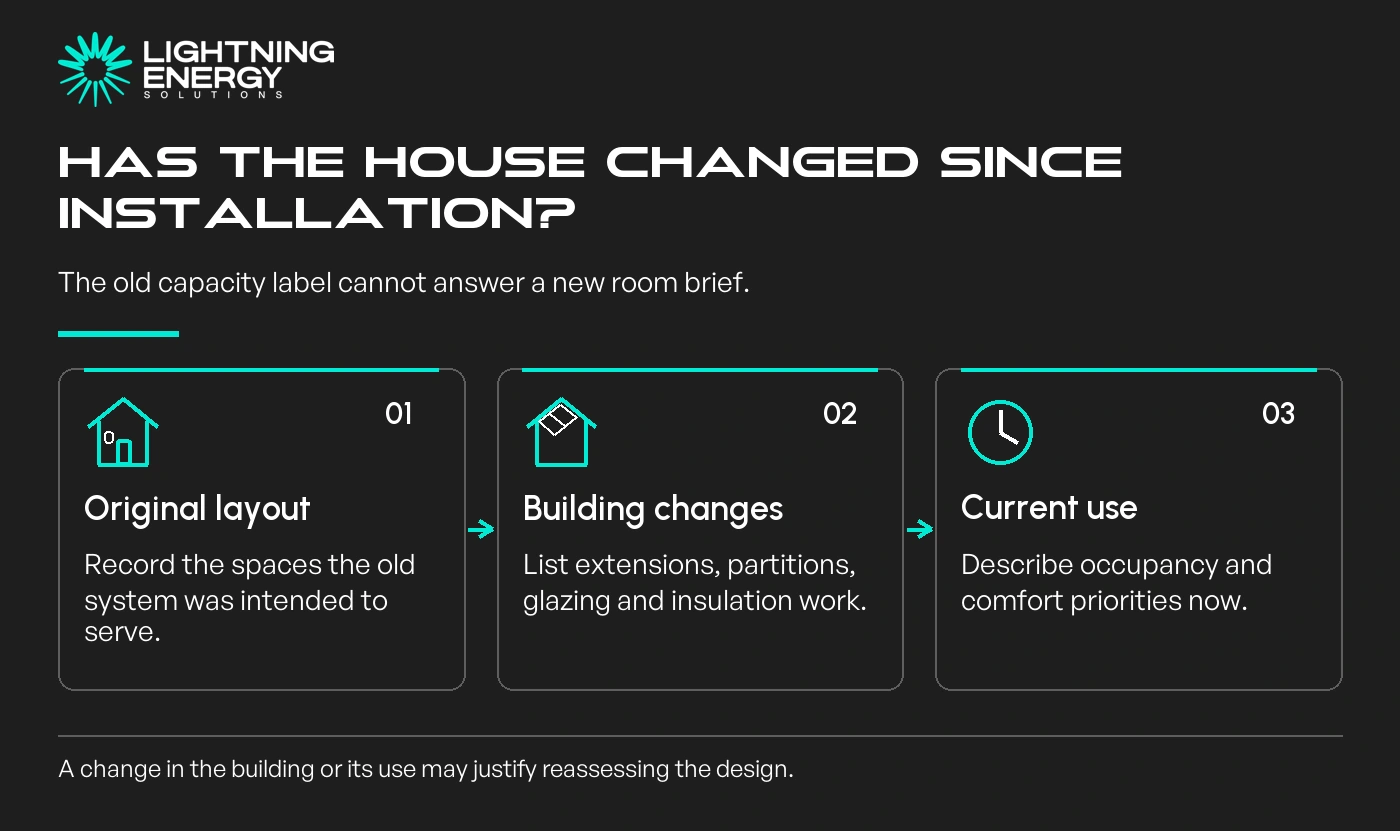
List extensions, removed walls, enclosed spaces, glazing changes and insulation improvements since the original installation. Note bedrooms that became offices or rooms now occupied for longer periods.
Describe which areas the old system served well and which repeatedly struggled. A history of poor comfort is information to investigate, not a reason to copy the same arrangement without review.
YourHome explains that heating and cooling selection should respond to the building and the spaces being used.
For an illustrative renovation, opening a kitchen into a living area changes the served space. A quote based solely on the old unit’s nameplate may overlook that change.
Start with an air conditioning assessment that distinguishes what remains suitable from what needs a new design.
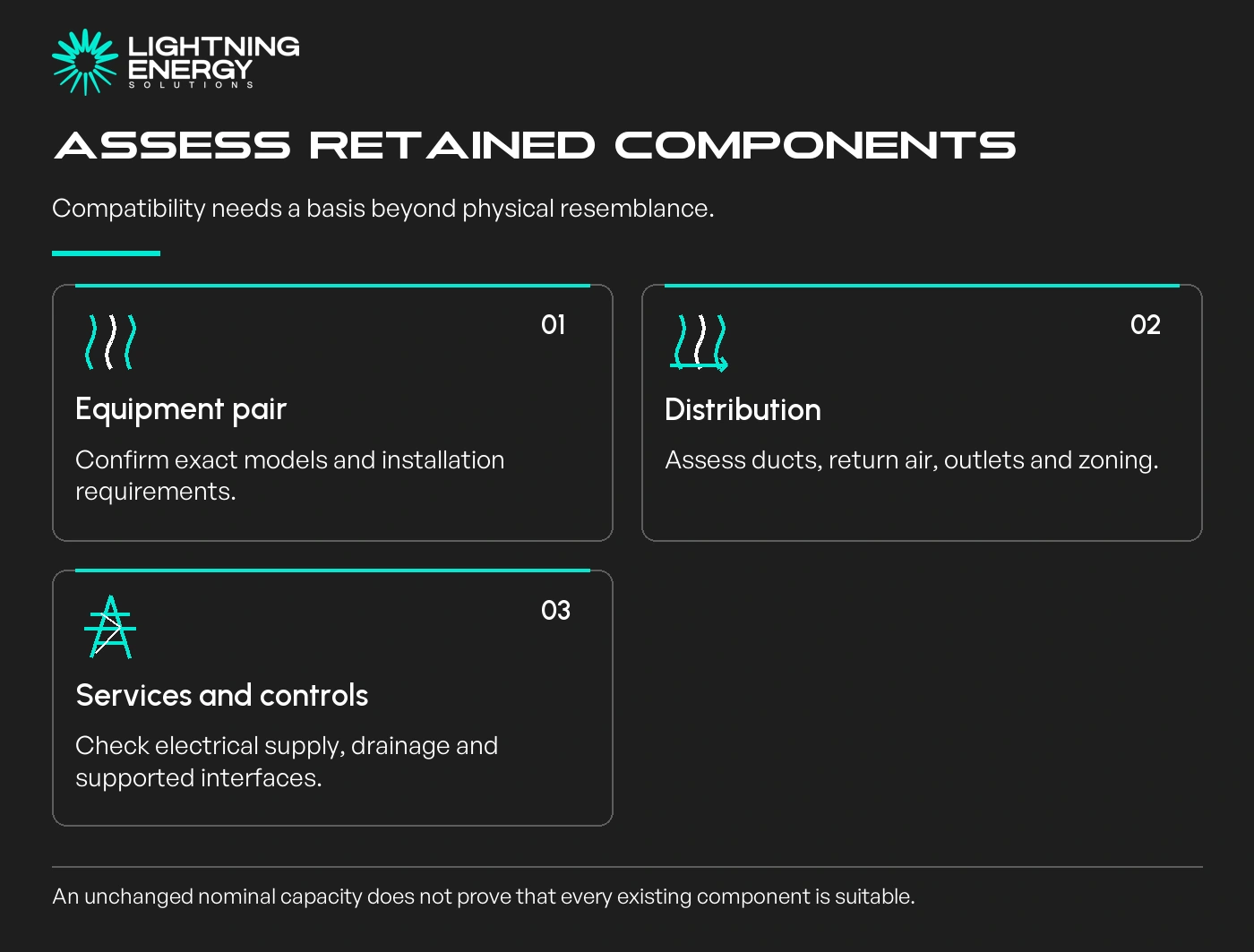
Request the exact replacement indoor and outdoor model pair. Confirm electrical requirements, controls, pipework, drainage, mounting and service access for that combination.
If ducts, return air or outlets are to remain, ask how their size, condition, insulation and airflow suitability were assessed. Retention should be documented rather than hidden inside “standard replacement”.
A change from gas ducted heating is especially different from replacing a comparable air conditioner. The ducts and return path need assessment for the new system, with required replacements identified in the quote.
YourHome heating and cooling guidance.
Our electrical capacity guide also separates the selected unit’s needs from overall household supply. Existing wiring is not proven suitable by an unchanged capacity label.
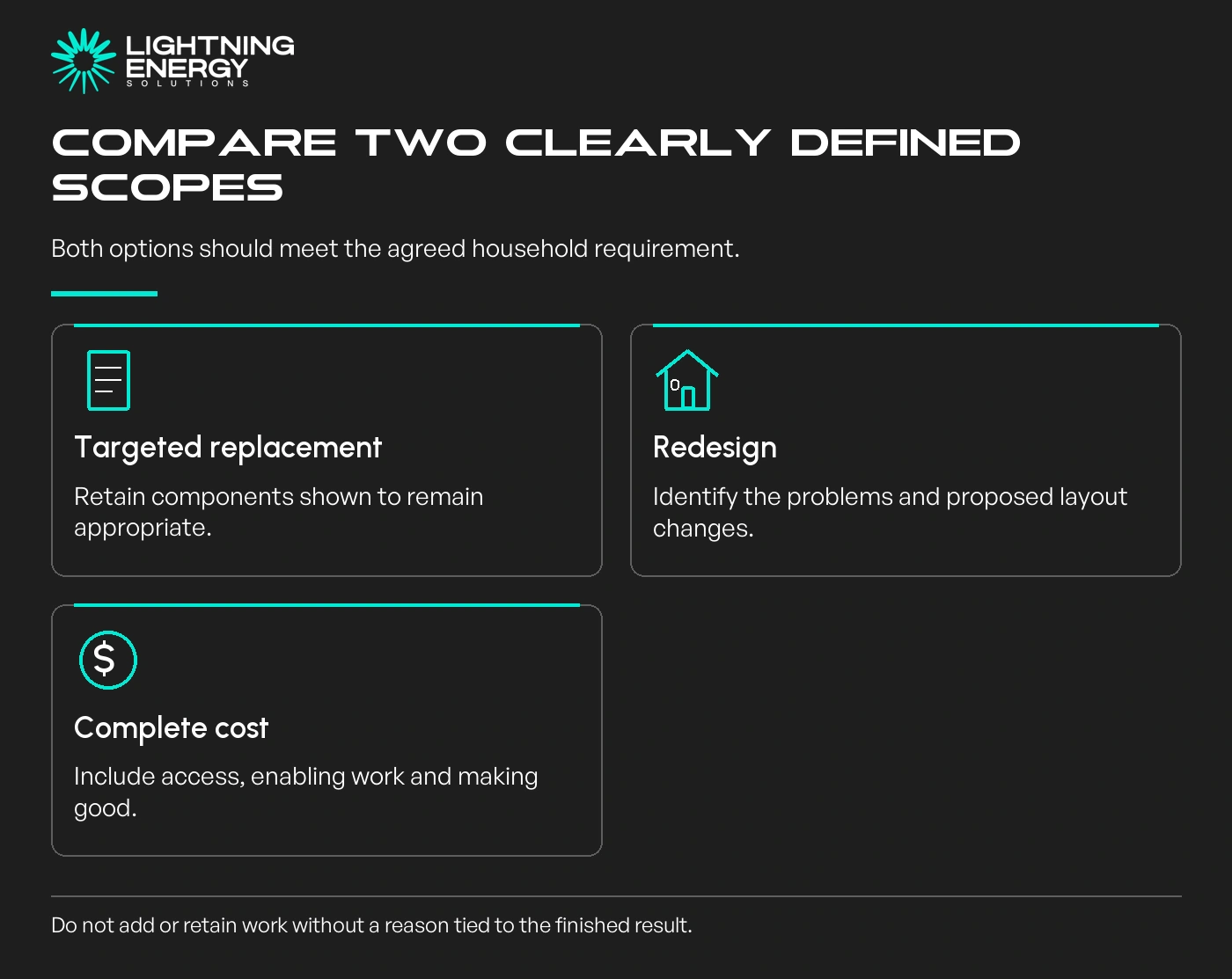
Ask for two feasible scopes when the choice is uncertain. One can retain assessed suitable components; the other should identify specific changes and the problems they address.
A redesign might change room groupings, sensing, return air or routes. Ask how each change affects the day and night operating scenarios you actually need.
Compare the finished ducted options, including enabling work and repairs, rather than treating the larger equipment price as the entire redesign cost.
Do not pay to duplicate suitable work simply because a package includes it. Equally, do not preserve a problematic component only because replacing it makes the first quote less attractive.
If the old unit has a repairable fault and the design remains appropriate, repair may still deserve consideration. Daikin discusses condition, repair costs and changing needs in its replacement guidance.
Daikin repair-or-replace considerations.
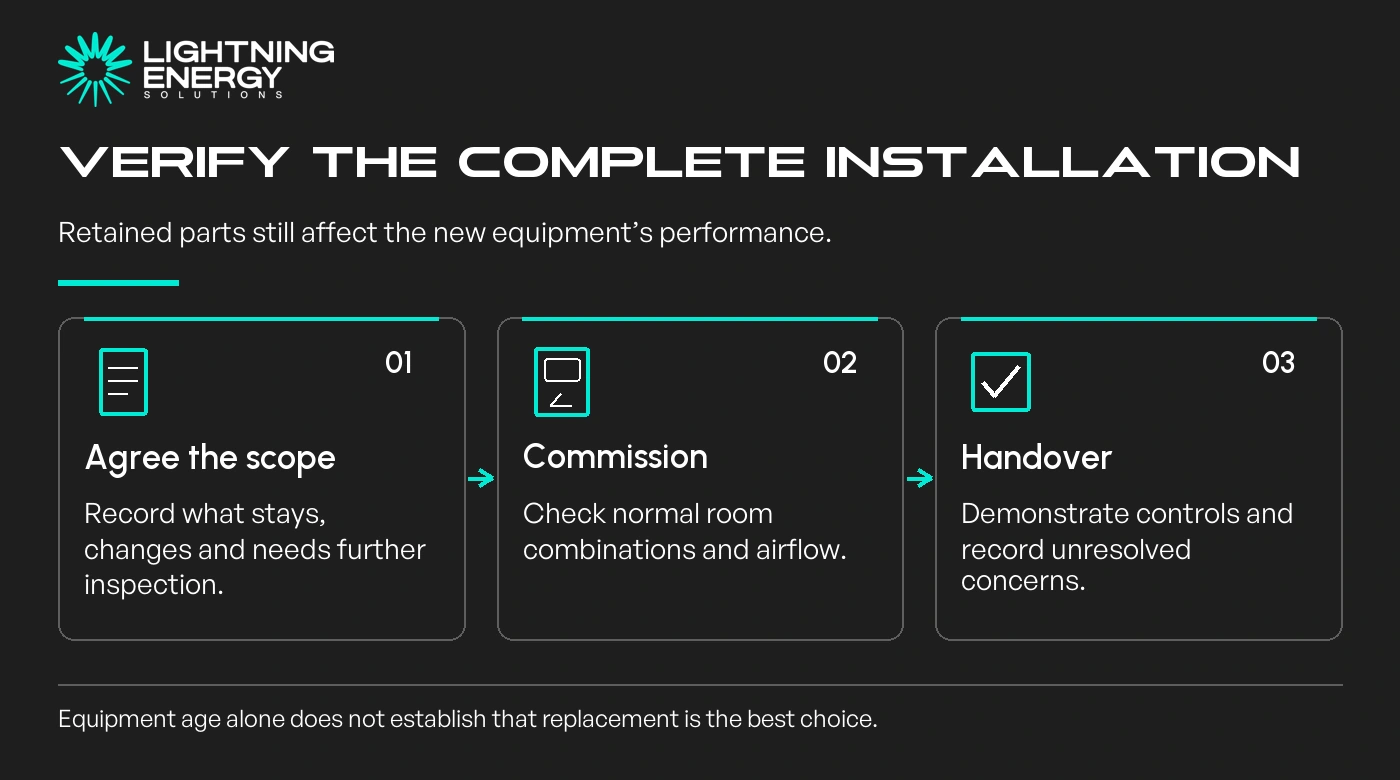
Record the accepted equipment, retained parts, changed parts and any assumptions that depend on further inspection. Agree how concealed findings will be priced and approved.
Ask for commissioning of the complete installed system, including retained components. A new indoor unit should not be the only part considered when a room still performs poorly.
At handover, demonstrate normal zone combinations and door positions, review filter access and collect equipment records. Note any concern requiring a later seasonal check.
A redesign should have a clear purpose such as serving an extension or fixing a diagnosed distribution limitation. More zones and outlets are not automatically better when they do not match the household.
Avoid replacing a comfortable, serviceable system merely because it has reached an arbitrary birthday. Likewise, repeated faults and poor fit should be assessed rather than dismissed because the equipment still turns on.
Bring the original system details and the current floor plan to a replacement assessment. The result should explain what can sensibly stay, what needs to change and how the finished design will be checked.
Available times
Book a consultation and we'll map solar, storage, hot water, and the rebates around your bills and your goals.
Question 1 of 6
