LONGi Hi-MO X10 vs REC Alpha Pure-RX: What Changes on an Australian Roof?
A LONGi Hi-MO X10 and a REC Alpha Pure-RX can have the same rated output while fitting a roof differently. That is why a useful comparison starts with exact model numbers and a roof layout, not a general ranking of brands.
LLightning Energy TeamLightning Energy27 October 2026 · 5 min read
A LONGi Hi-MO X10 and a REC Alpha Pure-RX can have the same rated output while fitting a roof differently. That is why a useful comparison starts with exact model numbers and a roof layout, not a general ranking of brands.
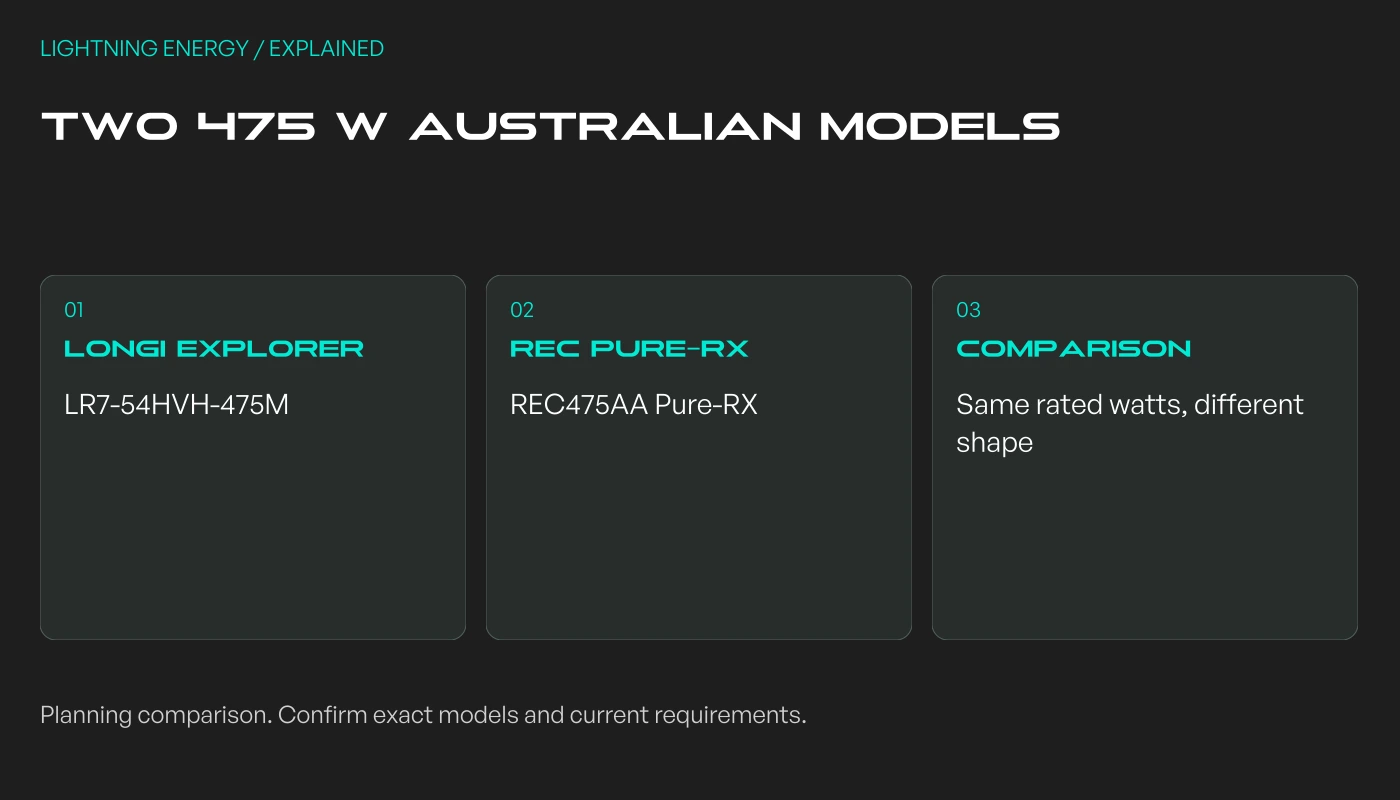
This is a document-based comparison checked on 27 October 2026. We have not conducted a side-by-side field test. The examples compare LONGi LR7-54HVH-475M Explorer with REC475AA Pure-RX, both rated at 475 W under standard test conditions.
The REC panel is shorter and wider; the LONGi panel is longer and narrower. Either shape can be advantageous on a particular roof face. Ask for both layouts at the same scale in your solar proposal.
Planning comparison. Confirm exact models and current requirements.
Turn dimensions into a realistic layout
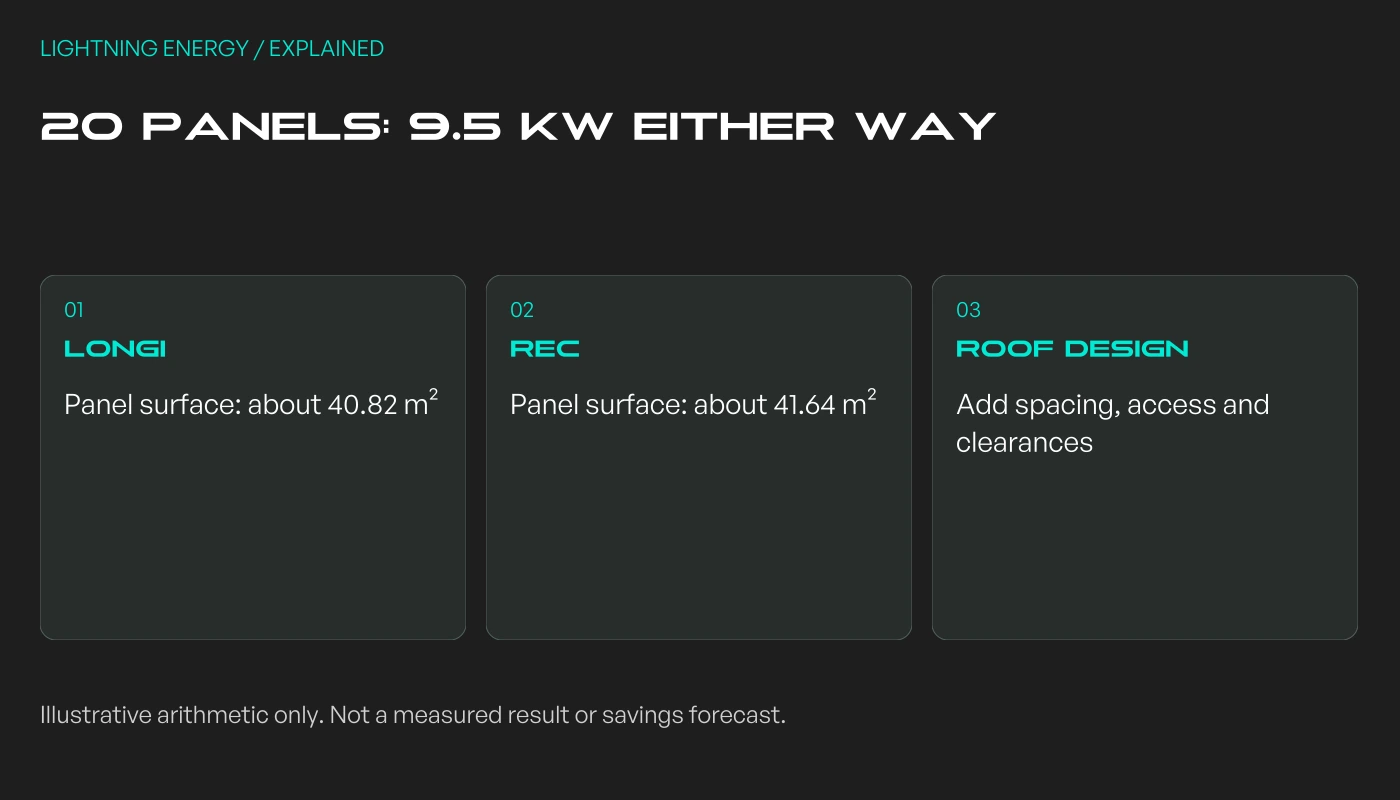
Twenty 475 W panels total 9.5 kW of nameplate capacity with either model. Multiplying their published dimensions gives approximately 40.82 square metres of panel surface for LONGi and 41.64 square metres for REC.
That is panel surface only. It excludes spacing, roof edges, access, obstructions and installation requirements. It must not be treated as the roof area needed or a guarantee that twenty panels will fit.
A layout that accommodates an extra panel can matter more than a small difference between individual panel ratings. Compare usable array size, shading and orientation before comparing an annual-yield estimate.
Illustrative arithmetic only. Not a measured result or savings forecast.
Temperature coefficients need context
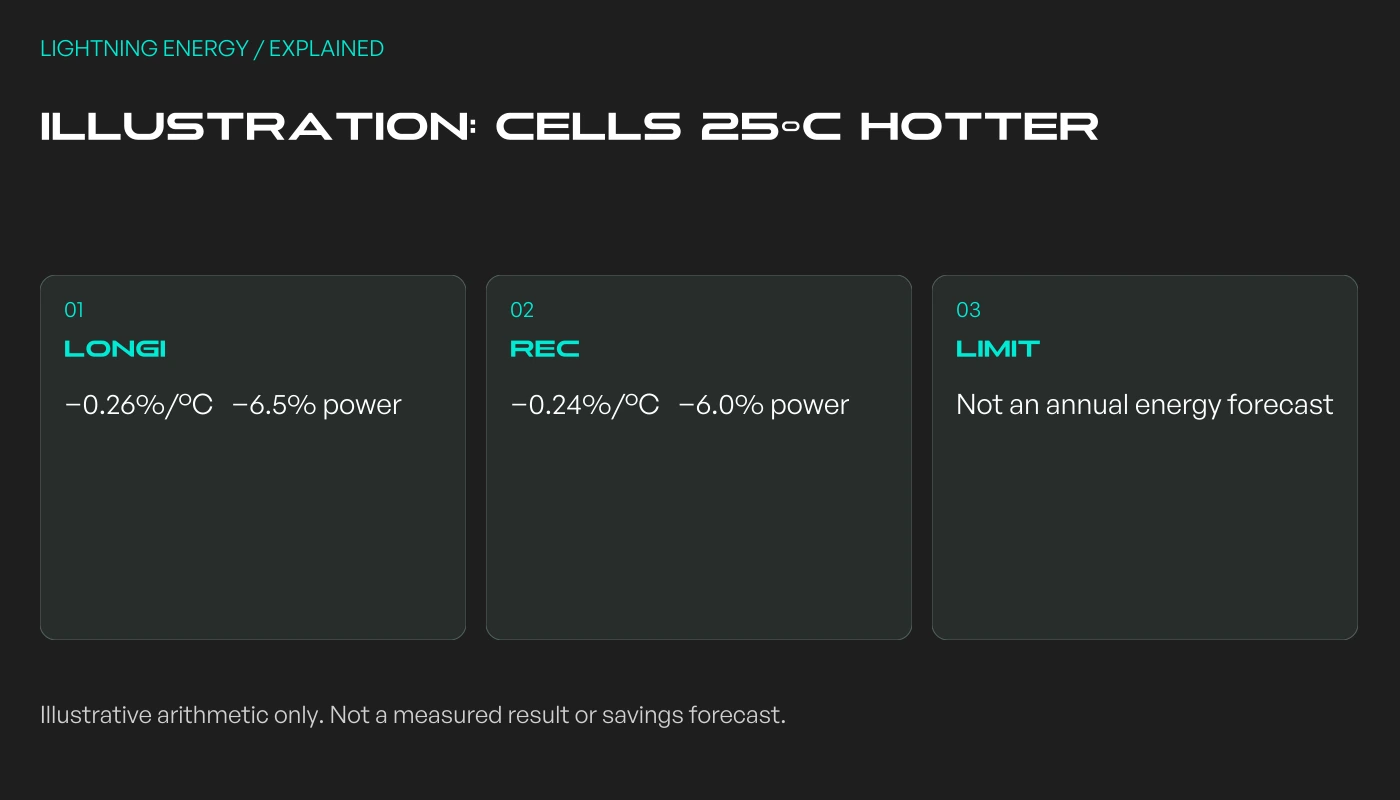
The published maximum-power temperature coefficients are minus 0.26 per cent per degree Celsius for the selected LONGi and minus 0.24 per cent for the selected REC.
For an illustrative 25°C rise in cell temperature above the rating reference, those coefficients imply reductions of 6.5 and 6.0 per cent respectively, holding other conditions constant.
This is a simplified calculation, not an annual energy prediction.
Cell temperature is not the weather forecast's air temperature.
Roof mounting, wind and operating conditions also matter.
Ask for consistent modelling assumptions rather than treating this single specification as a guaranteed bill advantage.
Illustrative arithmetic only. Not a measured result or savings forecast.
Read the Australian warranty, including the claim costs
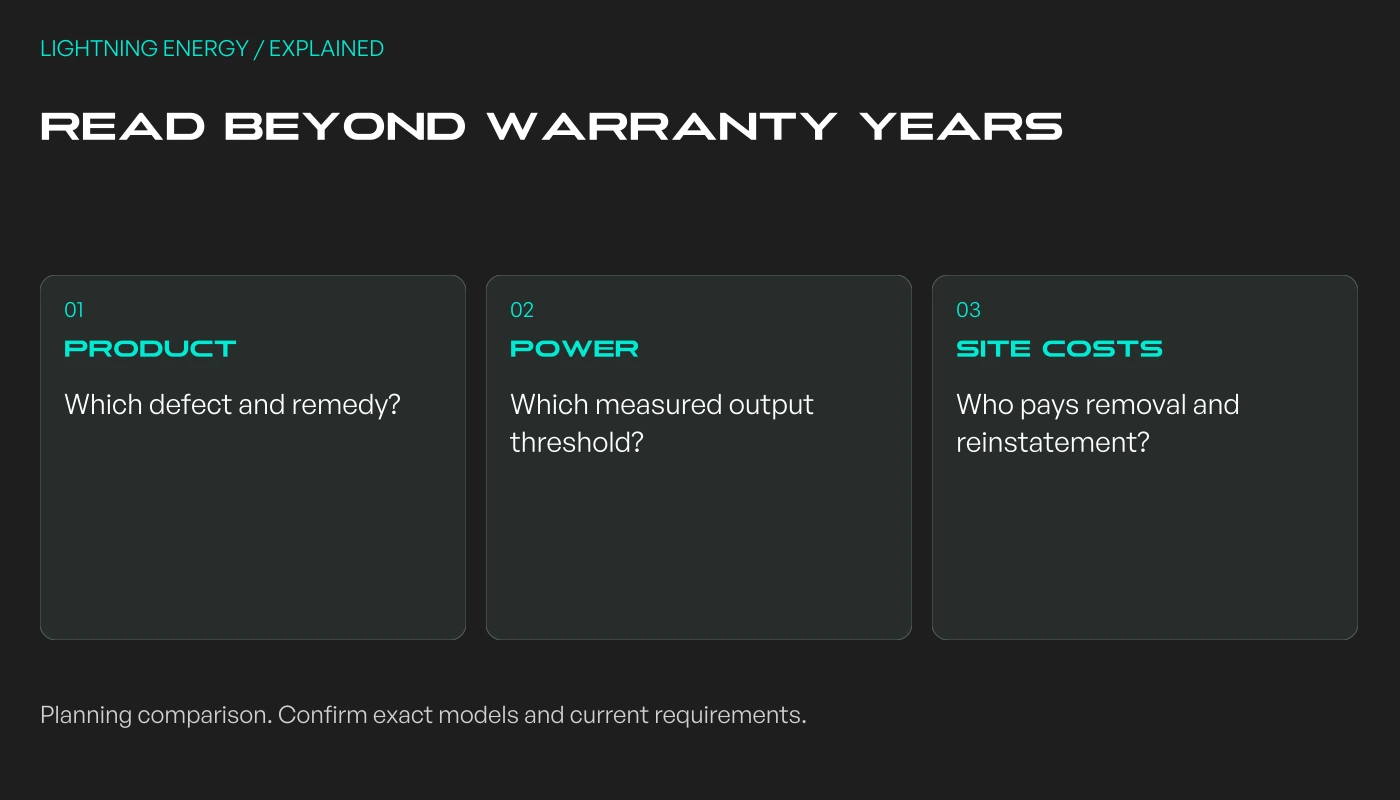
Its voluntary terms assign dismantling and reinstallation costs to the customer. A long headline term should therefore be read alongside the remedy and claim process, not as a promise that every future site cost is paid.
REC's warranty guidance distinguishes standard cover from conditional ProTrust benefits. The Australian datasheet states 20-year standard product and 25-year power cover; qualifying ProTrust installations can receive enhanced benefits.
Ask whether your particular installation qualifies, who must register it and what labour benefit applies.
This article does not claim that any quoted installer automatically meets those conditions.
Manufacturer warranties do not replace statutory consumer rights.
Planning comparison. Confirm exact models and current requirements.
Compare the inverter, mounting, monitoring, workmanship support and final price as well as the panels. If a battery is planned, ask how the complete design accommodates it; panel brand alone does not determine compatibility.
Our practical view is to favour the proposal with a convincing layout, transparent performance assumptions and clear support obligations, rather than choosing a winner from one specification.
Book a consultation and we'll map solar, storage, hot water, and the rebates around your bills and your goals.
Loading consultations…
Lightning EnergyPlan your next energy upgrade.
⚡
Hi, I’m Lightning Energy’s project guide. I’ll ask a few practical questions, explain what usually matters for your project, and help you decide on a useful next step — no guesswork or sales pressure.
First, what kind of property are we planning for?