NSW’s Summer Firming Pack Is Live — Liddell Battery Hits Full Commercial Ops
AGL’s 500 MW / 1 GWh Liddell battery hits full commercial ops, completing NSW Round 2 firming ahead of summer. Why homeowners should care about evening peaks.
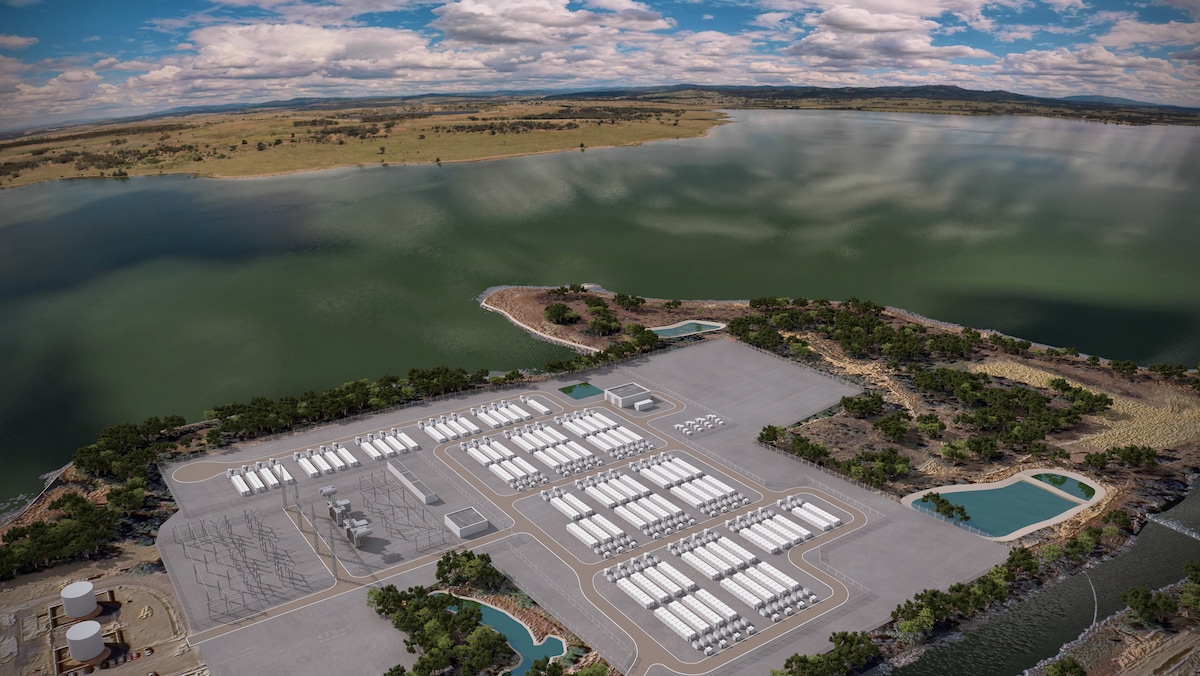
New South Wales — Here's what just locked in on the Hunter. AGL's 500 MW / 1,000 MWh (1 GWh) Liddell battery energy storage system (BESS), built on the former Liddell coal plant site, has reached full commercial operation.
That milestone completes all four winners from the state's Electricity Infrastructure Roadmap Tender Round 2 firming pack — three big batteries plus a virtual power plant (VPP) — ahead of the hot summer peak season.
Did you know the headline is not a wall-unit launch? This is grid kit. The homeowner stake is simpler: grid batteries and a VPP soak evening peaks so rooftop solar stays useful after dark — and a home battery still owns the dinner window at your meter.
Invest in your independence where the meter still answers to you. Stake your claim on evening power you own — while the firming pack does the heavy lifting on the network.
Source: RenewEconomy / Sophie Vorrath, 18 Sep 2026 (https://reneweconomy.com.au/huge-liddell-battery-hits-full-commercial-operations-completing-states-firming-line-up-ahead-of-el-nino-summer/).
Liddell: from stage one to full commercial
AGL's Liddell BESS is a two-hour machine — 500 MW power, 1 GWh energy — now marked fully operational at the Hunter Energy Hub footprint.
Timeline, per AGL via RenewEconomy: - Final reliability testing completed this week (Tuesday), marking practical completion
AGL called it the first major development at the former thermal station site and one of the largest batteries in the National Electricity Market — fast-response storage to keep the grid reliable as more renewables come online.
Support stack (context only): the project sits under a NSW Long-Term Energy Service Agreement (LTESA), with an Arena grant alongside. Extra state support helped fund more engineers at Transgrid and AEMO to fast-track the job.
Transgrid's Jason Krstanoski said full commercial ops confirm the battery is delivering grid-scale storage at intended capacity — fast-response support and help managing renewable volumes into the system.
Round 2 pack: four winners, now all live
Liddell closing the loop means Tender Round 2's firming line-up is delivered. The four projects, with published capacities:
Liddell BESS — AGL — 500 MW / 1 GWh (2-hour) — Hunter; former coal site; full commercial now Orana BESS — Akaysha Energy — 415 MW / 1,660 MWh (4-hour) — Full commercial June; one of the largest 4-hour batteries on the main grid Smithfield BESS — Iberdrola Australia — 65 MW / 130 MWh (2-hour) — Co-located with peaking gas plant, Greater Western Sydney Enel X VPP — Enel X — 95 MW, minimum 2-hour dispatch — Already used in the 2025 heat event and other peak periods
Minister Penny Sharpe marked the Round 2 completion on Friday. Government framing: Roadmap delivery with additional federal Labor support to bring forward private firming as coal exits.
Government claims (not verified here): Sha
Bonus firming (context only — not Round 2)
Round 2 is the story that just closed. Separately, a bonus firming round announced in February awarded contracts to AGL's Tomago battery (500 MW, four-hour) and another 32 MW of Enel X VPP capacity. That is backlog for later summers — not today's “pack is live” headline.
So far, seven tenders for LTESAs and renewable energy zone (REZ) Access Rights have been completed under the NSW Roadmap. Delivery cadence matters more than ribbon counts: coal exits on a calendar; firming has to show up before the heat does.
Scale check: firming pack ≠ national power crown
Liddell at 500 MW / 1 GWh is a major NEM asset. It is not automatically Australia's biggest by every ruler.
NSW already has the Waratah Super Battery — about 850 MW / 1,680 MWh — playing shock-absorber on the Central Coast. South Australia's giga-scale build is stacking modules at Reeves Plains (250 MW / 1,000 MWh stage one). Different jobs, different states, same theme: storage that keeps renewables useful when households actually draw.
Round 2's edge is the pack — batteries plus a VPP already proven in a heat event — timed for summer peaks, not a single-site brag.
What this changes — and does not — at your meter
A Hunter container farm and a western Sydney co-located BESS will not automatically shave your dinner peak. Network charges, wholesale spikes and export limits still land on the household statement.
What grid firming + VPP does for NSW homeowners: - Soaks evening and heat-event peaks so midday solar has somewhere useful to go - Reduces the “curtail everything” reflex when the network is stressed - Makes a rooftop + compliant home batte
What you can still own: - Roof solar sized to your load and export limits - A compliant home battery matched to evening and overnight circuits - Tariff literacy so peaks hurt less - An electrification sequence that does not amplify the dinner rush - Docs and monitoring so the next heatwave is data, not panic
Federal Cheaper Home Batteries support can take around / up to ~30% off eligible home battery systems when you qualify. Eligibility depends on property and current rules. Never invent dollar savings off a grid-BESS headline. For who actually wins on the rebate math, read federal home battery rebate — who wins: https://lightning-energy.com.au/blog/federal-home-battery-rebate-australia-who-wins.
Stake your claim where the pack won't
Full commercial at Liddell is real news for NSW ahead of summer. The Round 2 pack — Liddell, Orana, Smithfield, Enel X VPP — is grid firming, not your wall unit. Mega-BESS and a heat-tested VPP keep the network honest; your independence still starts on the roof and in the garage — with a compliant home battery stack when the site and rules fit.
If grid headlines have you staring at the bill, bring that bill to a design consult. Own your evening power. The Hunter containers will keep cycling either way.ry pair more valuable, not less — evening load still needs local kit - Buys time for wires and rules to catch up without pretending a press release fixes your billrpe says the pack can provide enough firming for the peak demand of around 400,000 homes, and that the projects supported more than 1,500 construction jobs. Treat those as ministerial claims, not independent meter math. - Stage 1 — 250 MW / 500 MWh — commissioned in March - Partial commercial operations from June - Official technical sign-off from AEMO and Transgrid at the end of July


Available times
Book a consultation and we'll map solar, storage, hot water, and the rebates around your bills and your goals.
Question 1 of 6