SA VPP Offers: Compare the Upfront Reward With the Ongoing Electricity Plan
A South Australian VPP offer can look generous on its sign-up banner and still be a poor fit for the household's electricity bill. Compare the reward with the plan, battery-control terms and costs that continue after the first year.
LLightning Energy TeamLightning Energy29 October 2026 · 5 min read
A South Australian VPP offer can look generous on its sign-up banner and still be a poor fit for the household's electricity bill. Compare the reward with the plan, battery-control terms and costs that continue after the first year.
This comparison checks public AGL and ENGIE information on 28 October 2026. It is a comparison method, not a market-wide ranking or a personalised quote. Public rewards do not reveal the full tariff available at a particular address.
What the two providers currently advertise
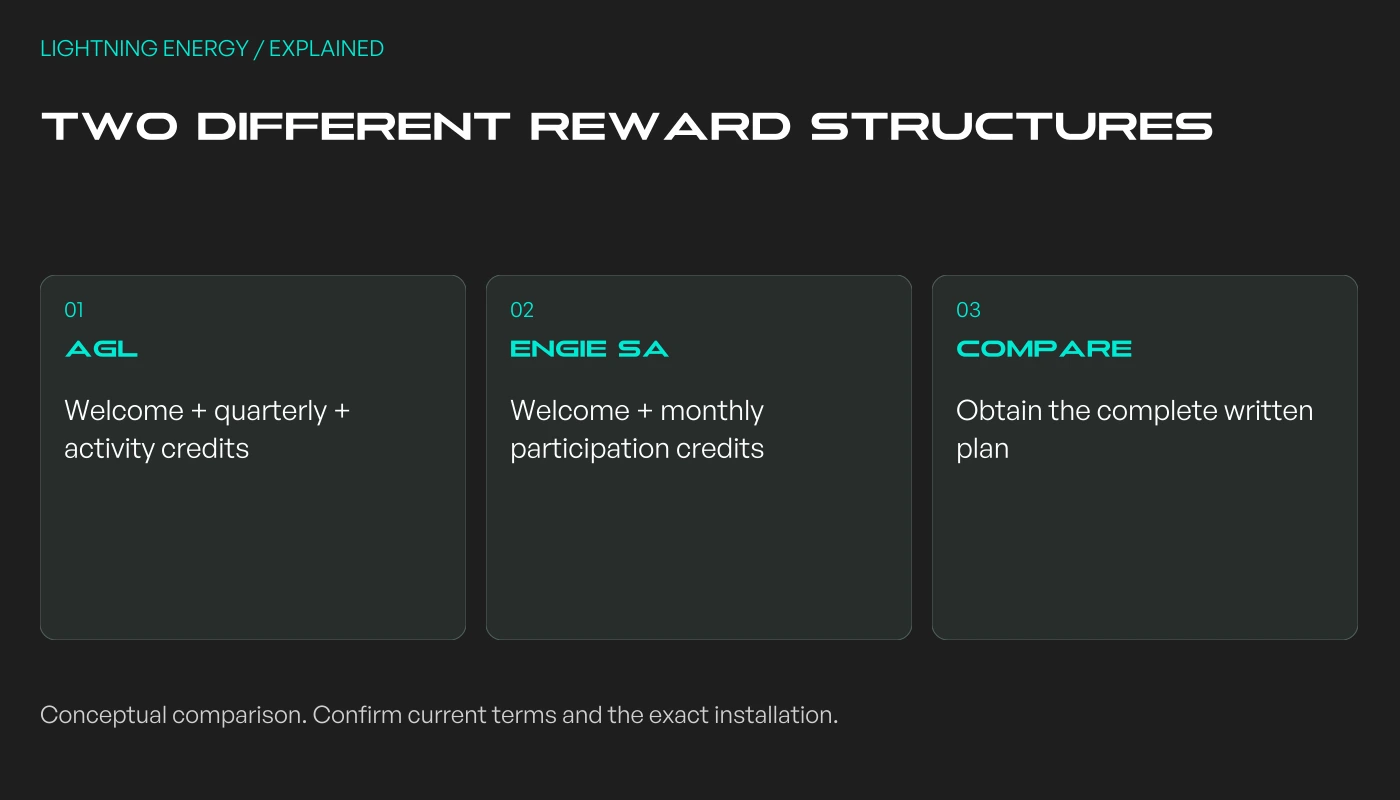
AGL's VPP page advertises a $200 welcome credit, $80 a year in quarterly credits and $1 per kWh for eligible VPP charging or discharging. The variable energy credit is settled annually or when the contract ends.
ENGIE's Battery Sharing Rewards Network advertises a $200 electricity sign-up credit for SA and approximately $20 in monthly credits. Its page says monthly participation credits continue even in months when it does not use the battery.
Those are different reward structures. AGL includes a variable activity component; ENGIE's public SA summary emphasises monthly credits. Neither headline tells you the household's net annual electricity cost.
Conceptual comparison. Confirm current terms and the exact installation.
Separate first-year credits from ongoing value
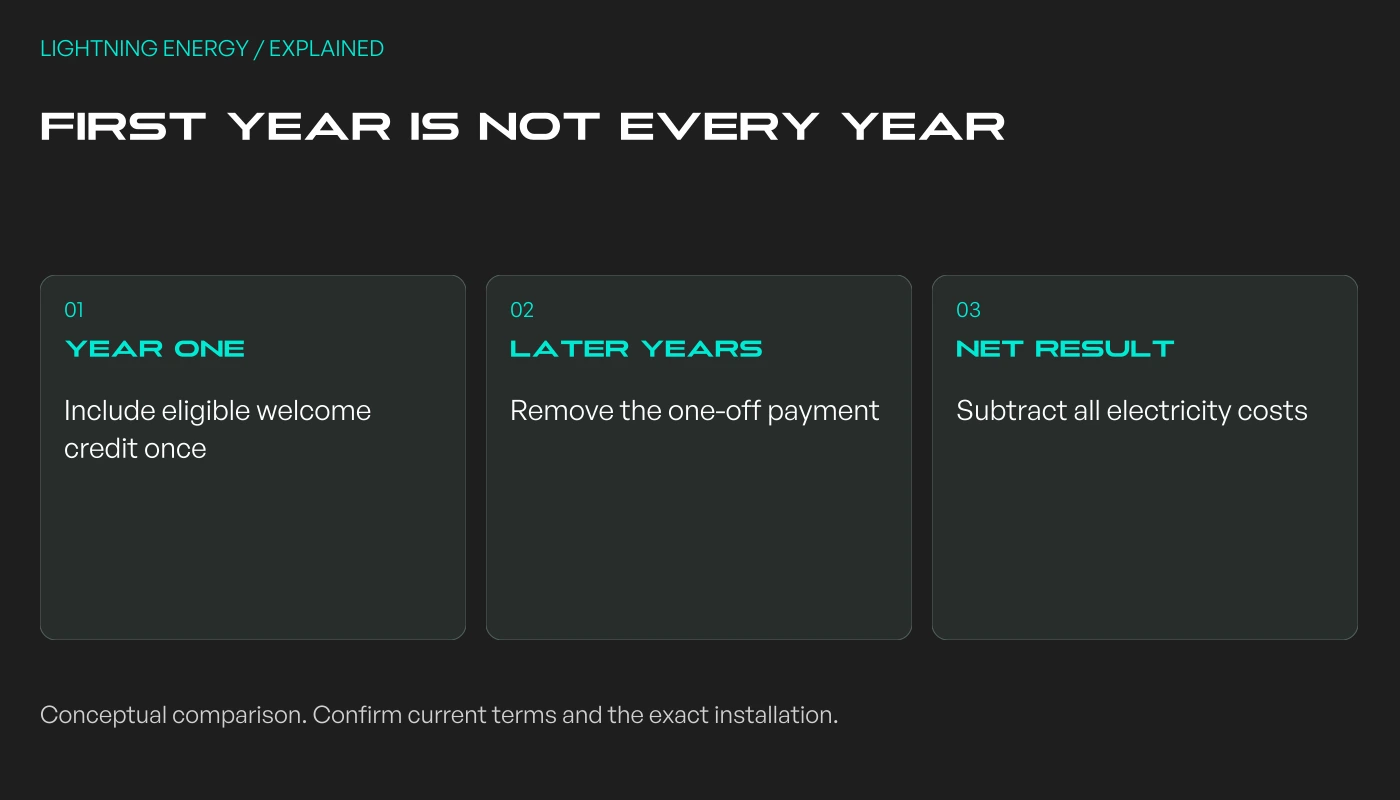
Using only those advertised headline amounts, AGL's welcome plus annual participation credits total $280 in year one, before variable energy credits. ENGIE's $200 plus twelve approximate $20 monthly credits would total about $440.
These are arithmetic summaries of public offers, conditional on eligibility and continued participation.
They exclude electricity charges, exports, other incentives and the value or cost of changing battery operation.
They are not promised savings.
Remove the one-off welcome payment when considering later years. It is also worth calculating a shorter period if you expect to move home, change retailer or replace equipment before a full year has passed.
A battery system should not be selected solely to qualify for a welcome bonus. Its everyday storage and backup role will usually last far longer than the introductory offer.
Conceptual comparison. Confirm current terms and the exact installation.
Put both electricity plans through the same worksheet
Start with the same twelve months of interval data. Calculate supply charges, imports by tariff period, ordinary export credits and confirmed VPP rewards under each written plan. Use identical household assumptions for both.
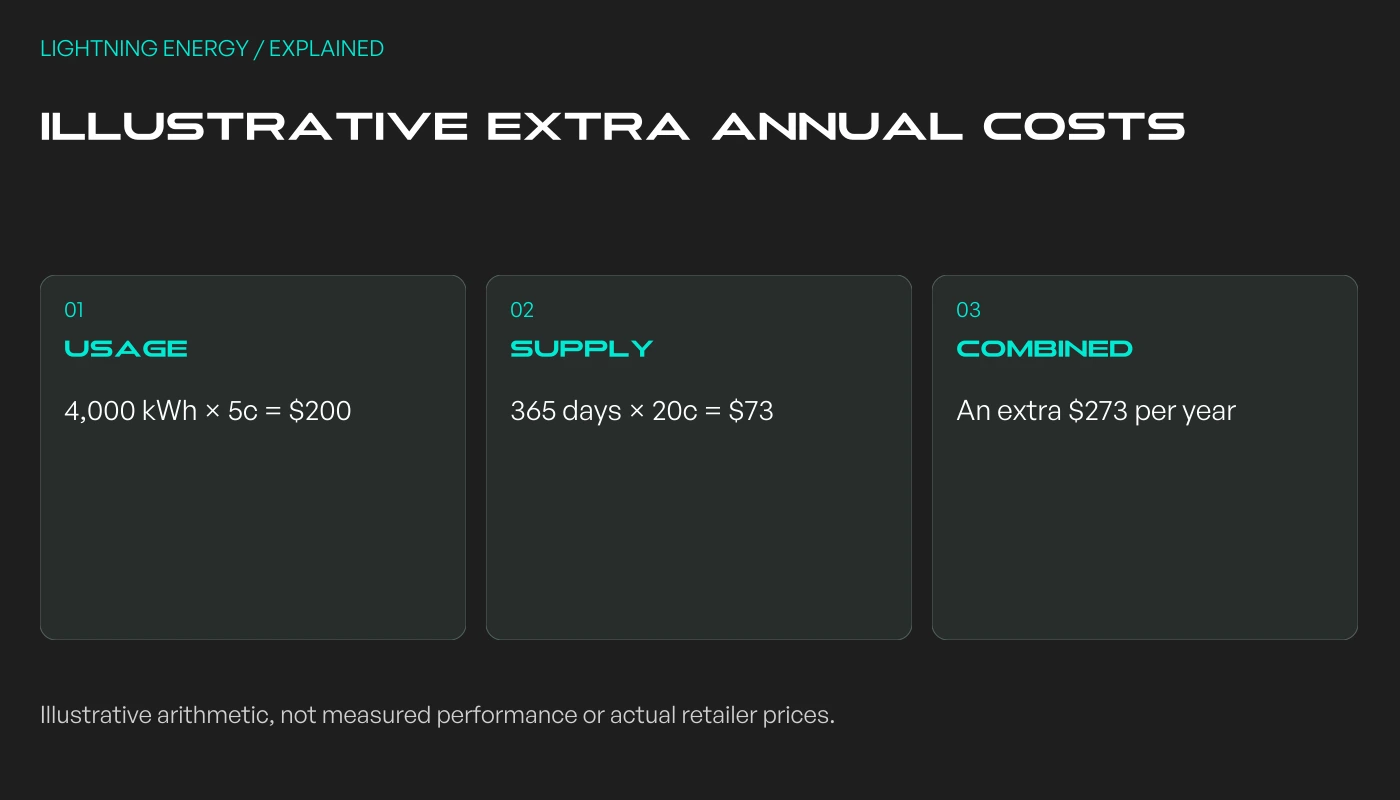
Here is an invented example. An additional 5 cents per kWh on 4,000 kWh of annual imports costs $200. An extra 20 cents a day in supply charges adds $73. Together, those differences cost $273 a year.
That could outweigh a $200 welcome credit before considering export rates or battery behaviour. These rates are deliberately hypothetical; they are not AGL or ENGIE prices and do not predict your bill.
Include changes in battery dispatch in the modelling. Energy exported during a VPP event may otherwise have served the home later, while an instructed charge can create imports. Count each resulting flow and payment once.
Illustrative arithmetic, not measured performance or actual retailer prices.
Check eligibility, control and exit arrangements
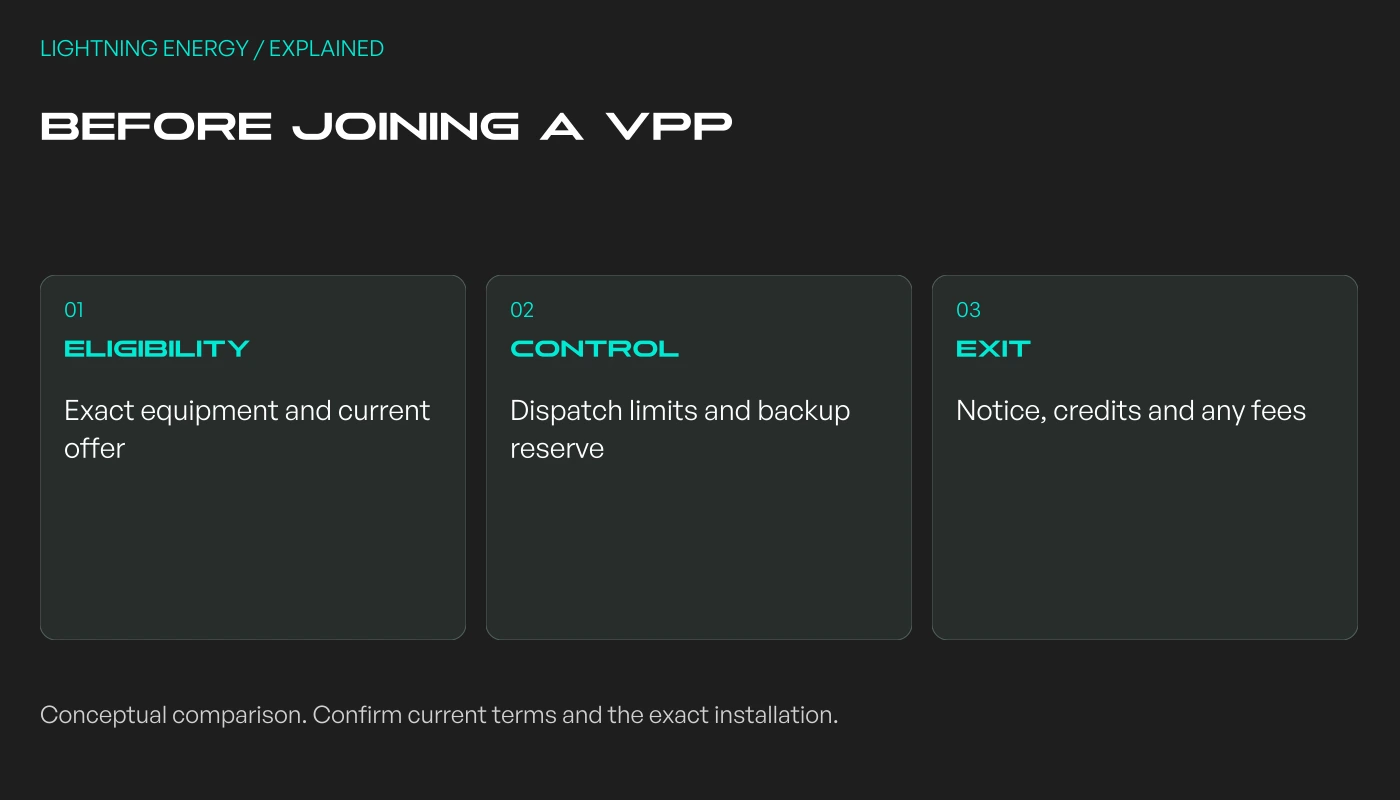
AGL requires compatible equipment, an AGL electricity plan, suitable metering and connectivity. Its public page describes a combined 250 kWh annual VPP charging/discharging limit and model-dependent backup reserve settings.
ENGIE lists at least 10 kWh of battery capacity and a solar inverter between 5 and 15 kW. For SA sign-ups after 24 April 2026, its published limit is up to 400 kWh charged, discharged or held during a rolling twelve months.
Those descriptions use different definitions, so the numbers are not directly comparable as annual exported energy. Ask each provider to explain the limit with the exact battery model and contract offered to you.
The AGL service agreement provides for customer termination on at least 30 days' notice, including for convenience. It also addresses accrued credits and automatic renewal. Read the offer schedule alongside the general agreement.
ENGIE's public offer flow requests personal and equipment details before displaying the tailored offer.
We have not submitted a customer application or verified an address-specific exit fee, reserve setting or tariff.
Obtain those terms in writing before choosing.
Conceptual comparison. Confirm current terms and the exact installation.
Keep REPS support and retailer rewards distinct
ENGIE's REPS explanation describes South Australian energy-efficiency support through its delivery arrangements. A scheme name alone does not establish that your battery qualifies for an additional payment today.
Ask whether any REPS benefit is available for the proposed installation or VPP enrolment, who delivers it, whether it has already been claimed and whether it is included in the advertised price.
Record the answer separately from recurring VPP credits.
For a home with rooftop solar, assess the existing export pattern before assuming a VPP is the best next step. A household planning EV charging may have a new use for some of that daytime energy.
A practical decision rule
Choose only after comparing a complete annual bill estimate and an acceptable level of battery control. Ask what happens during an internet outage, a retailer switch or a period when you need more energy reserved for backup.
Keep dated copies of the plan, VPP agreement and compatibility confirmation. Revisit the calculation when tariffs or household usage change, rather than assuming the introductory comparison remains valid indefinitely.
Speak with Lightning Energy about the battery and installation side of the decision. Use the retailer's written offer for the electricity contract, and keep the reward arithmetic separate from any claim about guaranteed savings.
Book a consultation and we'll map solar, storage, hot water, and the rebates around your bills and your goals.
Loading consultations…
Lightning EnergyPlan your next energy upgrade.
⚡
Hi, I’m Lightning Energy’s project guide. I’ll ask a few practical questions, explain what usually matters for your project, and help you decide on a useful next step — no guesswork or sales pressure.
First, what kind of property are we planning for?