A Hot Start to Spring: What September’s Weather Means for Home Cooling
September's weather has given Australians an early reason to think about summer comfort. The Bureau of Meteorology's monthly assessment shows unusually warm conditions nationally, with major differences in rainfall between regions.
LLuke CoveLightning Energy7 October 2026 · 4 min read
September's weather has given Australians an early reason to think about summer comfort. The Bureau of Meteorology's monthly assessment shows unusually warm conditions nationally, with major differences in rainfall between regions.
I would use that news as a prompt to prepare, not as a prediction that every place will have the same summer. A national weather statistic cannot tell you whether your own living room needs a larger air conditioner.
What the September report says
The Bureau's September 2026 summary identifies Australia's second-warmest September on record. Eastern dryness contrasted with unusually wet conditions in Western Australia.
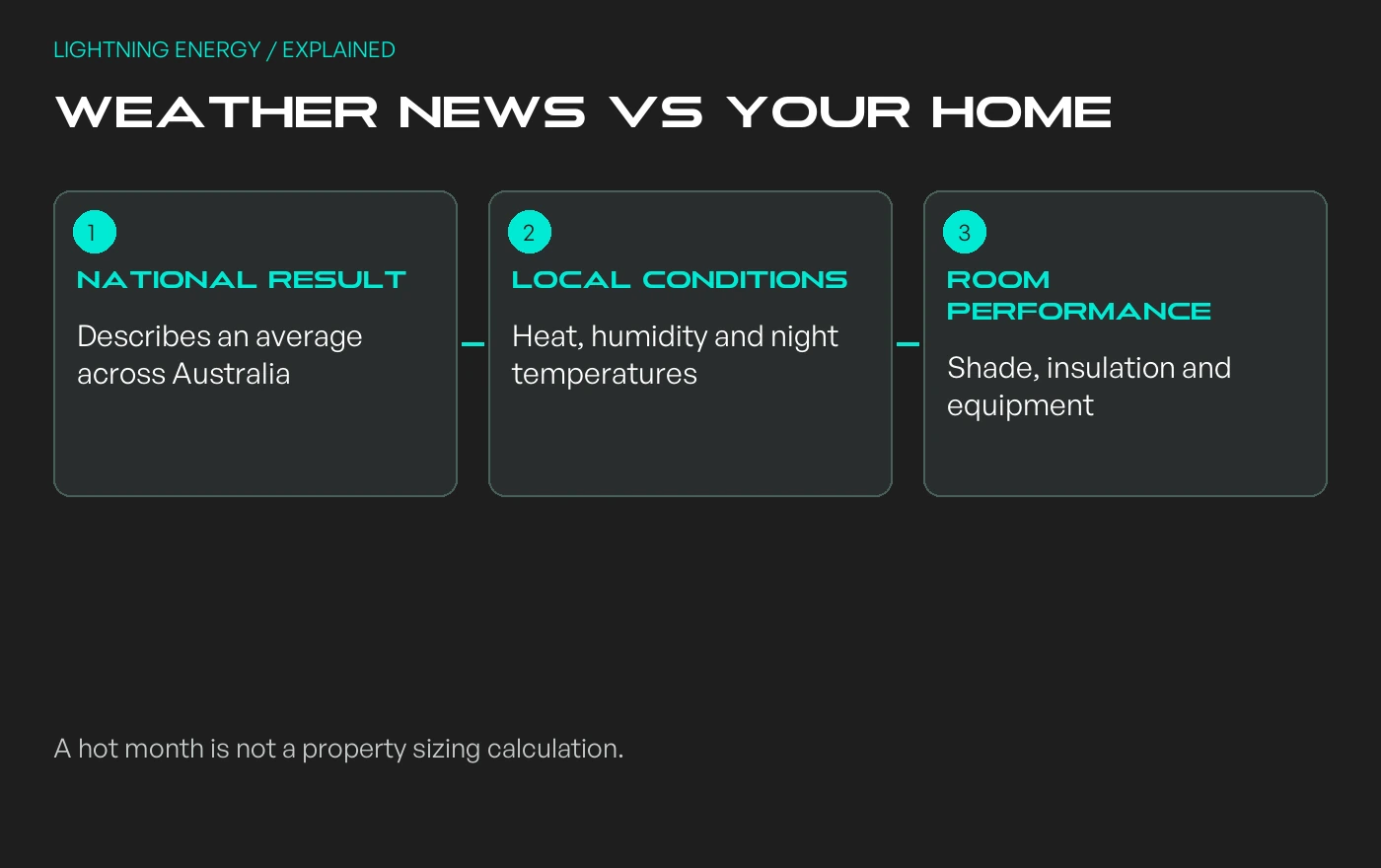
That geographical difference matters. National averages smooth out conditions that households actually experience, including humidity, night temperatures and local heat exposure.
This is an account of a completed month, not a seasonal forecast. I would keep any discussion of future conditions separate from the observed September results.
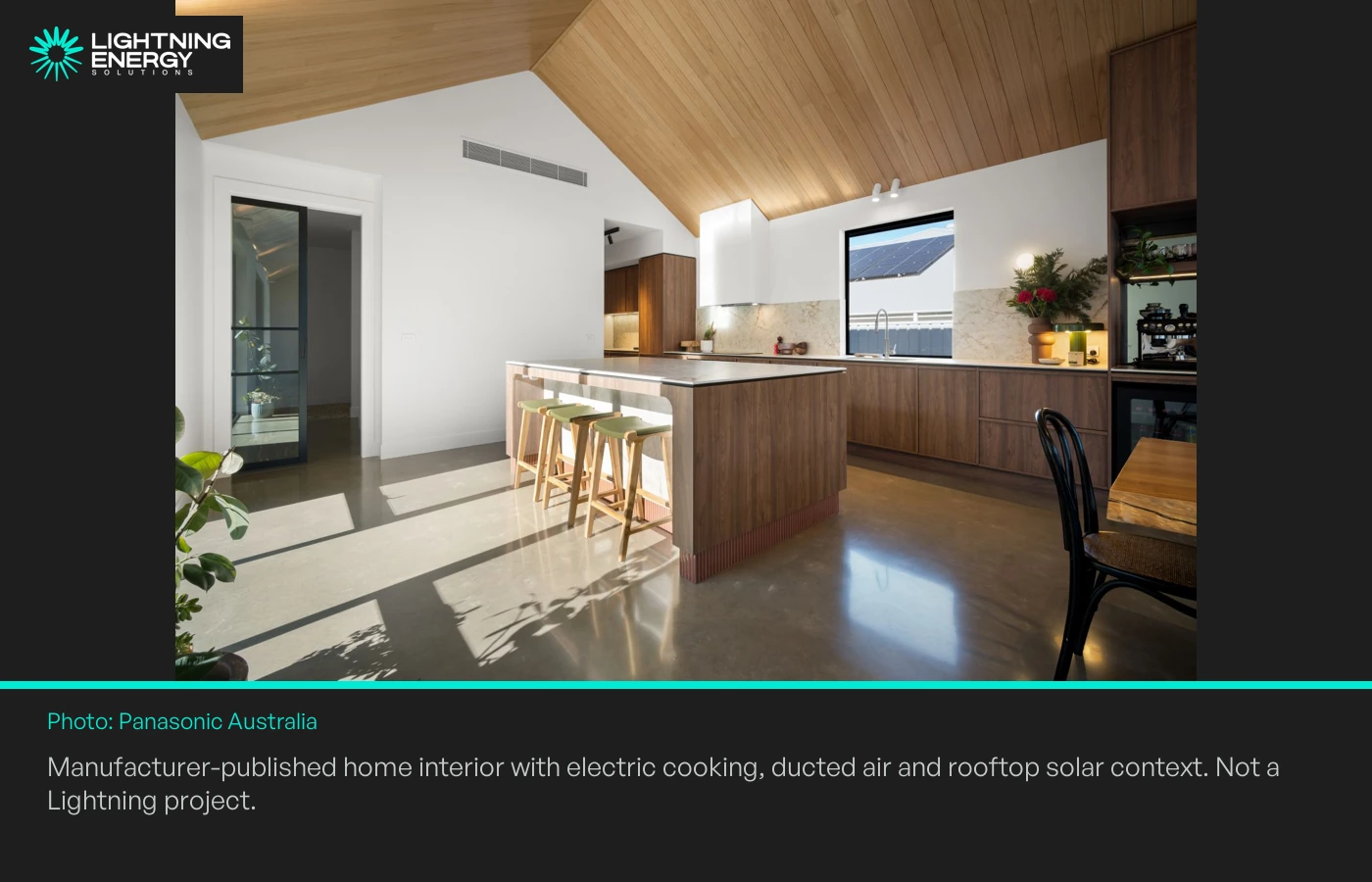
Photo: Panasonic Australia. Manufacturer-published home interior with electric cooking, ducted air and rooftop solar context. Not a Lightning project.
Why heat can increase electricity demand
Hot conditions can bring many cooling systems into use at similar times. A building that has accumulated heat may still need cooling after the strongest solar generation has passed.
The relationship is not as simple as hotter weather always meaning more useful solar power. Cloud, roof orientation, shading and equipment temperature also affect production.
For a household, compare the time of cooling demand with the time of generation and the electricity tariff. A system can generate plenty over a day while still importing energy during the evening.
Original Lightning Energy graphic. A hot month is not a property sizing calculation.
Prepare the building before reaching for the thermostat
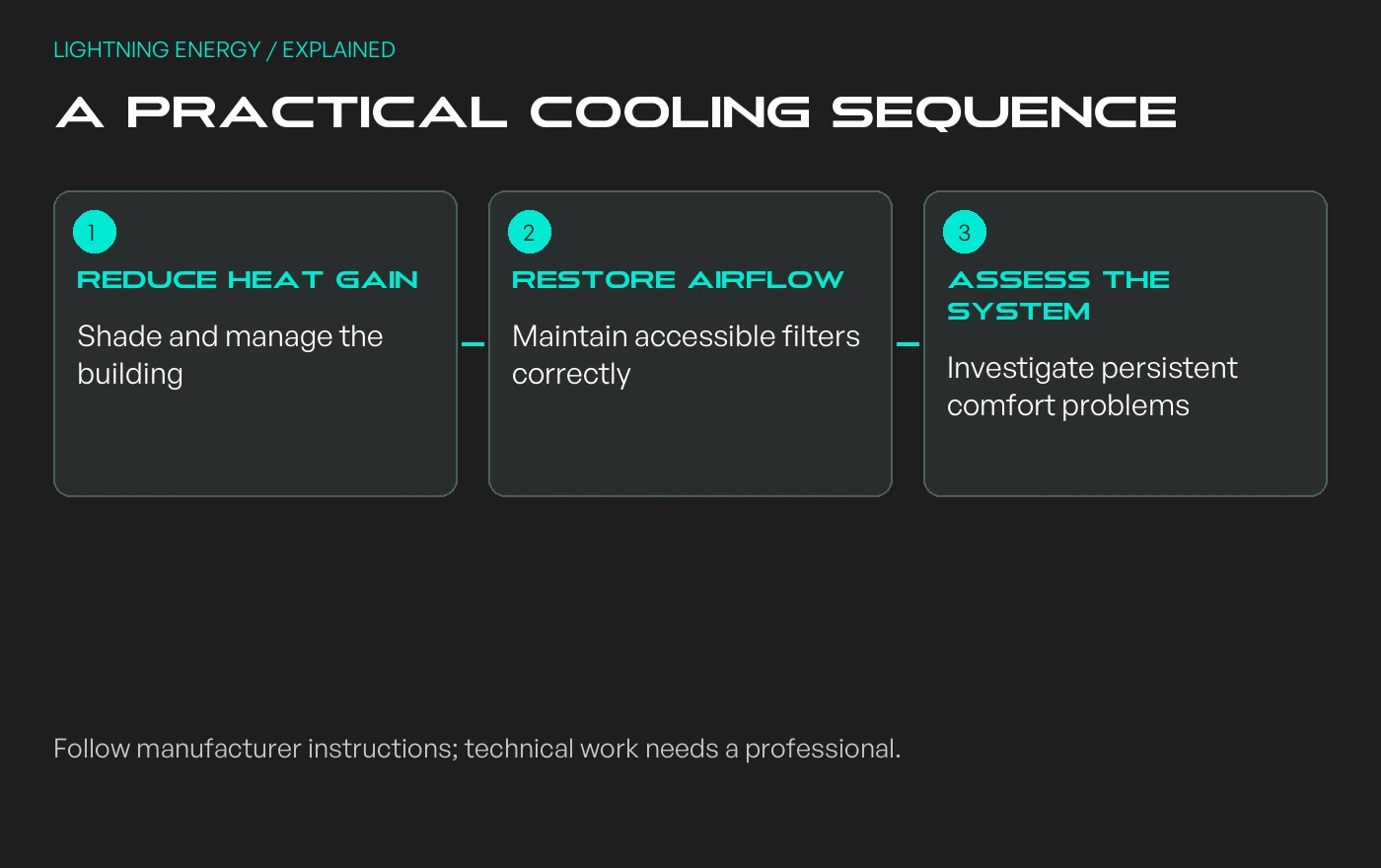
Shade the sun before it heats the glass where practical. Use blinds and external shading appropriately, reduce unnecessary heat-producing activity during hot periods and keep the rooms you are cooling reasonably contained.
For air conditioning, clean user-accessible filters in accordance with the manufacturer's instructions and keep airflow clear. Electrical faults, refrigerant work and servicing belong with qualified technicians.
Duct condition and building leakage can affect comfort. If one room performs badly, investigate the cause rather than assuming the whole system must be replaced with a bigger unit.
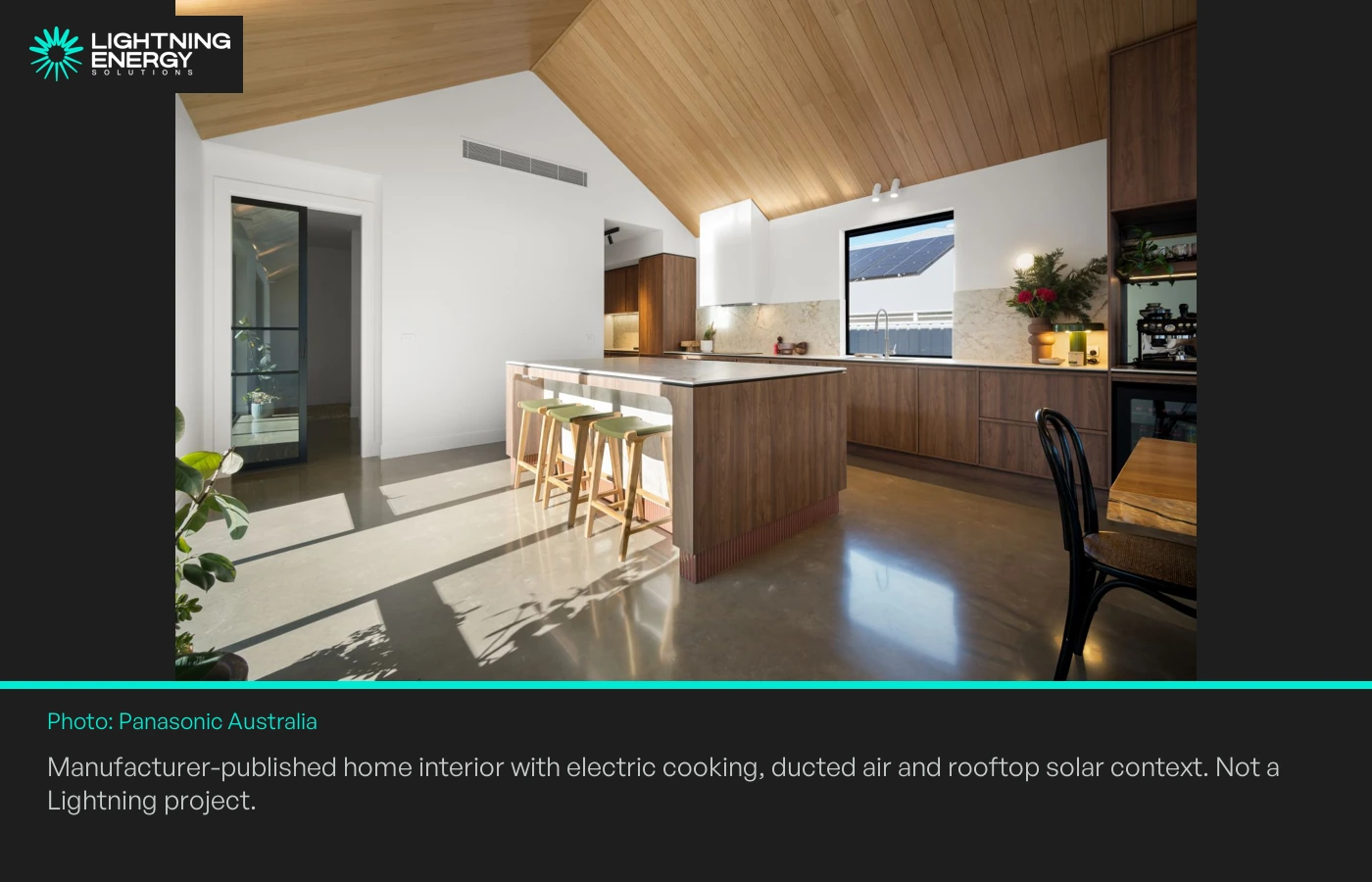
Photo: Panasonic Australia. Manufacturer-published home interior with electric cooking, ducted air and rooftop solar context. Not a Lightning project. Illustrative household context, not the news project.
Make a plan for comfort, not just consumption
Some homes can shift a little cooling earlier, but the result depends on insulation, thermal mass, occupancy and comfort needs. Treat pre-cooling as a measured trial rather than a universal setting.
If battery storage is involved, allow for the load it can actually support. A daily energy total does not prove the battery can run every appliance simultaneously.
My recommendation is to deal with known problems before peak demand arrives. If a system is failing, arrange a proper assessment. If it works well, start with sensible maintenance and building improvements instead of a rushed upgrade.
Research checked 6 October 2026. Project plans and policy timelines may change. The linked sources distinguish announcements, proposals and operating results.
Book a consultation and we'll map solar, storage, hot water, and the rebates around your bills and your goals.
Loading consultations…
Lightning EnergyPlan your next energy upgrade.
⚡
Hi, I’m Lightning Energy’s project guide. I’ll ask a few practical questions, explain what usually matters for your project, and help you decide on a useful next step — no guesswork or sales pressure.
First, what kind of property are we planning for?