When Solar Feels Unlimited: What a New Household Study Reveals
What happens when a household stops thinking of every appliance as a cost? New research into homes with energy technology suggests that the answer involves habits, comfort and family routines as well as tariffs.
LLuke CoveLightning Energy8 October 2026 · 4 min read
What happens when a household stops thinking of every appliance as a cost? New research into homes with energy technology suggests that the answer involves habits, comfort and family routines as well as tariffs.
I find that more useful than assuming people behave like a spreadsheet. The question is how to enjoy the benefits of solar and storage while keeping the operating plan sensible.
What the researchers actually studied
The June 2026 Living Lab report from the Scenarios for Future Living project followed 35 households. It examined everyday energy use, household decisions and the role of technology including solar, batteries and electric vehicles.
The research release is part of the Scenarios for Future Living project. It provides insight into behaviour, not a representative survey of every Australian home.
Some participants described energy feeling more plentiful after adding storage. That can change appliance use and the importance placed on conserving electricity. It does not mean every battery household becomes wasteful.
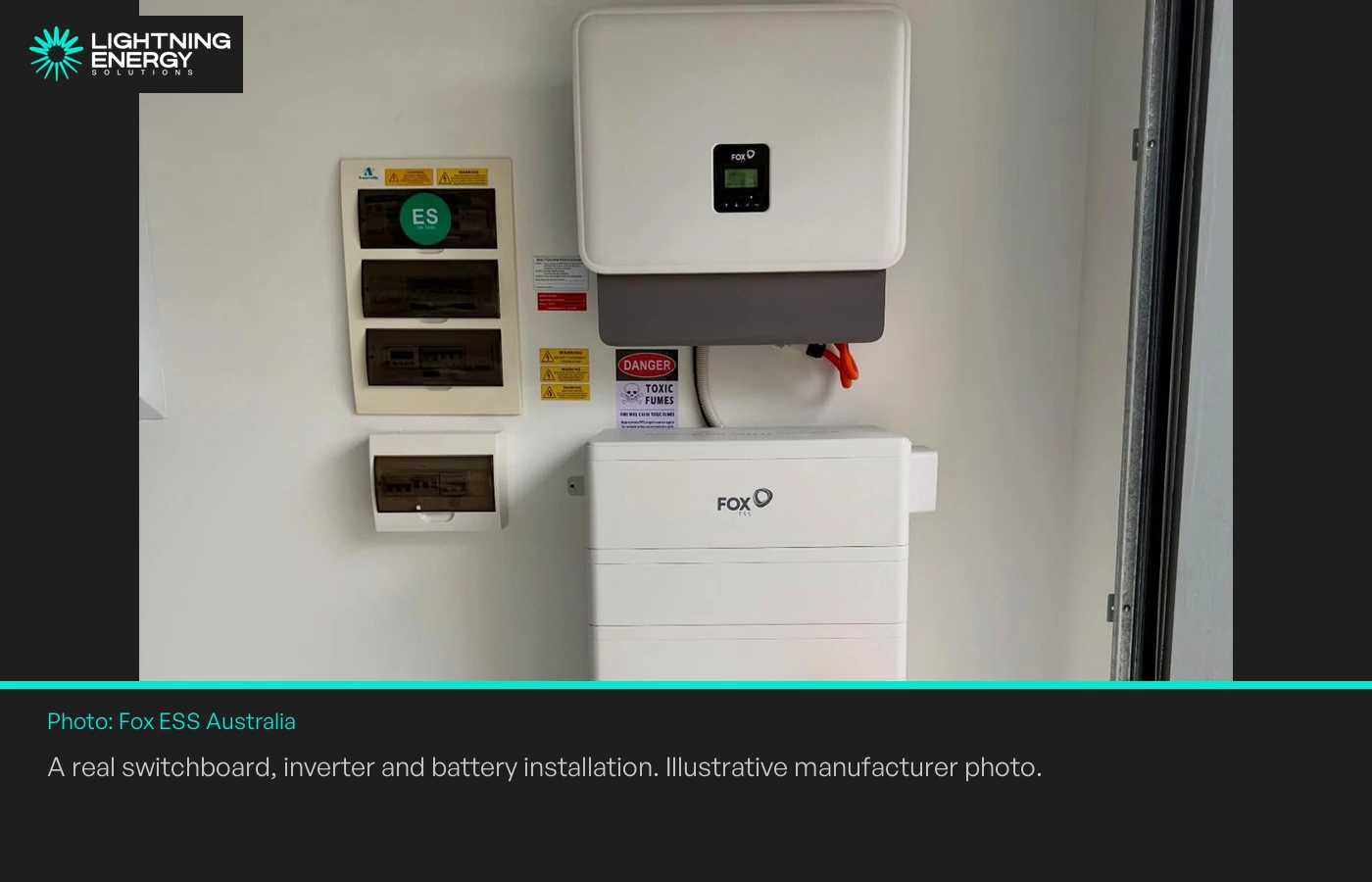
Photo: Fox ESS Australia. A real switchboard, inverter and battery installation. Illustrative manufacturer photo.
Comfort can be a benefit, not a failure
If someone previously avoided cooling an uncomfortable room because of cost, using more cooling after an upgrade may be an improvement in their quality of life. Energy use alone does not describe that outcome.
The comparison should identify what service changed. More comfortable rooms, additional hot water and a new EV are different from unexplained consumption in an otherwise unchanged household.
For air conditioning, I would discuss comfortable operating patterns rather than treating the lowest possible energy use as the only goal. Efficiency means delivering the useful outcome with less waste.
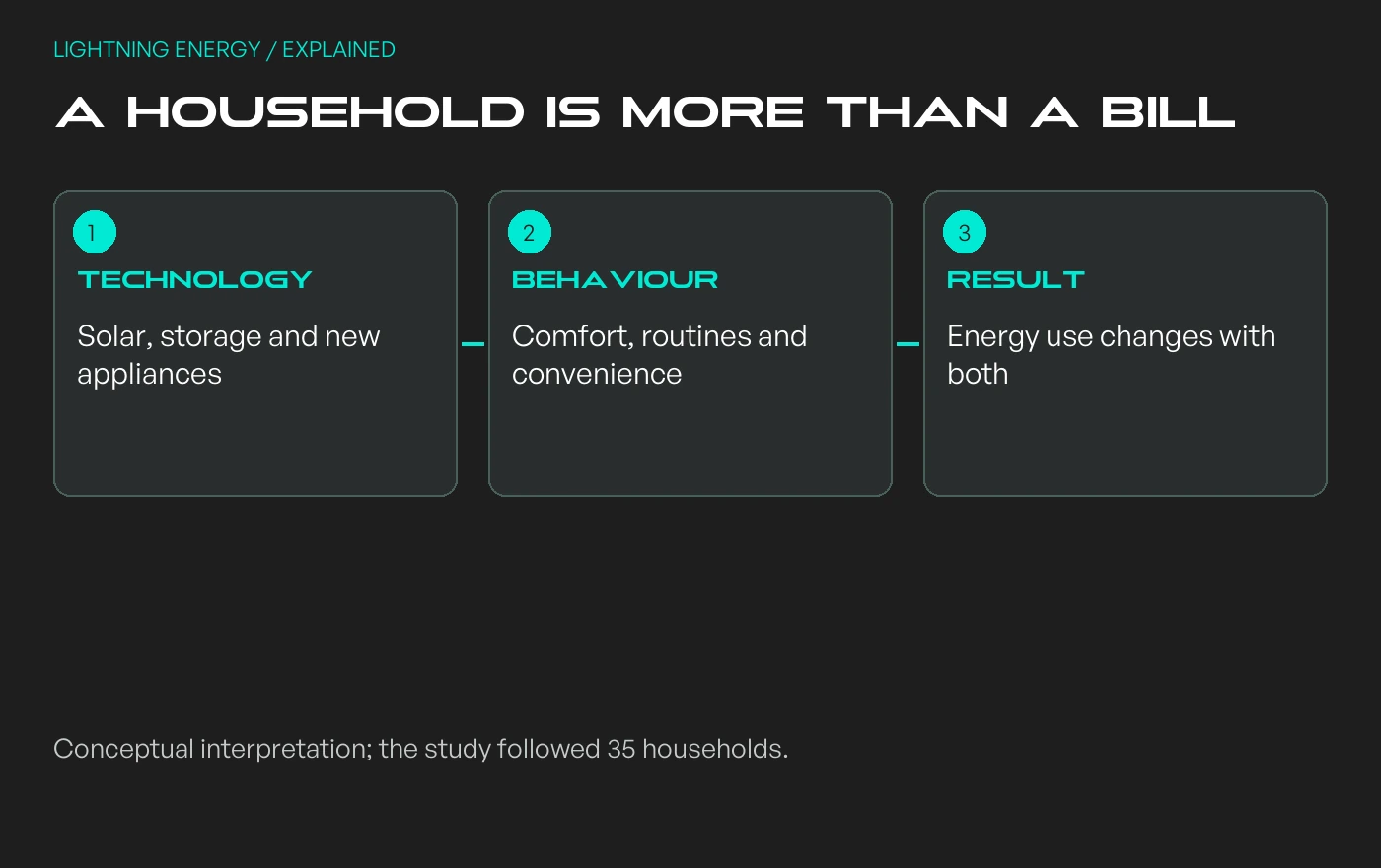
Original Lightning Energy graphic. Conceptual interpretation; the study followed 35 households.
The meter still sees timing
A household can generate substantial solar electricity over a day and still buy energy at expensive times. A feeling of abundance does not guarantee that every appliance is being supplied from current solar production.
A battery also has output and energy limits. More simultaneous loads can exceed its output; longer use can exhaust the energy available before morning.
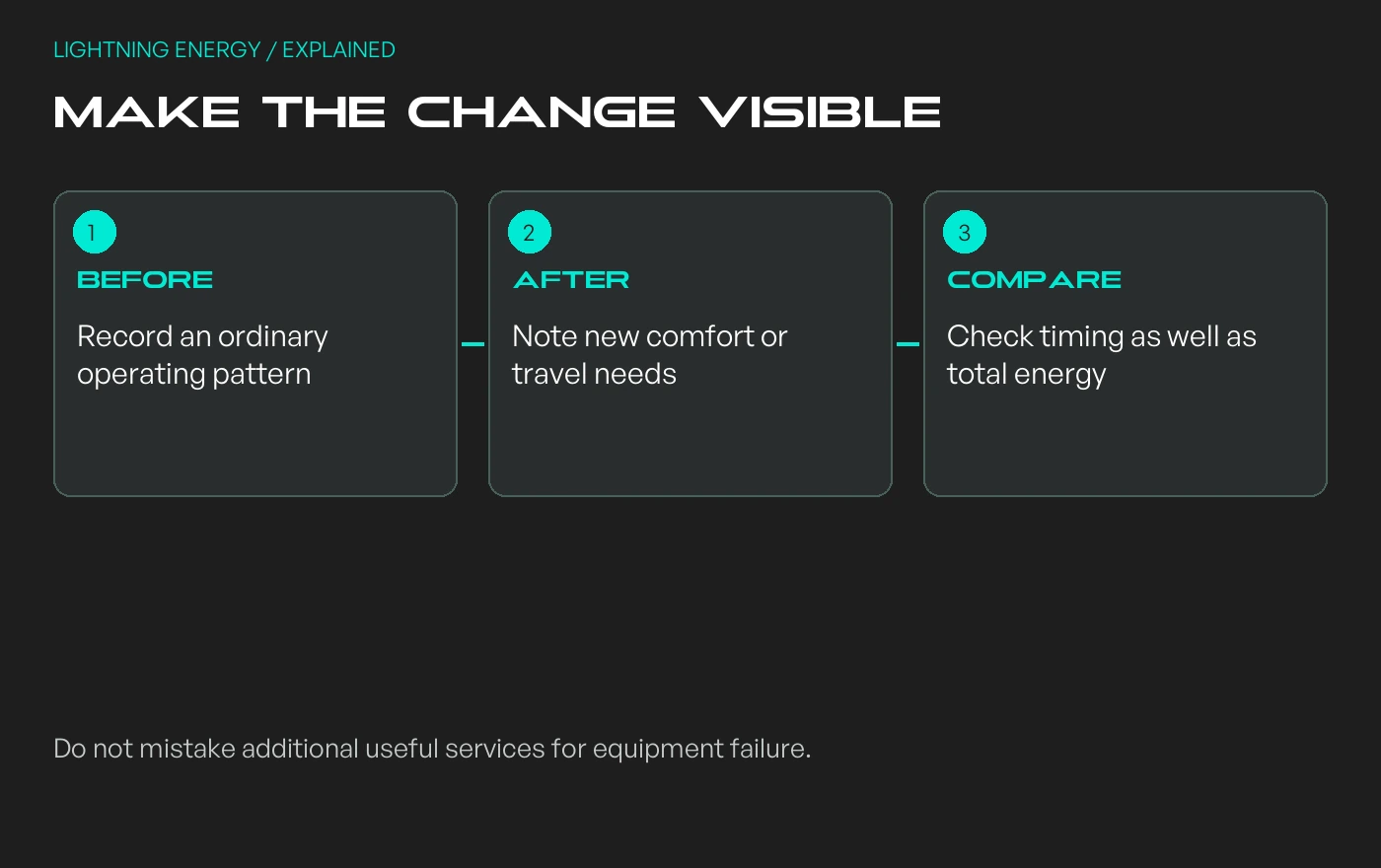
The practical response is feedback. Compare imports, exports and major loads before and after a routine changes. Look for a pattern over ordinary days rather than drawing conclusions from one sunny afternoon.
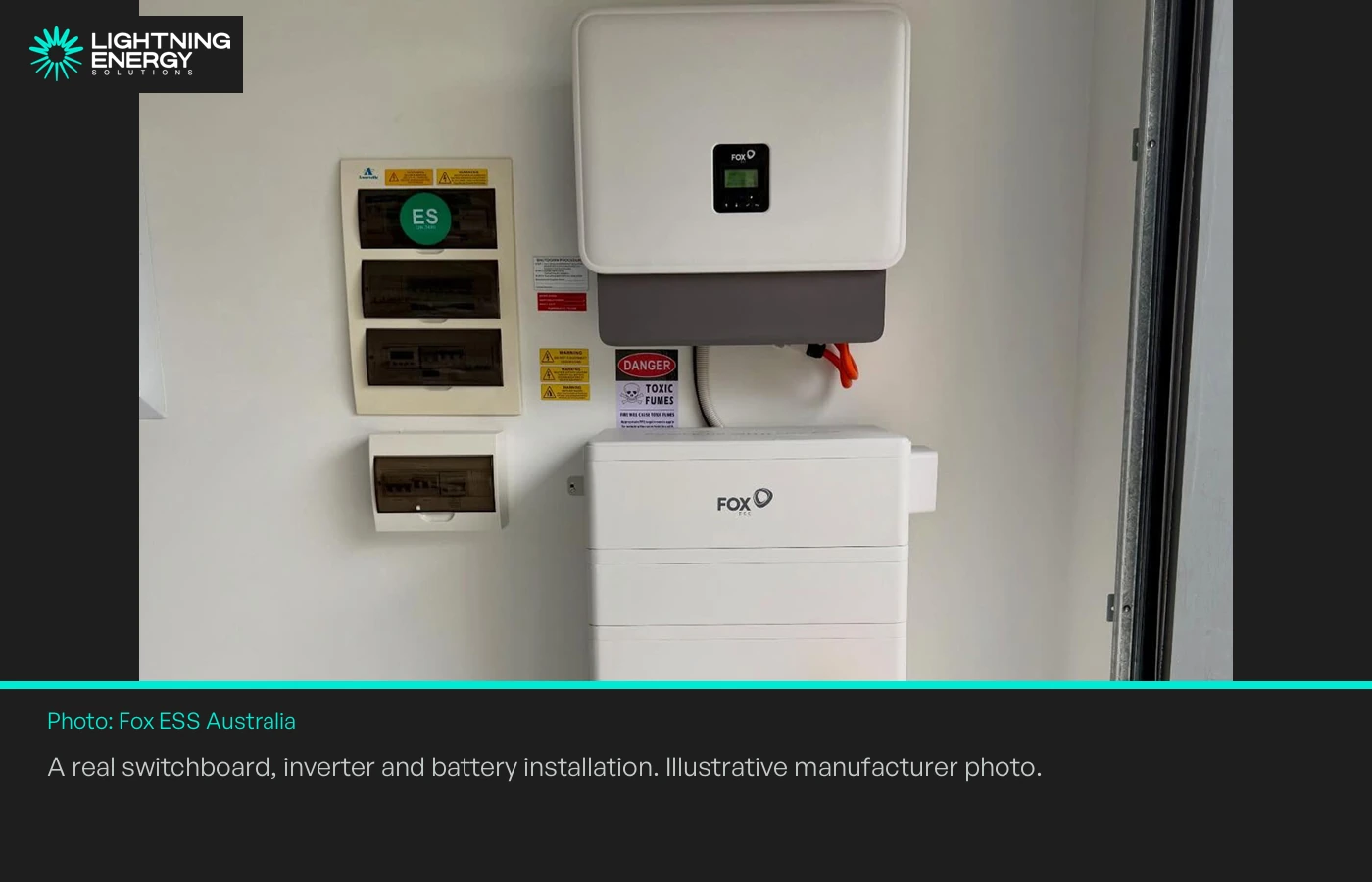
Photo: Fox ESS Australia. A real switchboard, inverter and battery installation. Illustrative manufacturer photo. Illustrative household context, not the news project.
My approach: useful freedom with visible limits
I would start by asking what the household wants to do more comfortably. Then build a simple operating plan around that, leaving room for changes in weather, occupancy and travel.
Automation can help with repeatable tasks, but it should remain understandable. If nobody knows why the hot water or car is charging at a certain time, the household loses the ability to judge whether the system is working well.
This is not a reason to reject solar or batteries. It is a reason to assess the people and routines alongside the hardware, and to measure results against the outcomes they actually wanted.
Research rechecked 8 October 2026. The report describes an engaged 35-household sample; its findings should not be treated as a population-wide measure of electricity use.
Book a consultation and we'll map solar, storage, hot water, and the rebates around your bills and your goals.
Loading consultations…
Lightning EnergyPlan your next energy upgrade.
⚡
Hi, I’m Lightning Energy’s project guide. I’ll ask a few practical questions, explain what usually matters for your project, and help you decide on a useful next step — no guesswork or sales pressure.
First, what kind of property are we planning for?