
Solar Export Metering Costs: What Are You Paying to Enable?
Separate solar meter configuration, connection and electrical upgrade costs so you can check what a quoted export-enabling fee actually covers.
Separate solar meter configuration, connection and electrical upgrade costs so you can check what a quoted export-enabling fee actually covers.

A charge described as “solar metering” can refer to different work. Before deciding whether it is reasonable, ask exactly what is being enabled, who performs the task and whether your quote already includes it.
There is no single metering fee that applies to every Melbourne solar home. An existing smart meter, the network process and required electrical work can change the scope.
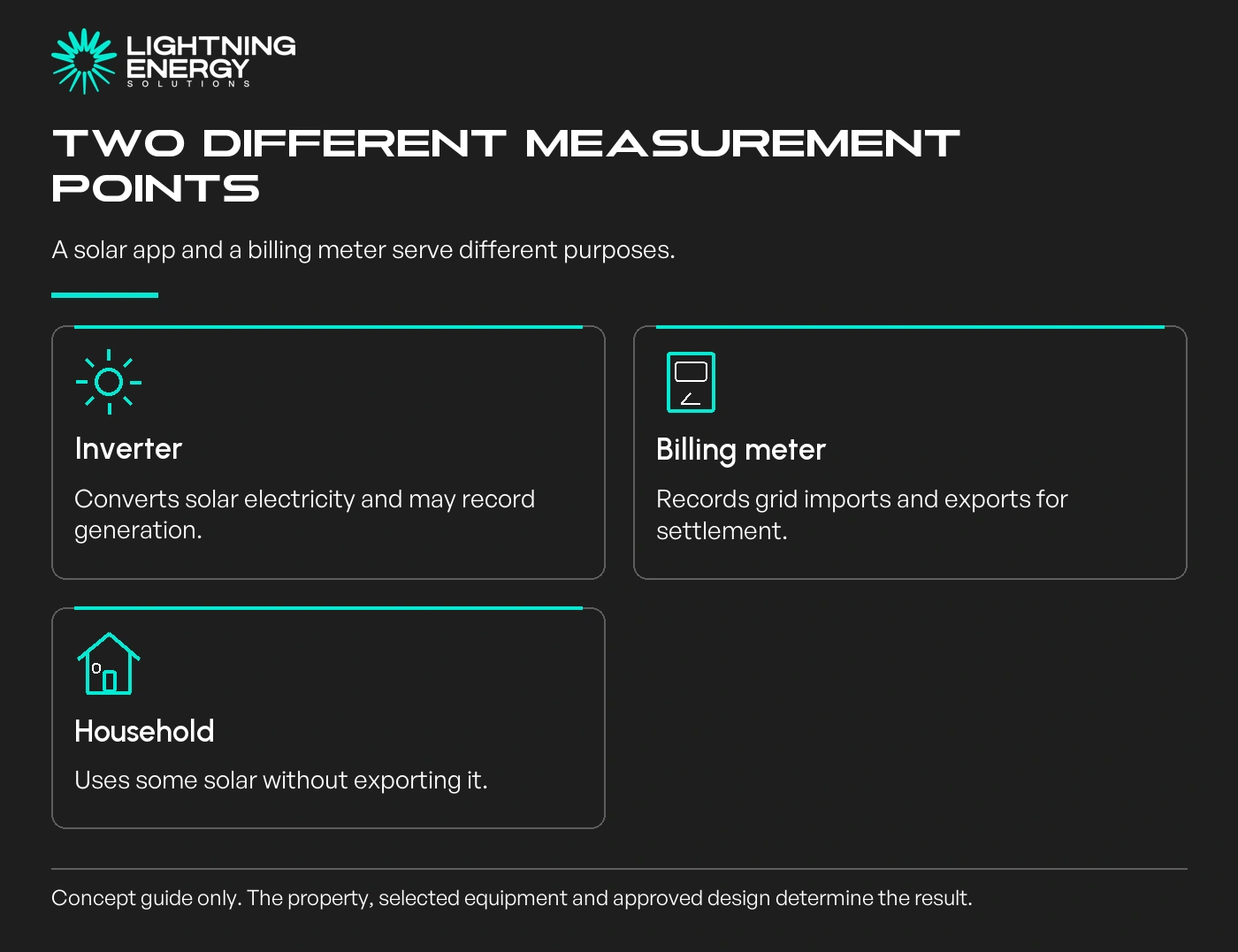
The inverter converts the solar system's electricity for use in the home. The electricity meter measures flows at the grid connection for billing. An inverter app is not a replacement for that billing meter.
Most Victorian customers already have smart meters, but they still need the appropriate solar configuration. See the government connection guide.
Configuration and replacement are different tasks. If someone proposes new hardware, ask why the existing meter cannot serve the approved installation and which business is responsible for the decision.
When comparing solar quotes, identify the metering allowance explicitly. “Grid connection included” is too vague if another business will invoice you for part of the process.
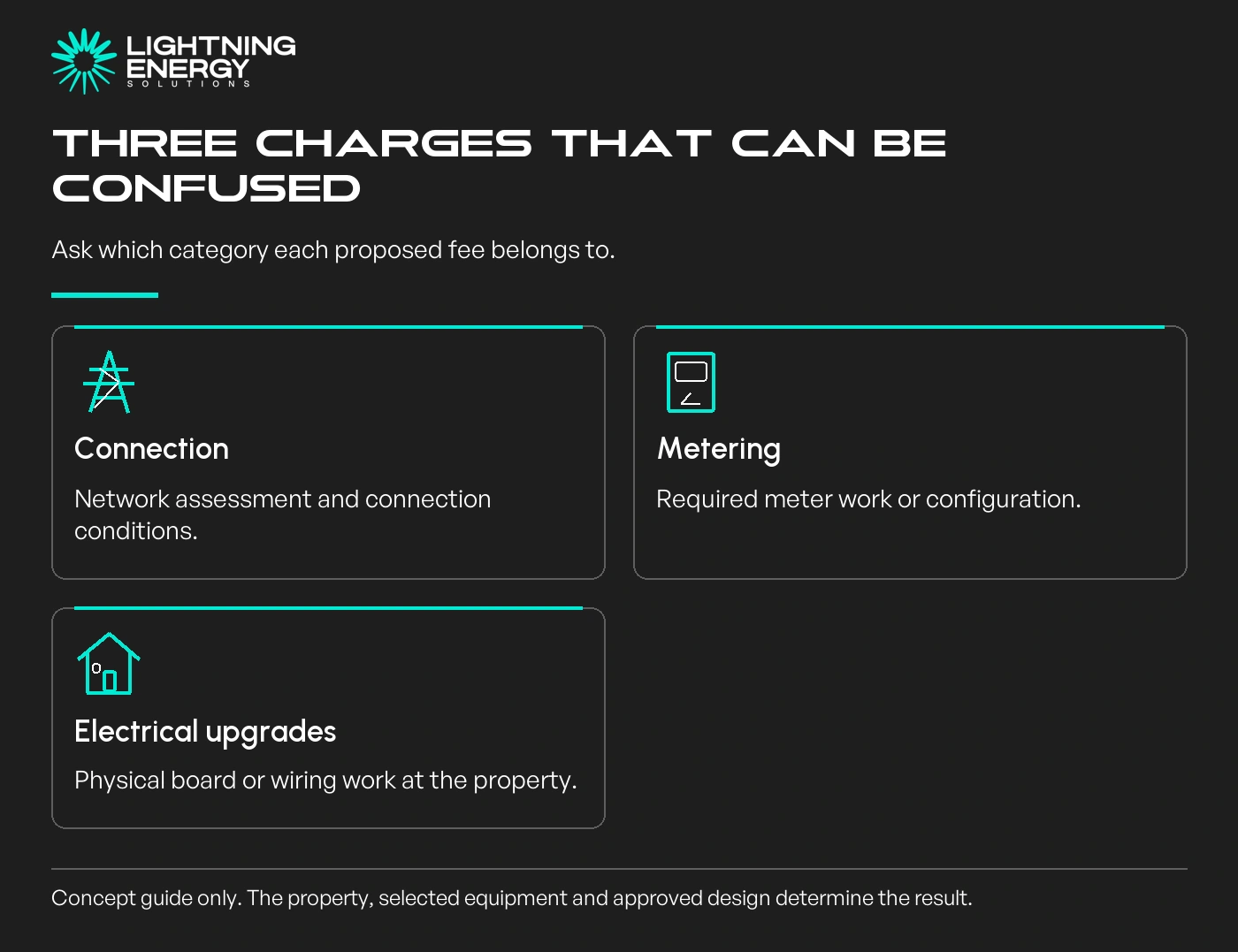
First is the network connection process: assessing and approving the system's connection conditions. The relevant distributor sets the requirements for its network area.
Second is metering work or configuration coordinated through the relevant electricity-market parties. Ask your retailer for the applicable process and any charge passed through to your account.
Third is physical work at the property, such as a switchboard or meter-board upgrade. That can be a separate electrical job rather than a fee for recording solar exports.
Jemena publishes connection guidance for its network.
Treat another distributor's process or fee as a reference only, not proof of what applies at your address.
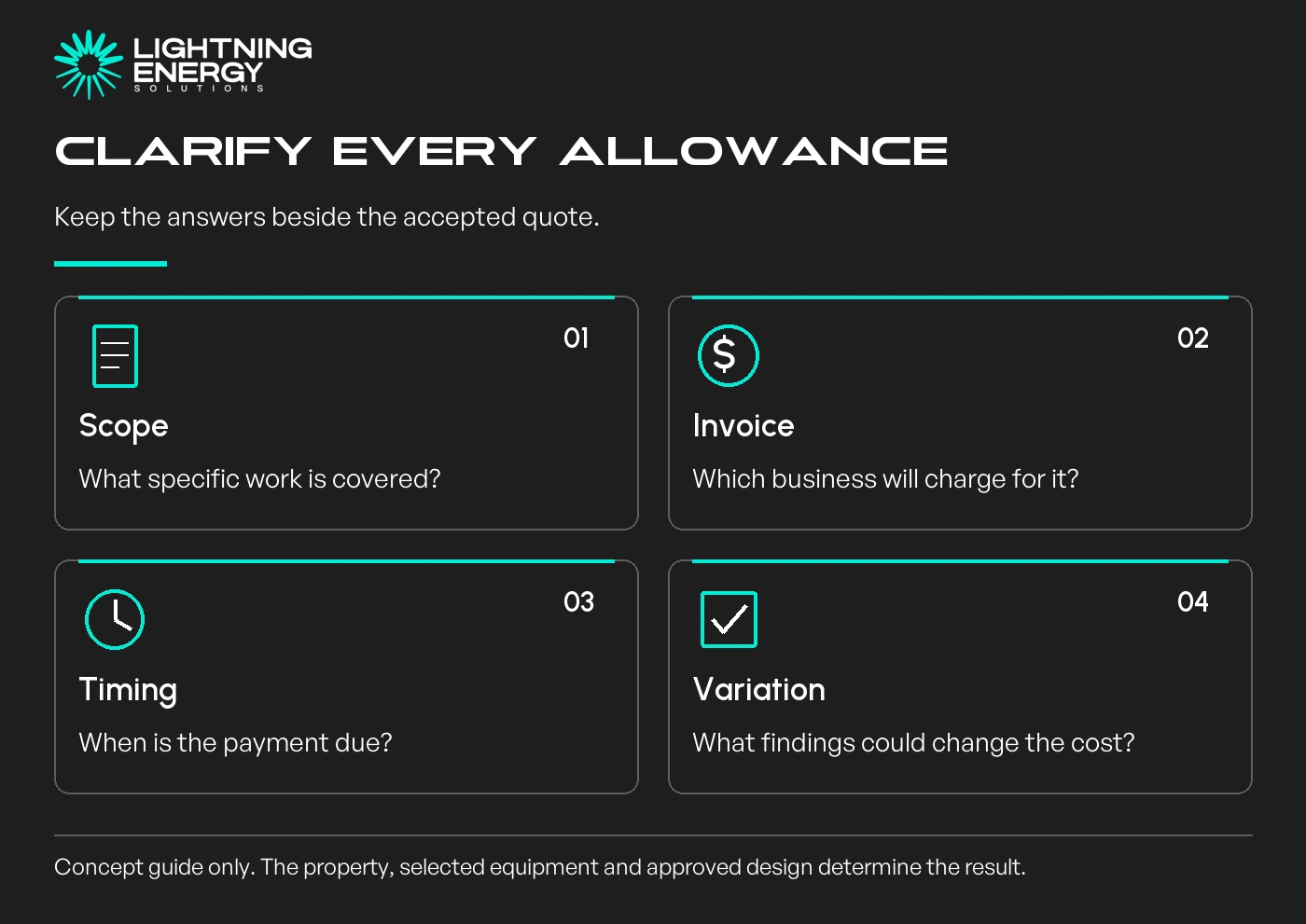
Request a written description of each item, who invoices it, when it becomes payable and whether tax is included. Identify allowances that could change after inspection.
For example, an illustrative quote might include the solar installation but exclude retailer-arranged meter configuration. A later charge is easier to understand when that exclusion was clear before acceptance.
A different quote might include an allowance for configuration while excluding board repairs. These are not necessarily competing prices for the same work.
Our inverter guide helps distinguish equipment functions. Do not approve an inverter upgrade merely because a bill says the meter needs configuration.
Export metering enables the appropriate recording of electricity sent to the grid, subject to the approved connection. It does not determine how much your retailer pays for each exported unit.
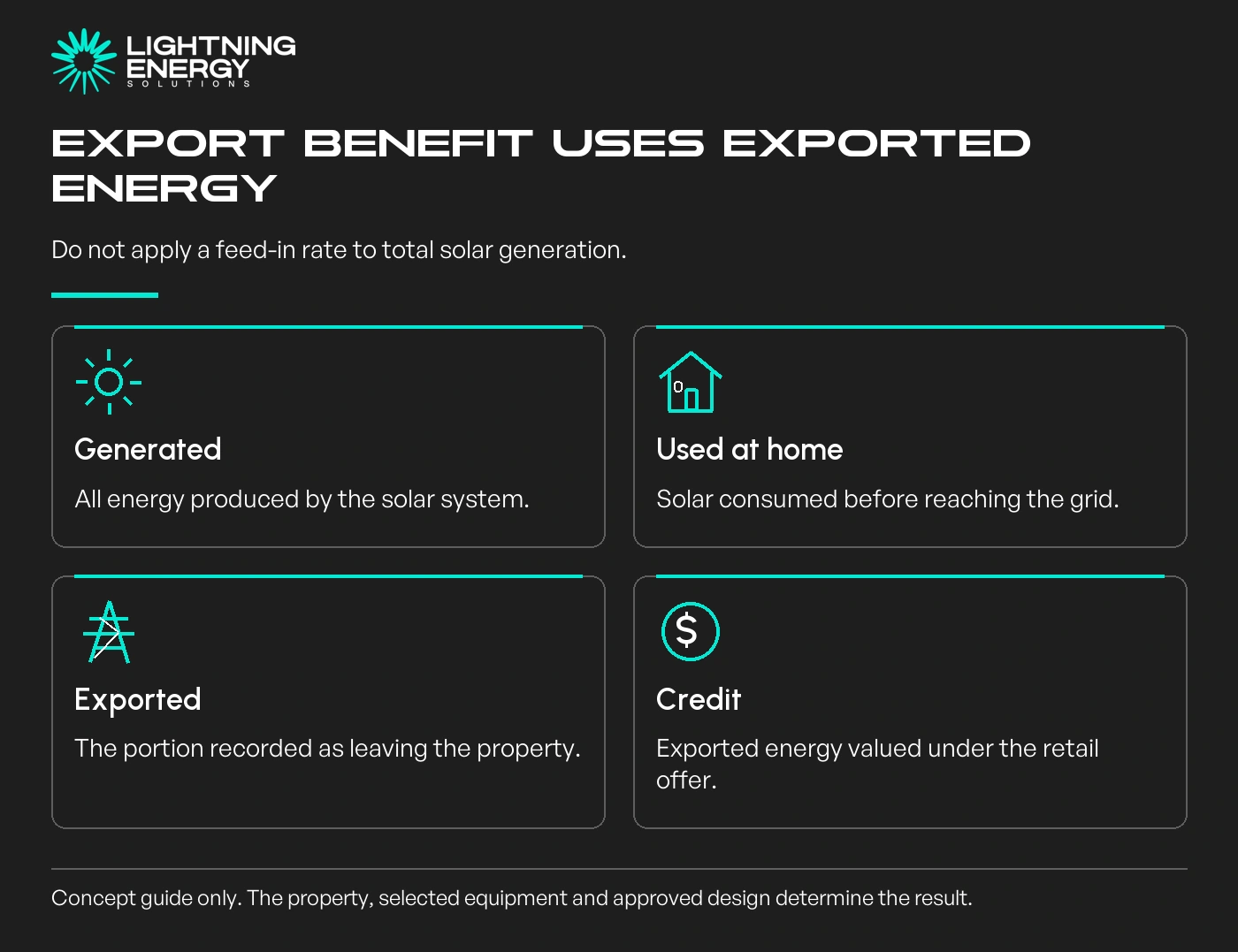
Use likely exported energy and the actual offer to assess export credits. Total panel generation includes electricity used directly in the home, so applying a feed-in rate to all generation overstates export income.
Check whether the proposed change also changes your retail tariff. Usage and daily charges can matter more than a small export credit, especially for homes with substantial evening demand.
A battery assessment requires its own economics. A metering charge alone is not a sufficient reason to buy storage or redesign an otherwise suitable system.
A grid-connected system restricted to zero export still needs the applicable network agreement and electrical compliance. Ask the distributor and retailer which metering requirements remain.
Do not change installer settings or bypass approvals to avoid a fee. Our export-limit explainer separates approved limits from the amount panels can generate.
If a charge is unclear, request its exact description and the published schedule or contract term supporting it. Keep the response with the quote so responsibility remains visible after installation.
The useful comparison is the full installed scope and ongoing plan, not the cheapest-looking line labelled “metering”. Pay for clearly identified work and query duplicated or unexplained items before they become a dispute.
Available times
Book a consultation and we'll map solar, storage, hot water, and the rebates around your bills and your goals.
Question 1 of 6
