
Solar STCs: Understanding the Discount and Certificate Assignment
Understand how solar STCs become an upfront discount, why postcode and installation timing matter, and what to check before assigning certificate rights.
Understand how solar STCs become an upfront discount, why postcode and installation timing matter, and what to check before assigning certificate rights.

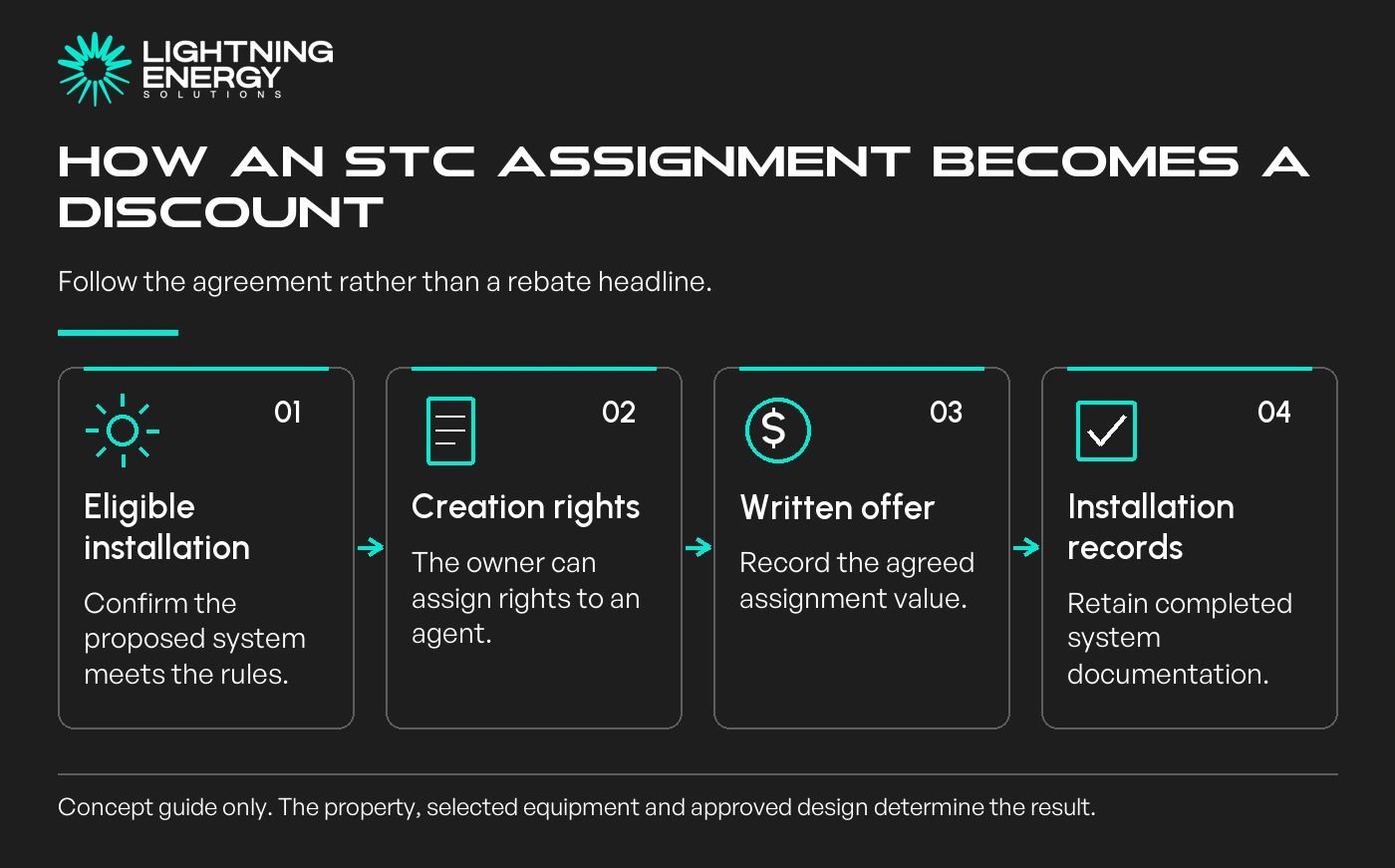
Solar STCs are tradable certificates associated with eligible installations. Many households assign the right to create them to a registered agent in exchange for an upfront discount.
That transaction is separate from Victoria’s state solar rebate. Ask the quote to identify each form of support rather than bundling them into one unexplained government saving.
For a new solar installation, understand the certificate calculation and assignment before relying on the discounted total.
The Clean Energy Regulator explains that a system owner can create certificates or assign that right to a registered agent. The assignment is not the same thing as receiving ongoing payments for exported electricity.
Read the assignment document alongside the quote. Check the system, property, agent and offered discount, and ask how a changed installation date or equipment list would be handled.
Do not sign incomplete paperwork with the expectation that the important details will be filled in later. Keep your own copy of the completed agreement and installation records.
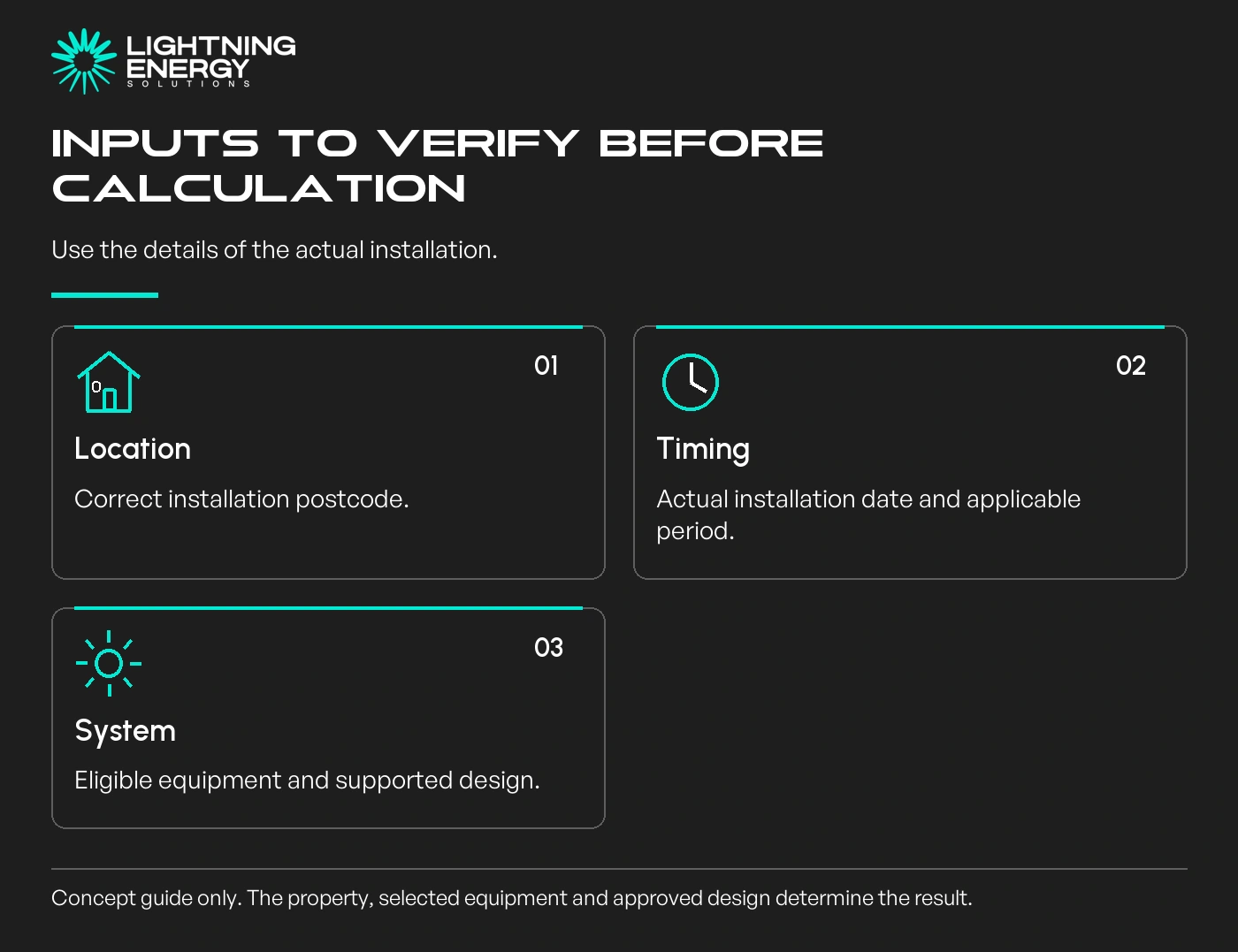
For solar PV, location and installation timing affect certificate entitlement. The applicable deeming period is a program calculation, not a statement about how long the panels will physically operate.
The regulator’s current table lists five deeming years for 2026 solar installations and four for 2027. Recheck the rules for the actual installation date before accepting a calculation.
Use the correct postcode and supported system details. A neighbour’s discount is not a reliable substitute, even if the advertised package size appears similar.
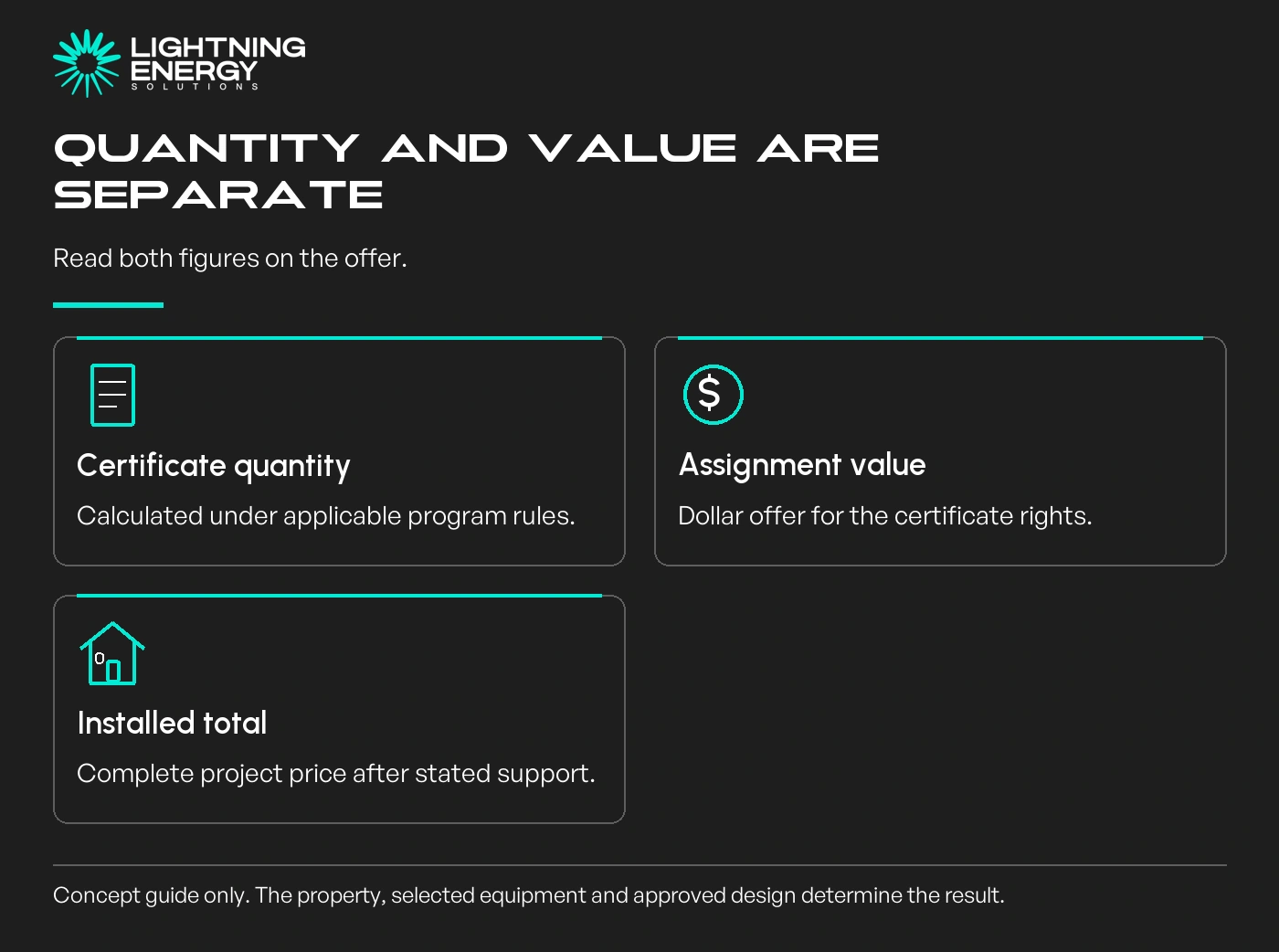
The number of eligible certificates and the dollar discount offered are different figures. Ask the provider to show both, including any assumptions or charges included in its offer.
An illustrative comparison is two quotes using the same eligible system details but offering different assignment values. The question is what each agreement pays for those rights, alongside the full installed scope.
That example does not establish a current certificate price. Obtain the actual written offer rather than using an internet headline as a guaranteed sale value.
Check our solar cost guide if other scope differences make the two totals difficult to compare.
Ask which current product, design and installer requirements the proposal must meet. The quoted model, installed model and final paperwork should tell the same story.
Use the installer-selection guide to clarify credentials and responsibility. If equipment changes, confirm the supported design and incentive treatment before agreeing to the variation.
Do not assume a larger array, replacement system or future expansion receives exactly the same treatment as another job. Get the relevant rule checked for the work actually being proposed.
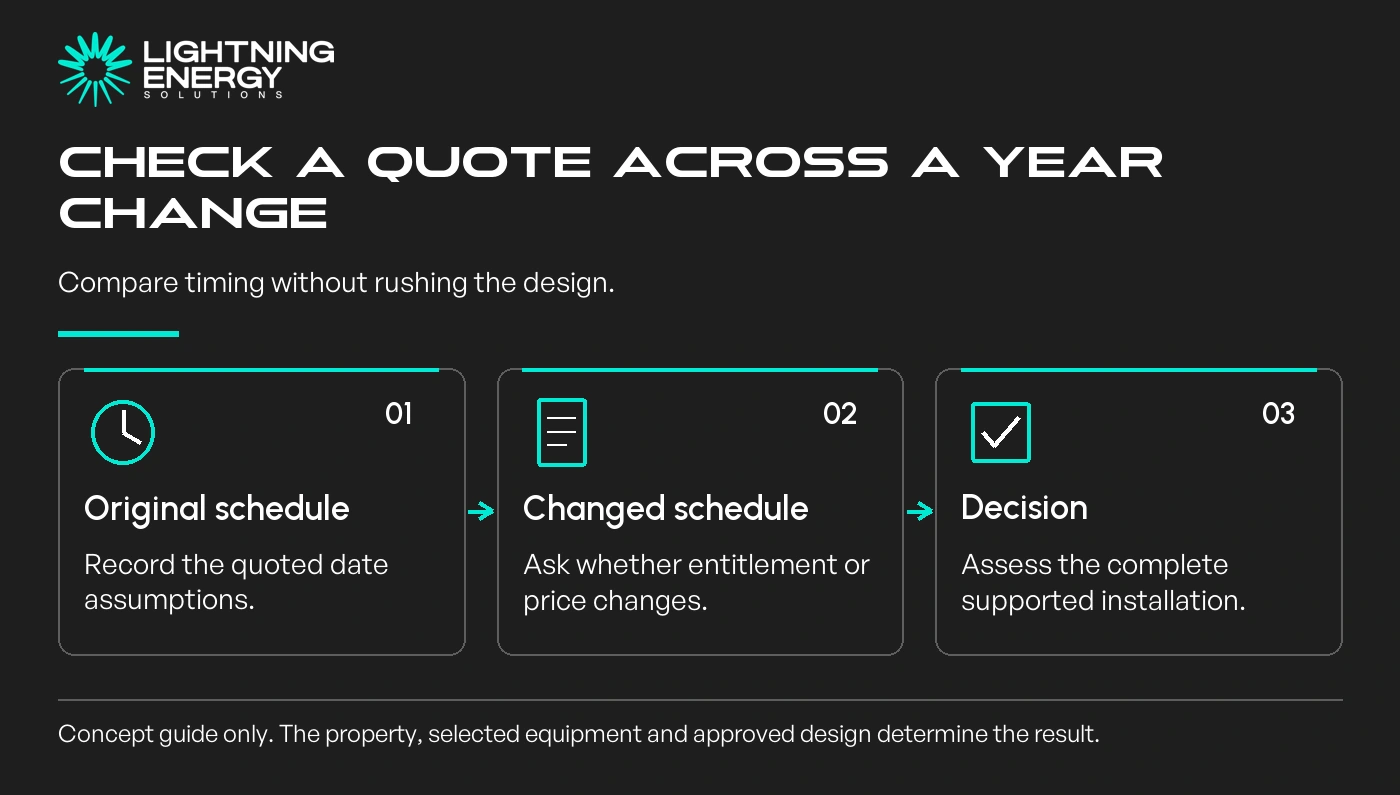
A timing change can affect the discount, but that does not justify rushing a poor design, unconfirmed roof condition or unclear contract. Compare the total decision rather than only the certificate difference.
If the quote spans a calendar change, ask for both timing cases and the terms that determine your final price. That gives you a concrete basis for deciding whether the schedule matters financially.
Contact Lightning Energy with the full quote and proposed installation date. Ask for the certificate calculation, assignment value and any separate state support to be explained as individual items.
Available times
Book a consultation and we'll map solar, storage, hot water, and the rebates around your bills and your goals.
Question 1 of 6