Solar Victoria for Landlords: Rebates, Renter Agreements and Loan Responsibilities
Solar on a rental property involves two households and several different responsibilities. The owner applies for the support and owns the system; the renter needs a clear agreement about access, electricity benefits and any voluntary loan contribution.
LLightning Energy TeamLightning Energy29 October 2026 · 5 min read
Solar on a rental property involves two households and several different responsibilities.
The owner applies for the support and owns the system; the renter needs a clear agreement about access, electricity benefits and any voluntary loan contribution.
This guide checks Solar Victoria's rental-property rules on 28 October 2026. It focuses on the application and handover process, so a rebate headline does not hide who signs, who pays or what happens when a tenancy changes.
Check the current rental criteria first
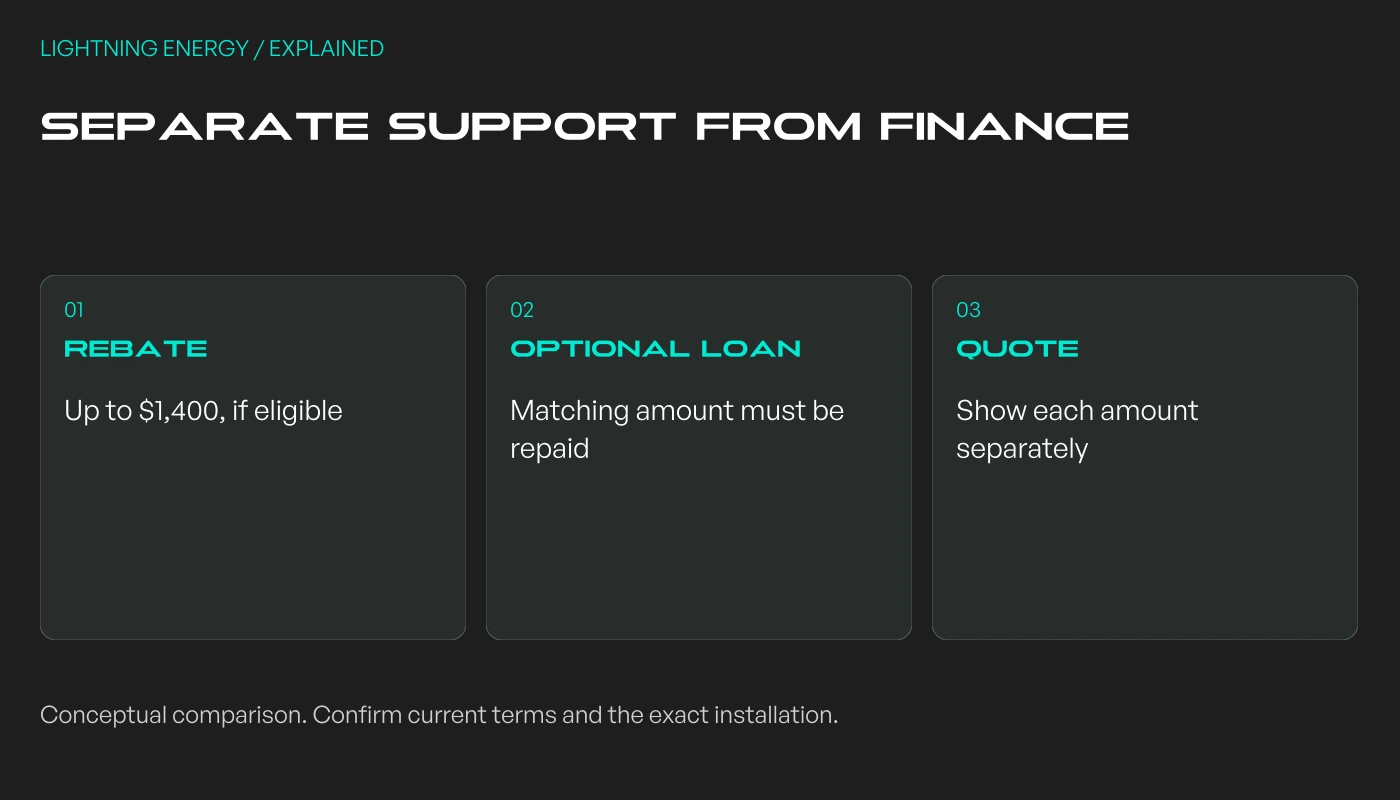
Solar Victoria's current rental program page offers a solar-panel rebate up to $1,400 and an optional matching interest-free loan. The loan is repayable; the two amounts should not be presented as a $2,800 saving.
The current renter household taxable-income threshold is less than $150,000, following the change from July 2026.
An older information page still shows $210,000, so use the current application guidance and agreement rather than an old saved summary.
The property-value threshold is under $3 million.
Check previous Solar Homes benefits, ownership and the rest of the current eligibility criteria before ordering.
Eligible rental providers can apply for up to two rental properties per financial year.
Conceptual comparison. Confirm current terms and the exact installation.
Choose the right agreement before anyone signs
The July 2026 no-payment agreement is for renters who do not contribute to the owner's loan. It is different from the co-payment agreement.
It requires a current rental agreement and an electricity account in the name of at least one renter named on the lease. It also sets out consent for installation access and program-related data collection.
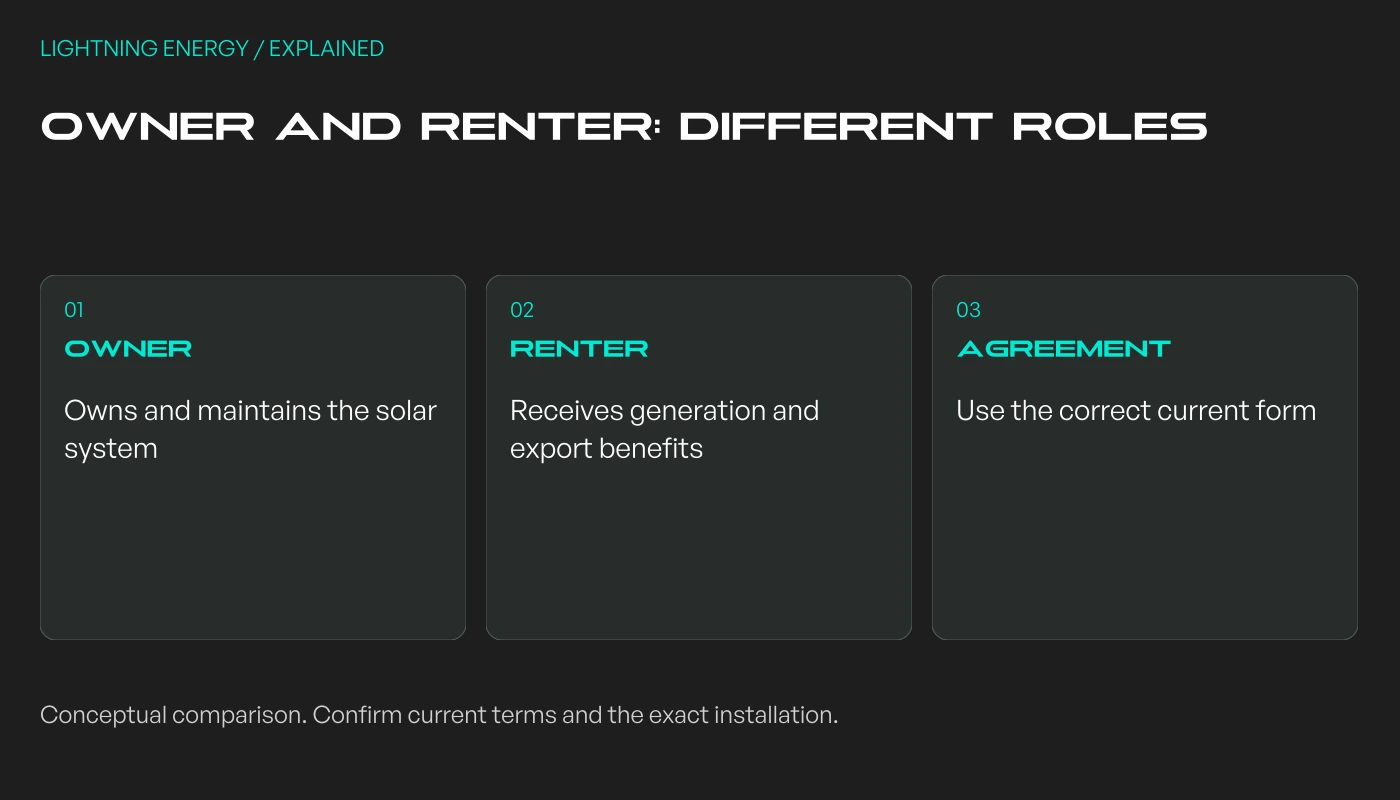
Under that agreement, the owner retains the solar system and maintains it in good repair.
The renter receives the generated electricity and retains any retailer payment for exported energy; the owner cannot charge the renter for that generation.
Read the whole form together, including the information-sharing provisions.
Give the renter a copy to review before signing, and keep the completed version with the property records.
Do not treat a contractor's sales estimate as a substitute for the agreement.
Conceptual comparison. Confirm current terms and the exact installation.
Follow the application sequence
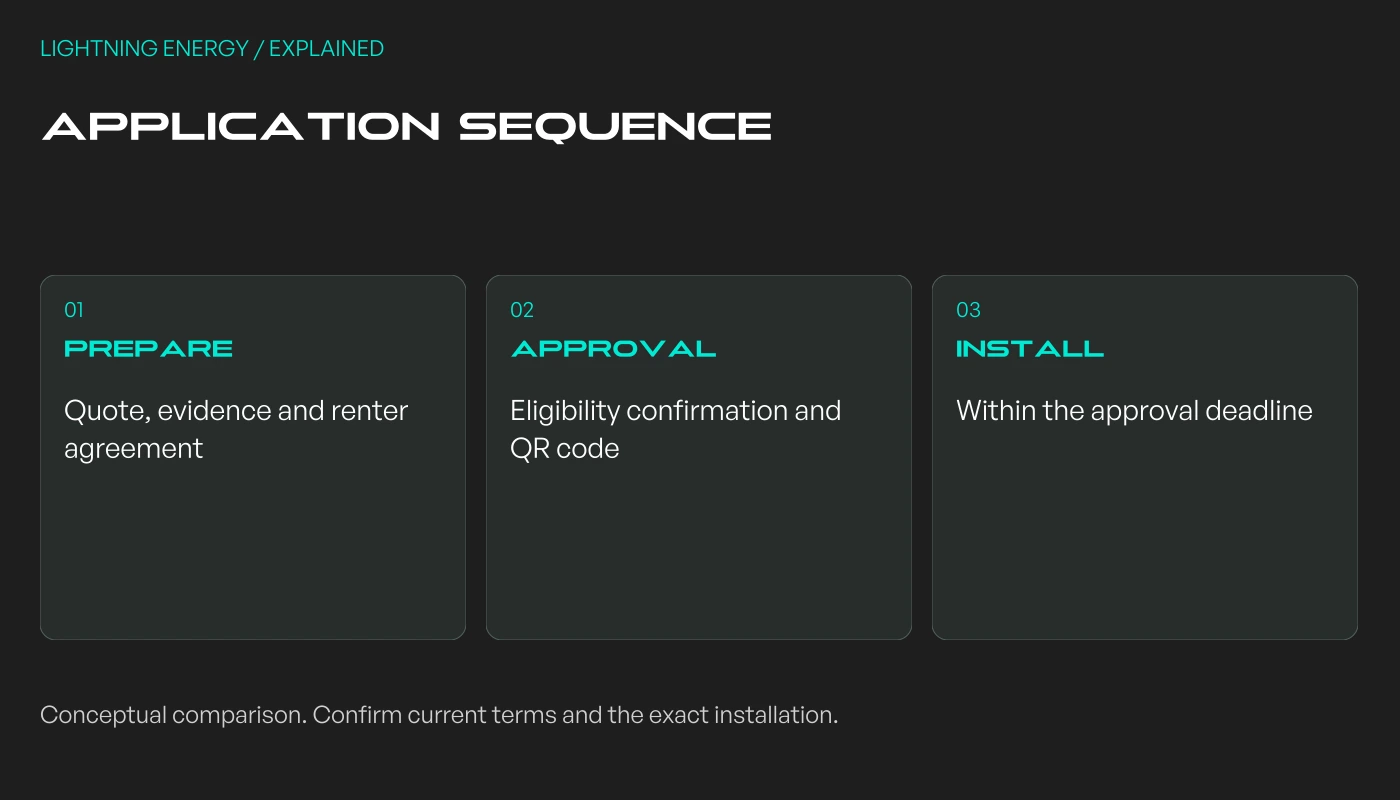
Solar Victoria's landlord application guide explains the quote, evidence and approval process. Select an authorised retailer and have the proposed quote uploaded before completing the application.
Prepare identity and ownership evidence, the renter agreement and the information required for any loan assessment. The guide notes that obtaining a credit report can take time, so build that into the proposed installation schedule.
Wait for the eligibility confirmation and QR code before installation. For an existing property, the current program page states installation must occur within 120 days of receiving that code; follow the deadline on the actual approval.
Discuss the solar design before accepting the quote.
Roof condition, shading, switchboard work, connection approval and export limits can all change the project.
Support approval does not establish that every proposed system is suitable for the building.
Conceptual comparison. Confirm current terms and the exact installation.
Keep the loan obligation with the owner
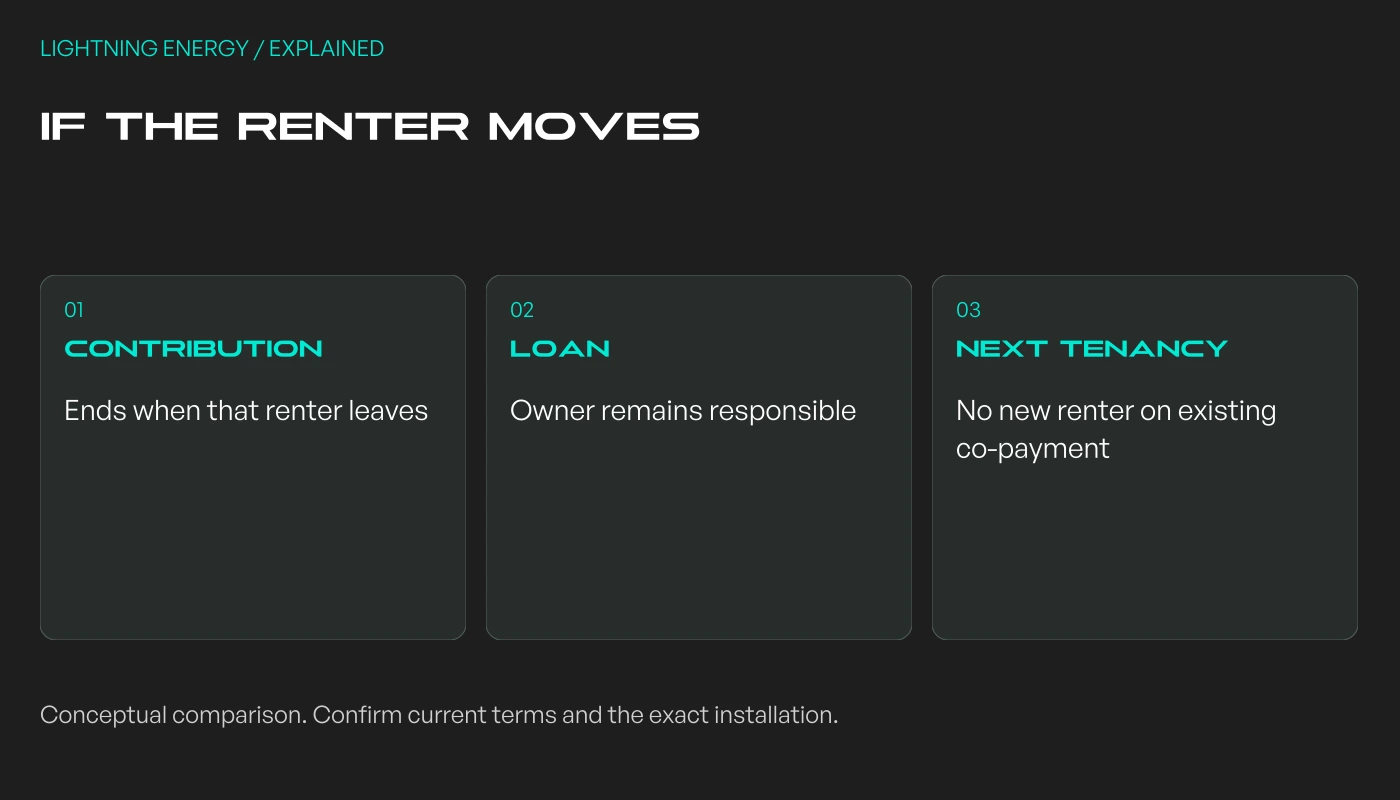
The current program describes a four-year loan, with the rental provider responsible for repayment. A renter can voluntarily agree to contribute up to half the monthly repayment, currently up to $14.58 for the maximum loan.
The agreed contribution cannot be increased during the loan period.
It ends when that renter leaves or the loan ends, and a replacement tenant cannot be brought into the existing co-contribution agreement.
Check the current signed terms for the actual arrangement.
A simple planning example illustrates the risk: an owner budgeting around a renter's contribution should also model the remaining repayments without it.
A change of tenancy does not turn the owner's outstanding loan into somebody else's debt.
Keep the installation payment, rebate, loan principal and any agreed contribution on separate lines. This prevents a repayable amount being confused with a discount and makes a later tenancy handover easier to administer.
Conceptual comparison. Confirm current terms and the exact installation.
Design the handover around the renter's use
The electricity use at the property should guide the system assessment. A renter who is home during daylight may use generation differently from one who is away all week. Do not promise identical bill savings to both.
Ask the installer to demonstrate monitoring and explain how to report a fault. Record which contact handles equipment support and which handles property management, so the renter does not have to guess when something stops working.
The owner and renter should agree how an installation visit will be arranged and how completion will be communicated. Put the system documents somewhere the property manager can find them without sharing unnecessary account credentials.
If a battery or EV charger is proposed as well, give it a separate scope and eligibility check.
The rental solar-panel rebate should not be stretched into an unsupported claim that every electrification upgrade is covered.
Review the proposal before committing
A useful rental-property quote names the equipment, installation work, approvals, support assumptions and total amount the owner pays. It also makes the ongoing responsibility for maintenance and finance understandable.
Keep the renter discussion separate from promises about property value or rent. This article does not calculate a rental return, and a solar generation estimate is not a guarantee of a particular tenant's bill reduction.
Book a consultation and we'll map solar, storage, hot water, and the rebates around your bills and your goals.
Loading consultations…
Lightning EnergyPlan your next energy upgrade.
⚡
Hi, I’m Lightning Energy’s project guide. I’ll ask a few practical questions, explain what usually matters for your project, and help you decide on a useful next step — no guesswork or sales pressure.
First, what kind of property are we planning for?