Sungrow Inverter Review: The World's Biggest Brand, But Is It Any Good?
We've installed a lot of Sungrow inverters. Here's our honest take - what works, what doesn't, how it stacks up against Fronius and SolarEdge, and who should actually get one.
If you've been collecting solar quotes lately, you've almost certainly seen the name Sungrow. And if you've done any research, you'll know they're not some fly-by-night manufacturer.
Sungrow is the world's largest inverter company by shipments, pumping out more inverter capacity each year than any other brand on earth. That alone should tell you something.
I've been installing solar in Victoria for over a decade, and we've put in a lot of Sungrow inverters. A lot.
This review isn't pulled from a spec sheet or a press release - it's based on what we've seen in the field, what our customers report back six months after install, and what it's actually like when things go wrong.
The short version: Sungrow is a capable, well-priced inverter that delivers what it promises. Whether it's the right fit for your home - that's a more interesting question. Let's get into it.
Sungrow was founded in 1997 in China by a university professor - which is a detail I find genuinely interesting. This isn't a factory floor story; it's an engineering one.
They're headquartered in Hefei, Anhui Province, and as of 2024 had shipped over 340GW of inverter capacity globally.
For context, Australia's entire installed solar capacity is somewhere around 40GW - Sungrow has shipped almost ten times that.
They have a proper local presence here through Sungrow Australia, which handles distribution, technical support, and warranty claims out of Melbourne. That matters more than most people realise when they're comparing quotes.
An inverter brand with no Australian entity means warranty claims go offshore, support calls go to a time-zone that doesn't match yours, and when something needs replacing, you're waiting on international logistics.
In the Australian residential and small commercial market, Sungrow is now one of the dominant brands. If you've had solar installed in the last five years, there's a solid chance it's running a Sungrow.
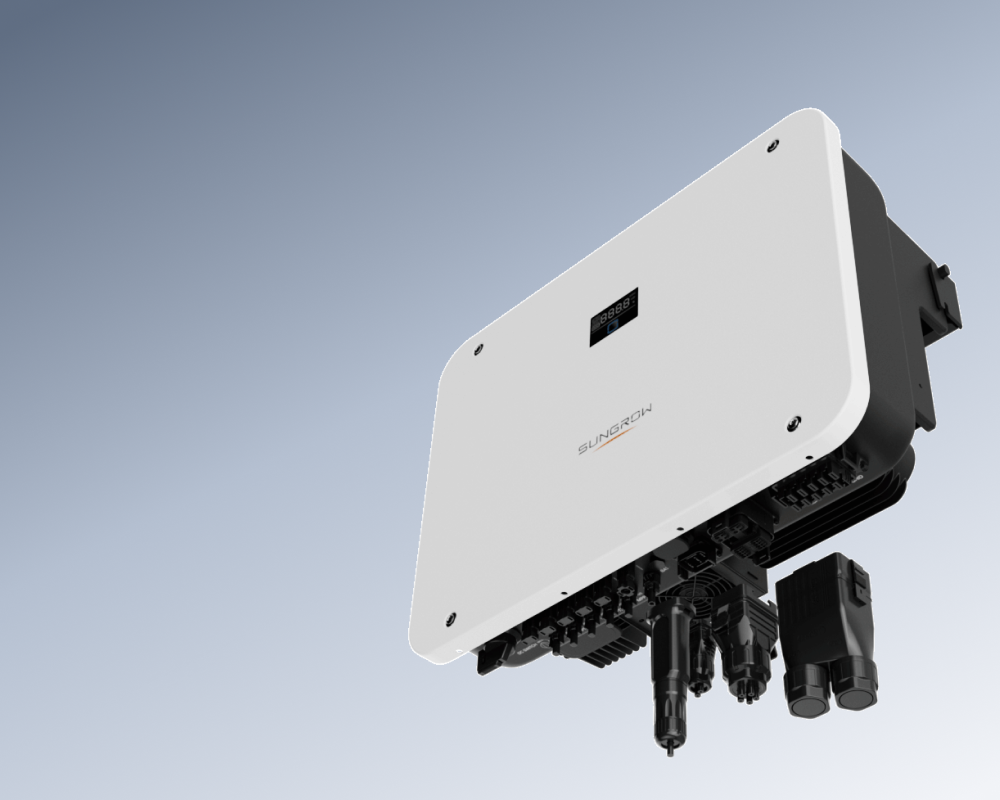
Sungrow's residential range for Australia covers single-phase and three-phase string inverters, plus hybrid inverters for battery storage.
The naming convention is straightforward once you know it: the SG series is solar-only, and the SH series is hybrid (battery-ready). Most homes fall into the 5kW-10kW range depending on panel count and connection type.
If you're being quoted a Sungrow, check which series it is. The SH hybrid is worth the small price premium if you have any intention of adding a battery in the next five years. More on that shortly.

This is Sungrow's strongest card, and it's a good one. A Sungrow inverter typically costs meaningfully less than a Fronius or SolarEdge equivalent - sometimes hundreds of dollars less.
But it delivers peak efficiency figures that are genuinely competitive. The SG RS series quotes 98.4% maximum efficiency, which is in the same ballpark as anything European.
Here's the honest truth: inverter efficiency differences in the 97-99% range have almost no noticeable impact on your annual system output. You're not leaving money on the table by choosing Sungrow on efficiency grounds alone.
Where the price difference really matters is when you're buying a battery at the same time. Saving $300-$500 on an inverter means more budget available for battery capacity - and that's where the money genuinely does the most work.
This is the one that surprised me when we started installing Sungrow more seriously from around 2021. I was watching failure rates closely because I'd heard mixed things about earlier generations.
The older SG series did have some issues - not catastrophic, but noticeable. The current RS and RT generation is a different product.
Our callback rate on Sungrow inverters is low. Not zero - no brand has zero callbacks - but competitive with Fronius and better than some brands that cost significantly more.
The build quality has also visibly improved. The enclosures feel sturdier, the connectors are solid, and the internal layout is clean.
Not flashy features, but they matter when you're looking at a 10-year product sitting on the side of someone's house in Melbourne weather.
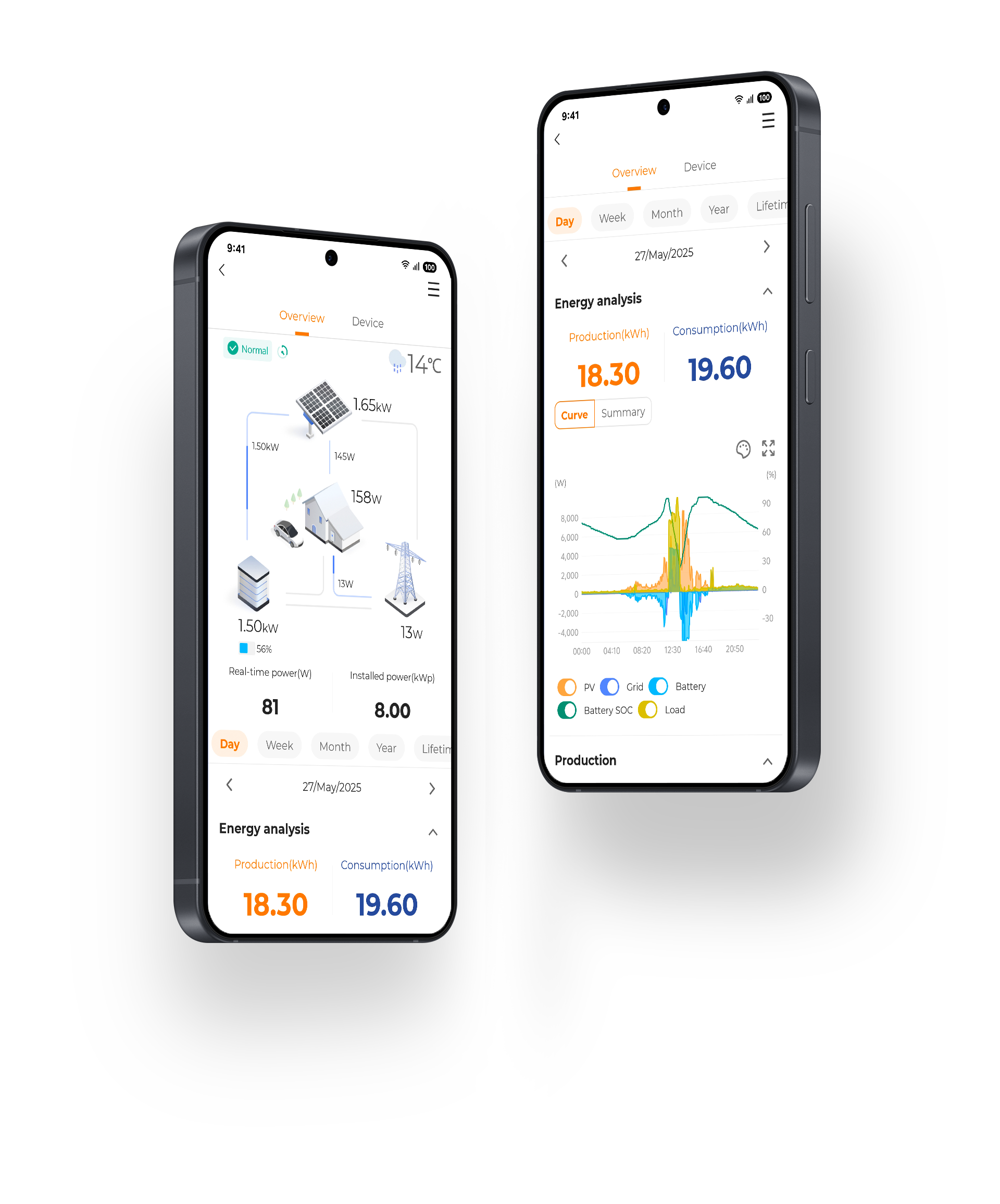
The monitoring app is genuinely good now. Three or four years ago I would have flagged it as a weak point - clunky interface, slow syncing, limited historical data. The current version is a proper monitoring platform.
You get real-time generation, consumption, battery state of charge (on SH hybrid systems), export limit settings and fault alerts.
Historical data breaks down by day, month, and year. The app works on iOS and Android, and the web portal is functional on desktop too.
For installers, the iSolarCloud Pro portal makes fleet monitoring viable. We can see all our customer systems from one dashboard - generation status, faults, alerts - which is exactly how it should work.
I'd give iSolarCloud a solid 7.5 out of 10. For a string inverter monitoring platform, it's genuinely useful and miles better than it was.

Battery storage is no longer a "maybe later" conversation - more Victorians than ever are pairing batteries with solar from day one, or planning to add one within a few years.
The Sungrow SH hybrid inverter is designed from the ground up for this. The SH series pairs with Sungrow's SBR battery, a modular lithium iron phosphate (LFP) unit that you can stack from 9.6kWh up to 25.6kWh.
LFP chemistry is safer and more cycle-stable than NMC, which matters for longevity. We've been happy with the SBR in the field.
The SH inverter handles the full system - solar, battery charge and discharge, grid import and export - without needing a separate battery inverter. That's simpler, cheaper, and means one warranty conversation if something goes wrong.
If you're even considering a battery in the next five years, get the SH series inverter from the start. The price difference over the SG solar-only model is minor. The flexibility is significant.
Standard warranty is 10 years, which is the baseline across the industry in Australia. Sungrow also offers an extension to 20 years through their warranty extension program.
Worth looking into if you want longer coverage, though anything beyond 10 years usually has conditions - read the fine print carefully before relying on it.
Warranty claims in Australia run through Sungrow Australia in Melbourne. In our experience, the process is functional - not lightning fast, but not the nightmare it can be with brands that have no real local presence.
Response times have improved meaningfully over the last two years. It's not Fronius-level support, but it's a real operation.
If your goal is a reliable solar system without spending more than you need to, Sungrow is hard to argue against. If your goal is a system you'll never need to think about again for 15 or 20 years - that's a different conversation.
Sungrow is cheap because something had to give. That's not a dig - it's just how manufacturing economics work.
In Sungrow's case the trade-offs show up in support infrastructure, build finish, and long-term component quality rather than core functionality. The inverter works. But you're not buying a Fronius, and it's worth being clear-eyed about what that means over a 10-20 year horizon.
I'll be straight about this: Sungrow's technical support in Australia has improved, but it's not where it needs to be yet.
Getting a live technician on the phone at the right moment can be frustrating. Email response times are inconsistent. If you're an installer managing a warranty claim on behalf of a customer, you need patience.
This is a common pattern across Chinese inverter brands generally. Their Australian operations are growing, but they're still catching up to their market share.
Fronius has better local support infrastructure. Full stop. That's not brand loyalty - it's just accurate.
For most homeowners this doesn't matter much in practice, because you work through your installer rather than dealing with Sungrow directly. Where it becomes a real problem is if your installer has gone out of business - which does happen - and you need to deal with Sungrow yourself.
In that scenario, you want a brand with a deep local support team behind it. Sungrow is getting there, but isn't quite there yet.
Put a Sungrow SG next to a Fronius Primo and the difference is immediate. The casing, the finish, the weight of it - Sungrow reads "functional" where Fronius reads "engineered."
This doesn't affect performance in any measurable way, and most inverters live in a garage or on a side wall where nobody looks at them. But it's a signal worth understanding.
The product is built to a price point. That's fine - it's priced accordingly. Just go in knowing what you're getting.
Some Sungrow models require a separate WiFi or LAN dongle for monitoring connectivity rather than having it built in. This is a minor gripe - the dongle isn't expensive.
But it's an extra step during installation and an extra component that can theoretically fail. The newer RS series models have improved this, but the situation varies across the range.
Before you sign off on a quote, ask your installer which specific model is going in and whether monitoring connectivity is built in or requires an add-on.
Fronius is the benchmark for a reason. The build quality is noticeably better, the Australian support network is genuinely strong, and the track record across more than a decade of Australian installs speaks for itself.
If budget is a real constraint, Sungrow is the rational call. The performance difference is marginal and the price savings are real.
But if budget isn't the deciding factor - if you're building a system you want to be completely trouble-free for the next 15-20 years - we'd steer you toward Fronius. The premium is real. So is what you get for it.
Think of it this way: Sungrow is the reliable workhorse. Fronius is the one you buy when you never want to think about it again.
SolarEdge pairs with power optimisers at each panel, which gives you shade tolerance, panel-level monitoring, and safety benefits.
Sungrow is a traditional string inverter - panels are connected in series and shading on one panel affects the string.
If your roof has significant shading from trees, chimneys, or neighbouring buildings, SolarEdge (or Enphase) has a genuine technical advantage that Sungrow simply can't match.
If your roof is largely unshaded and you're comparing on price alone, Sungrow at a lower cost is the rational call.
Enphase microinverters work at the individual panel level - each panel has its own inverter, so shading or failure on one panel doesn't drag down the others.
The monitoring is panel-level granular, the redundancy is excellent, and the system is ideal for complex roof orientations. They're also more expensive per watt and add installation time.
For a standard unshaded roof, a Sungrow string inverter delivers comparable energy yield at a lower system cost. For complex roofs with multiple orientations or shading, Enphase is worth the premium.
The honest answer to "is Sungrow right for me" comes down to what you're actually optimising for. Here's how we think about it.
Sungrow isn't the right answer for everyone. If any of these apply to you, it's worth having a more detailed conversation about what else is out there - and whether the extra spend makes sense for your situation.
Here's the honest version: Sungrow is a budget inverter that does a good job. It will cut your power bills. It will work. For a lot of Victorian homeowners, that's genuinely enough.
If your goal is fast ROI - get bills down, see the savings, pay off the system in 5-7 years - Sungrow makes sense. The price point is real. Put the savings into more panels or more battery capacity and you'll come out ahead.
If your goal is a system you never think about again - something you install today and it's still humming quietly in 2045 with no dramas - then budget hardware is a risk we'd rather be honest about. Cheap components have a higher chance of needing attention in years 10-15. Not a certainty, but a real pattern we see in the field.
For long-term, hands-off ownership, we'd point you toward Fronius. The build quality is better. The support is better. The track record over 15+ years in Australia is better. You pay more upfront, and it's genuinely worth it if that's what you're after.
Sungrow isn't for everyone. But for the right buyer, it's hard to argue with.
Not Sure Which Inverter Is Right for You?We install Sungrow, Fronius, SolarEdge, and Enphase across Victoria and we don't have a favourite. Tell us your situation and we'll give you a straight answer.
Available times
Book a consultation and we'll map solar, storage, hot water, and the rebates around your bills and your goals.
Question 1 of 6