
Sungrow SBR and GoodWe ESA: Compare Complete Australian Storage Systems
Compare Sungrow SBR and GoodWe ESA as complete Australian systems, with named inverters, modules, backup scope and warranties rather than brand labels.
Compare Sungrow SBR and GoodWe ESA as complete Australian systems, with named inverters, modules, backup scope and warranties rather than brand labels.

Sungrow SBR and GoodWe ESA are not equivalent descriptions of a complete installation. SBR identifies a battery family used with a compatible inverter; the current three-phase ESA range combines selected power and battery modules.
A fair comparison names all that equipment first. Similar storage capacity can still produce different charging limits, backup behaviour and expansion options.
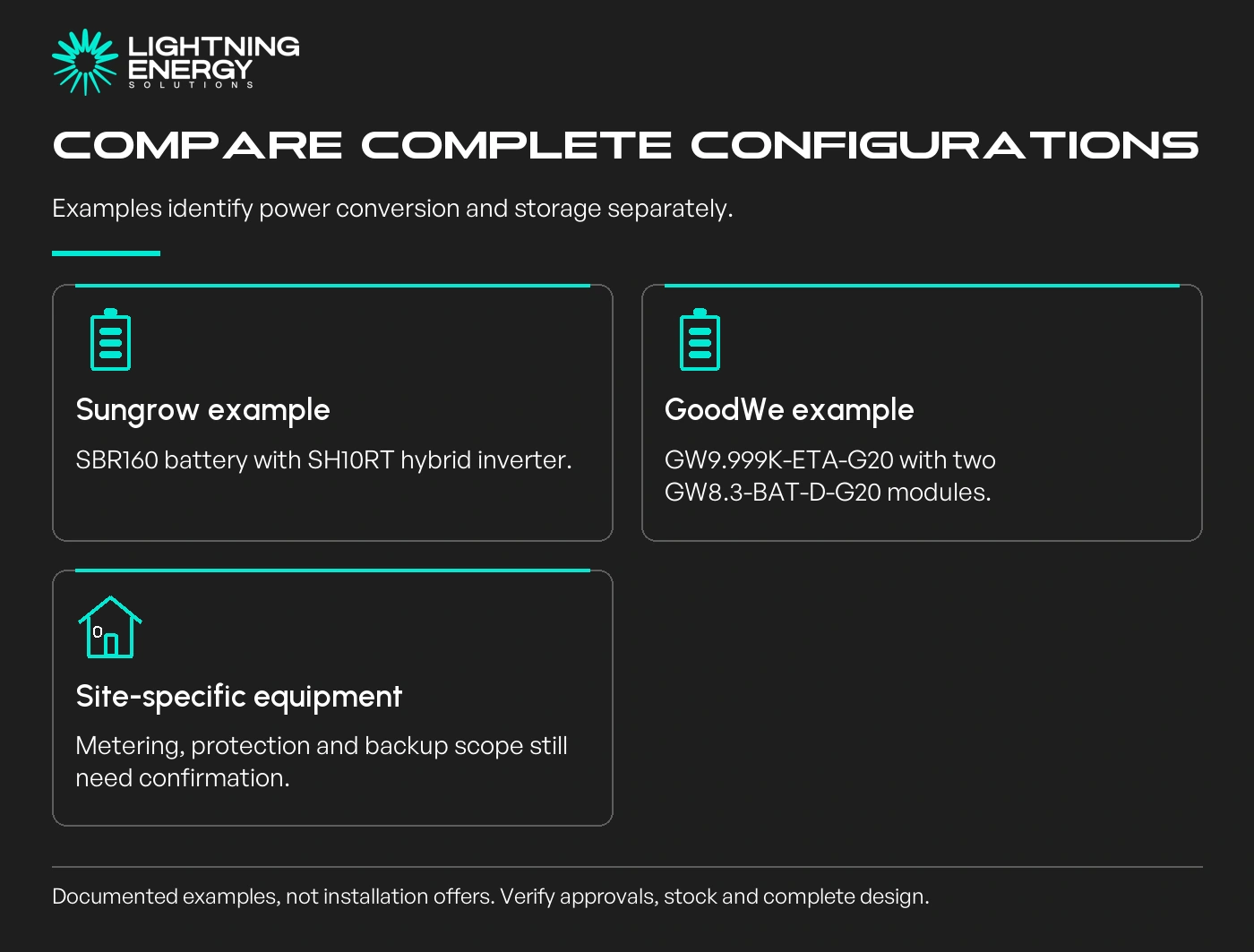
For a concrete technical comparison, consider Sungrow SBR160 with an SH10RT hybrid inverter, alongside GoodWe's three-phase GW9.999K-ETA-G20 power module with two GW8.3-BAT-D-G20 battery modules.
These are documented configuration examples, not installation offers or promises of current stock. A quote must still verify the exact current approvals, components and site suitability.
GoodWe's Australian datasheet specifies 8.0 kWh design usable energy per selected battery module under its test conditions, giving 16.0 kWh for the two-module example. The power module's rated grid output is 9.999 kW.
GoodWe Australian ESA specifications.
Sungrow's Australian documentation must be read as an inverter-and-battery pairing. Its cross-reference chart lists the SH10RT with SBR160 and identifies a 9.60 kW battery limit for that combination.
Sungrow Australian compatibility documents.
This illustrates why a 10 kW-class inverter label should not automatically become a promise of 10 kW from every connected battery stack.
Request usable energy, battery charging power, battery-only discharge power and backup output separately. Check temperature, state-of-charge and per-phase qualifications in the applicable documents.
Do not compare one product's brief overload figure with another's continuous rating. Likewise, grid-connected pass-through capacity is not a promise that the battery alone can power that entire load during an outage.
Our Sungrow inverter review explains why the inverter belongs in the storage decision.
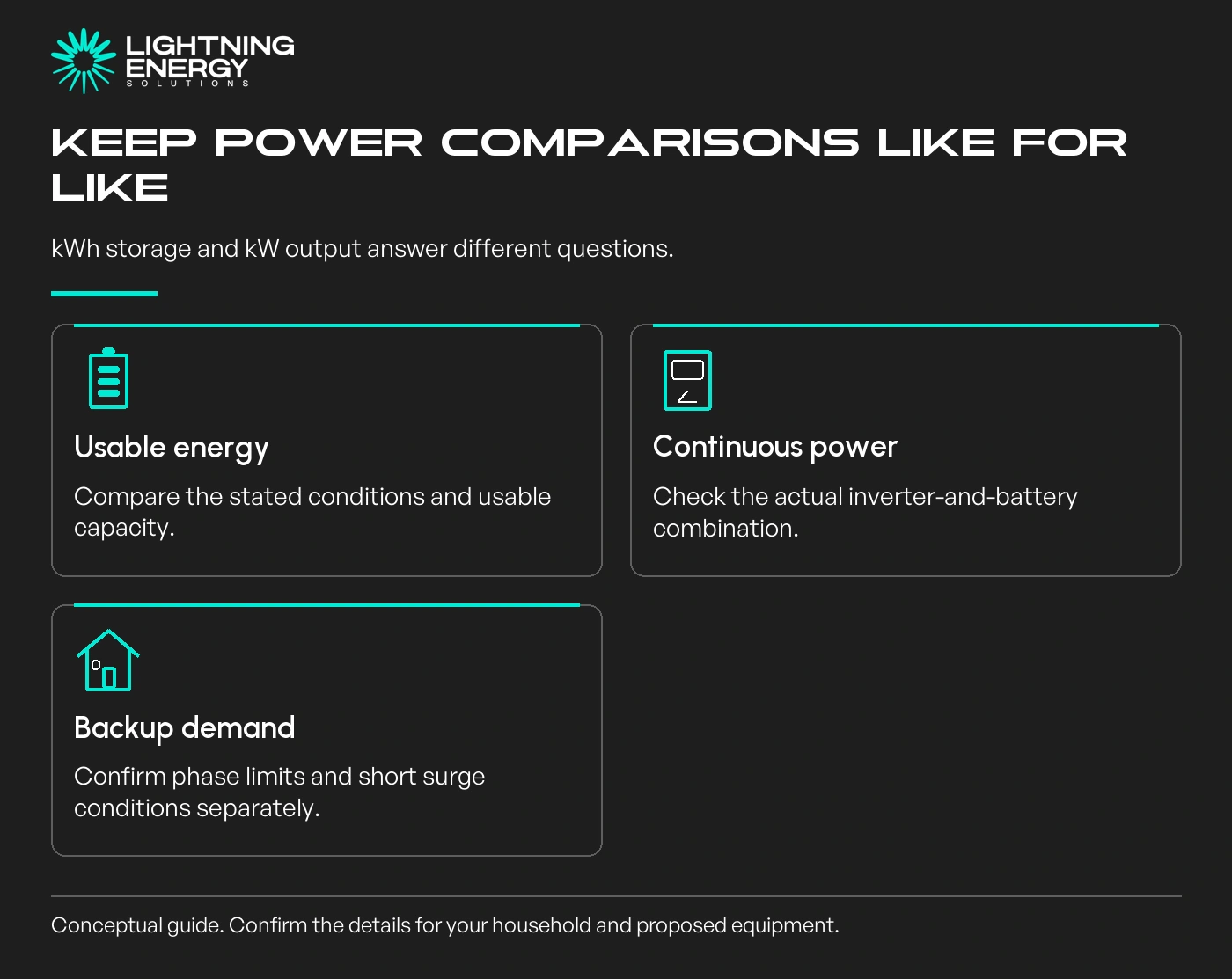
Both proposals need a written list of the loads to be backed up and the equipment required to do it. Include phase allocation, simultaneous demand and the behaviour of existing solar during an outage.
GoodWe's ESA name has been used across different generations and phase arrangements. This article's example is the current three-phase ETA-G20 family, not the older ESA 5048 or every single-phase ESA offer.
GoodWe Australian three-phase ESA range.
A hypothetical household wanting lights, refrigeration and internet backup has a different brief from one wanting ducted air conditioning. Neither requirement can be settled by comparing battery kWh alone.
Our blackout guide helps turn that brief into a realistic load list.
Check the metering and communications included, which owner app is used and who assists with a monitoring fault. Ask how later expansion affects output, commissioning and warranty dates.
Sungrow's Australian warranty library includes current HV battery terms and claim procedures. GoodWe publishes separate inverter and battery warranty documents, so avoid treating the longest quoted term as cover for every component.
Sungrow Australian warranty library.
GoodWe Australian warranty library.
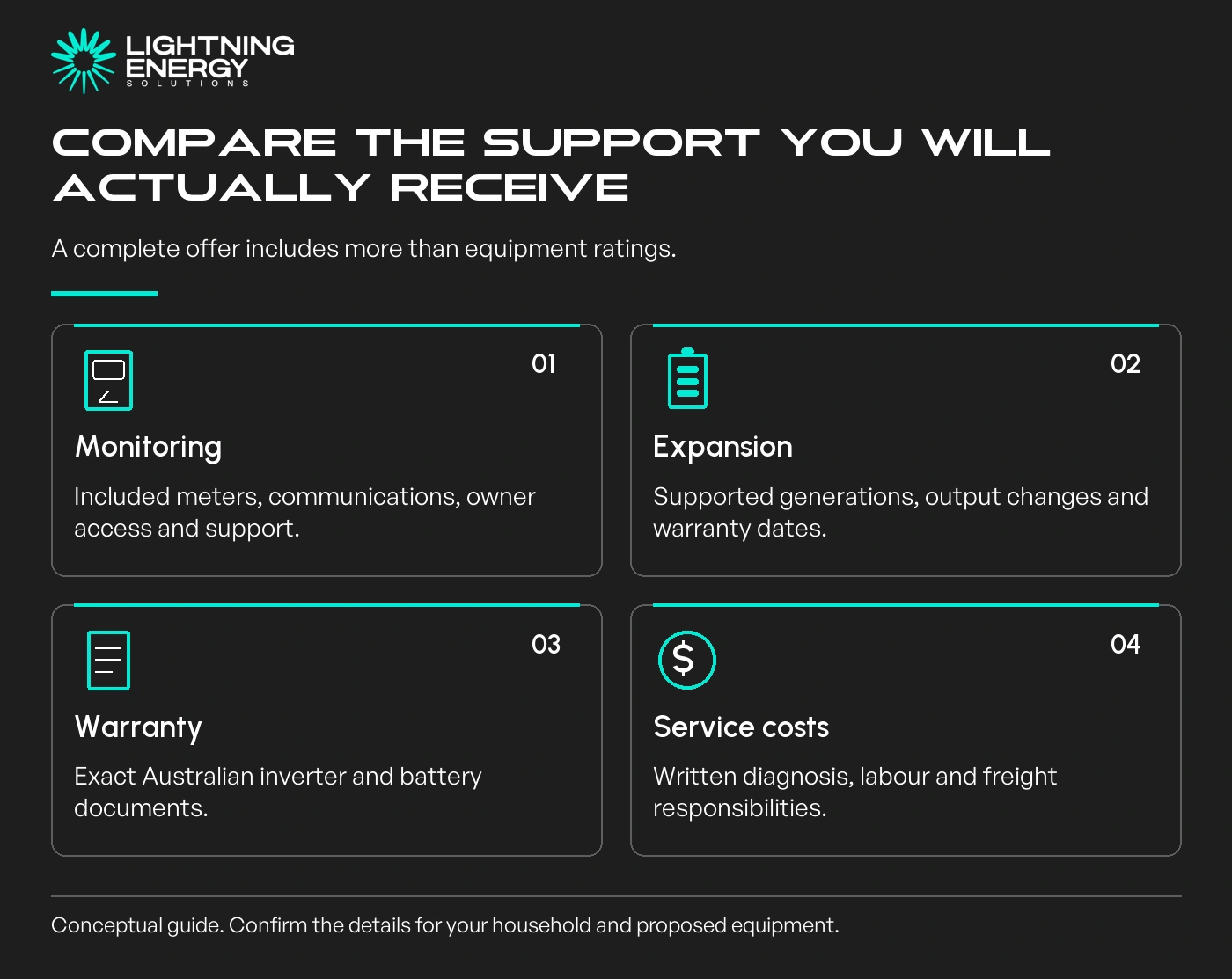
Ask for the documents applying to the delivered models, plus responsibility for diagnosis, labour, freight and reinstatement. Manufacturer support details do not prove a particular installer can resolve every issue immediately.
If both designs meet the household brief, compare complete installed price, constraints, warranty obligations and the quality of the proposed handover. There is no defensible universal winner from these family names alone.
A battery assessment should establish whether either proposed configuration offers useful capacity and sufficient output before adding modules or paying for higher inverter ratings.
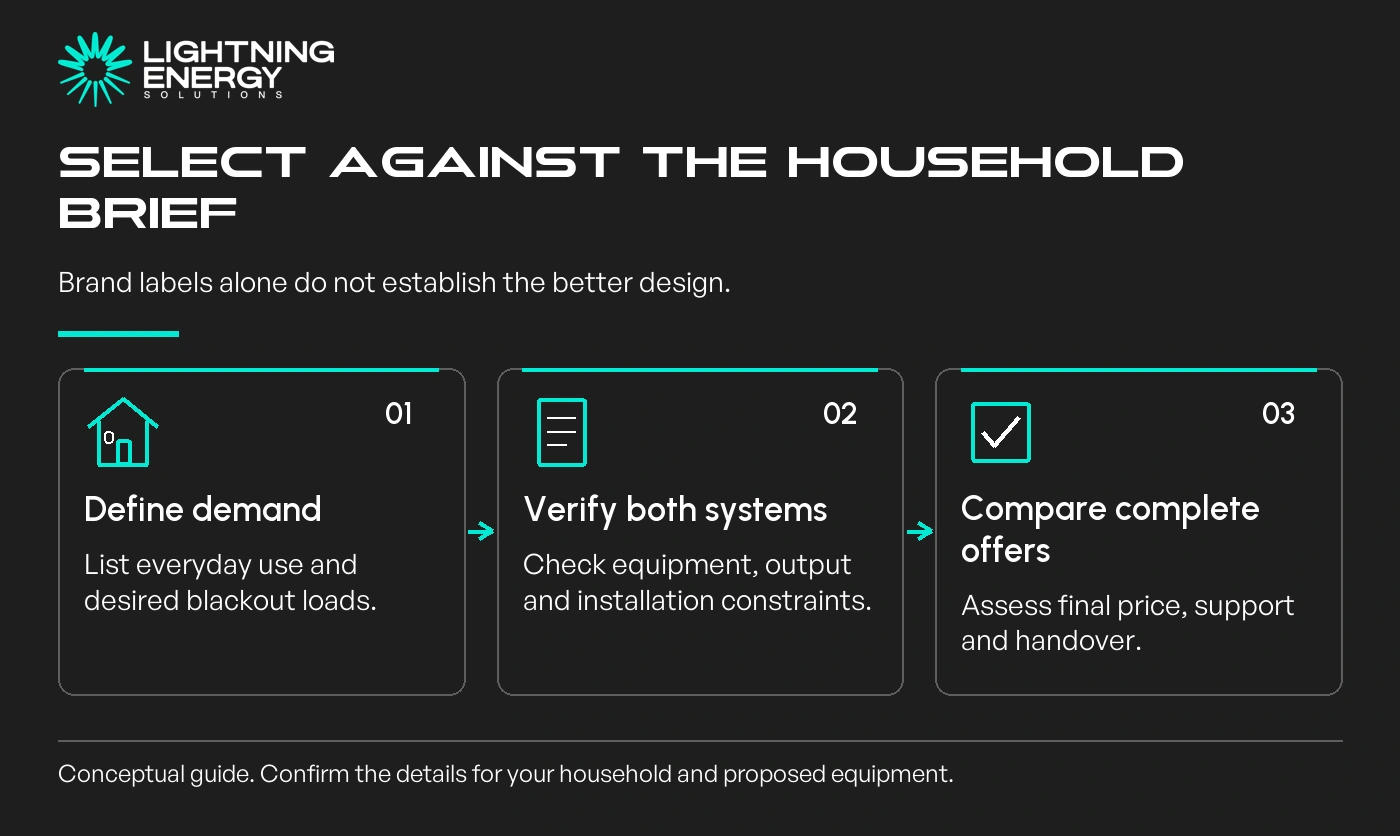
Keep the final component schedule attached to the accepted quote. If a controller, battery generation or module count changes, reassess the comparison instead of assuming the original headline still describes the offer.
Plan your battery upgradeSend both complete equipment schedules and your desired backup loads. We can compare the installed arrangements, supported limits and service scope on the same basis.Available times
Book a consultation and we'll map solar, storage, hot water, and the rebates around your bills and your goals.
Question 1 of 6
