
Heat Pump Tank Size and Recovery Rate: Why Both Matter
Compare heat-pump tank volume and recovery together. More stored water and faster reheating solve different household demand problems, especially in winter.
Compare heat-pump tank volume and recovery together. More stored water and faster reheating solve different household demand problems, especially in winter.

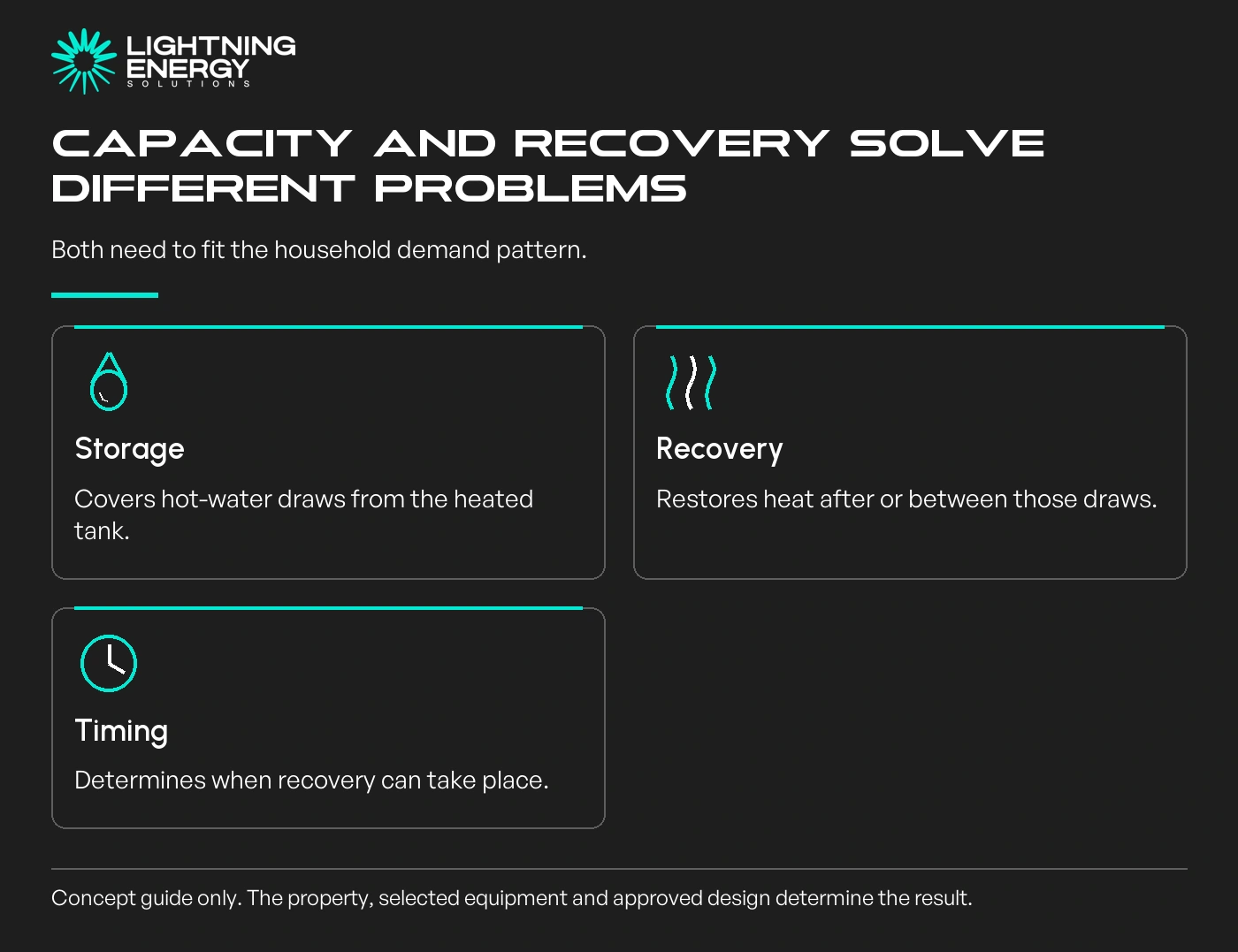
Tank capacity tells you how much water can be stored. Recovery describes how the system restores heat after that water is used. You need both to judge whether a heat pump suits the household.
A larger tank can help with a concentrated draw, while effective recovery can help between draws. Neither number makes sense without the operating conditions and heating schedule.
Several showers close together can draw on stored hot water faster than the system restores it. The usable supply depends on temperatures, mixing and the amount already heated, not just the nominal tank label.
A household that spreads its use through the day may give the heat pump more opportunities to recover. The same total daily demand can therefore create a different sizing problem.
Solar Victoria's sizing guide highlights the trade-off between adequate supply and unnecessary capacity.
Ask how the recommended combination serves the busiest period in your dwelling.
When comparing heat-pump systems, keep the tank model and outdoor unit together as a specified combination. A tank from one quote and recovery claim from another do not describe a real system.
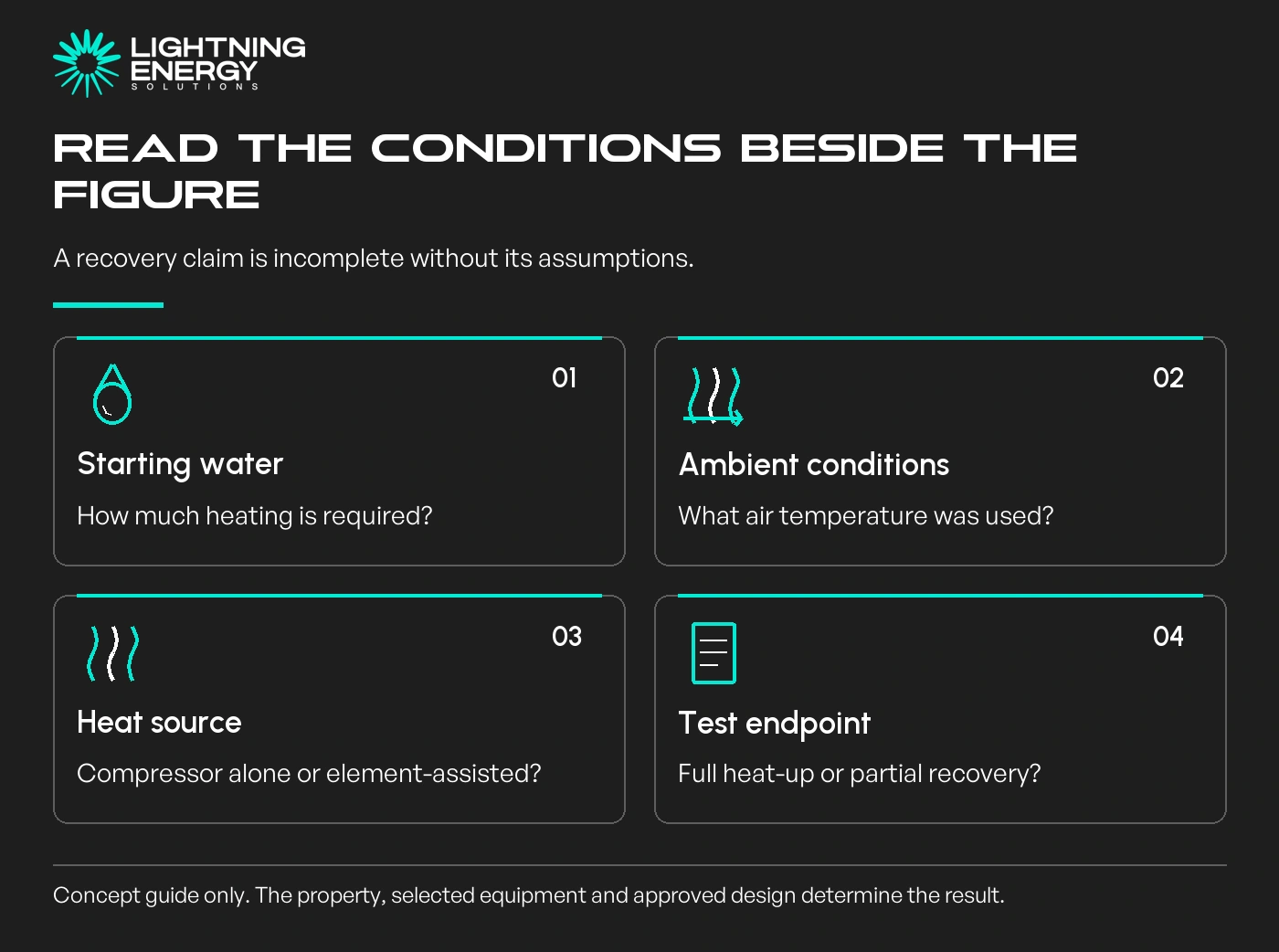
Heating a tank from a cold start is different from reheating after a partial draw. The time depends on the water volume, starting and final temperatures, heat output and losses.
Heat-pump output can vary with outdoor and incoming-water conditions. A published result measured in warm conditions should not be assumed to describe a cold Melbourne morning.
Sanden's specifications, for example, state the ambient and inlet-water conditions beside heat-output and efficiency values.
Those conditions are part of the claim, not optional fine print.
Ask the supplier for data relevant to the planned operation. Where a precise winter recovery figure is unavailable, the recommendation should acknowledge that uncertainty rather than invent a guarantee.
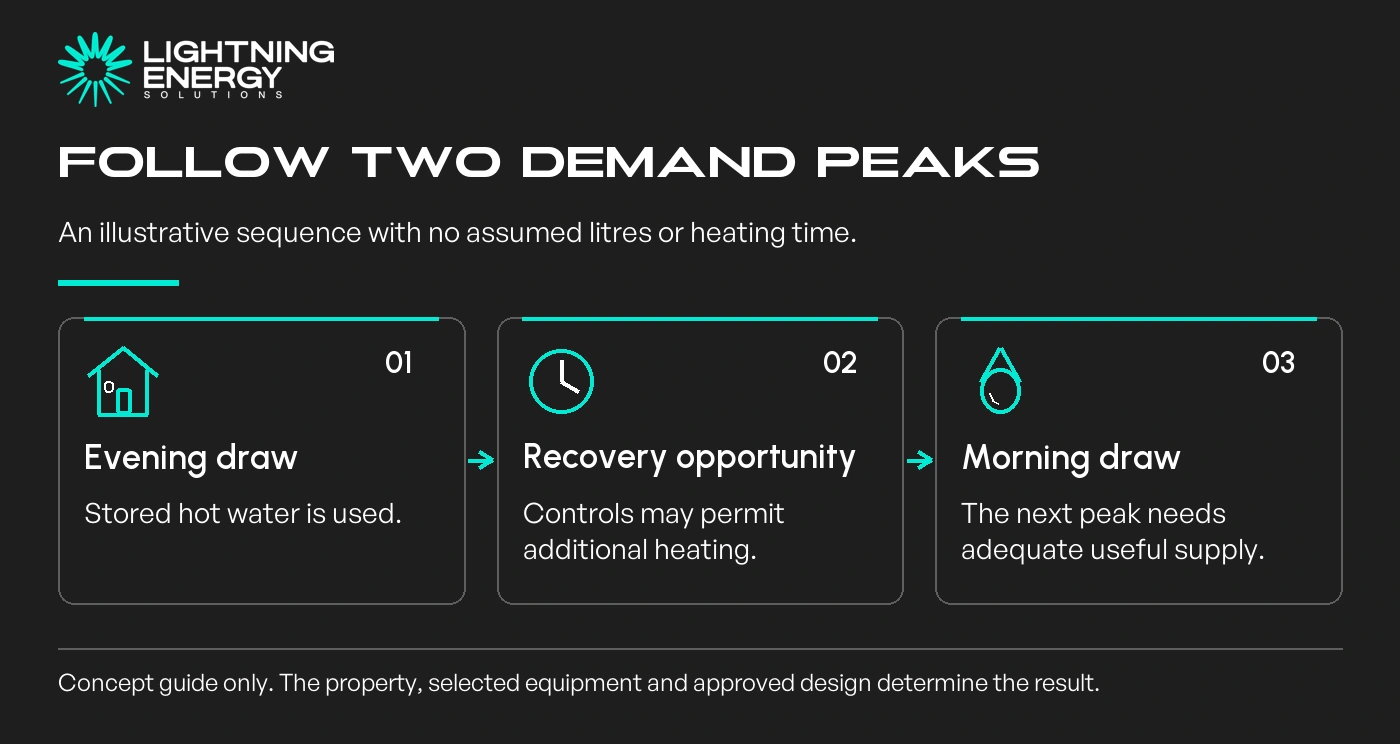
A system may be capable of reheating but prevented from doing so by its normal schedule. If the allowed period ends before the required recovery, theoretical heating capacity alone does not solve the shortage.
Our solar timer guide explains why daylight scheduling must retain adequate hot water and required protective functions.
Imagine a home with large evening demand and another busy morning before the next scheduled cycle. It needs enough stored heat across that gap, or a supported recovery opportunity within it.
A home with solar may prefer daytime heating, but the preferred window is one input. Reliable supply should not depend on every winter day producing a perfect solar surplus.
Ask the installer to show how each proposed tank-and-heat-pump combination meets the same demand pattern. Include ordinary days and a realistic high-use scenario.
Clarify whether quoted recovery uses the compressor alone or includes an electric element. Faster recovery with a different heat source may involve a different electricity demand and running cost.
Solar Victoria's planning guide discusses system configurations and boosting.
The terminology used by individual manufacturers still needs to be checked.
Do not solve a timing problem automatically by adding tank volume. Equally, do not choose a small tank on the assumption that the heat pump can instantly replace every litre as it is drawn.
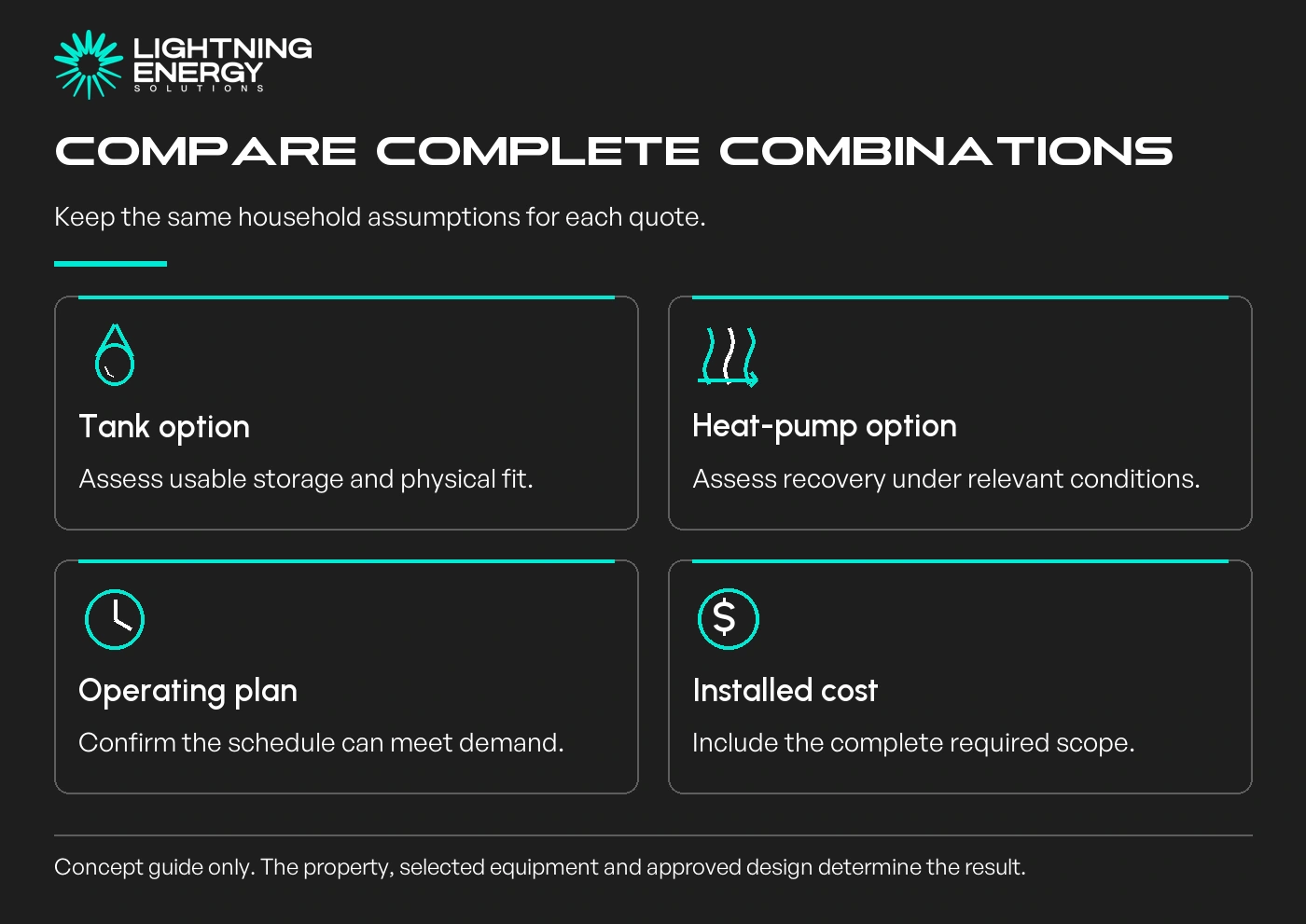
A useful quote should identify usable storage assumptions, recovery conditions and the intended schedule. Ask what happens after several consecutive showers, not simply how many people the brochure mentions.
If the explanation relies on an especially warm test condition or unrestricted all-day heating, ask whether that matches your actual home and preferred operation.
There may be no need for a larger system when the current unit is reliable and an approved schedule adjustment addresses the concern. A genuine peak-demand shortfall needs a different design response.
Contact our team with the proposed models and household routine. Compare storage and recovery as a pair, then decide whether the combination delivers the service you need.
Available times
Book a consultation and we'll map solar, storage, hot water, and the rebates around your bills and your goals.
Question 1 of 6