
Why Reverse-Cycle Heating Pauses to Defrost in Winter
Understand winter defrost pauses in reverse-cycle heating, how they differ from faults, and which observations help your technician assess repeated problems.
Understand winter defrost pauses in reverse-cycle heating, how they differ from faults, and which observations help your technician assess repeated problems.

A reverse-cycle air conditioner can briefly pause room heating to remove frost from its outdoor heat exchanger. That can be normal winter operation, not proof that the system has failed.
Use the instructions for your exact equipment to interpret what you see. Persistent loss of heating, fault messages or unusual behaviour still deserve assessment.
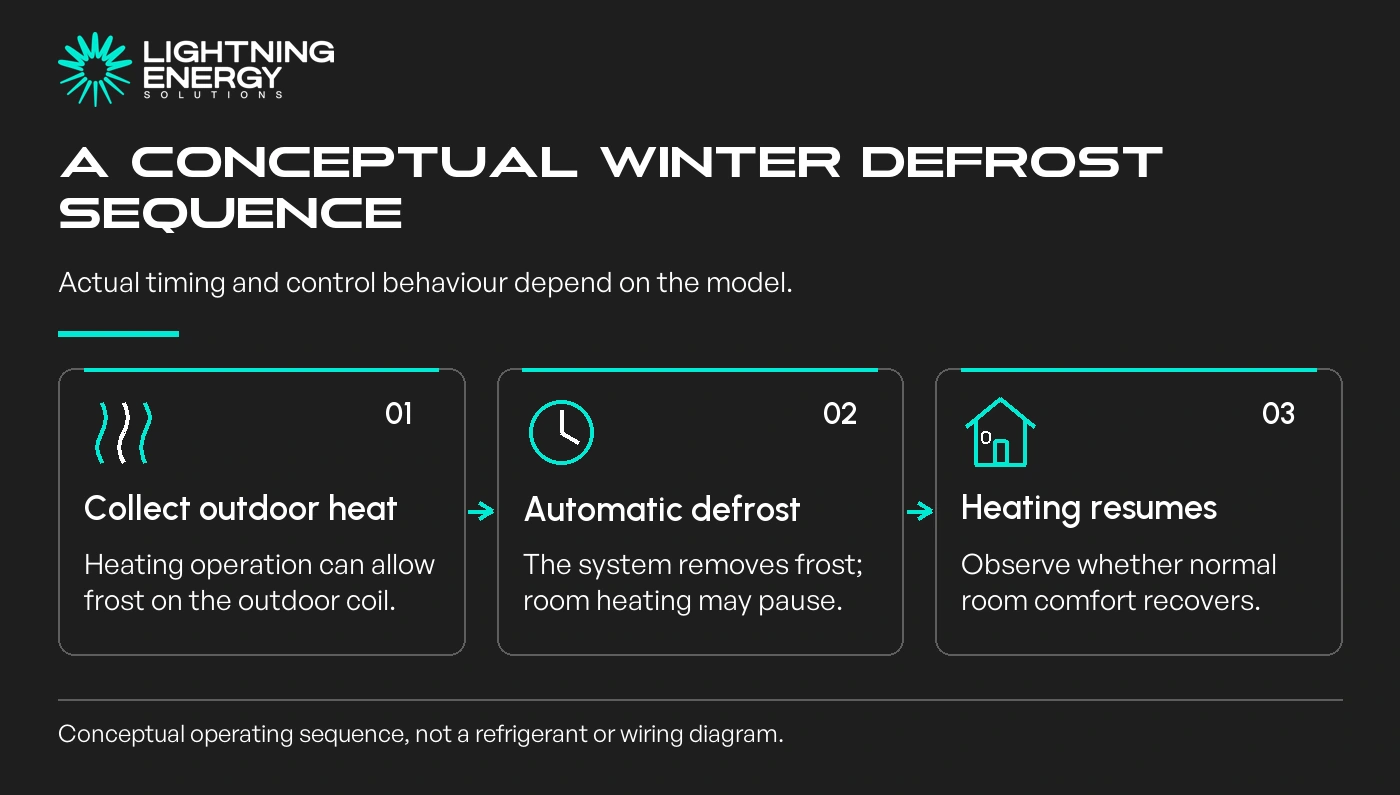
During heating, the system collects heat from outdoor air. Frost can accumulate on the outdoor heat exchanger under suitable cold and damp conditions, reducing its ability to exchange heat.
An automatic defrost sequence addresses that frost before ordinary heating resumes. Its frequency and duration depend on the equipment and conditions; there is no single interval for every Melbourne installation.
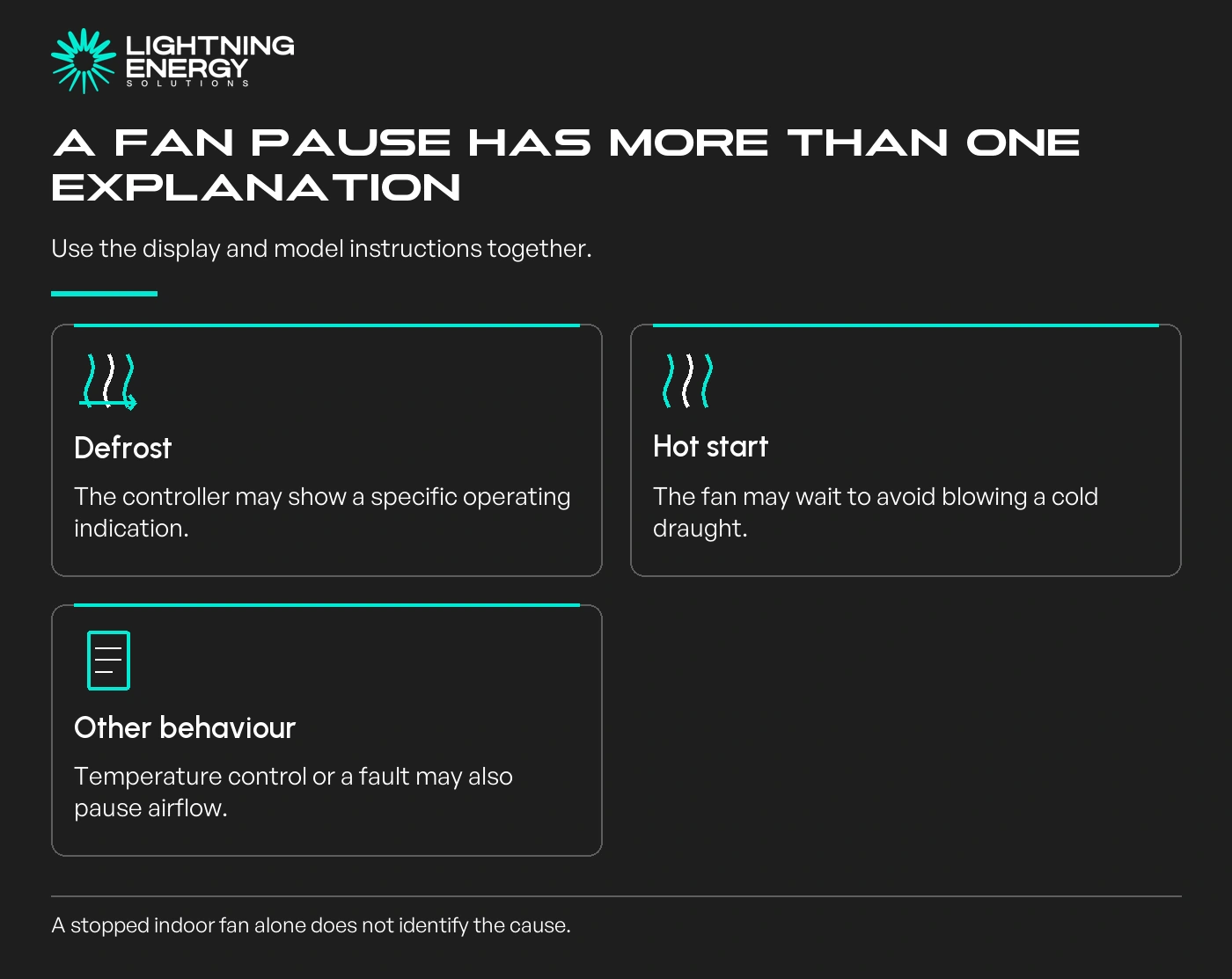
Daikin’s troubleshooting guidance identifies defrost as one reason heating can pause. Its controller-symbol guide explains the defrost/hot-start indication; use the manual for your exact model to interpret it.
Find your Daikin operation manual.
Our air conditioning guide explains why the heating requirement and local conditions belong in equipment selection, alongside the headline cooling capacity.
Look at the controller display and note the mode, set temperature and any symbol or message. The indoor fan may also pause during hot start to avoid delivering an uncomfortable cold draught.
A stopped fan therefore does not identify one cause by itself. Other temperature-control behaviour or a fault may look similar to someone watching from the room.
Daikin’s controller-symbol guide.
Read your own manual before treating a pause as abnormal. Avoid repeatedly cycling power or changing modes in an attempt to force heat while an automatic sequence is underway.
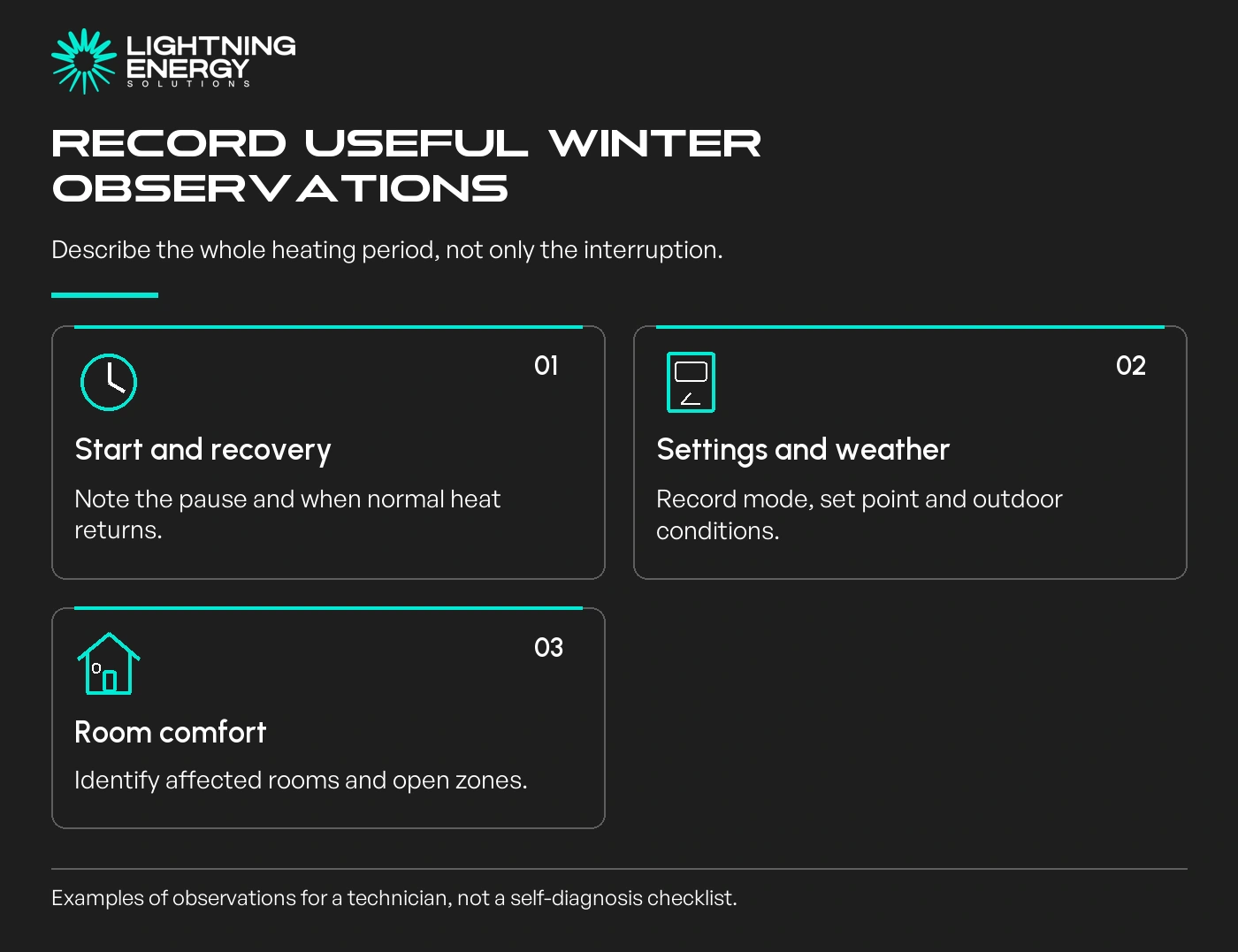
For an illustrative winter morning, record a pause, the displayed symbol and the time normal heating returns. That is more useful than reporting that the unit “sometimes stops”.
Note whether the rooms recover after the pause, which rooms remain cold and whether the concern occurs only in particular weather. Include open zones, fan setting and the normal position of internal doors.
A short interruption and a house that never reaches a reasonable temperature are different problems. The second can involve equipment performance, controls, airflow or building heat loss as well as defrost.
Review ordinary owner checks, such as accessible filters, in accordance with the manual. Keep outdoor airflow clear of loose leaves or stored objects without opening equipment or entering unsafe spaces.
Daikin’s troubleshooting guidance separates normal heating behaviour from symptoms requiring service.
The winter solar guide is also useful if your concern combines poor room comfort with unexpected winter grid use.
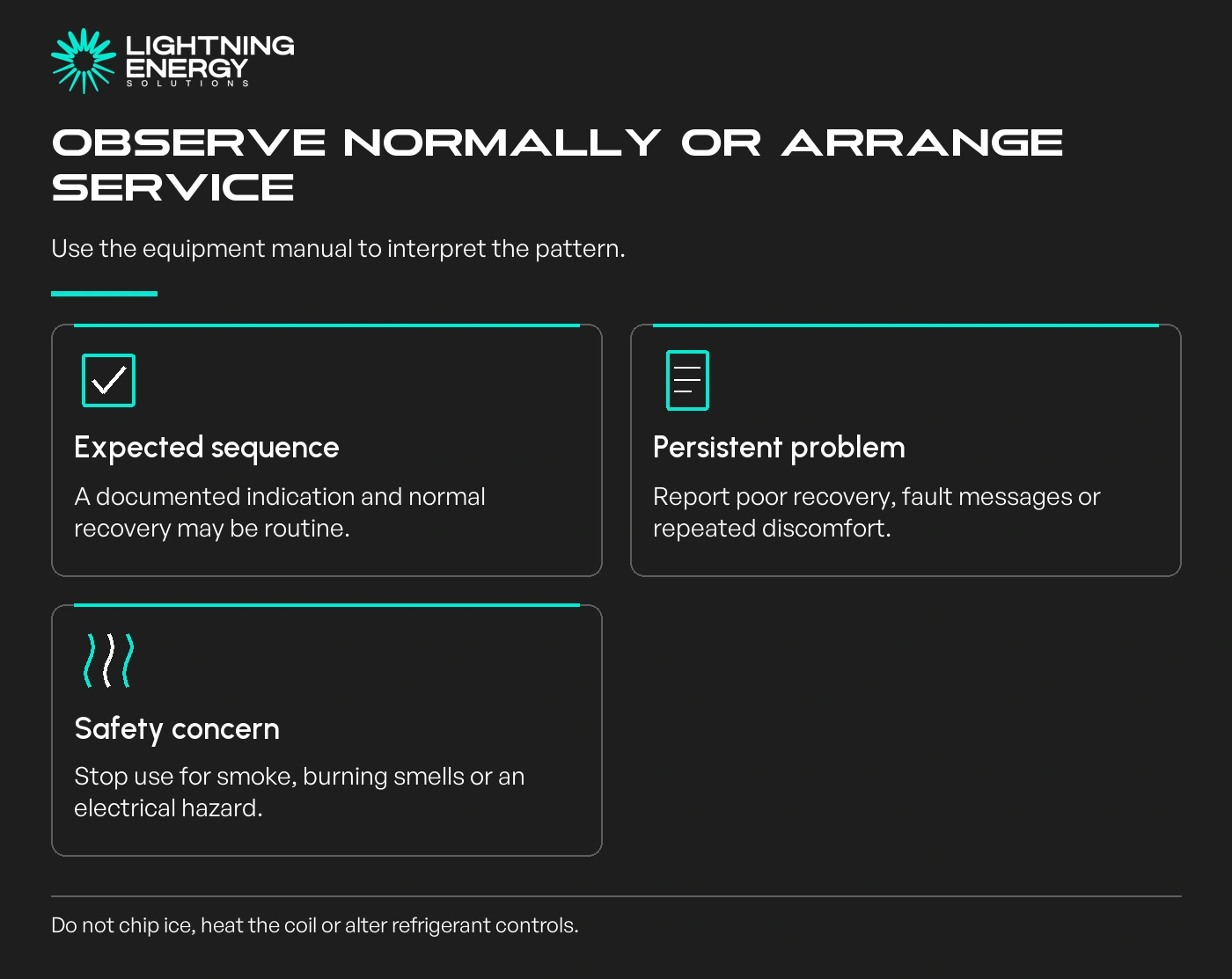
Contact the installer or service provider when heating does not recover as the manual describes, fault messages appear, or repeated interruptions leave the home uncomfortable. Share the observations and model details.
Treat burning smells, smoke or an apparent electrical hazard as a safety problem and stop using the equipment. Do not continue running it merely because frost can sometimes be normal.
Do not chip ice off the coil, apply improvised heating or alter refrigerant controls. Those actions can damage equipment and do not diagnose the cause.
Avoid ordering a larger unit on the strength of a defrost pause alone. Ask for a diagnosis and a review of the original design if sustained comfort is inadequate.
If replacement is justified, compare ducted options against the assessed heating load and operating conditions, not an assumed promise of uninterrupted warm air.
Send the model, controller photo and a short observation log when you request help. Clear evidence lets the technician distinguish expected operation from an airflow, control or equipment problem.
Available times
Book a consultation and we'll map solar, storage, hot water, and the rebates around your bills and your goals.
Question 1 of 6
