
Will going all-electric lower your bills? Build a household comparison
Compare all-electric household bills using consistent comfort, seasonal demand, tariffs, solar use, retained supply charges and separately recorded project costs.
Compare all-electric household bills using consistent comfort, seasonal demand, tariffs, solar use, retained supply charges and separately recorded project costs.

Going all-electric can lower running costs, but a useful estimate must describe your household rather than quote a generic annual saving. It also needs to distinguish lower bills from recovering the upfront installation cost.
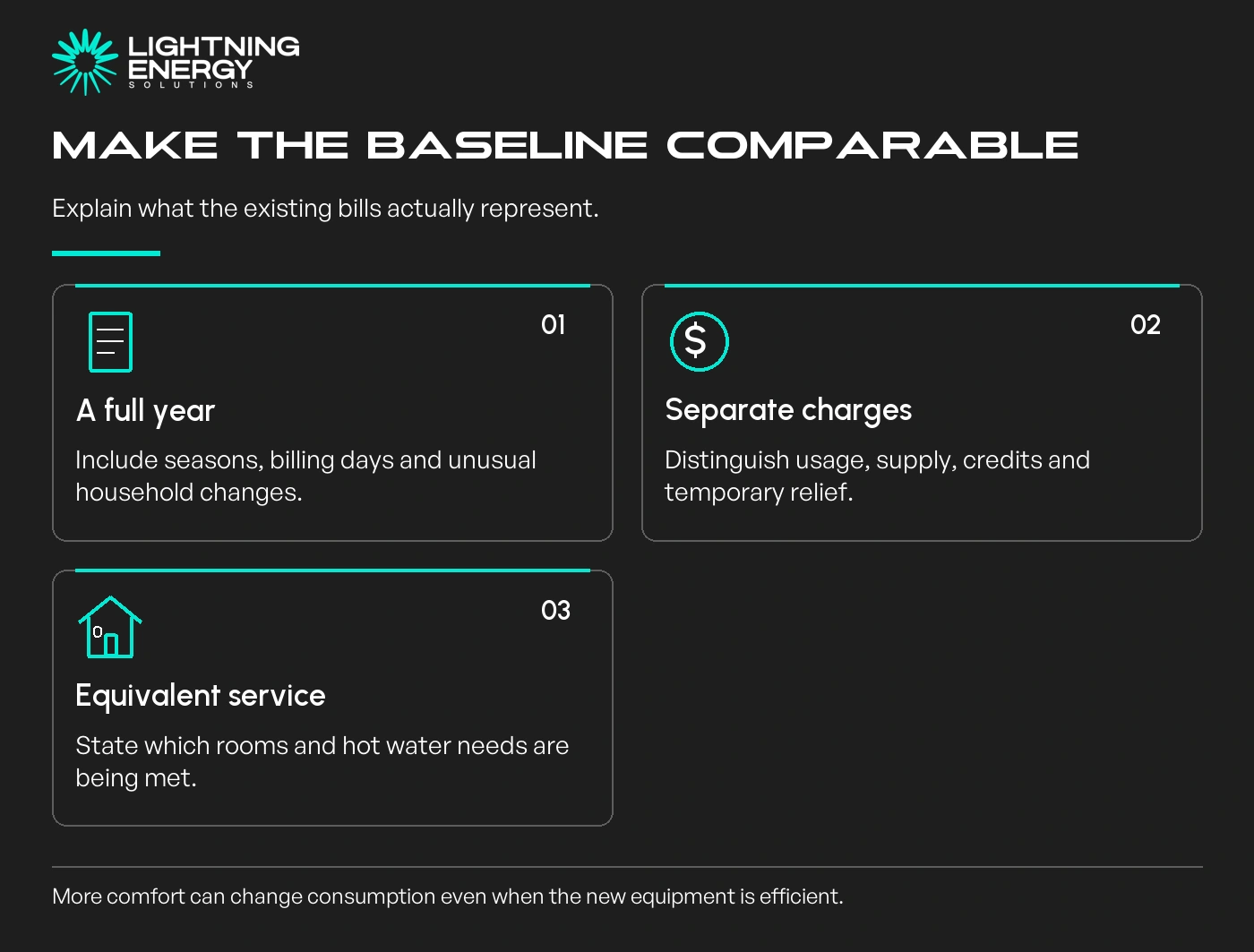
Build the comparison around equivalent comfort and hot water service. If the new system heats more rooms for longer, the change in service should be visible rather than hidden inside an efficiency claim.
Collect a full year of electricity and gas bills where possible, plus interval electricity data and solar monitoring. Note changes in occupancy, work patterns and unusual weather or absences.
Separate usage charges from daily supply charges, credits and one-off rebates. A temporary bill credit is not an ongoing appliance-efficiency improvement.
The government’s electrification guidance describes efficient electric alternatives, while acknowledging upfront costs and different household circumstances.
For an illustrative home that currently heats only its living room, compare that same service first. A second scenario can show the extra cost and comfort of warming bedrooms as well.
Use the whole-home planning guide to identify every appliance being changed. Omitting one remaining gas appliance can distort the projected bill.
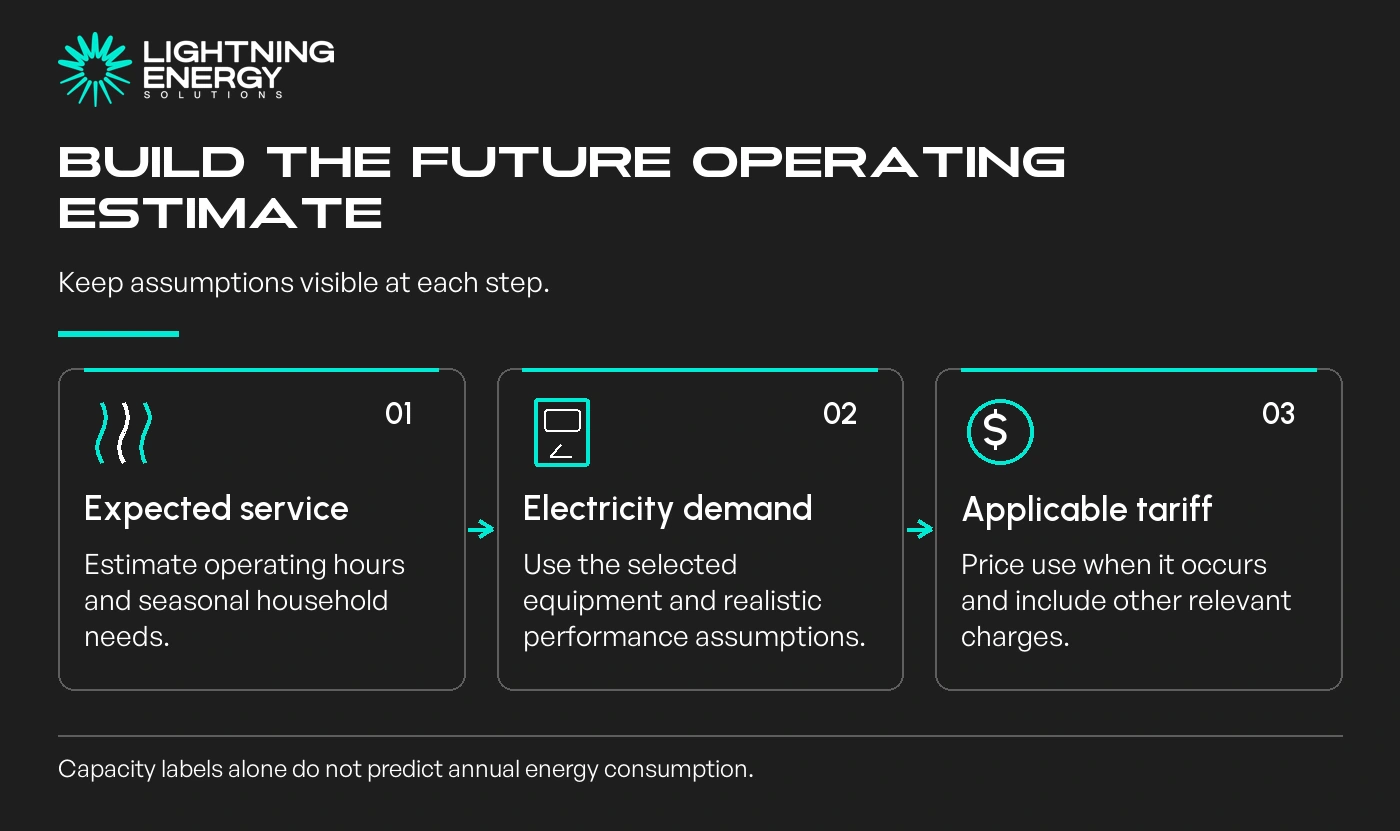
Ask the designer to state the assumed operating hours, temperatures, household hot water use and seasonal performance. Equipment capacity alone does not predict annual electricity consumption.
Apply the tariff that matches when the new loads are expected to run. Include applicable supply and demand charges rather than comparing only the lowest advertised usage rate.
Victorian Energy Compare is an independent government service for comparing available offers using household usage information.
Victorian Government offer-comparison guidance.
For illustration only, an additional 1,000 kWh bought at 30 cents per kWh costs $300 in usage charges. It says nothing about your likely annual consumption, actual tariff, solar contribution or other charges.
Run the same calculation with a less favourable operating assumption. A range is more informative than a precise total built from uncertain heating hours.
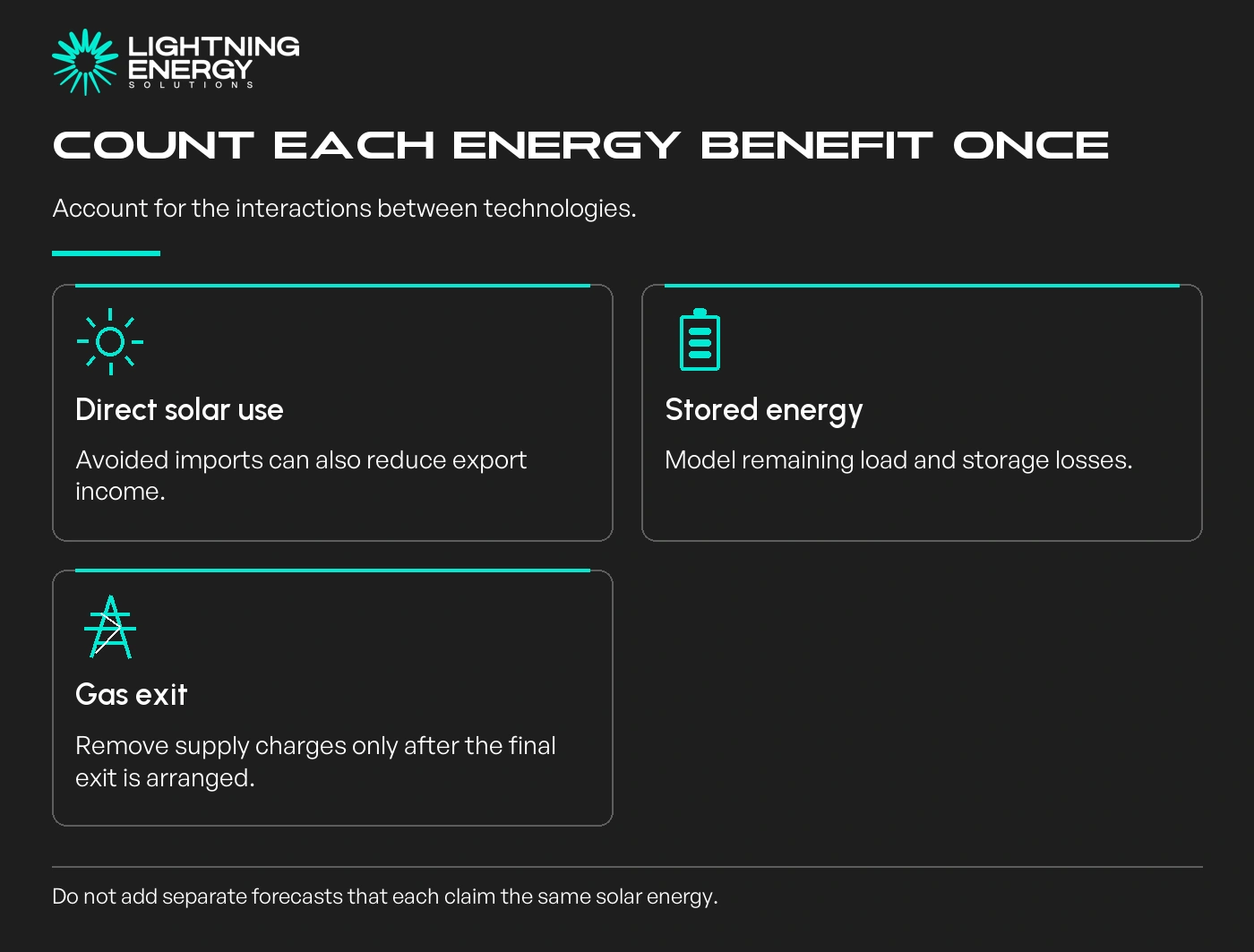
Direct solar use can reduce imports, but it can also reduce export income. Value both effects using the rates that apply to the household.
A battery shifts energy between times and introduces storage losses. Its bill benefit should be calculated on the load left after other changes, not added to an unrelated solar-sales estimate.
The government’s financial guide describes the import, export and timing effects.
Check any network export limit when modelling generation and exports. Do not assume every unused unit of solar can earn the feed-in tariff.
Keep daily gas charges while the gas account and connection remain. Credit their removal only once the final gas exit and billing outcome have been arranged.
If an EV is included, show household electricity and transport costs separately before combining them. Moving spending from petrol to electricity can raise the electricity bill while lowering total operating cost.
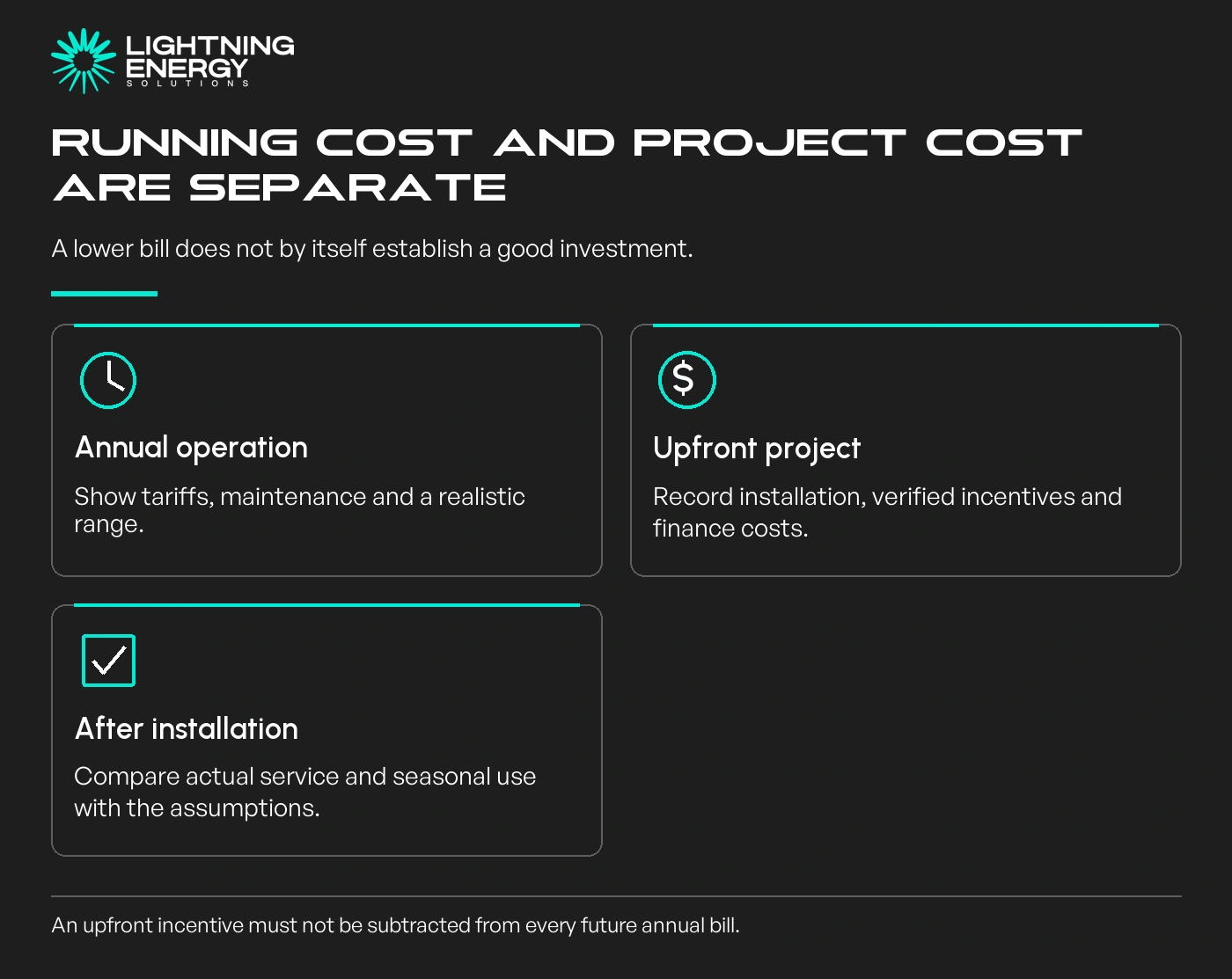
Present annual operating costs beside the installed project price, verified incentives, maintenance and finance costs. Do not deduct an upfront rebate from every future year’s bill.
Compare the upgrade with the realistic alternative. If a failed heater must be replaced anyway, the decision differs from replacing a reliable appliance well before it is needed.
State the assumptions behind any payback estimate, including equipment life, future prices and replacement costs where relevant. Avoid presenting one forecast as a guaranteed outcome.
After installation, retain the same measurement categories and compare actual use through different seasons. Investigate differences in household service or settings before concluding the equipment has failed its promise.
Delay optional equipment if the estimate only works under unusually favourable assumptions. A smaller project with a clear benefit may suit the household better than a larger theoretical saving.
Bring a year of bills and the proposed equipment scope when you request a household comparison. Ask for transparent assumptions, a realistic range and a clear separation between bills and capital cost.
Available times
Book a consultation and we'll map solar, storage, hot water, and the rebates around your bills and your goals.
Question 1 of 6