
Planning Solar Cleaning and Inspection Without Unnecessary Roof Work
Plan solar servicing and cleaning using safety guidance, manufacturer requirements and evidence of soiling, without paying for unnecessary roof work.
Plan solar servicing and cleaning using safety guidance, manufacturer requirements and evidence of soiling, without paying for unnecessary roof work.

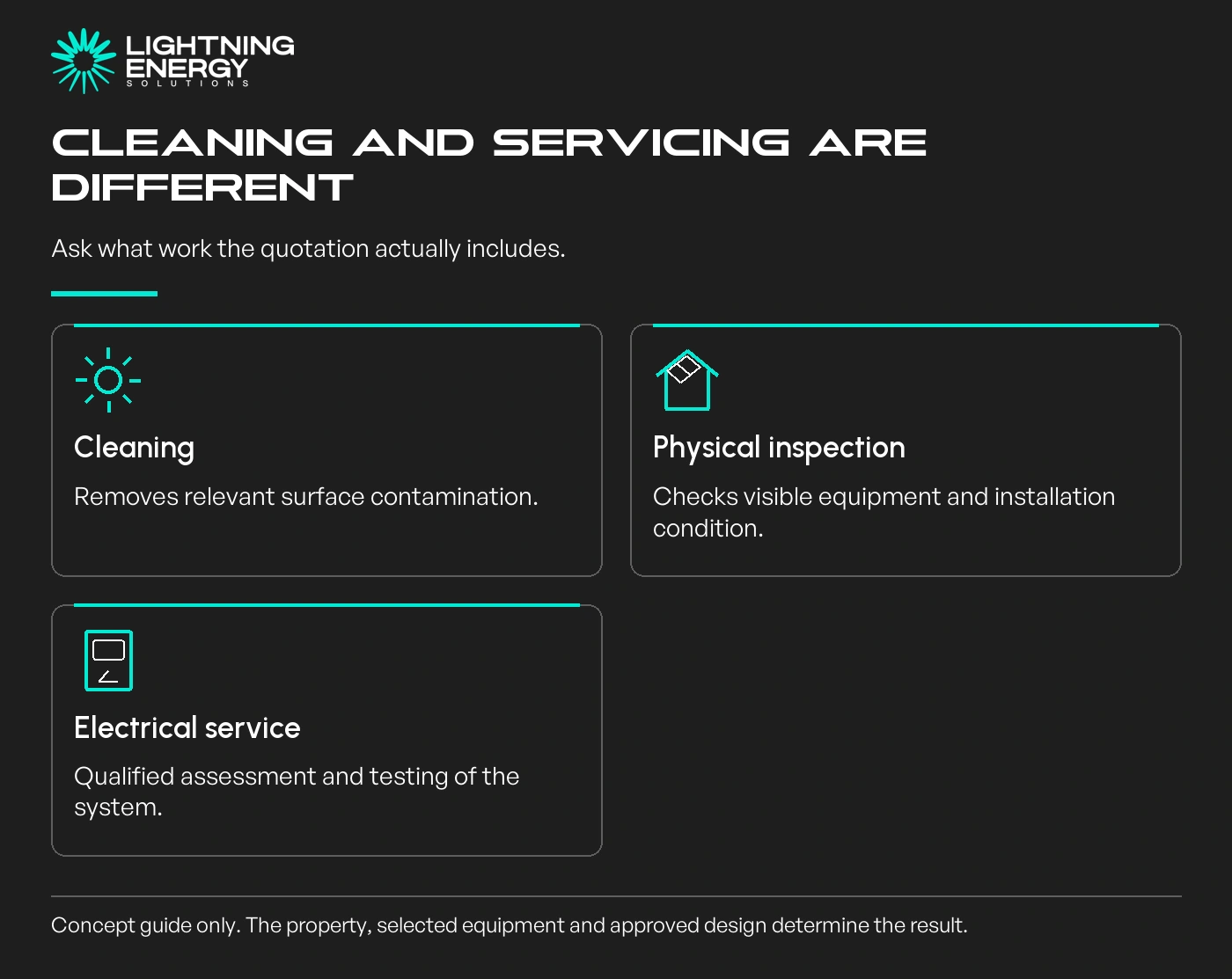
Solar cleaning and solar servicing are different jobs. Cleaning removes surface contamination; a professional service checks the system's electrical and physical condition. One should not be sold as an automatic substitute for the other.
Energy Safe Victoria recommends servicing at least every two years. Your installer or manufacturer may specify additional requirements relevant to the equipment and site, so keep a documented maintenance plan.
Energy Safe Victoria's solar guidance explains what professional servicing should cover and why it matters.
Find the installation manual, warranty and last service report. Record any recurring warnings, recent storms, roof changes or visible damage that might affect the next visit.
Our solar service can help distinguish a performance concern from a routine maintenance enquiry. Tell the service provider what you want assessed rather than asking only for a clean.
A low energy total is not evidence of dirt by itself. Weather, seasonal shade, inverter faults and missing monitoring data can also change the apparent result.
Local conditions matter. Nearby trees, birds, dust, construction activity, panel tilt and rainfall can affect the type and persistence of contamination. A generic calendar cannot describe every roof.
Solar Victoria's maintenance guide covers cleaning need, warranty conditions and safe working practices. It does not promise a generation gain for every household.
Ask what evidence supports the recommended clean and which method is allowed by the panel manufacturer. The person doing the work should avoid damage to glass, frames, cables and the roof.
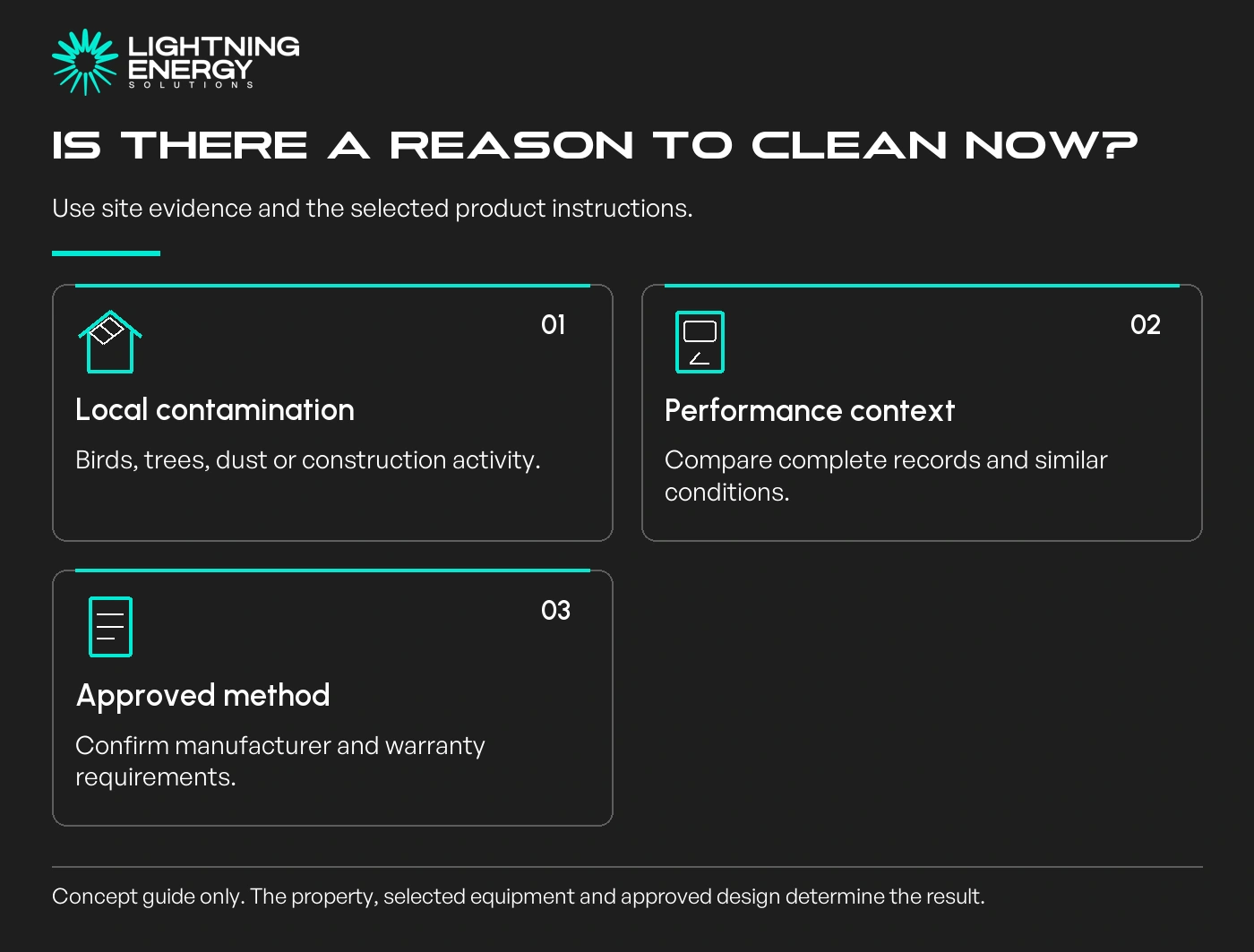
Do not assume a household pressure washer, abrasive tool or cleaning chemical is suitable. Product-specific instructions and the condition of the installation determine an appropriate professional method.
Our panel selection guide explains why keeping the actual model documents matters beyond the original purchase.
Cleaning panels on a roof exposes workers to fall risks. Edges, skylights and fragile surfaces require planned controls, even when the task appears short or the house has only one storey.
WorkSafe roof-safety guidance describes those hazards. A low price does not remove the need for safe access.
Homeowners can note visible changes from a safe ground-level position and review monitoring. They should not climb onto the roof, stand on panels or handle electrical connections to investigate a suspected problem.
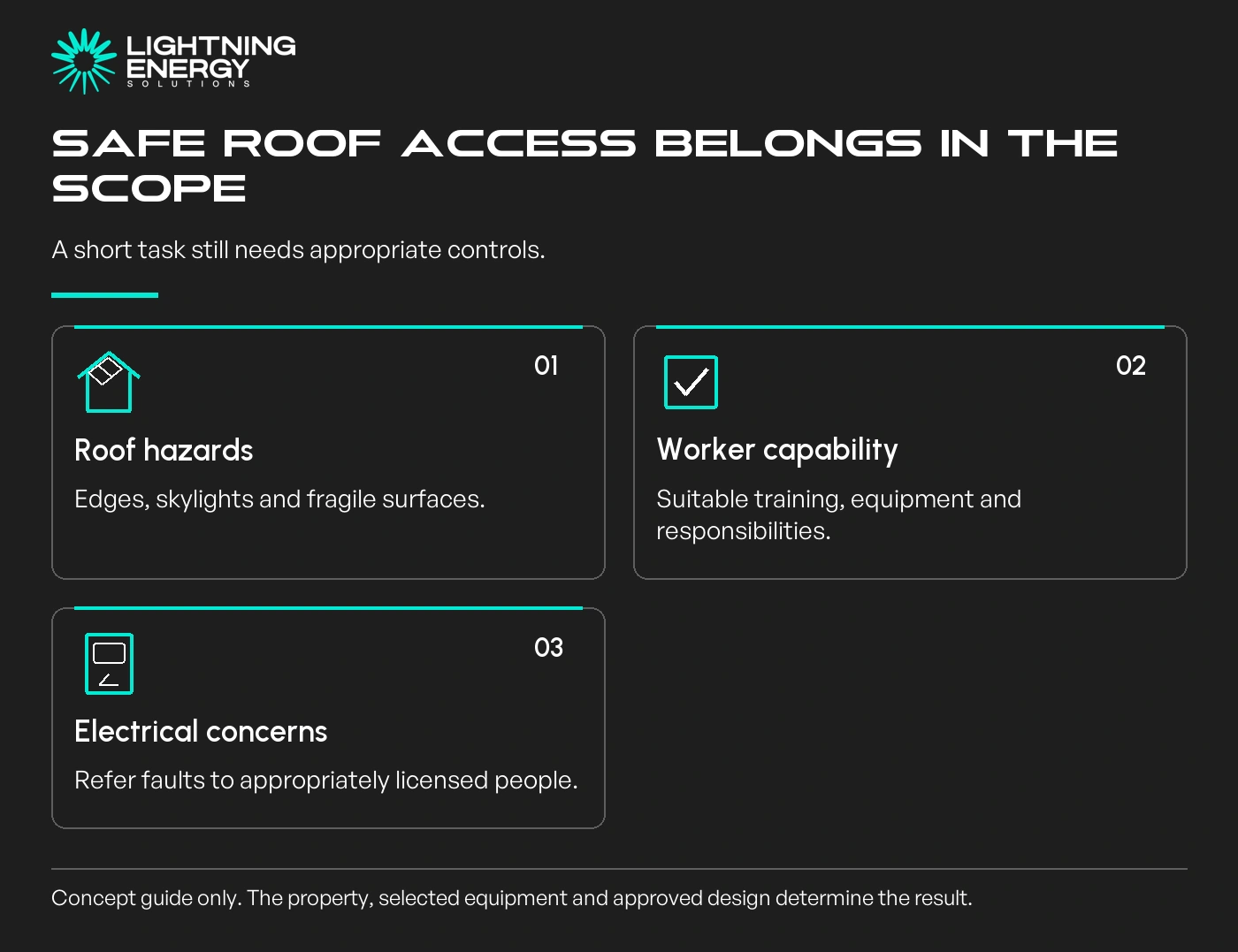
Electrical testing and repairs require appropriately licensed people. A cleaning service should be clear about what it can inspect, what it cannot certify and when it will refer a concern to an electrician.
Ask whether any defects found are documented with photographs and recommendations. A report that simply says panels cleaned provides little evidence about the electrical system's condition.
Imagine a household with a persistent patch of bird contamination and an overdue professional service. Combining appropriately planned tasks may be sensible, provided the people involved have the necessary skills and scope.
Another home may have no evidence of significant soiling and a normal weather-adjusted generation pattern. An unsolicited promise of a large output boost deserves supporting evidence before money is spent.
Our winter-performance guide explains why before-and-after totals need comparable conditions.
Even when cleaning is appropriate, two different weather days cannot establish its precise benefit. Avoid paying a premium for a percentage improvement that has not been credibly assessed.
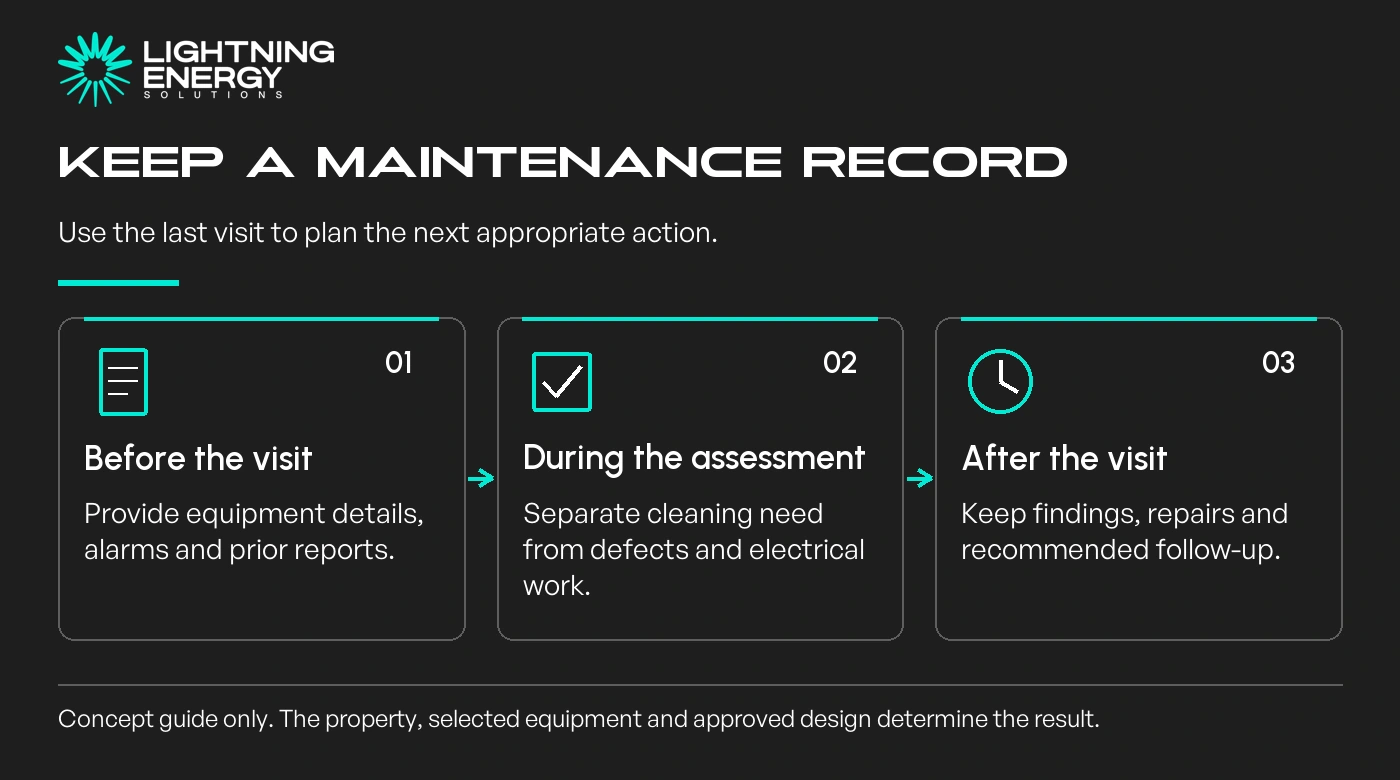
Retain the work date, findings, methods and any repairs. Ask what should trigger an earlier check, such as damage or repeated alarms, rather than treating the routine schedule as a reason to ignore a new issue.
Request a maintenance scope that separates cleaning, inspection and electrical servicing. The aim is a safe, functioning system with useful records, not unnecessary visits or roof work.
Available times
Book a consultation and we'll map solar, storage, hot water, and the rebates around your bills and your goals.
Question 1 of 6
