
Your Smart-Meter Data Can Explain What to Electrify Next
Your electricity bill totals the energy bought over a period. Smart-meter interval data can show when that energy was bought, which often makes an electrification discussion much more useful.
Your electricity bill totals the energy bought over a period. Smart-meter interval data can show when that energy was bought, which often makes an electrification discussion much more useful.

Your electricity bill totals the energy bought over a period. Smart-meter interval data can show when that energy was bought, which often makes an electrification discussion much more useful.
Start with patterns rather than a single unusually expensive day. The aim is to understand the household routine, identify missing information and test the next upgrade against realistic demand.
Victoria's smart-meter guidance explains that meters record usage in half-hour intervals and that customers can access usage information through distributor services.
Request a downloadable file and check its units, time zone and whether timestamps mark the beginning or end of each interval. Keep the original file so the assumptions can be checked later.
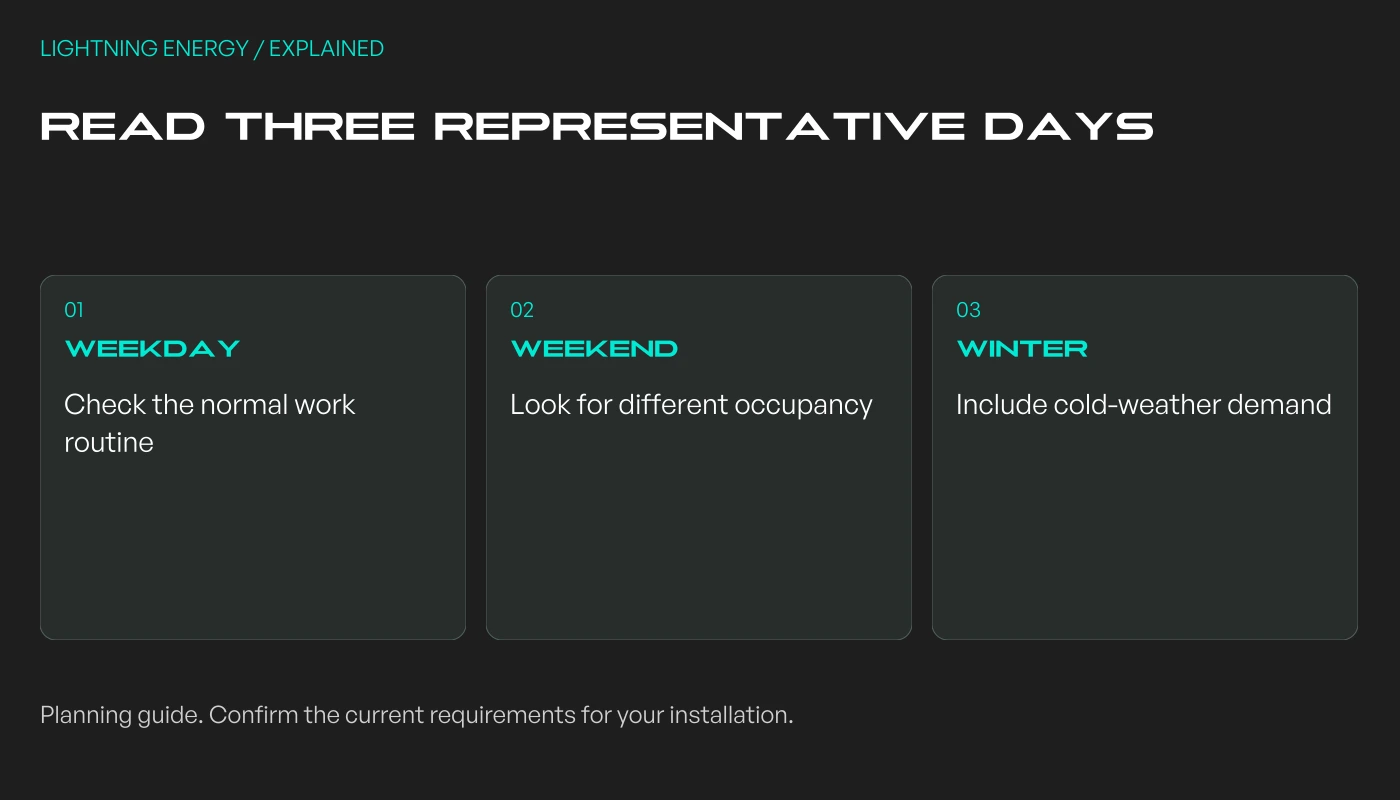
Compare a normal weekday, a weekend and a cold-weather period. If possible, use a full year to avoid choosing equipment around a mild week that misses winter heating demand.
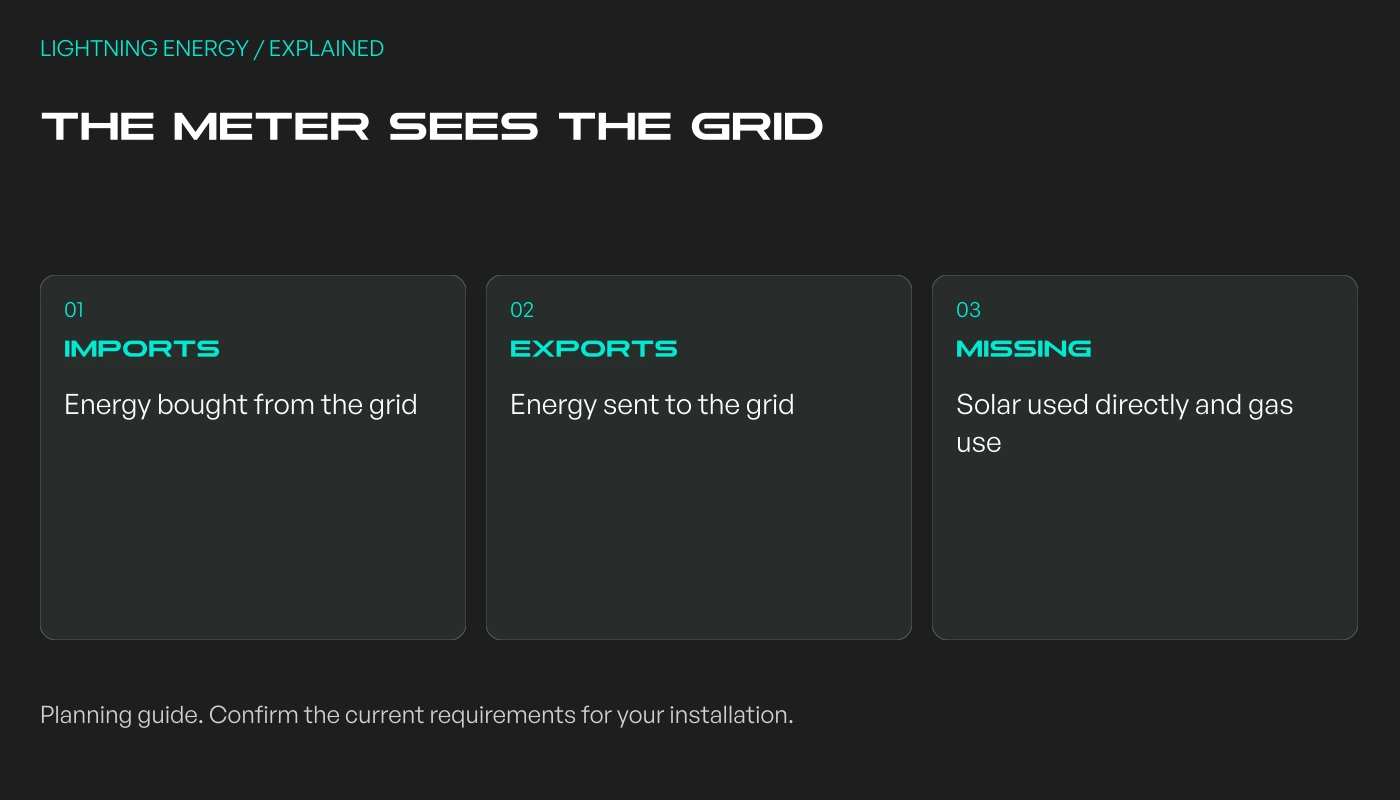
For a home with rooftop solar, grid imports do not equal total household consumption. Electricity generated and used directly behind the meter does not appear as grid energy purchased.
Combine import and export data with suitable generation information where available. Confirm that the records cover the same periods before calculating a household energy balance.
The electricity meter also does not show gas consumption. If you plan to replace gas heating or hot water, bring the gas bills and equipment details into the discussion rather than treating today's electric load as the future total.
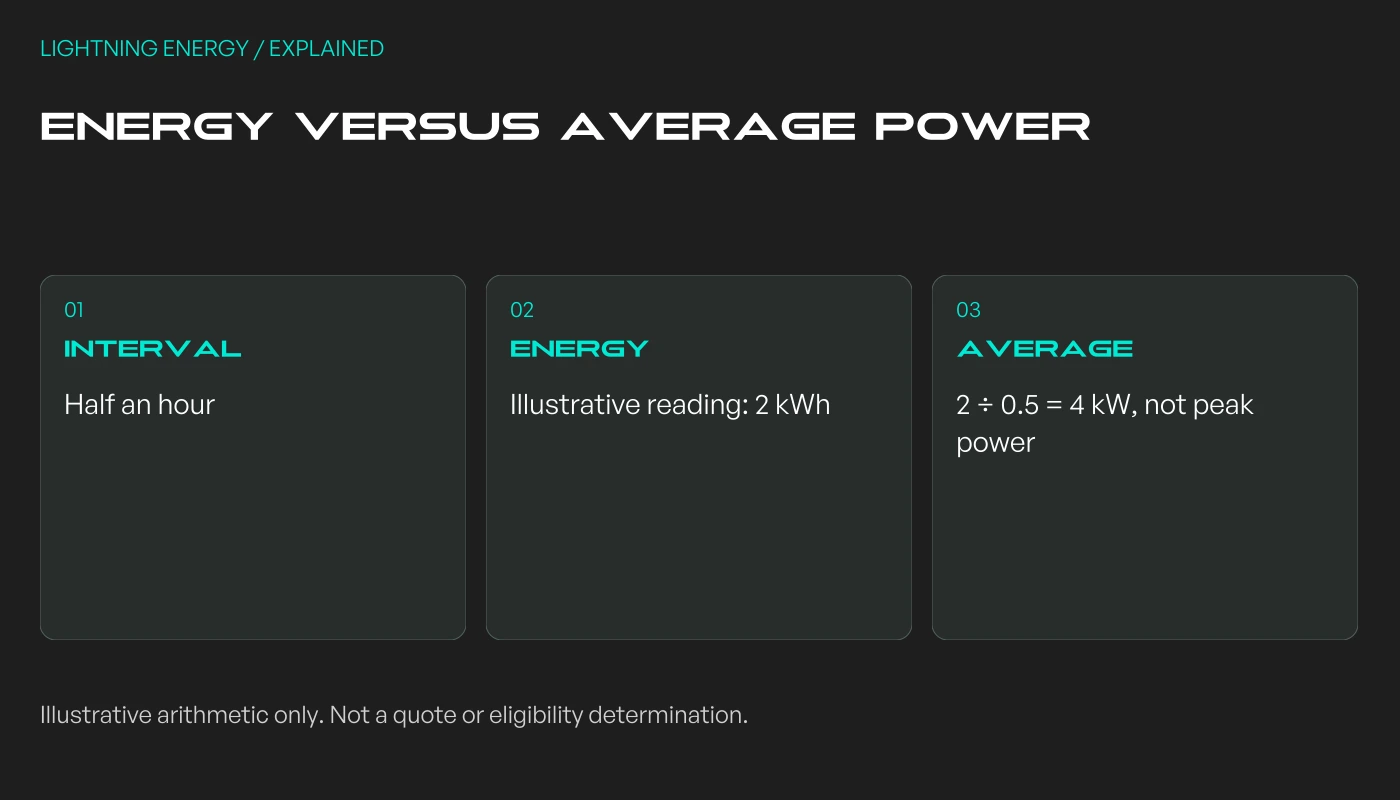
An interval containing 2 kWh over half an hour represents average power of 4 kW during that interval. It does not prove that power stayed at 4 kW throughout those thirty minutes.
A short appliance surge or several overlapping loads may be hidden inside the average. A qualified electrical assessment is still needed for supply capacity, circuit protection and equipment selection.
For EV charging, use the data to discuss practical charging windows, then add the expected driving energy. A vehicle you do not yet own will not be represented in historic meter readings.
Mark likely events such as cooking, heating and overnight hot water, but treat the labels as hypotheses unless another measurement confirms them. A repeated evening rise could have more than one cause.
The Australian Government's smart-home guide discusses monitoring and controls. A timer or schedule may be worth assessing before a larger equipment purchase.
For example, compare a proposed daytime hot-water schedule with solar availability and the tariff. The result depends on available generation, tank needs and other loads; it is not automatically free energy.
When considering a battery, ask for a model that uses imports, exports and generation assumptions consistently. Avoid counting the same solar energy as both direct household use and battery charging.
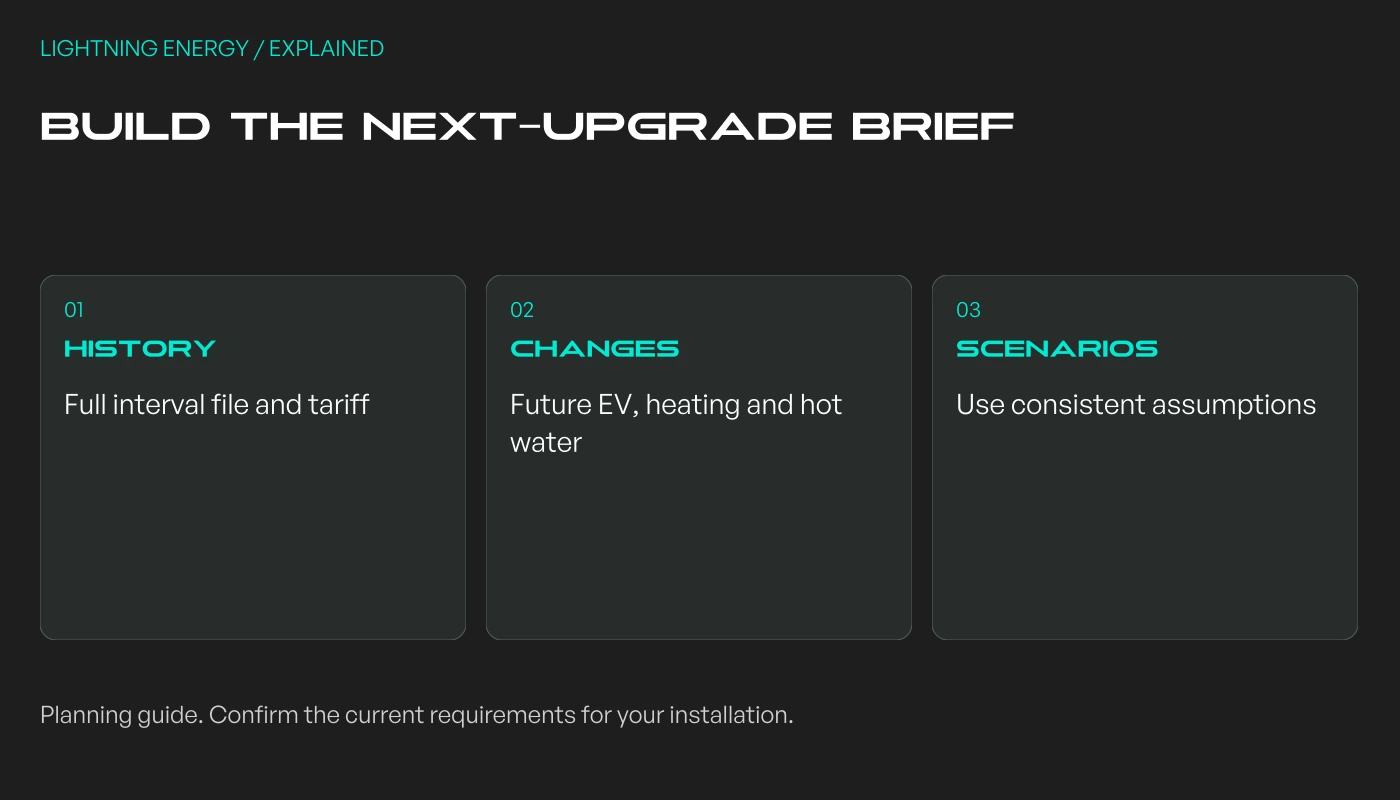
Summarise the household routine, planned changes, tariff and any known data gaps. Include a few representative days alongside the full file, so a memorable spike does not dominate the conversation.
Ask each supplier to explain what their model assumes about winter, occupancy and future appliances. Compare scenarios with the same assumptions before comparing savings claims.
Send Lightning Energy your usage information through the agreed quote process. The useful outcome is a documented plan for the next upgrade, with measurements that can be checked after installation.
Available times
Book a consultation and we'll map solar, storage, hot water, and the rebates around your bills and your goals.
Question 1 of 6
