
Adding Air Conditioning: Single-Phase Supply, Three-Phase Units and Load Management
Check the air conditioner’s required supply and your home’s combined electrical loads separately before deciding on circuits, three-phase or an upgrade.
Check the air conditioner’s required supply and your home’s combined electrical loads separately before deciding on circuits, three-phase or an upgrade.

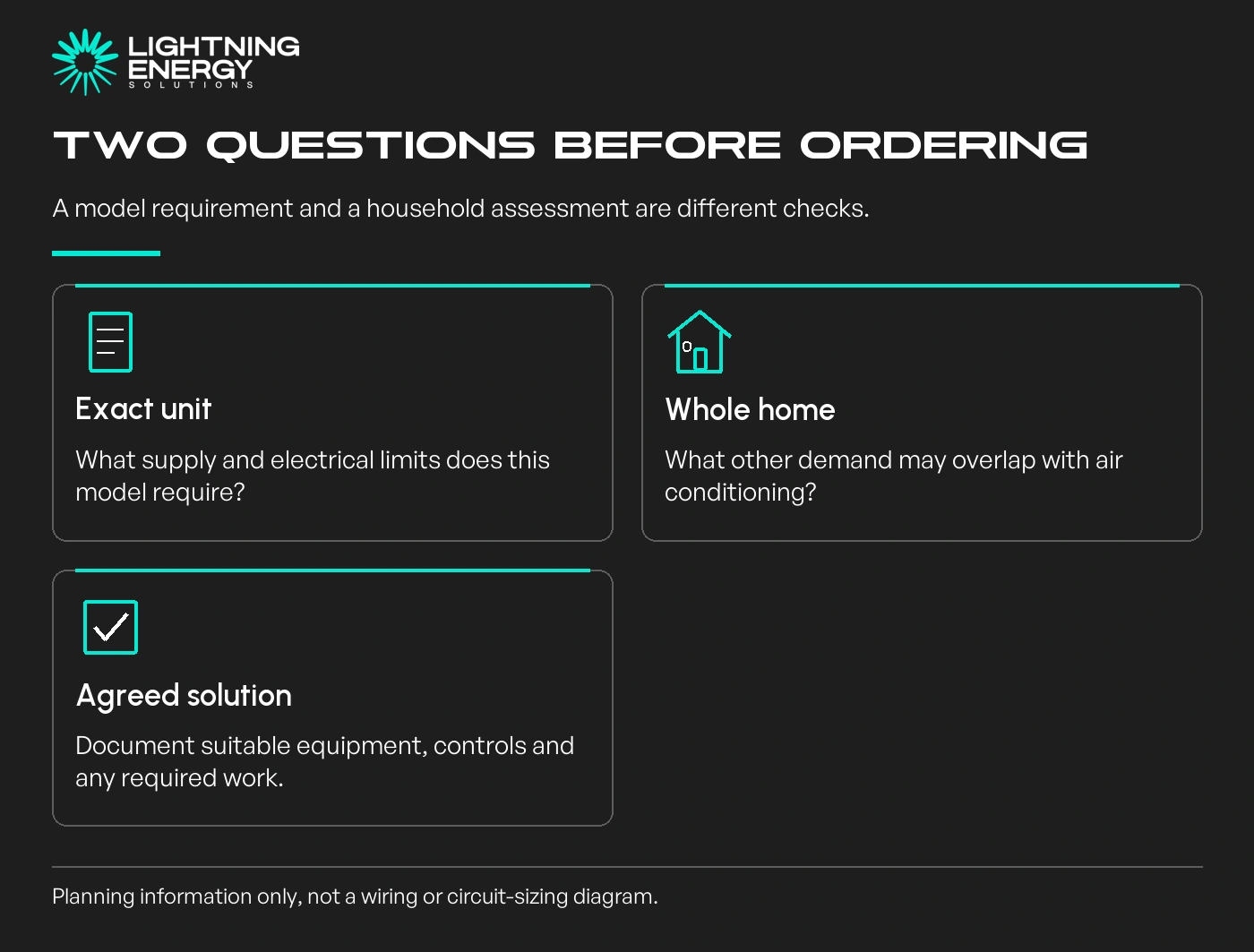
Adding a large air conditioner does not automatically mean your home needs three-phase power. There are two questions: what supply the exact model requires, and whether your home can support the proposed combined demand.
Have a licensed electrician assess both before accepting the equipment choice. A cooling-capacity number or a photograph of one switchboard label cannot answer them.
The kilowatt rating advertised for heating or cooling is usually thermal output. Electrical input, required supply and installation limits are separate specifications in the matching manufacturer documentation.
Daikin’s Australian ducted range includes single-phase and three-phase options. That is a reminder to identify the exact indoor and outdoor models, rather than assuming every model in a capacity class uses the same supply.
Ask the air conditioning supplier to provide the electrical requirements with the quotation.
The electrician should use the applicable installation documentation, not calculate circuit requirements from a marketing headline.
If a chosen unit requires three-phase supply, discuss a suitable alternative model as well as a supply upgrade. The alternatives still need to meet the home’s heating and cooling brief.
Prepare a list of the larger appliances and their intended routines: cooking, water heating, air conditioning, EV charging and any other substantial loads. Include planned additions, clearly marked as future work.
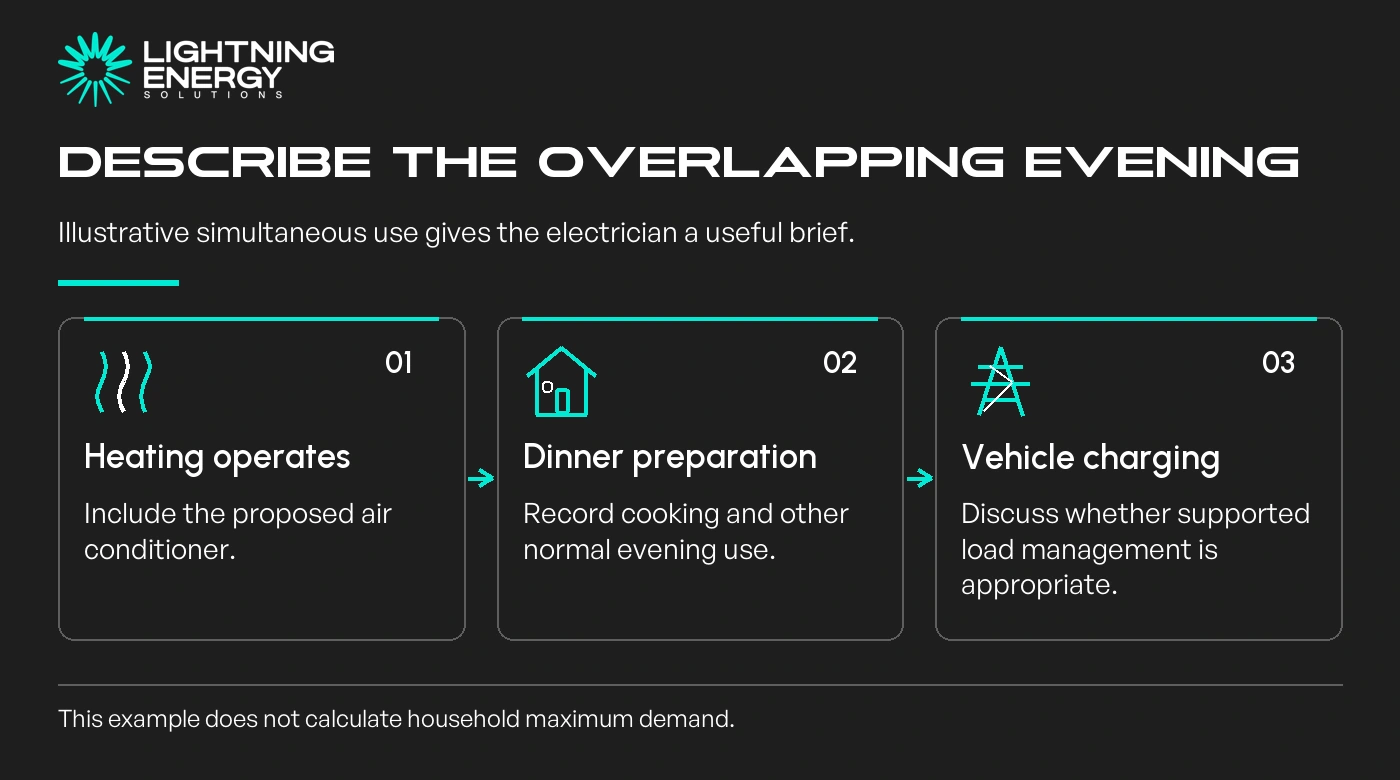
Imagine an illustrative evening with heating, dinner preparation and a vehicle charging together. That overlapping period matters more to the assessment than a low average daily electricity use.
A large solar array does not increase the rating of existing cables or guarantee available generation on a winter evening. Any battery arrangement also needs to be considered within the actual electrical design.
Ask whether supported load management could change the overlap. For example, an appropriately designed charging arrangement may manage vehicle demand while other loads operate.
A promise that the family will remember to turn appliances off is different from an engineered control arrangement. Ask which approach the proposal actually relies on.
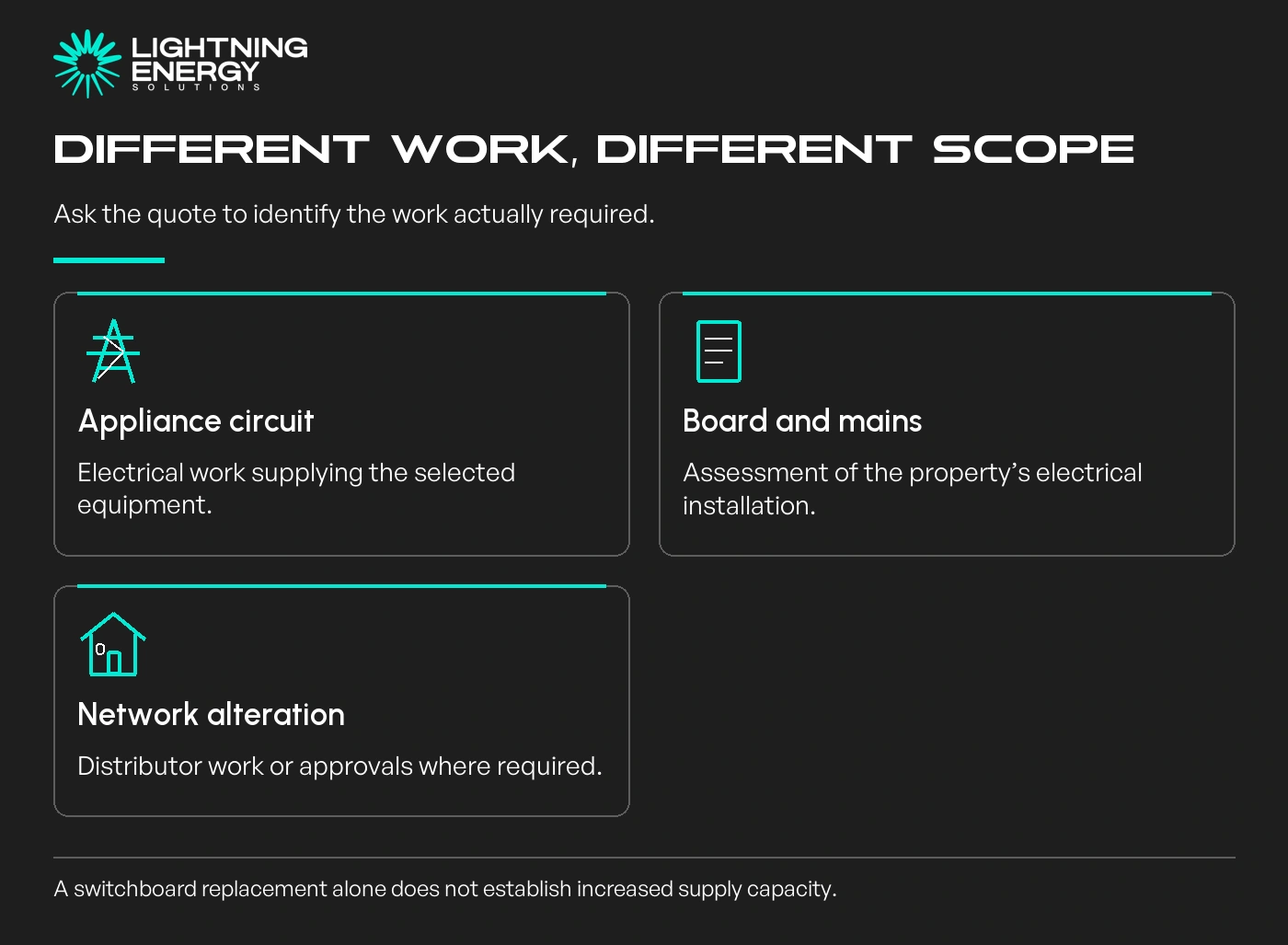
A dedicated appliance circuit, a switchboard replacement, changes to consumer mains and a network supply alteration are different pieces of work. Ask the quote to identify which are necessary and why.
Changing the switchboard does not, by itself, establish a larger network supply. Equally, a request for increased supply may involve more than work inside the switchboard.
CitiPower and Powercor describe alterations to capacity, phase arrangement and metering, with applications submitted by a registered electrical contractor in their networks.
Their supply alteration process.
Your property may be on a different Victorian distribution network. Confirm the responsible distributor and current requirements rather than applying another network’s process or price to your home.
Request separate descriptions of equipment, electrical work, network work and approvals. Ask who coordinates each part and whether the appliance installation depends on a supply alteration being completed first.
Energy Safe Victoria explains that residential main-switchboard replacement requires the power to remain off until the relevant inspection. Include any required inspection and interruption planning in the scope.
Energy Safe’s inspection guidance.
Coordinate this assessment with your electrification sequence. Doing a clear future-load assessment now can avoid making separate, incompatible decisions for each appliance.
Do not open electrical equipment or attempt your own capacity test. The homeowner’s useful contribution is an accurate appliance list, operating brief and renovation timeline.
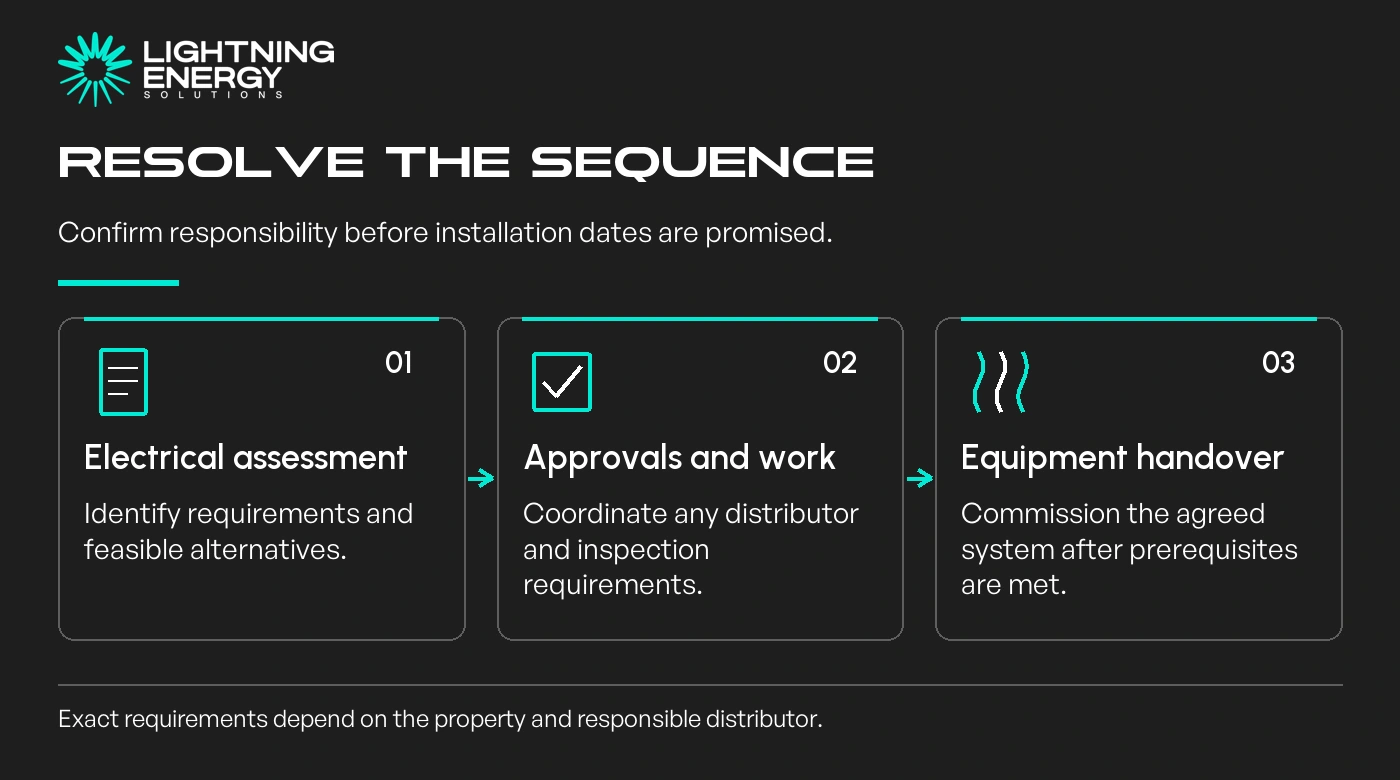
Before ordering the unit, request a coordinated assessment. Ask for the model’s supply requirement, the household demand assessment and any management or upgrade work to be documented separately.
Available times
Book a consultation and we'll map solar, storage, hot water, and the rebates around your bills and your goals.
Question 1 of 6