
All-Black Solar Panels: Do You Still Have to Choose Between Looks and Power?
Jinko’s Tiger Neo 5.0 announcement puts appearance and performance in the same conversation. Here is what Australian homeowners should check beyond the headline numbers.
Jinko’s Tiger Neo 5.0 announcement puts appearance and performance in the same conversation. Here is what Australian homeowners should check beyond the headline numbers.

The appearance of a solar array matters when it becomes a prominent part of your home. But a dark finish alone does not tell you how much electricity the system will generate or whether a particular panel suits your roof.
A new JinkoSolar announcement is a useful example of why appearance and performance should be assessed together. It is also a reminder to distinguish a global product launch from an Australian installation offer.
This is a desk-researched buying guide, checked on 1 November 2026. We have not independently tested the announced module. The cover shows an existing AIKO installation for visual context, not the new Jinko product.
In its 17 October announcement, JinkoSolar describes an all-black, 48-cell Tiger Neo 5.0 residential module using its TAC technology.
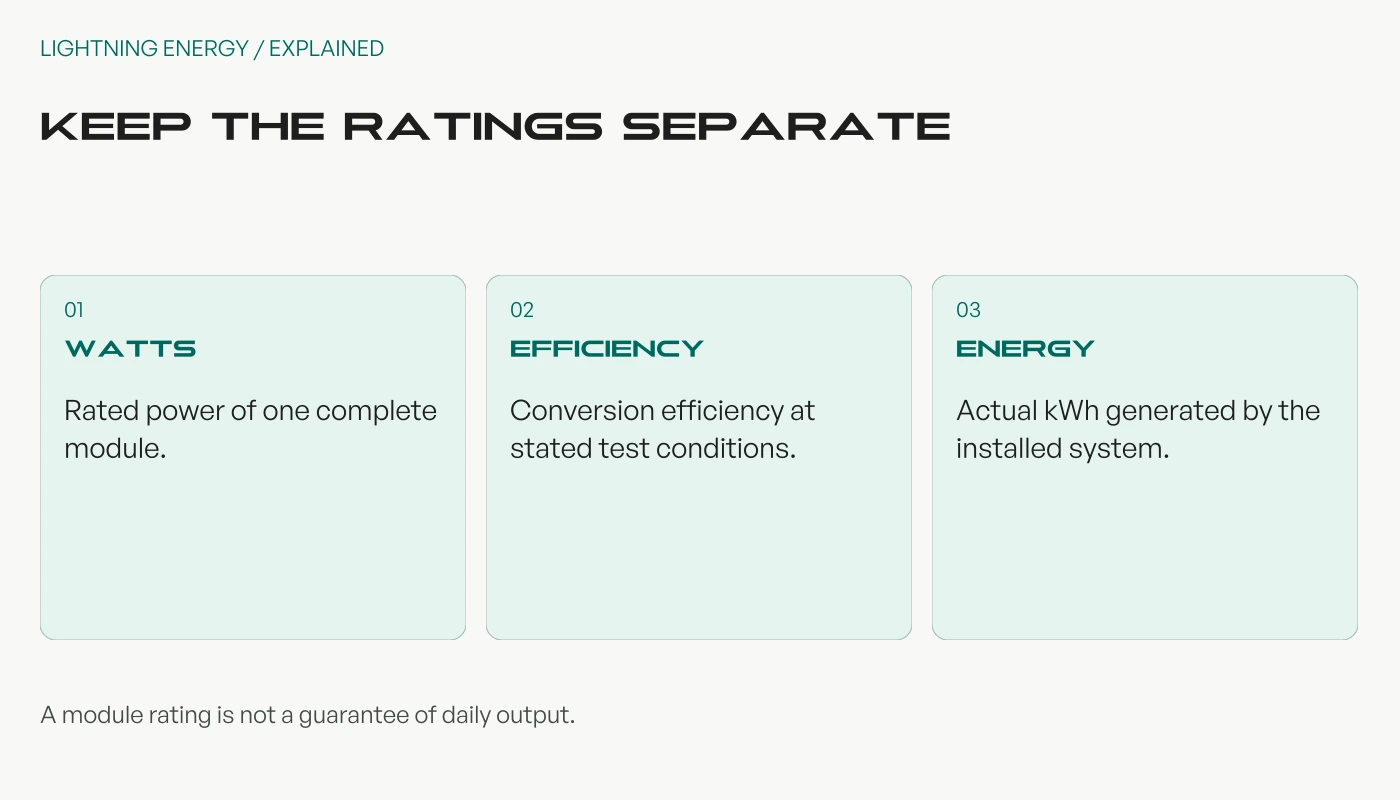
The company states maximum rated output of 510 W, module efficiency of 25.52% and a power temperature coefficient of -0.24% per degree Celsius. These are manufacturer specifications, not measurements from an Australian roof.
Jinko also discusses peak cell efficiency. Cell efficiency and finished-module efficiency are different measures; neither is the percentage of your household bill that solar will remove.
The announcement does not establish the exact Australian model offered to you, local stock, installed price or applicable Australian warranty. Ask for those documents before making a product decision.
All-black describes appearance, not a single cell technology or a standard output level. Frames, cells, interconnections and the backing or rear glass can all affect the finished look.
Two panels can look similar from the street while having different dimensions, ratings and electrical characteristics. Conversely, a more visible frame does not by itself make a panel technically better.
Avoid choosing from a photograph alone. Request the exact model number and datasheet, then compare the proposed system design.
Our guide to TOPCon, HJT and back-contact labels explains the terminology.
First, how much usable roof area does the module occupy? A larger panel can have a higher wattage without fitting more total capacity onto a complicated roof.
Second, what is the module efficiency under the stated test conditions? Use comparable finished-module figures, rather than mixing a cell research result with a retail panel rating.
Third, how does rated power change with cell temperature? For the usual negative power coefficient, a value closer to zero represents less change per degree above the reference temperature, all else equal.
That coefficient does not mean a panel gains output simply because the roof gets hotter. See why output can fall on a hot sunny day.
Fourth, what warranty and support arrangement applies to the exact Australian product? Request both product and performance terms, including exclusions and the claims process.
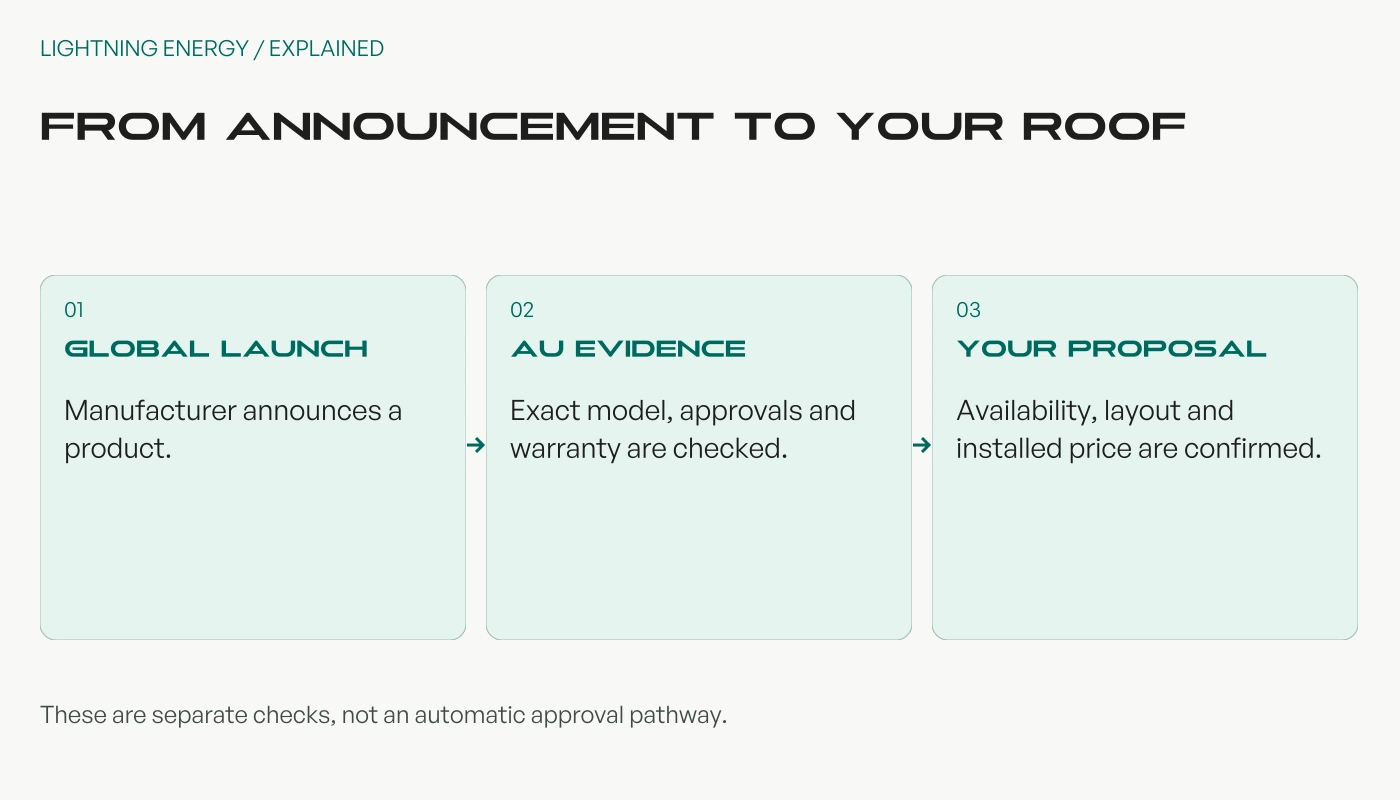
A global announcement is a starting point for research. Before ordering, the retailer should identify the exact model, applicable approval listing, delivery expectations and warranty documents for the proposed installation.
An overseas product name can cover several variants. Do not transfer specifications or warranty promises from a similarly named model into your quote.
Ask how the proposed modules work with the inverter, roof layout and network conditions. The Solar Victoria solar buyer’s guide is a useful independent starting point for system planning.
If a product is not yet available on documented Australian terms, compare currently available alternatives on the same basis. There is no need to make an immediate purchase decision from a launch headline.
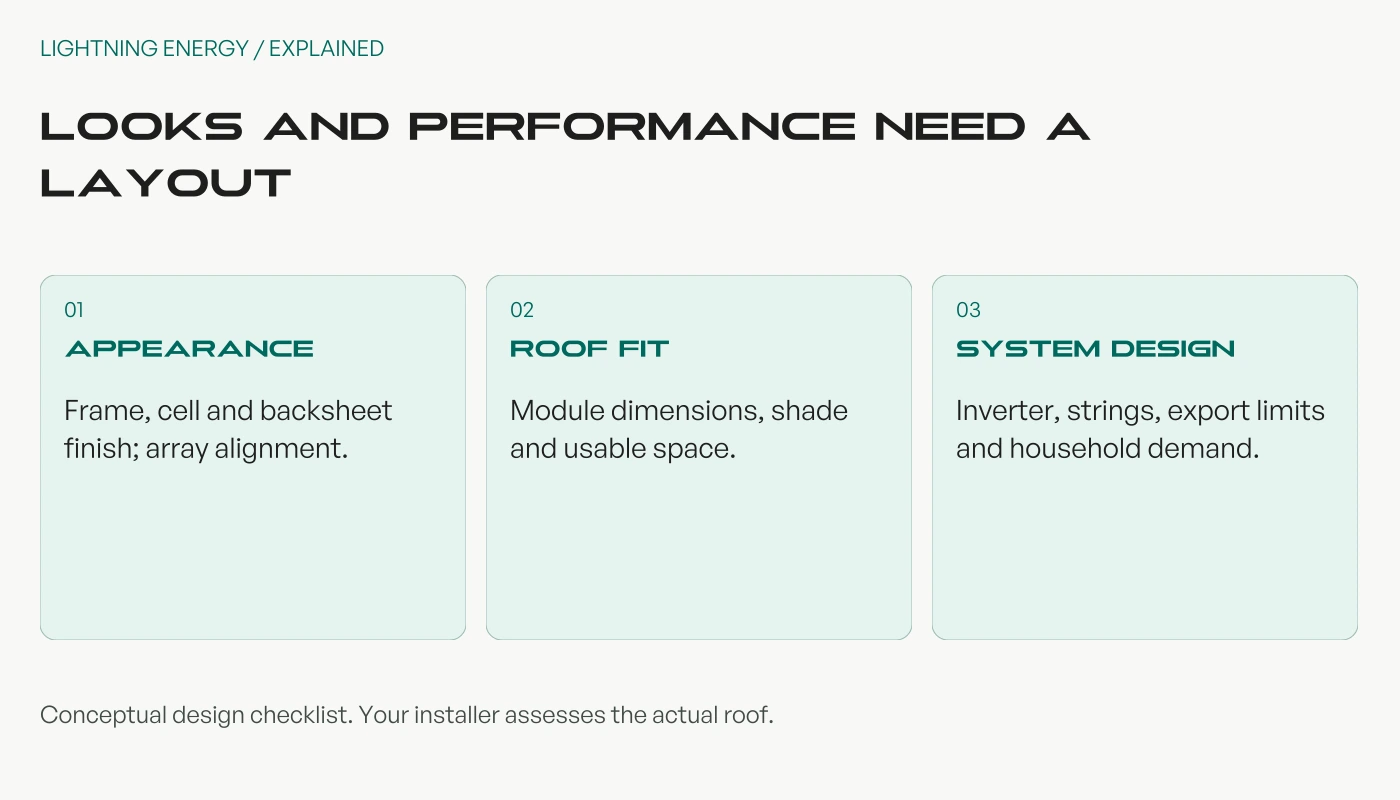
Ask for a panel-by-panel roof plan showing the proposed orientation, obstructions and usable roof sections. A neat rectangular arrangement may look appealing, but the design must still account for shade and site constraints.
Compare the actual number of modules that fit, rather than assuming the highest individual wattage produces the best complete system.
Our small and complex roof guide explains the practical trade-offs.
Request the assumptions behind any annual generation estimate. Household savings also depend on when you use electricity and how the electricity plan treats imports and exports.
If you already have functioning solar, an attractive new product is not by itself a reason to remove it. Check the existing system’s output, condition and compatibility before discussing expansion or replacement.
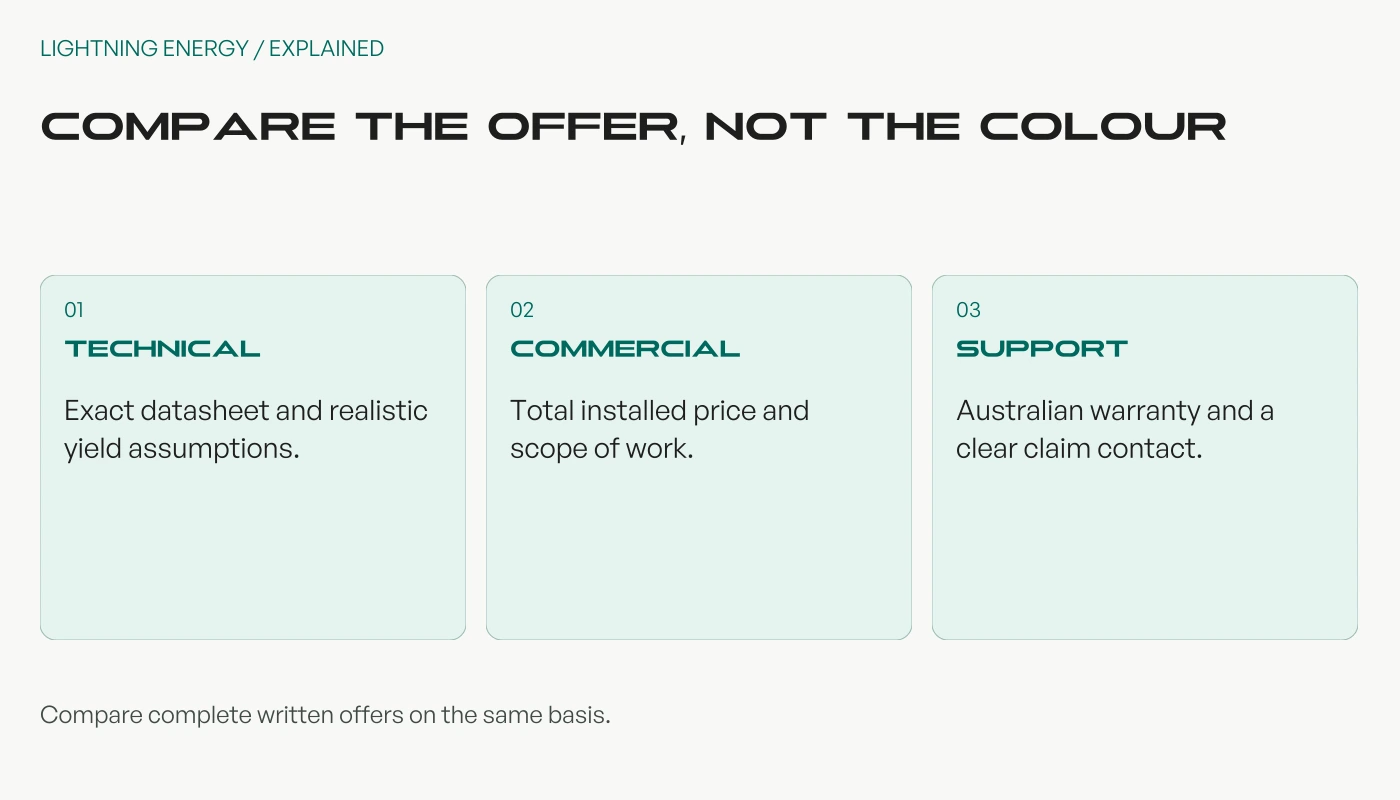
Put the exact module, inverter, layout, installation work and support terms side by side. A colour preference is reasonable; it should sit alongside those practical requirements.
Separate the product warranty from the performance warranty and installation workmanship cover.
Our solar warranty guide explains why those promises answer different questions.
The right outcome is an array you like looking at, with a documented design and realistic performance expectations. Ask Lightning Energy for a roof and system design check if you want to compare the available options.
Available times
Book a consultation and we'll map solar, storage, hot water, and the rebates around your bills and your goals.
Question 1 of 6
