
How Much Solar Fits on a Small or Complex Roof?
Work out how much solar fits on a small or complex roof using exact panel dimensions, obstructions and access requirements rather than a fixed area rule.
Work out how much solar fits on a small or complex roof using exact panel dimensions, obstructions and access requirements rather than a fixed area rule.

The amount of solar that fits on a roof comes from a workable panel layout. Total roof area and panel efficiency are useful inputs, but neither can tell you the final capacity on its own.
Ask for a dimensioned drawing using the exact quoted module. Small changes in panel length or width can matter when a roof face is narrow or interrupted by a chimney or skylight.
Start with a solar roof assessment rather than choosing a package size before the layout is checked.
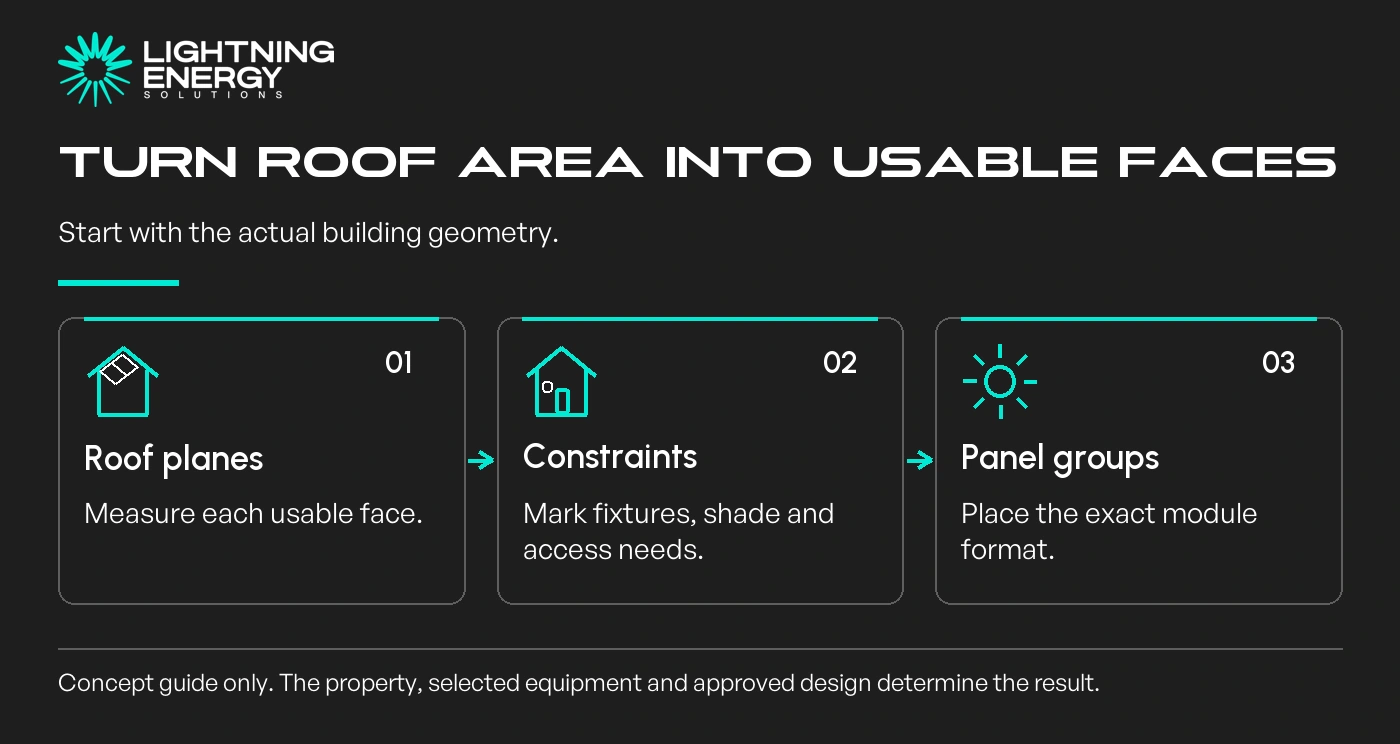
Divide the roof into the actual planes available for panels. Record their dimensions, direction and slope, then mark fixtures, shaded areas and required working space.
SunSPOT’s mapping guidance shows why roof boundaries and obstructions need to be represented realistically. It also notes that a final installer design may include requirements beyond the tool.
An aerial image can help begin the conversation, but confirm whether it captures recent extensions, new fixtures or changed trees. A drawing built on old geometry needs correcting before it supports a purchase.
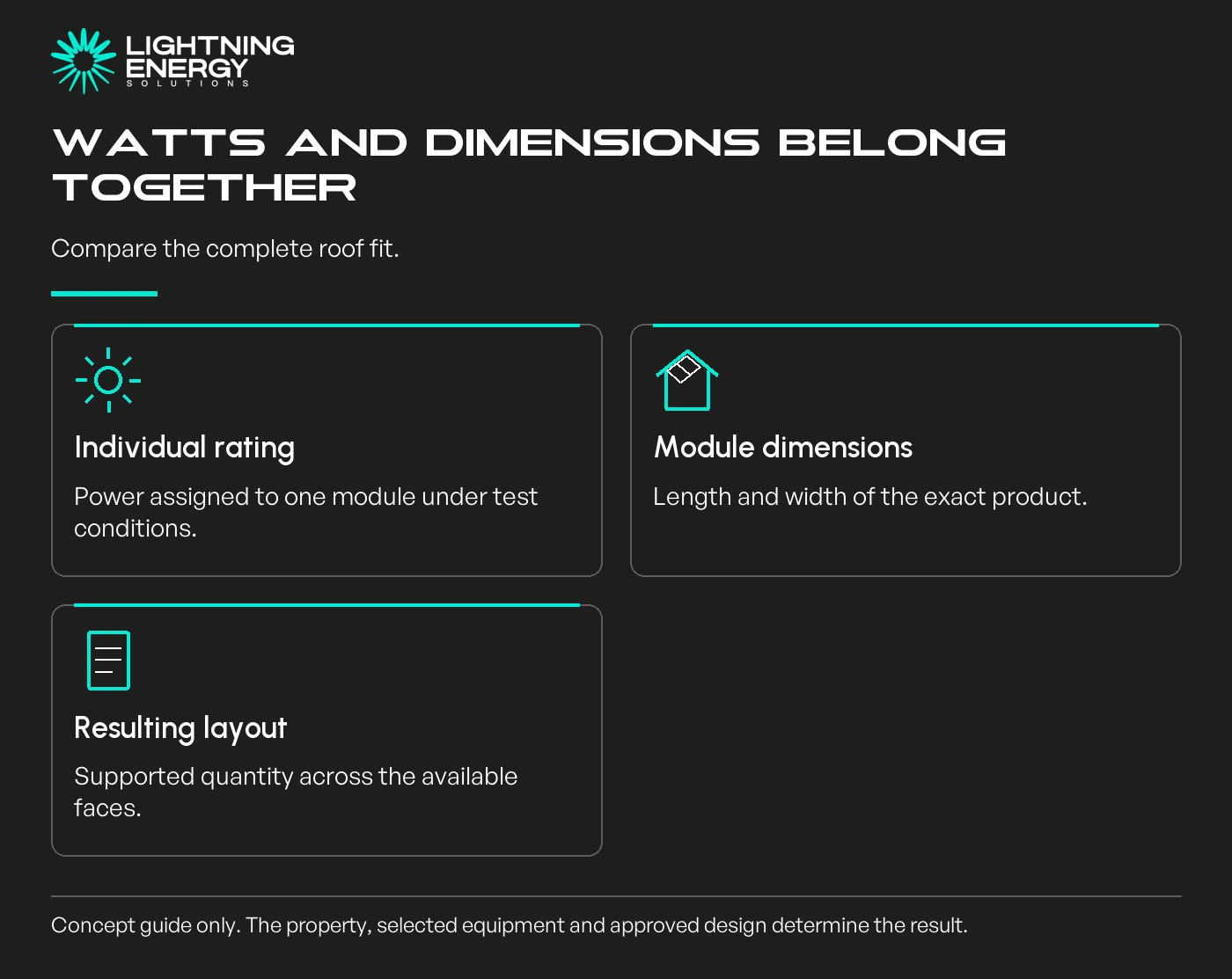
A higher-wattage panel may also be physically larger. Compare its dimensions and the number that fit before assuming the highest individual rating creates the largest system on your roof.
Solar Victoria’s panel guide identifies the layout trade-off: smaller modules can sometimes fit an awkward roof more effectively than fewer larger modules.
Solar Victoria panel-selection guidance.
Imagine an illustrative narrow roof plane. One module format leaves an unusable strip; another allows a different arrangement. Only the supported drawing can show whether the second format actually adds useful capacity.
Do not turn that example into a rule that smaller panels are always better. The dimensions, electrical design, availability and installed price still need to be compared.
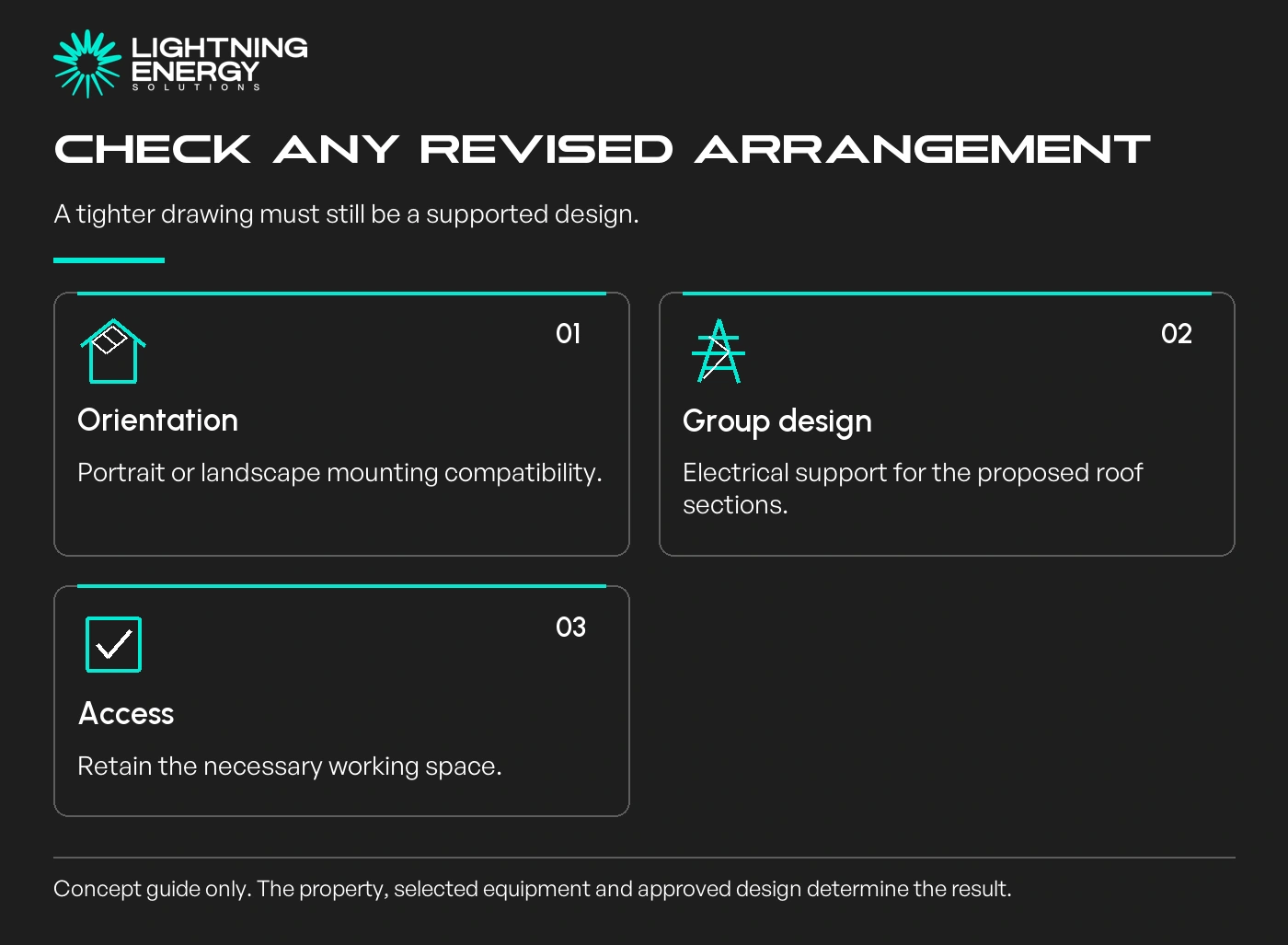
Ask whether portrait or landscape placement changes the fit and whether the mounting system supports the proposed arrangement. Preserve appropriate access and design allowances rather than filling every visible gap.
Our inverter guide provides context when several small roof groups complicate the electrical arrangement.
If a designer proposes another roof face, ask for its contribution separately. Adding a less productive group is a different decision from finding a better-fitting module on a good face.
Keep the group sizes, orientations and estimated generation visible on the drawing. A total panel count can hide important differences between the parts of the array.
The rated capacity describes the installed panels, while actual energy production depends on the site and operating conditions. A larger number on the quote is not an explanation of household value.
The system-size guide helps connect the layout with demand and connection constraints.
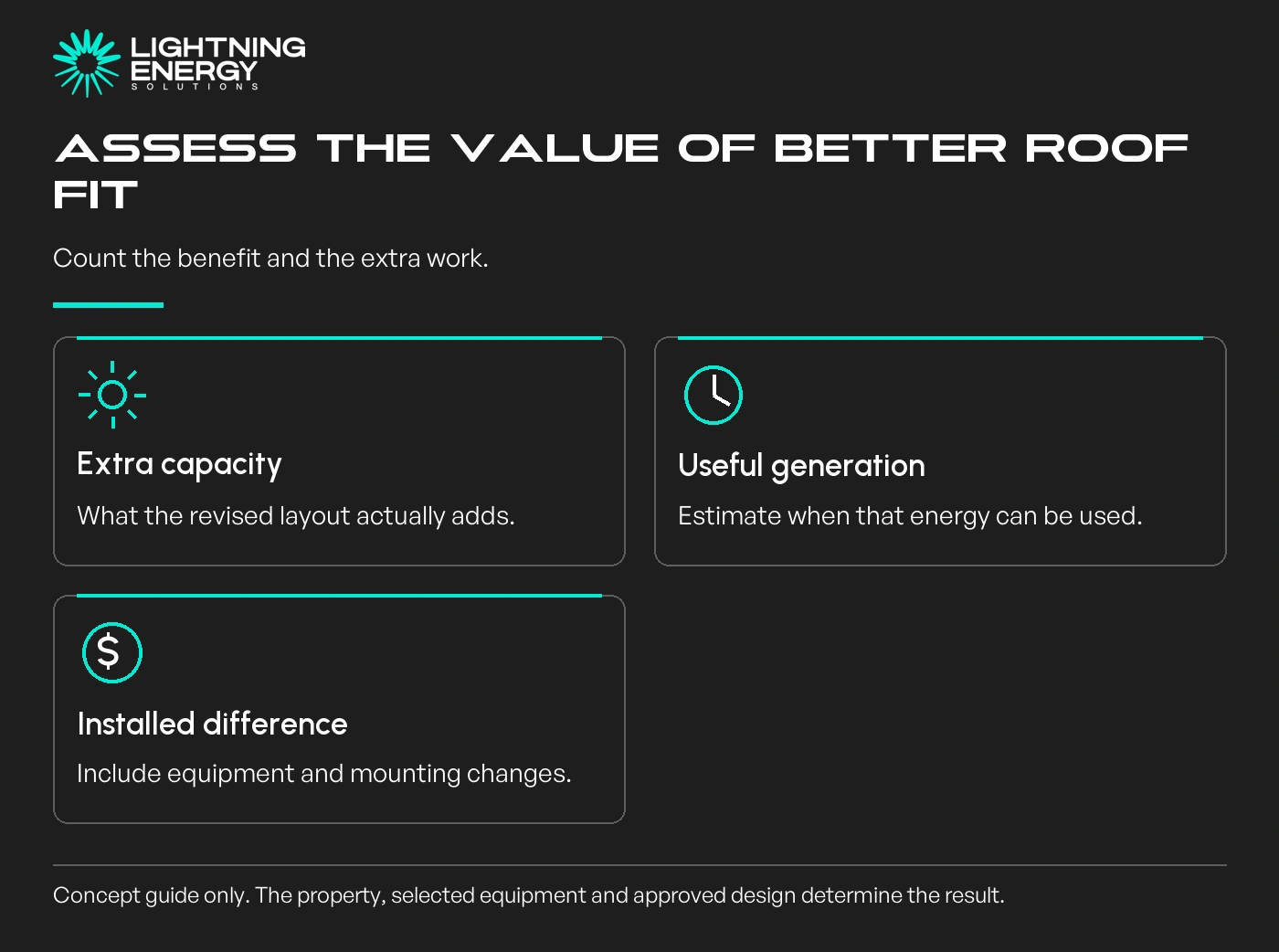
Ask for the additional installed cost and estimated contribution of each alternative. A premium module or more complex mounting arrangement should have a reason beyond making the roof look full.
A constrained roof may simply suit less capacity than the package you first considered. Do not sacrifice access, ignore shade or assume unsupported mounting to reach an advertised system size.
If two compliant layouts offer similar useful results, the simpler one may be easier to justify. If a different panel format solves a real space constraint, compare its full cost and documentation.
Contact Lightning Energy with current roof information. Request the exact module dimensions, a supported layout and a clear explanation of what prevents additional panels from fitting.
Available times
Book a consultation and we'll map solar, storage, hot water, and the rebates around your bills and your goals.
Question 1 of 6