
Why Solar Output Can Fall on a Very Hot, Sunny Day
Understand why a hot sunny day can reduce solar output, with panel temperature effects, inverter derating and practical checks before assuming a fault.
Understand why a hot sunny day can reduce solar output, with panel temperature effects, inverter derating and practical checks before assuming a fault.

Bright sunshine and high temperature affect solar differently. Strong sunlight helps production, but hotter solar cells generally reduce conversion efficiency compared with the same sunlight at a lower cell temperature.
That is why the hottest afternoon does not automatically produce the highest power reading. The useful question is whether the observed pattern fits the equipment and conditions, or indicates a problem needing assessment.
Our solar design service considers the roof and equipment location, including how the system operates through changing conditions.
The weather forecast reports air temperature. Solar cells exposed to sunlight can operate at a different temperature, influenced by sunlight, wind, mounting and ventilation.
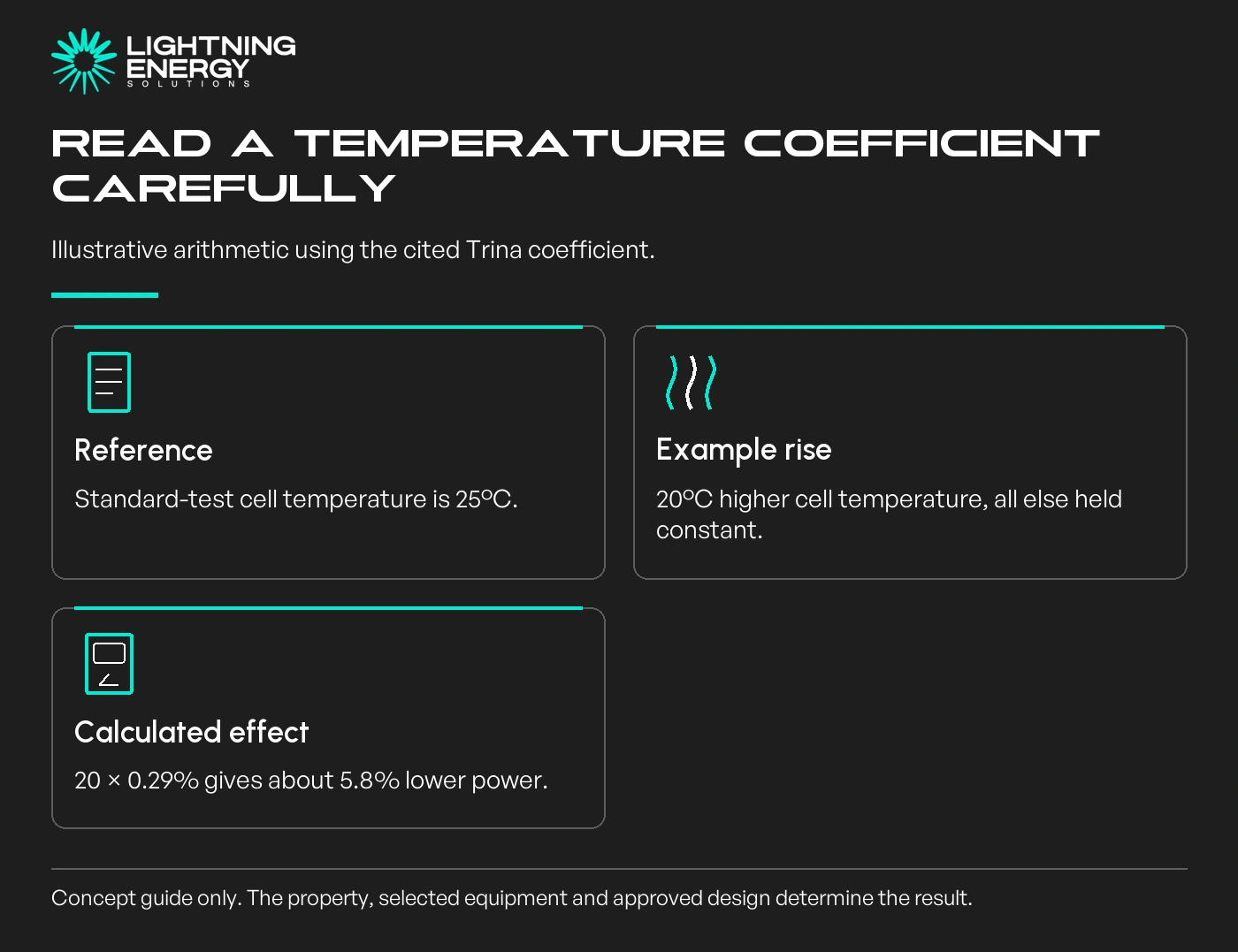
A panel's standard-test rating is measured under specified conditions, including a cell temperature of 25°C. It is not a promise that a roof panel will deliver that power whenever the air is 25°C.
The US Department of Energy explains how cell temperature affects efficiency. The physical principle applies even though local weather and equipment determine the result.
US Department of Energy PV guide.
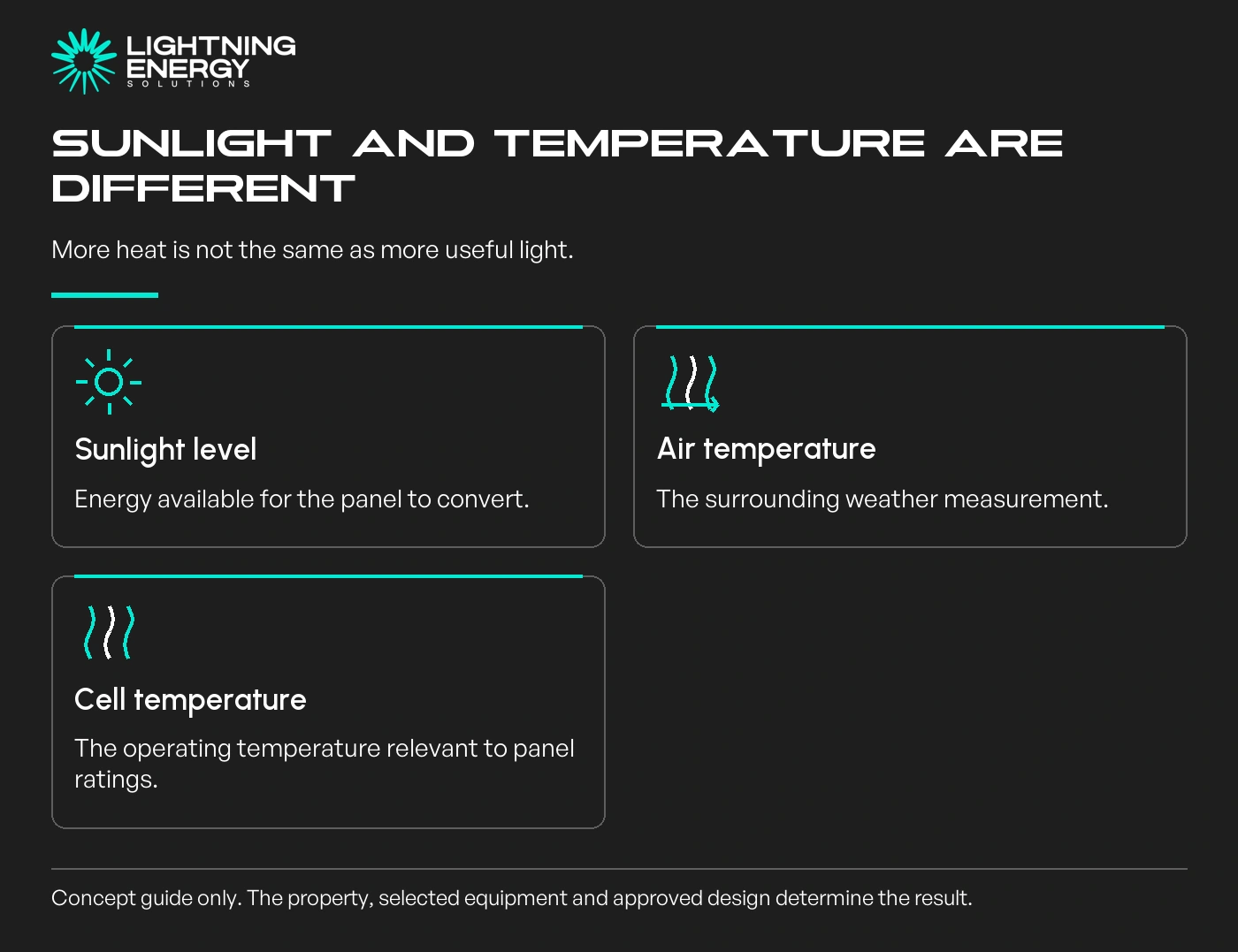
Datasheets usually provide a power-temperature coefficient. A negative value describes how rated power changes with cell temperature under the stated assumptions, not a direct prediction of annual energy loss.
For example, the Trina TSM-NEG9R.28 datasheet lists a Pmax coefficient of -0.29%/°C. That figure belongs to the documented model family, not every panel sold under the brand.
As an illustrative calculation, a 20°C rise in cell temperature above the reference gives about 5.8% lower power using that coefficient, holding other conditions constant. It is not a measured roof result or annual loss estimate.
Actual irradiance may change at the same time. A hotter, much brighter period can still produce more electricity than a cool cloudy one. Separating the variables avoids treating temperature as the only influence.
Our panel selection guide places temperature ratings alongside roof fit, electrical compatibility and support.
An inverter may also reduce power when its internal operating conditions require protection. This thermal derating is different from the panel's temperature coefficient and can have its own status messages or limits.
Fronius, for example, identifies excessive-temperature power derating in its Energy Package operating instructions. That does not establish a universal trigger temperature for every inverter or a diagnosis for your system.
Fronius operating instructions.
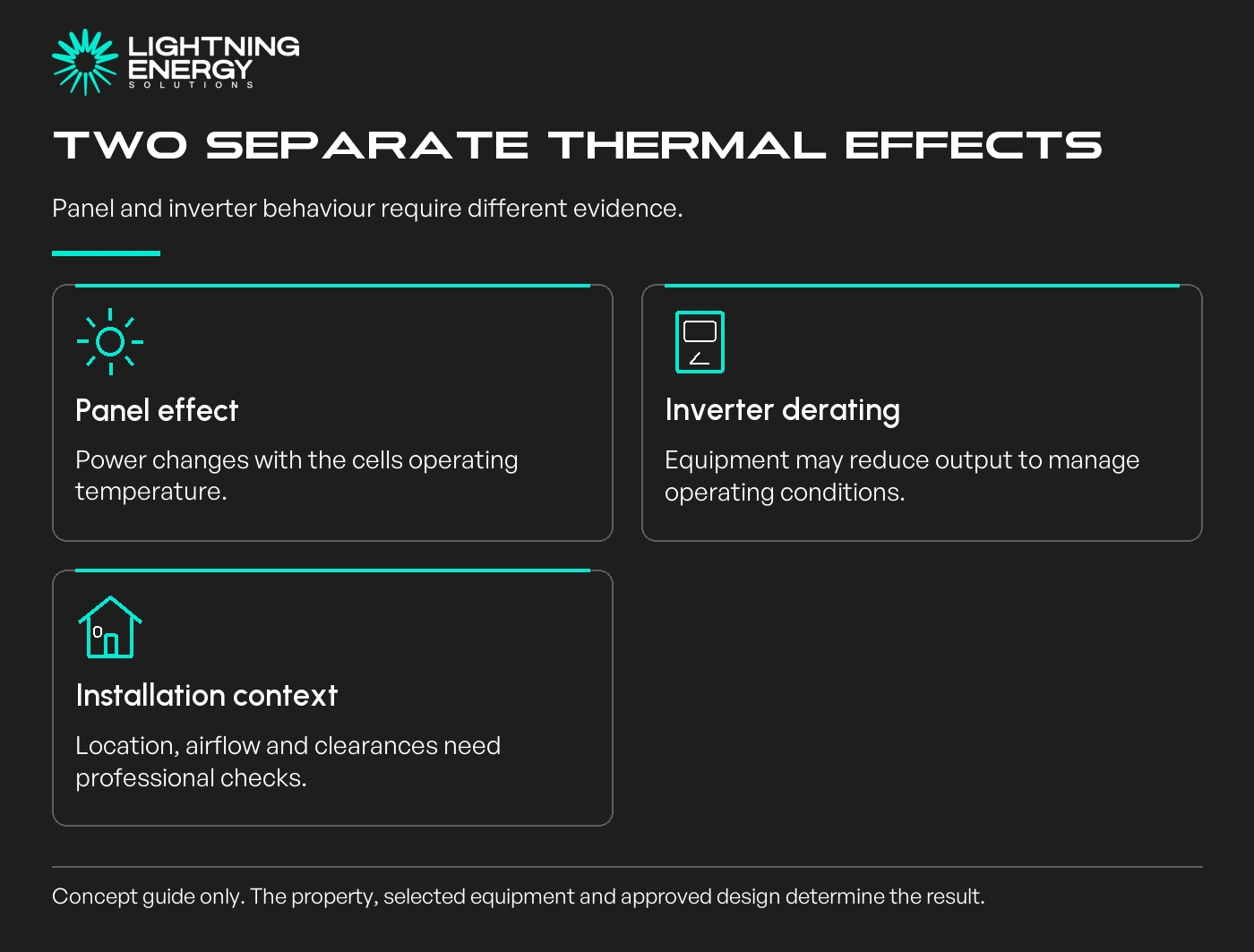
Have the installer check location, clearances and ventilation against the exact manufacturer's instructions. Do not add an improvised enclosure, cover vents or spray equipment in an attempt to cool it.
An inverter's operating temperature range also does not necessarily mean full rated output is available at every temperature across that range. Read the relevant power and derating documentation together.
Record generation, weather, timestamps and any warning codes across comparable days. A brief drop, an ordinary output ceiling and a persistent temperature alarm have different implications.
Our export-limit guide explains another reason an output trace can flatten. Household loads and battery charging can further change what the app shows as exported power.
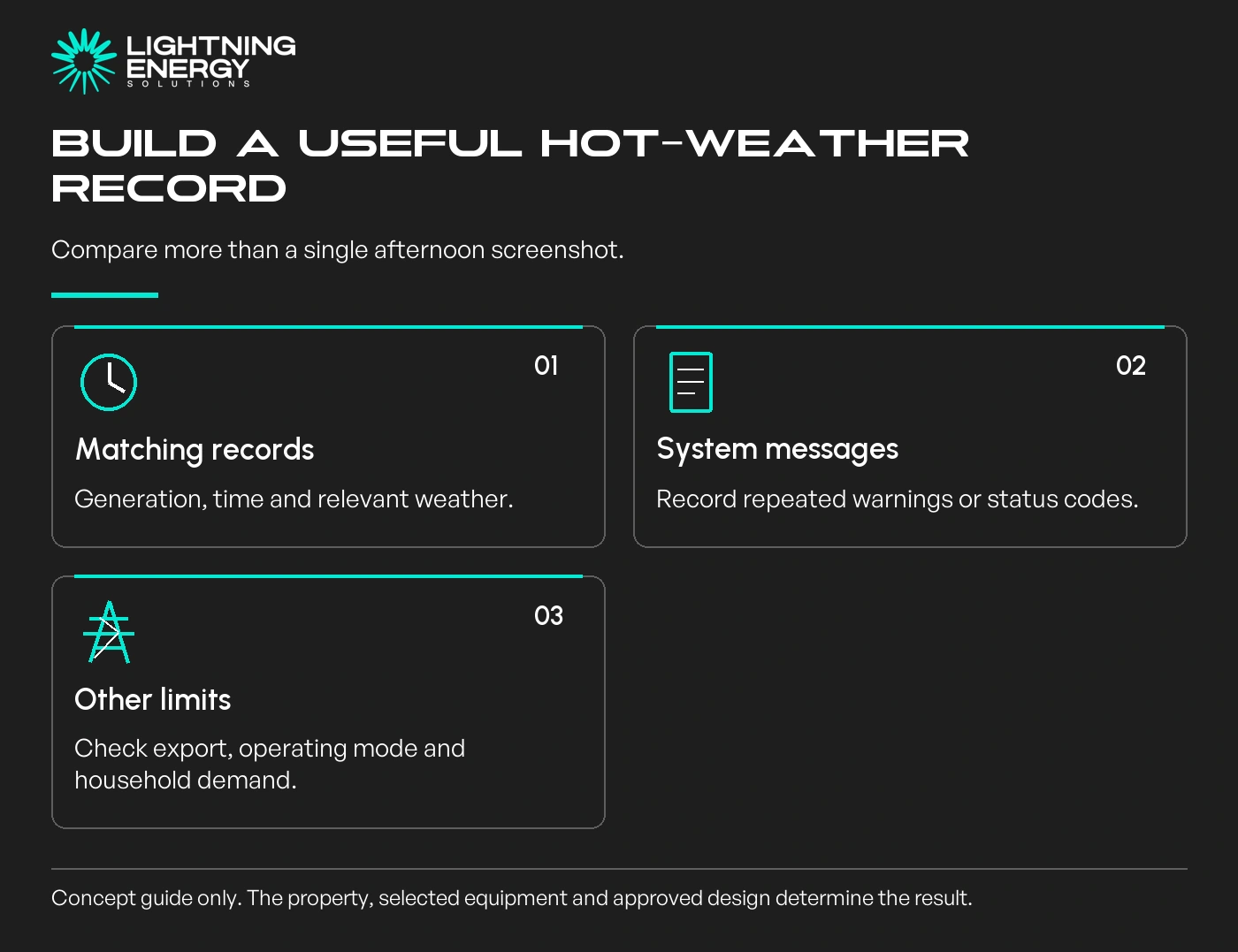
Imagine a household comparing a cool clear morning with a very hot afternoon on another day. Different sun angle, cloud, roof direction and cell temperature make that an unreliable single-variable test.
A better assessment uses the system design, representative records and the relevant manufacturer limits. If performance is reasonable, replacing sound panels solely for a slightly different coefficient may not justify its cost.
Send us the equipment models and dated records if hot-weather behaviour seems unusual. Resolve the cause before paying for cleaning, relocation or replacement equipment.
Available times
Book a consultation and we'll map solar, storage, hot water, and the rebates around your bills and your goals.
Question 1 of 6
