
Can Battery Backup Run Ducted Air Conditioning and the Fridge Together?
Can ducted air conditioning and the fridge share battery backup? Check electrical input, starting demand, phases and runtime before including both.
Can ducted air conditioning and the fridge share battery backup? Check electrical input, starting demand, phases and runtime before including both.

A battery may run ducted air conditioning and refrigeration together, but only if the complete backup design supports their combined demand. Battery capacity alone cannot establish that they will start or keep running.
Begin with the exact air-conditioner and fridge models. The installer needs their electrical requirements, the proposed backup output and the circuits and phases involved.
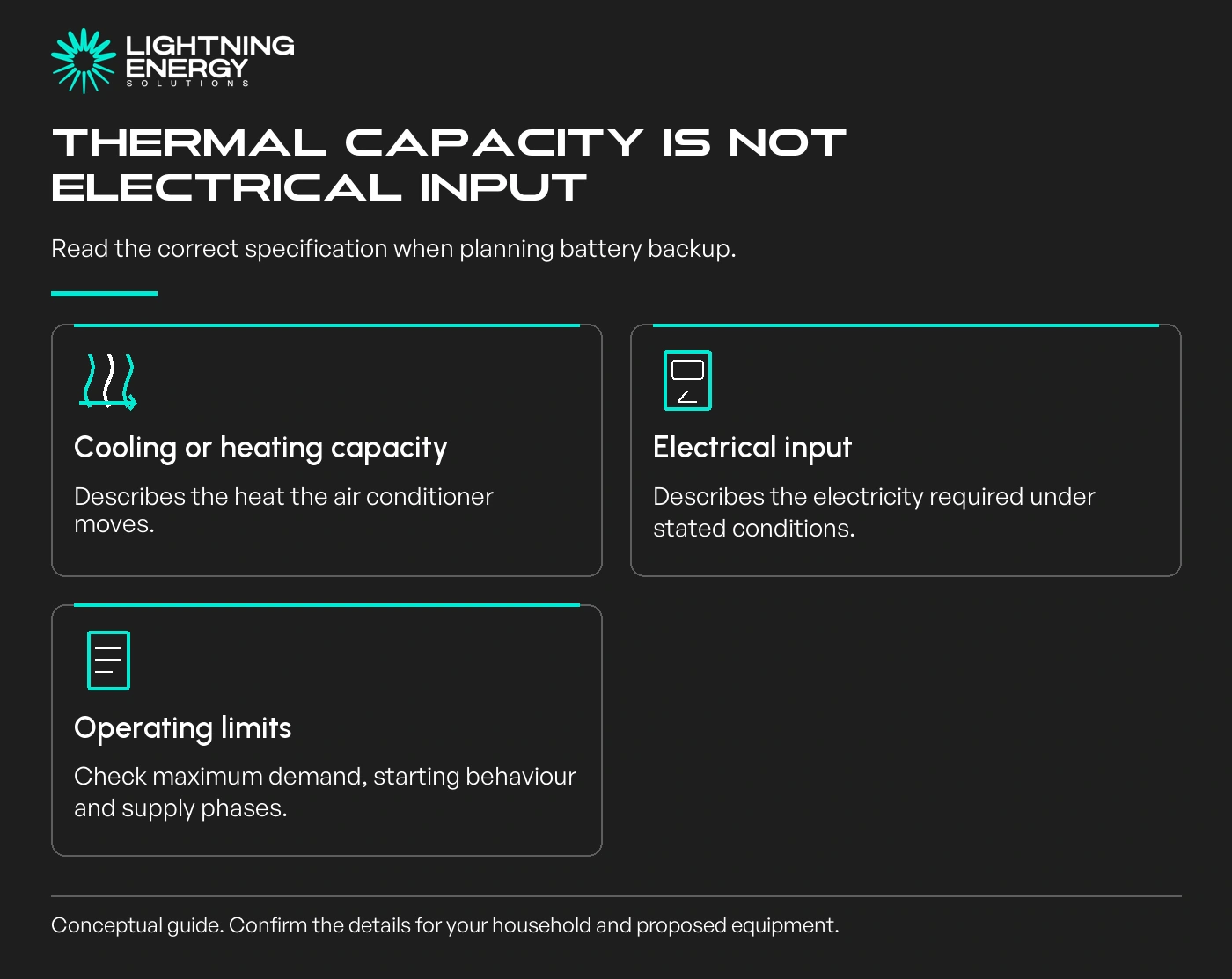
A ducted system's advertised cooling or heating capacity describes heat moved. It is different from the electricity the system draws. Using the headline cooling number as a battery load produces the wrong comparison.
Daikin's Australian ducted brochure lists rated thermal capacity and rated power input in separate rows. It also gives test conditions and supply requirements for the listed combinations.
Daikin Australia ducted systems brochure PCDUAU0126.
Ask for the relevant input and operating limits for your indoor and outdoor combination. A rating measured under specified conditions should not be treated as the maximum demand in every situation.
For the broader comfort design, see our air-conditioning guidance. A poorly matched comfort brief can also become a difficult backup brief.
Include refrigeration, lights, communication equipment and other intended backup loads. Use the appliance data and an installer assessment rather than assigning every fridge the same consumption.
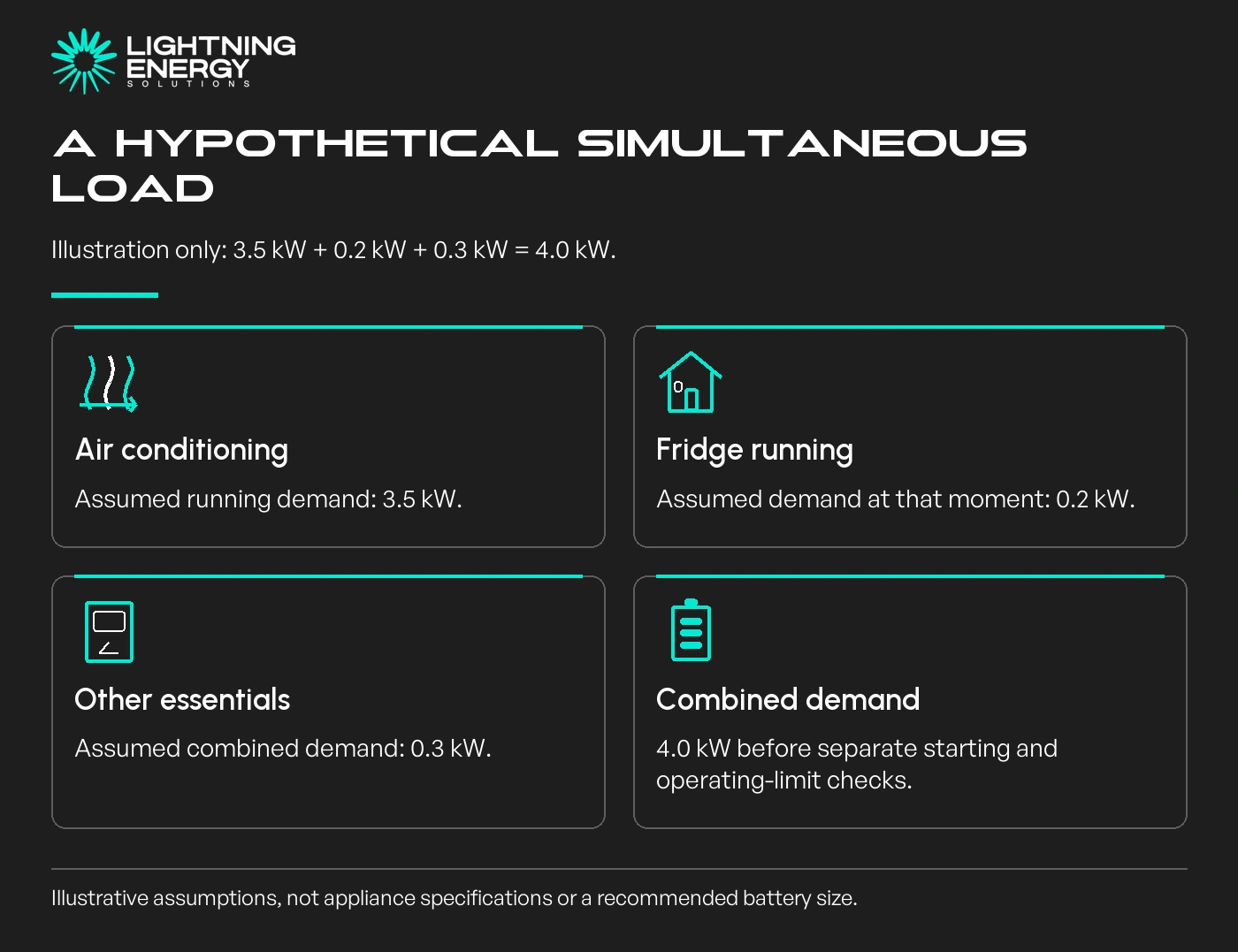
For a clearly hypothetical load budget, assume air conditioning draws 3.5 kW, the fridge draws 0.2 kW while running, and other essentials draw 0.3 kW. Together they require 4.0 kW at that moment.
That total is not a sizing recommendation. It leaves starting demand, changing appliance operation and system operating limits to assess. It also assumes those loads are on supported backup circuits.
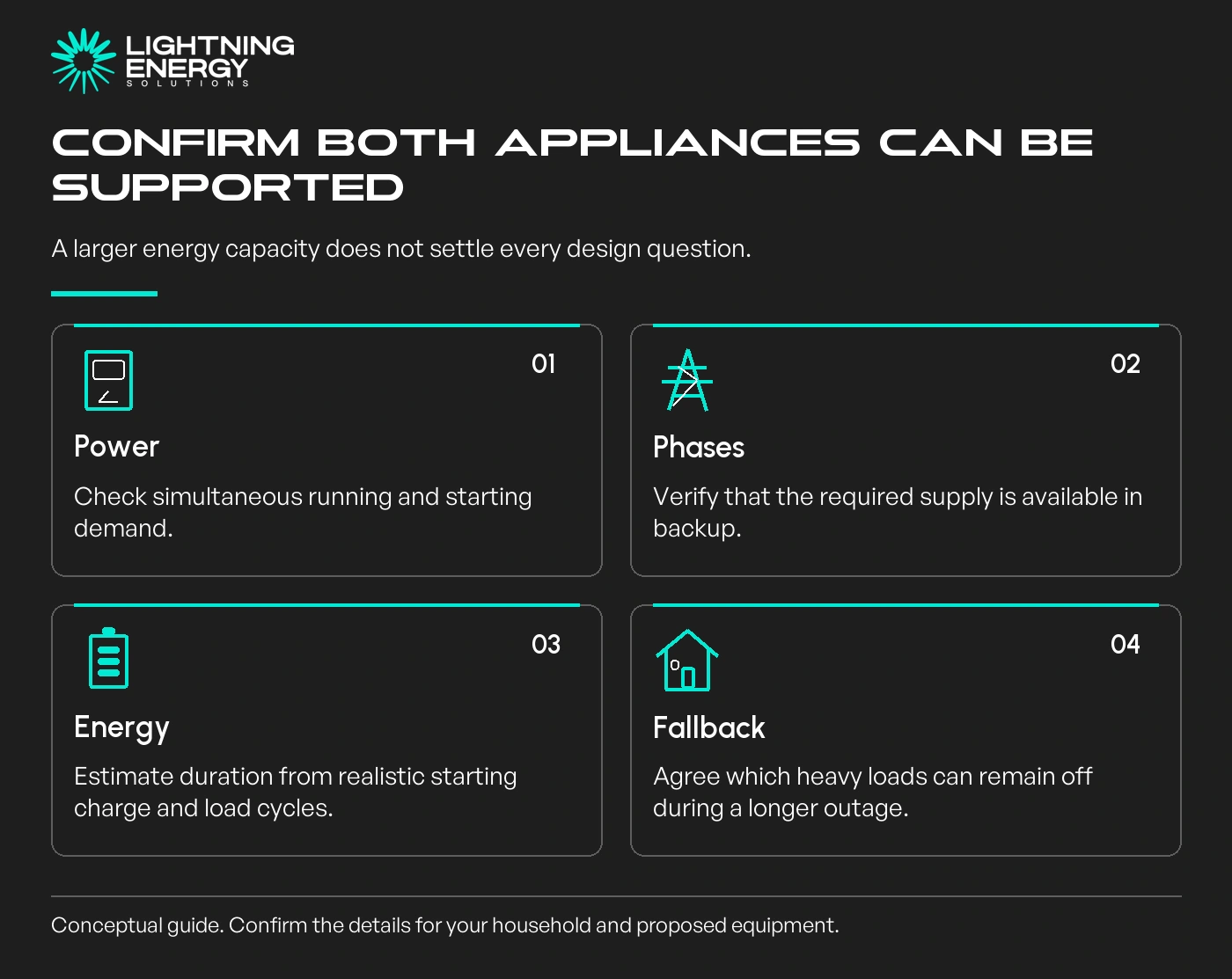
Compressors and motors need assessment of their starting behaviour as well as their running load. A short peak rating must be read with its duration and conditions, not treated as continuous output.
Tesla's Australian Powerwall 3 design guidance explicitly considers air-conditioner inrush and the configured system output. Other battery systems need the same checks against their own manuals.
Tesla guidance on large backup loads.
A three-phase ducted unit also needs a compatible three-phase backup supply. A battery installed at a three-phase property is not automatically supplying all three phases during an outage.
Our blackout planning guide helps distinguish connected equipment from equipment actually included in backup.
Once the power checks pass, estimate energy use over time. Heating and cooling demand changes with weather, the building, settings and operating cycles. Refrigeration also cycles instead of drawing its running input continuously.
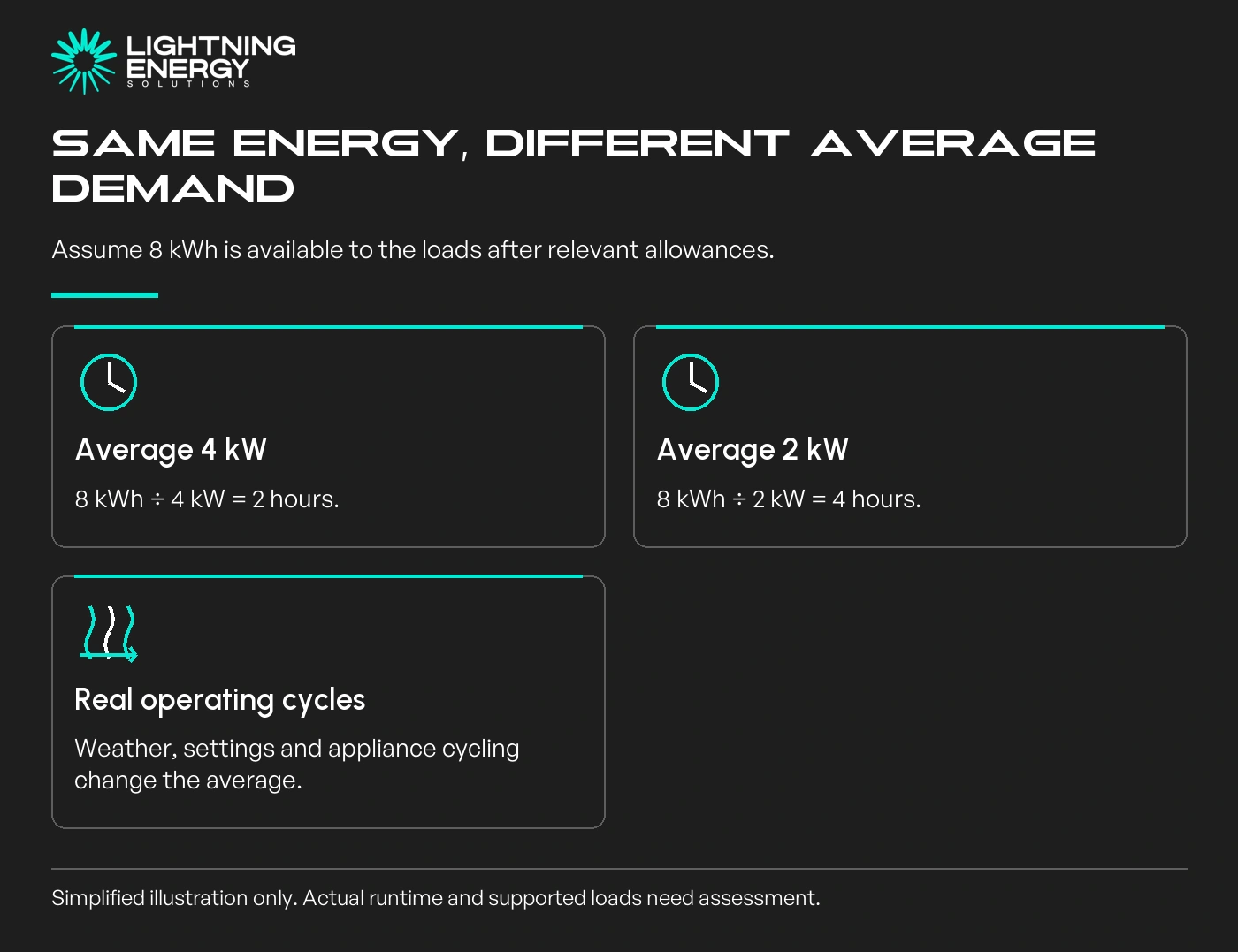
Suppose, only for illustration, that 8 kWh is available to the selected loads and their combined average is 4 kW. The simple duration is two hours. At a 2 kW average, it is four hours.
Those figures assume energy available after relevant losses and operating reserves. They do not predict the average load of your appliances or promise either duration.
Ask how the estimate changes during a cold evening or hot afternoon. Also check the battery's output under the expected temperature and state-of-charge conditions.
If ducted operation makes the backup scope disproportionately expensive, consider a lower-load household plan. That might mean limiting comfort expectations during an outage or assessing a suitable smaller room system separately.
Do not assume closing most ducted zones is acceptable or reduces demand in direct proportion. Airflow and permitted operating combinations still need to follow the air-conditioning design.
A battery assessment should document which appliances can operate together and the conditions behind the runtime estimate. If that evidence is missing, leave the heavy load outside the promise until it is assessed.
Plan your battery upgradeShare the air-conditioner and fridge model details and your essential-load list. We can assess whether simultaneous operation is practical in the proposed backup design.Available times
Book a consultation and we'll map solar, storage, hot water, and the rebates around your bills and your goals.
Question 1 of 6