
Can controlled-load hot water use your rooftop solar?
A daytime hot-water schedule does not prove a controlled-load circuit can use your rooftop solar. Check the wiring, meter and tariff before changing it.
A daytime hot-water schedule does not prove a controlled-load circuit can use your rooftop solar. Check the wiring, meter and tariff before changing it.

Controlled-load hot water does not automatically use your rooftop solar, even if it runs during daylight. The wiring and metering arrangement determine whether on-site generation can supply that circuit directly.
Start with an electrician's assessment and your retailer's tariff information. A timer setting alone cannot change the electrical connection or the way the energy is billed.
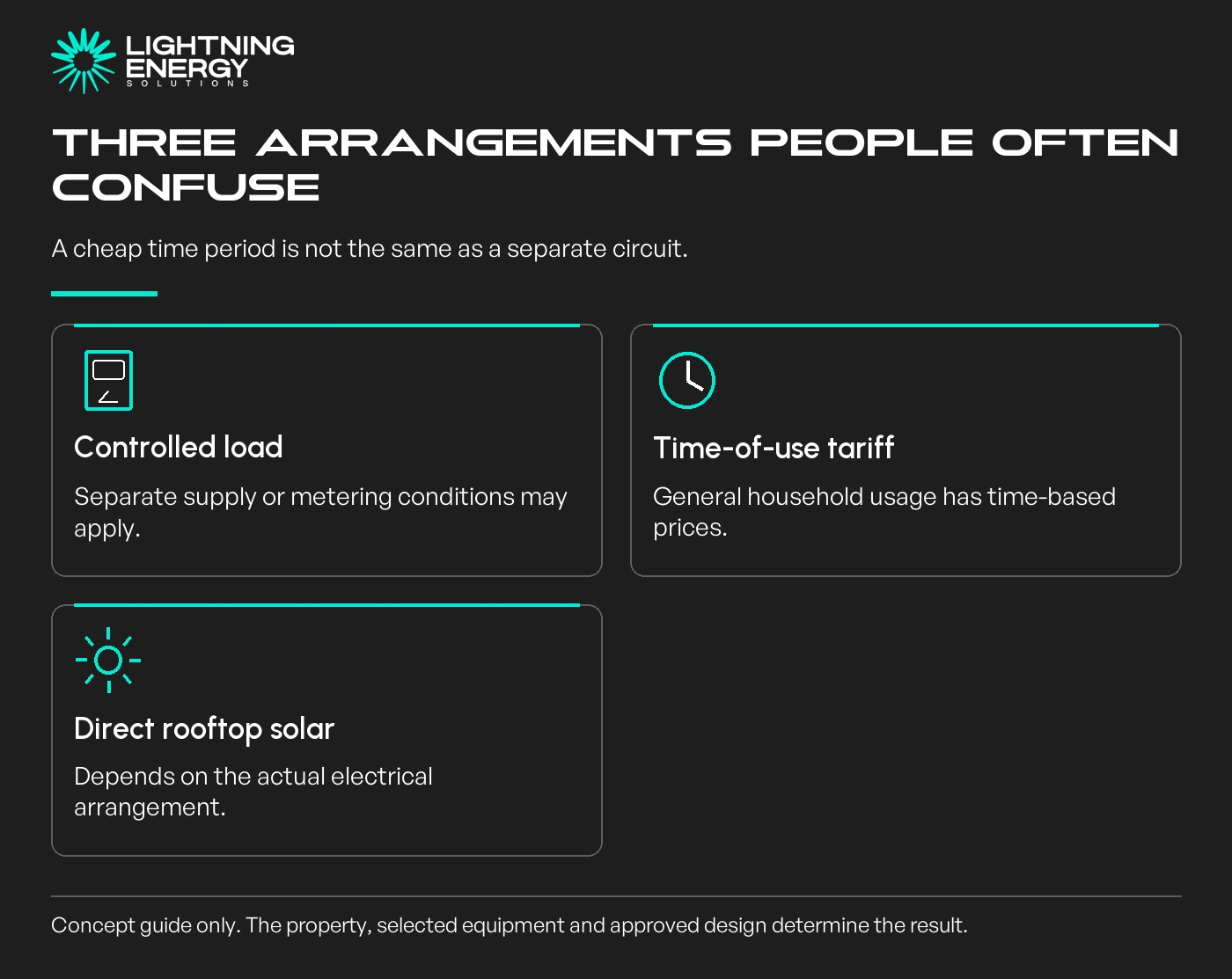
Controlled load generally refers to an appliance supplied and measured under a separate arrangement, with availability or conditions set through the relevant network and retail processes.
Time-of-use pricing on the general household supply is different. A cheap overnight period under that offer does not necessarily mean the water heater is on a separately controlled circuit.
Government solar-use guidance discusses the need for electrical assessment when changing controlled-load hot water to solar self-consumption.
Do not assume the change is merely an app preference.
For solar planning, identify which consumption the available monitoring measures. A whole-home app may not represent a separately metered circuit in the way you expect.
Some networks operate controlled loads during daytime periods to respond to broader grid conditions. That does not establish that electricity from your particular roof is directly supplying the appliance.
Ausgrid's controlled-load explanation is a useful NSW example of separate wiring and changing operating windows.
Its tariff names and supply conditions should not be applied to a Victorian address.
A Melbourne household needs the arrangement applicable to its own distributor, meter and retail contract. Check the bill for a separate hot-water or controlled-load usage line, then confirm what it represents.
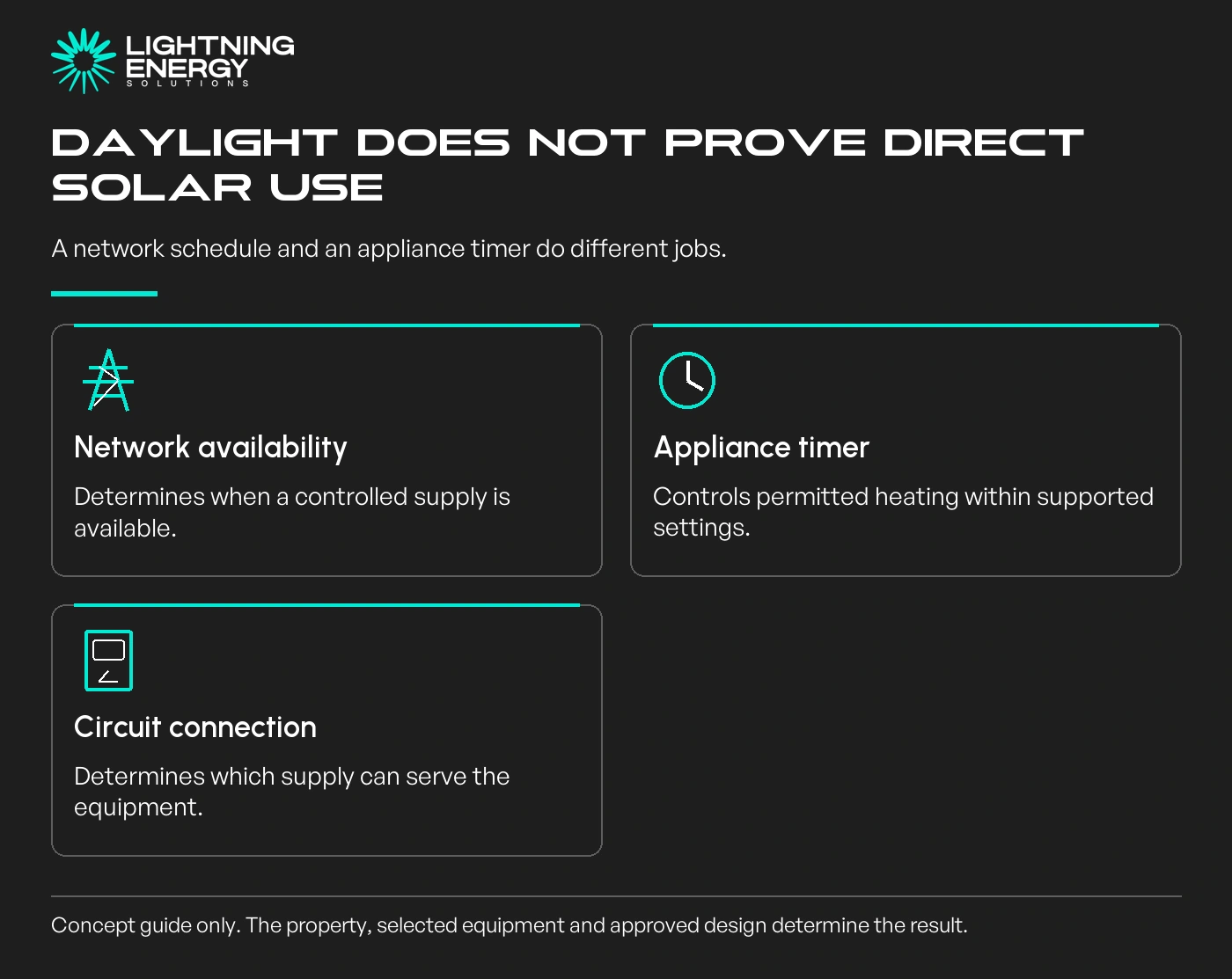
The heat-pump timer guide explains another distinction: a supported appliance timer can restrict heating, but it cannot create electricity supply when the circuit is unavailable.
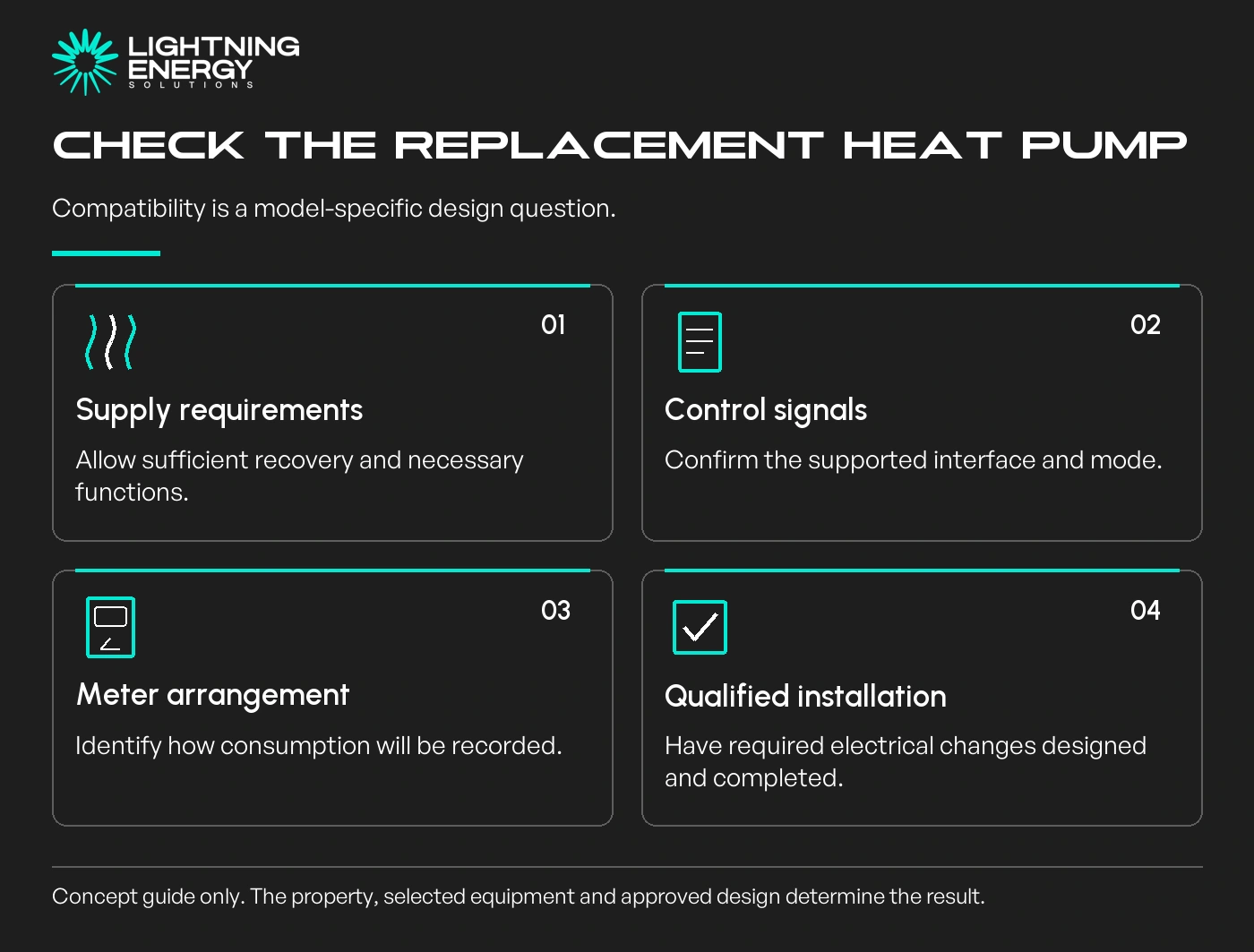
The heat pump needs enough suitable supply time to recover hot water and perform required protective and hygiene functions. A tariff designed around a different heater may not automatically suit the replacement model.
Some products can respond to a control signal while maintaining an appropriate electrical supply. Others have different requirements. The model's installation and controller documentation must govern the design.
For example, Haier's documentation distinguishes timer, off-peak signal and PV-related modes on specified controllers.
These modes should not be treated as interchangeable wiring instructions.
Ask the installer whether the proposed heat-pump system is compatible with the current arrangement and what would change if it moved to the general household supply.
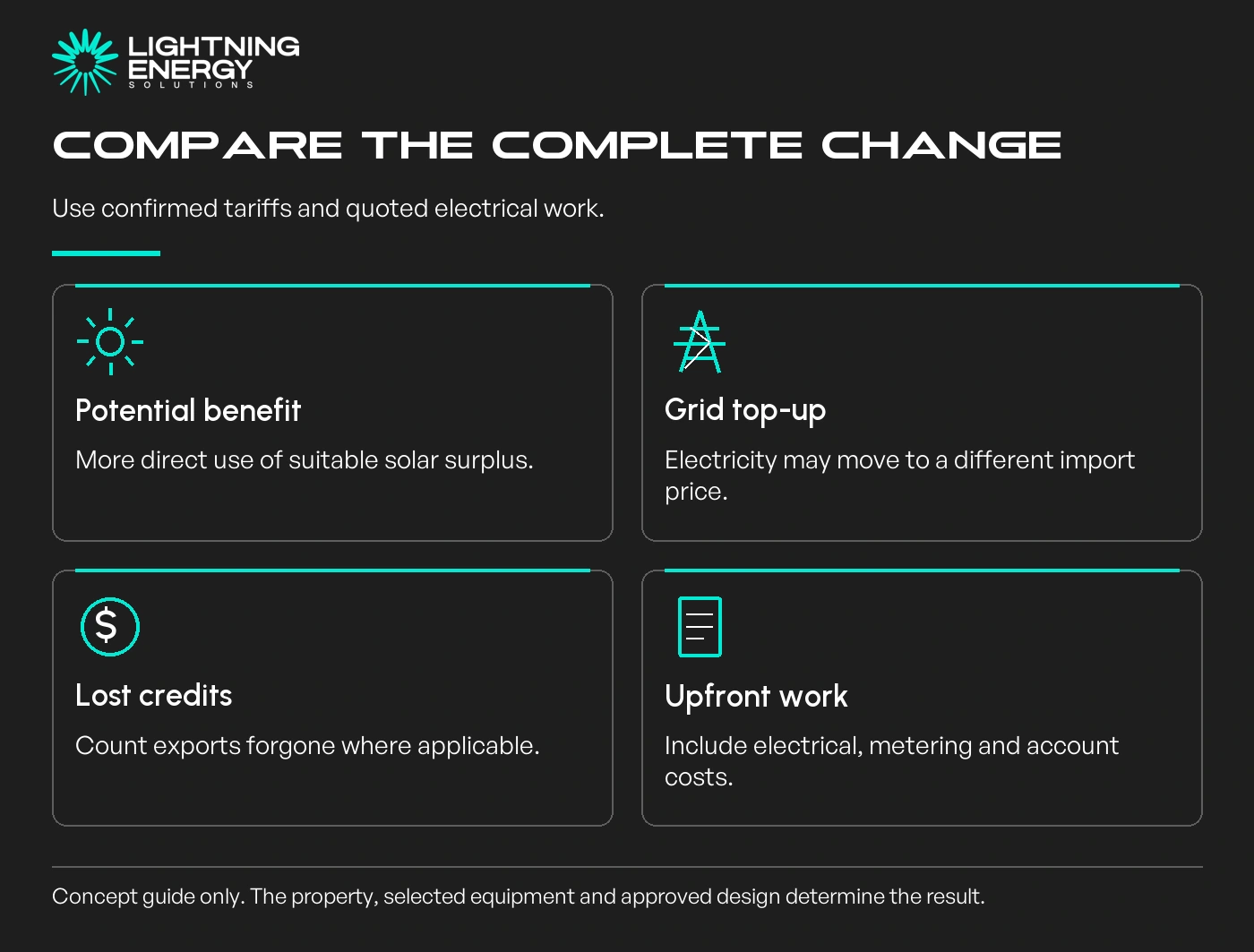
Moving the load may make direct solar use possible, but electricity bought outside solar hours could then cost a different amount. Include the relevant import rates and any lost controlled-load benefit.
Also account for export credits forgone when surplus solar is used for water heating. Those credits may be small, but the comparison should use the actual offer rather than assuming they are always zero.
Imagine a home with ample weekday surplus but a winter morning recovery need. A move may help on some days while increasing the price of grid top-up on others. Model both periods.
Include electrical work, metering or account changes in the upfront cost. Ask whether any separate daily charge actually disappears; do not count a saving unless the retailer confirms it.
The electrician should explain the circuit arrangement, equipment compatibility and required work. The retailer should confirm the applicable tariff, metering process and account consequences.
Keep those answers with the quote. They should describe the same proposed arrangement, not two different assumptions about where the hot-water circuit will sit.
Do not move wiring, alter meter equipment or bypass load control yourself. A proposed change must meet the applicable electrical and network requirements.
If the current setup provides reliable hot water at a reasonable cost, conversion may not justify its expense. Contact us with the bill, equipment model and solar records for a comparison based on the actual property.
Available times
Book a consultation and we'll map solar, storage, hot water, and the rebates around your bills and your goals.
Question 1 of 6