
Choosing an Electricity Plan for a Solar and Battery Home
Choose an electricity plan for solar and storage by comparing the whole annual bill, seasonal usage and battery controls, not one attractive rate.
Choose an electricity plan for solar and storage by comparing the whole annual bill, seasonal usage and battery controls, not one attractive rate.

The best electricity plan for a solar and battery home is the one that works with the household's actual imports, exports and controls. A high feed-in rate or cheap charging window alone cannot tell you the annual cost.
Gather a representative year of bills and, where possible, interval meter data. Then compare the same household under each proposed plan, including how the battery would operate.
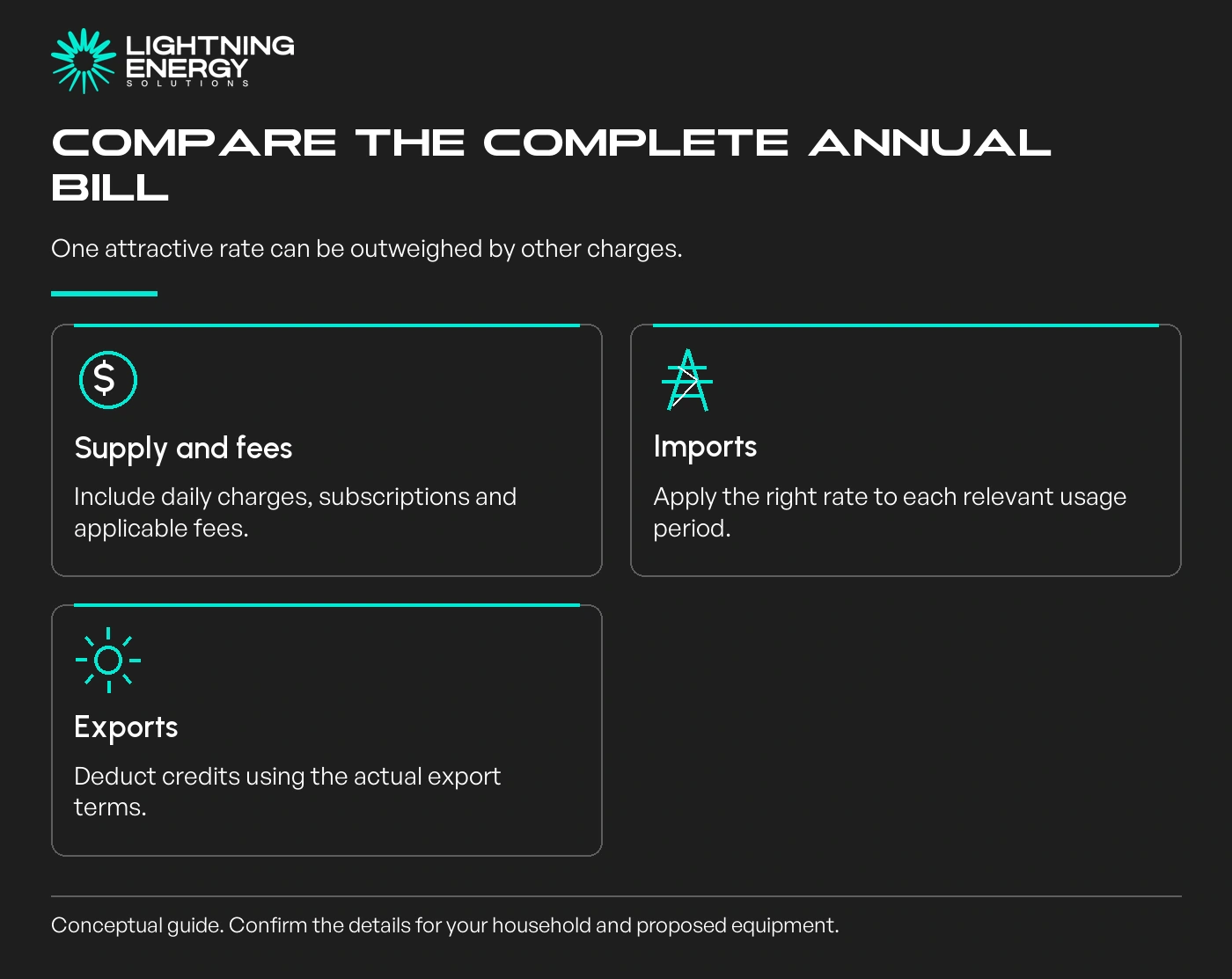
Include daily supply charges, usage charges and export credits. Check for controlled-load charges, demand charges, subscriptions, payment fees and other conditions that apply to the offer.
The Victorian Government's bill guide distinguishes supply charges from charges based on energy use. A battery reducing imports does not automatically remove the daily supply charge.
Victoria: read your energy bill.
Our fixed-charge explainer provides context for why a low-import home can still receive an electricity bill.
A flat import rate stays the same across the day under that tariff. A time-of-use plan changes rates across specified periods. Check weekdays, weekends, seasonal differences and the exact time windows in the offer.
Origin's tariff guidance explains these structures and notes that variable rates can change. Compare the current written offer for your address rather than assuming an advertised example applies everywhere.
Origin: electricity tariffs explained.
A battery's schedule should then be modelled against those periods. Electricity shifted out of one expensive period may leave less storage available for another household need.
A summer week with plenty of solar can make a plan appear attractive while hiding winter imports. Include electric heating, hot water and any EV charging that the household realistically expects.
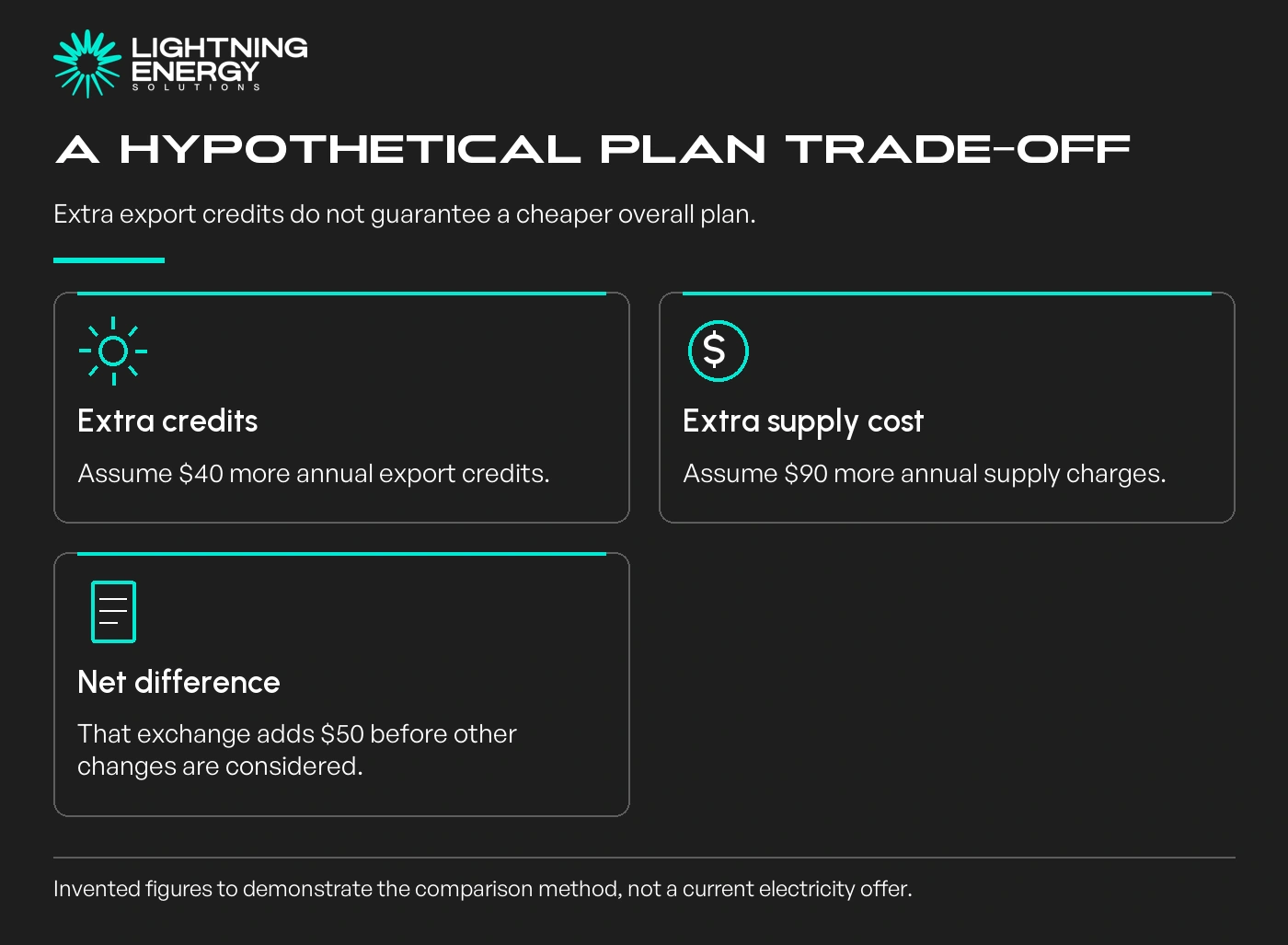
Imagine a hypothetical plan that earns an extra $40 in annual export credits but costs an extra $90 in supply charges. Before considering any other differences, that exchange leaves the household $50 worse off.
The example uses invented figures to show the method. Actual rates, exports and import costs must come from the household data and current offer.
Our battery value guide explains why storage savings need a consistent comparison baseline.
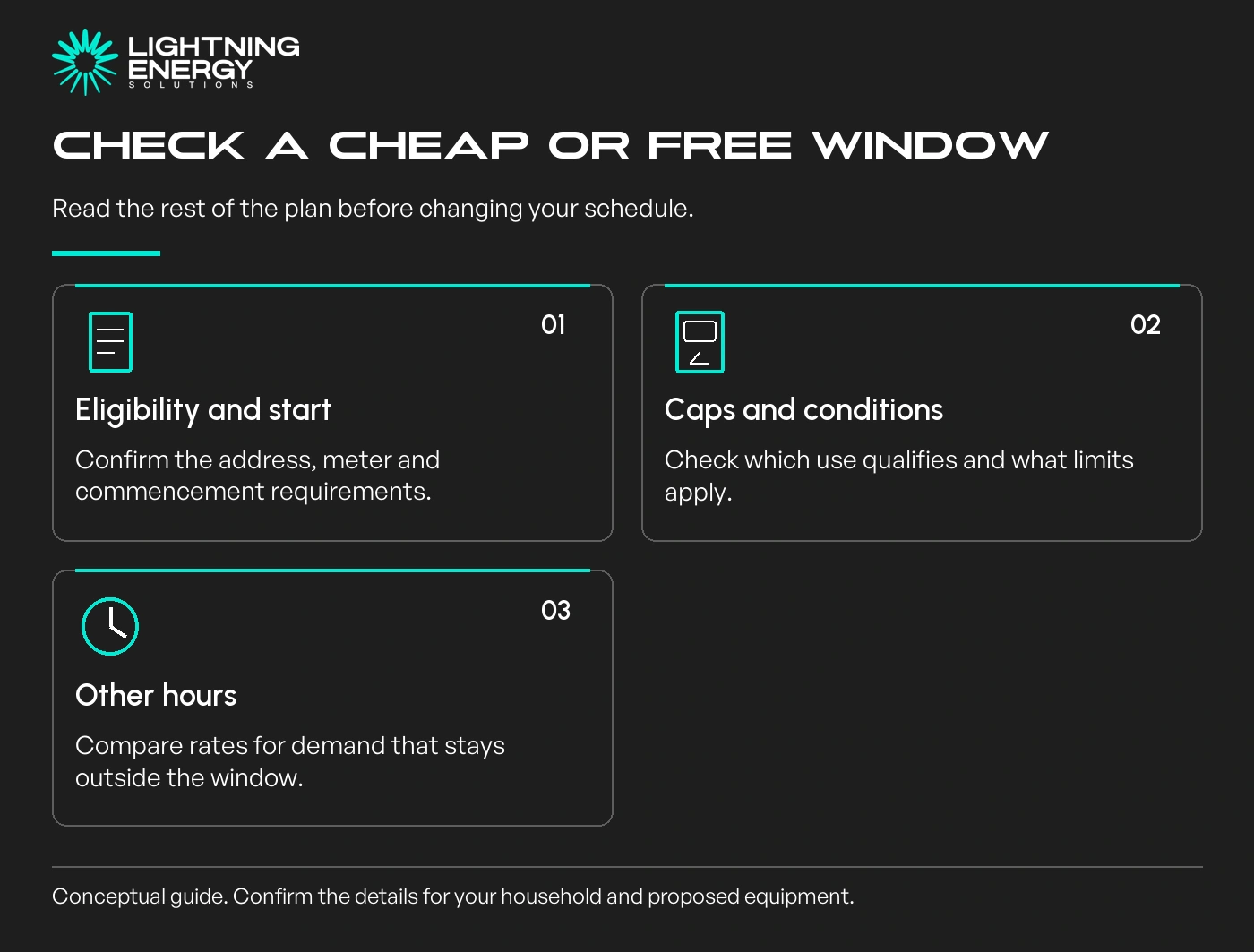
Check eligibility, usage caps and prices outside the promotional window. A plan can suit a household that shifts substantial demand while costing more for someone unable to change their routine.
As checked on 10 October 2026, Victoria's Midday Power Saver is available through most retailers.
Eligible households with a smart meter can sign up for up to 24 kWh of no-cost electricity between 11 am and 2 pm each day.
Compare the entire offer before switching: supply charges and prices outside that window still matter.
The offer is not automatically active on your account. Confirm enrolment, the start date and current terms with your retailer.
Existing free-power market offers can have different conditions; compare annual costs using your own imports, exports and battery schedule.
Check whether the plan expects you to schedule the battery or gives a provider control through a virtual power plant. Include any subscription or participation conditions and understand how backup reserve is treated.
A conventional time-of-use plan is also different from exposure to wholesale prices.
Our wholesale battery automation article explains why those decisions need separate attention.
Use Victorian Energy Compare as a starting point for available offers. When projecting changed battery behaviour, record the assumptions explicitly rather than treating historical usage as a guaranteed future pattern.
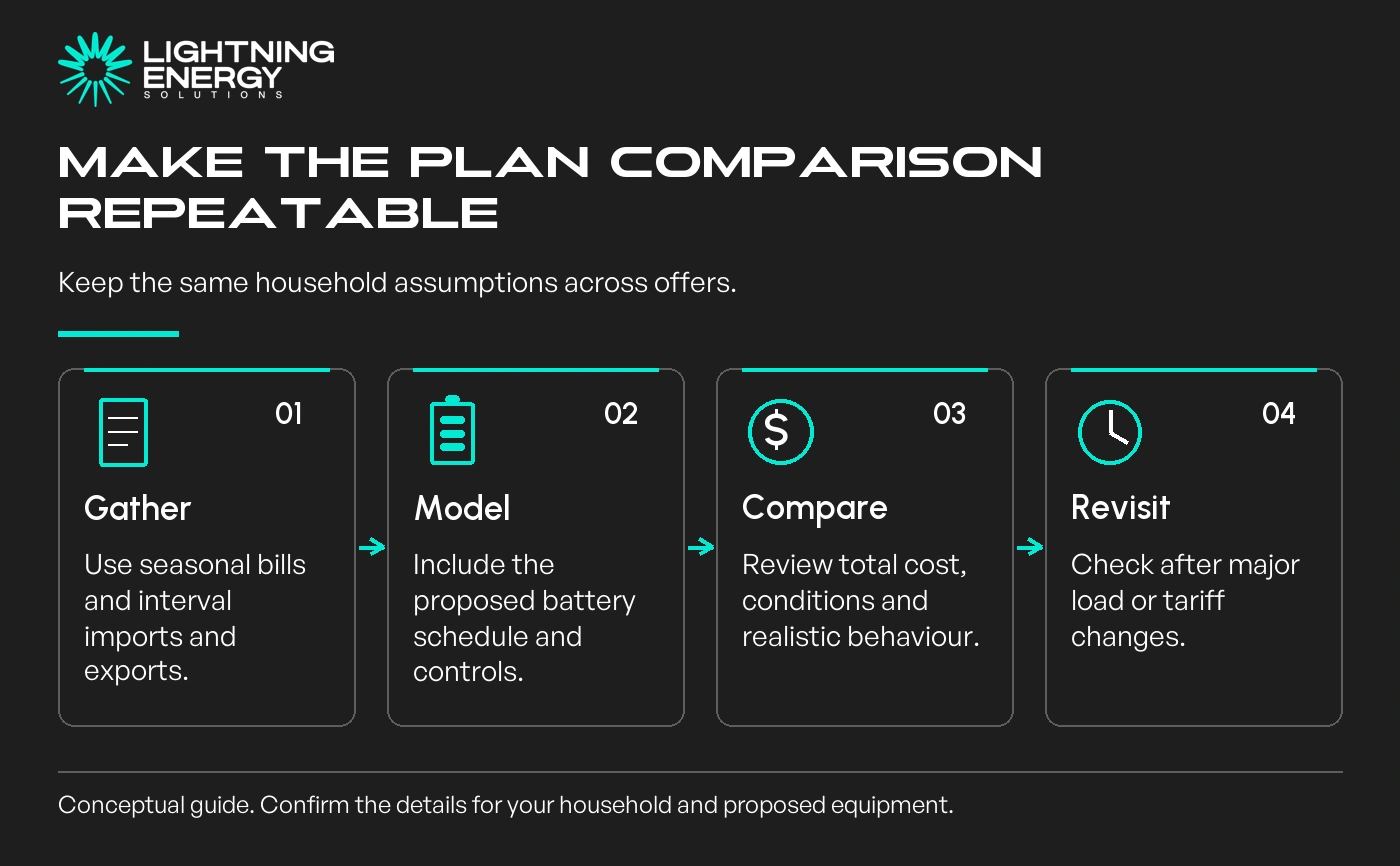
Keep your current plan if the proposed alternative offers little expected benefit or depends on a routine you will not maintain. Recheck after major appliance changes or when rates and plan conditions change.
Plan your battery upgradeBring your current plan, seasonal bills and battery settings. We can help identify the operating assumptions to use when you compare suitable electricity offers.Available times
Book a consultation and we'll map solar, storage, hot water, and the rebates around your bills and your goals.
Question 1 of 6