
Choosing heat pump hot water for a Melbourne winter
Choose heat-pump hot water for Melbourne by checking cold-weather recovery, usable storage and controls, rather than relying on an operating-range headline.
Choose heat-pump hot water for Melbourne by checking cold-weather recovery, usable storage and controls, rather than relying on an operating-range headline.

A heat-pump water heater can be a suitable choice for a Melbourne winter, but the exact model and system design matter.
Check how it will restore hot water in local conditions, not merely whether its operating range includes a cold temperature.
The right question is whether the selected tank, compressor and schedule can meet your household's winter demand reliably. That takes more information than a generic “suits four people” label.
A heat pump transfers heat from surrounding air into water. Outdoor conditions influence that process, while colder incoming water can increase the heating needed for each refill.
Australian Government hot-water guidance notes that cold-location suitability varies between models.
Avoid assuming all products have the same winter performance because they use the same broad technology.
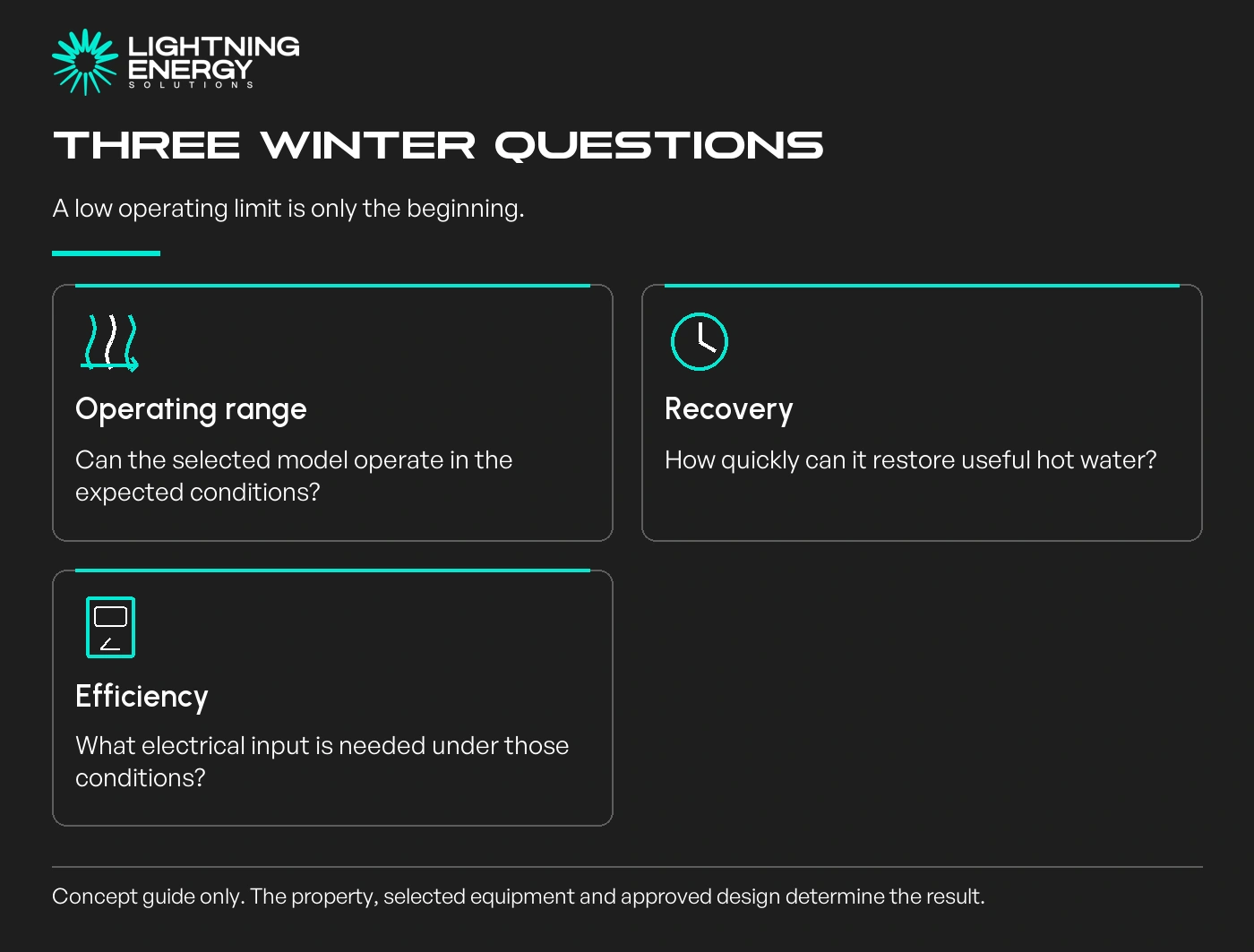
An operating-range specification states conditions under which equipment can operate. It does not, by itself, promise a particular recovery time, efficiency or amount of hot water for consecutive showers.
When reviewing heat-pump options, ask for the exact model's performance documentation and the assumptions behind the sizing recommendation.
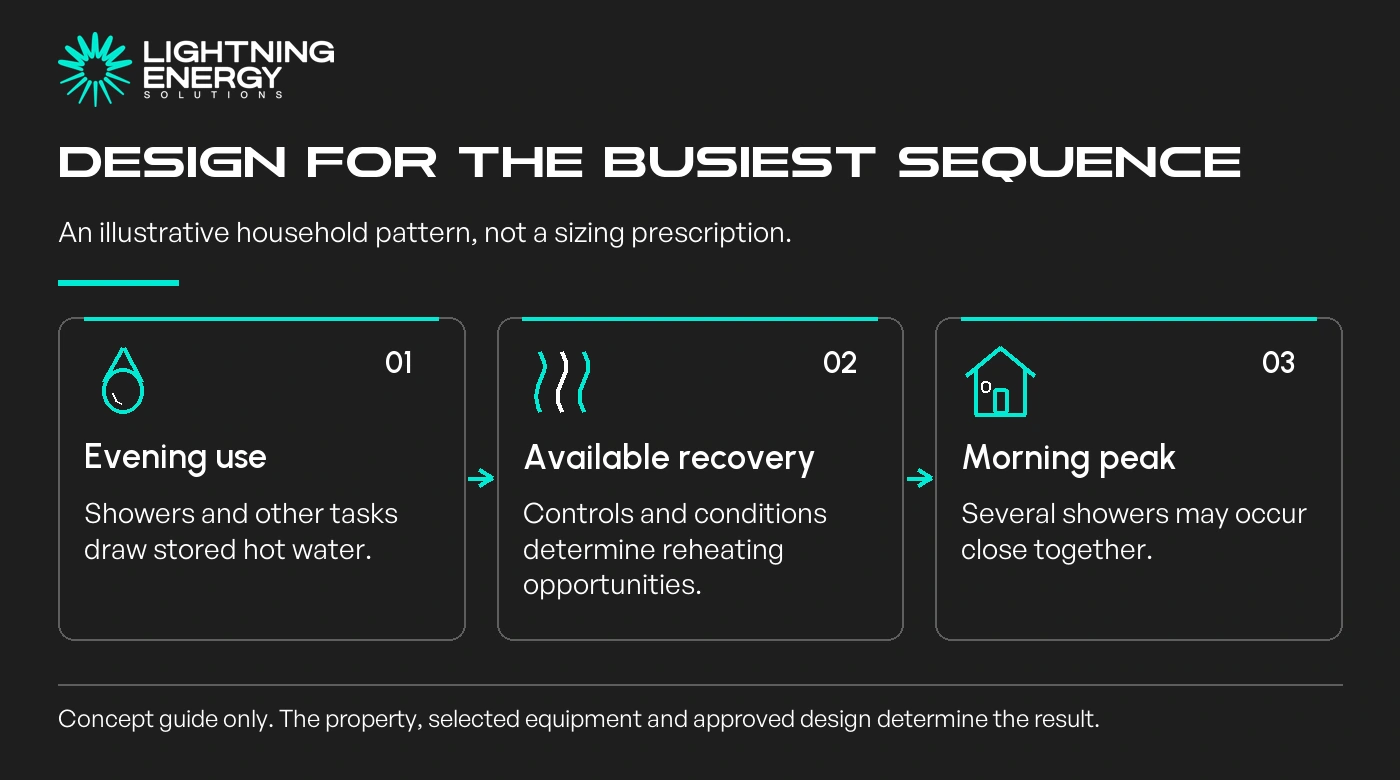
List the busiest sequence of showers, baths and other hot-water uses. A household that uses most of its hot water before work needs enough stored heat or recovery before that period.
Imagine four people showering close together after an evening with extra guests. A system adequate for an average day may face a much tighter storage-and-recovery challenge on that morning.
Ask how the proposed design handles that pattern in winter, including any heating window. The aim is a clear explanation of supply, not an assurance that the tank's nominal litres sound large enough.
Solar Victoria's planning guide discusses cold-weather and boosting considerations.
Manufacturer data should explain the particular equipment being offered.
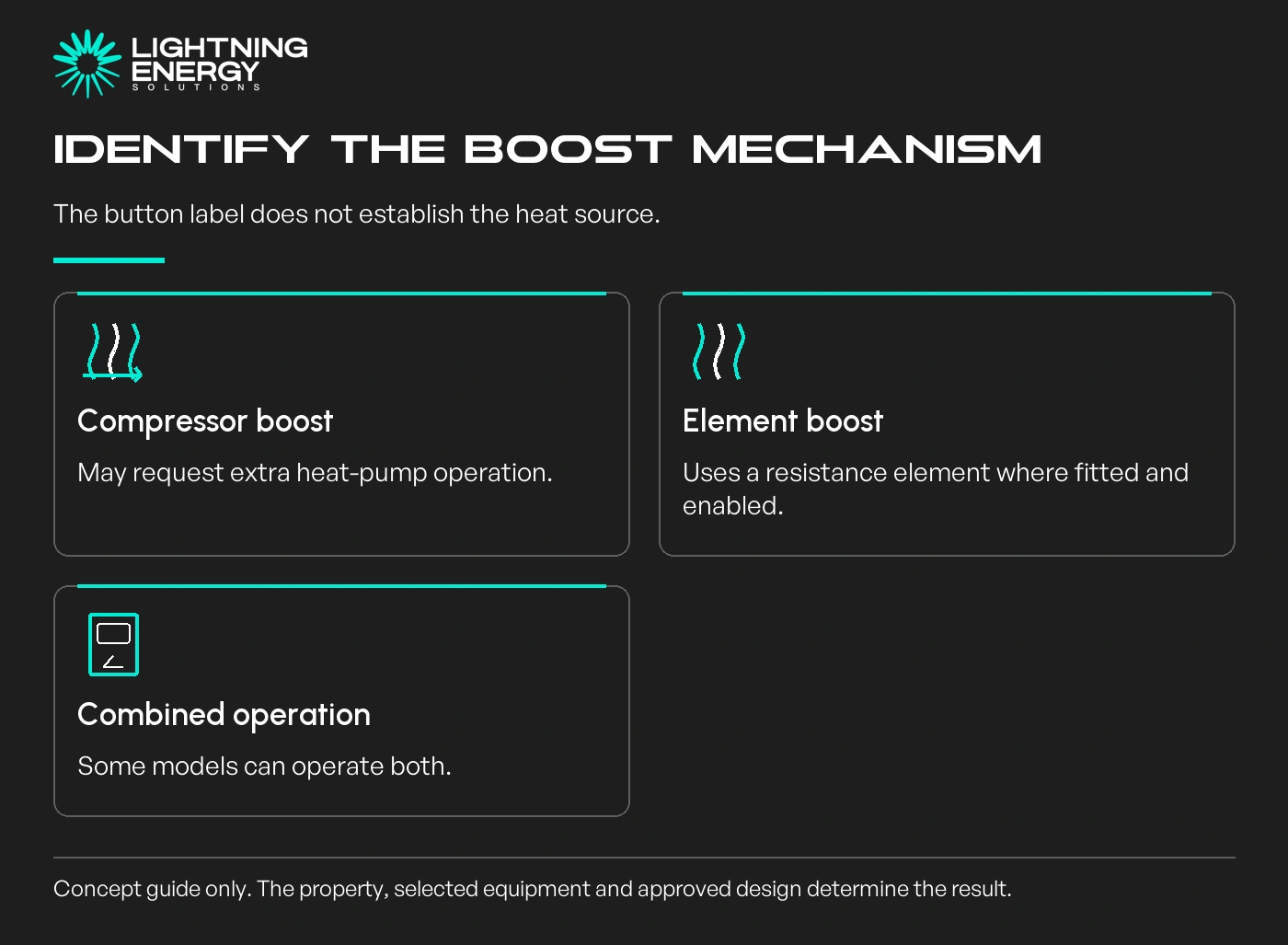
Some systems include a resistance element; others use a compressor-based boost function. Ask which heat source operates during boost, when it is enabled and how that affects electricity use.
The word “boost” alone is not a specification. Ask the installer to demonstrate the relevant indicators and owner controls at handover, using the correct manual for the installed model.
A supported timer can favour daylight operation, but it must not compromise necessary recovery, hygiene or frost protection. Our winter timer guide explains this balance.
Do not plan around an unrealistically short sunny interval if the household needs more heating time. Some grid electricity can be part of a sensible and reliable winter arrangement.
The outdoor unit needs the manufacturer's clearances and airflow, suitable drainage and service access. A cramped position chosen only to hide the equipment can undermine an otherwise sensible selection.
Consider bedroom windows and neighbours, particularly where operation may occur outside daytime hours. A timer should complement a suitable location, not compensate for an unresolved noise problem.
If solar is present, compare the winter generation window with heating needs. Strong summer exports are not proof that winter water heating will be entirely solar supplied.
The quotation should include necessary plumbing, electrical work and commissioning. A capable unit still needs a suitable installation to deliver the intended result.
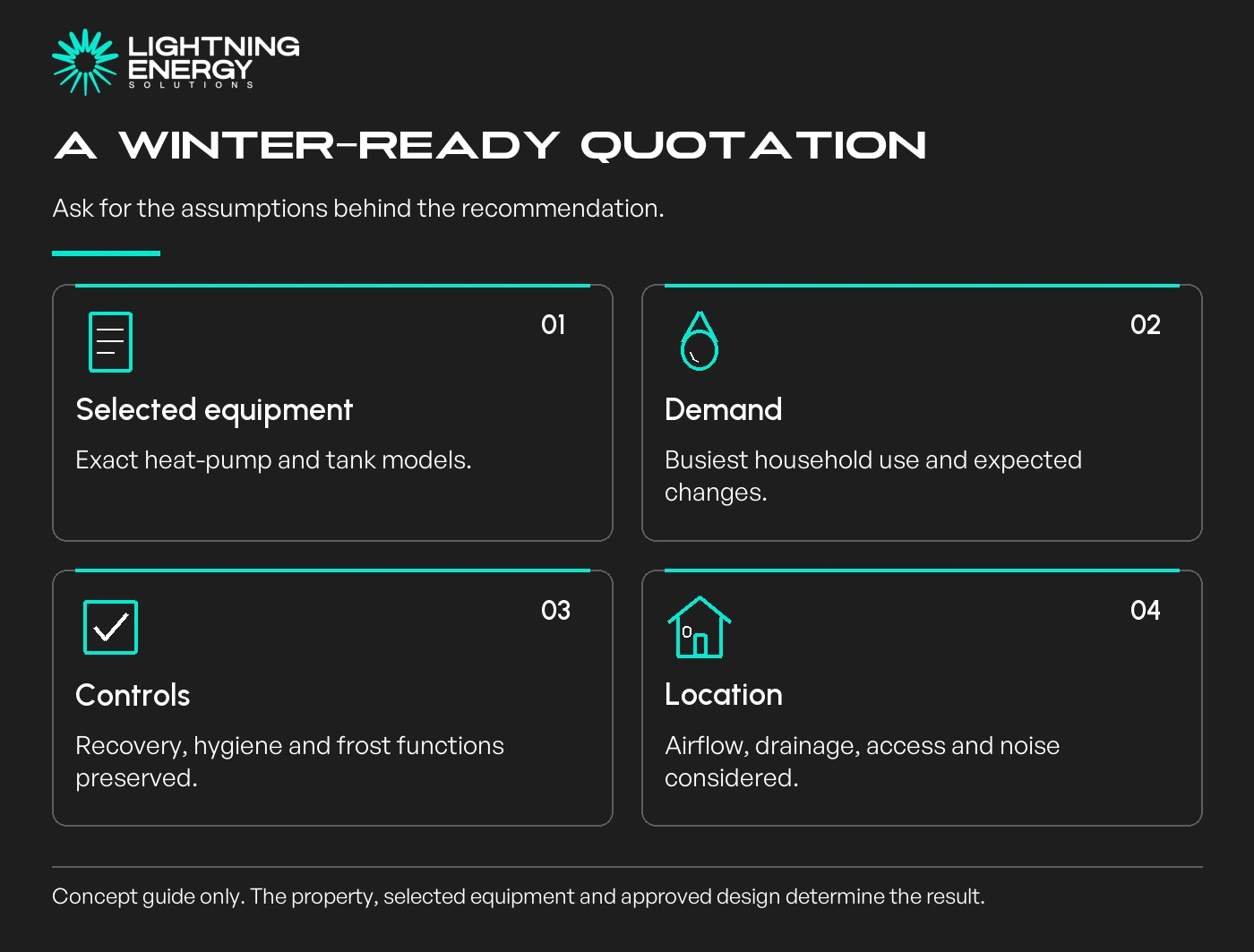
Ask for the model, tank capacity, expected recovery under relevant conditions, intended schedule and response to unusually high demand. Keep those assumptions with the quote.
You do not need to buy the largest tank automatically. You need enough usable storage and recovery for the home, with reasonable provision for foreseeable changes.
Contact our team with household routines and the existing system details. A winter-focused assessment makes the choice more defensible than selecting by price, refrigerant or advertised capacity alone.
Available times
Book a consultation and we'll map solar, storage, hot water, and the rebates around your bills and your goals.
Question 1 of 6