
Cloudy Melbourne Weeks: Planning for Heating When Solar Output Is Low
Plan a winter heating budget for low-solar Melbourne weeks by checking household demand, grid imports, tariffs and the limits of stored energy.
Plan a winter heating budget for low-solar Melbourne weeks by checking household demand, grid imports, tariffs and the limits of stored energy.

A solar-assisted heating plan should still work financially and practically during a cloudy Melbourne week. When useful solar falls short of household demand, the remaining energy has to come from available storage or the grid.
Budget for that period before relying on a sunny-day screenshot. A battery can shift stored energy, but it cannot create a week’s heating supply from an empty store.
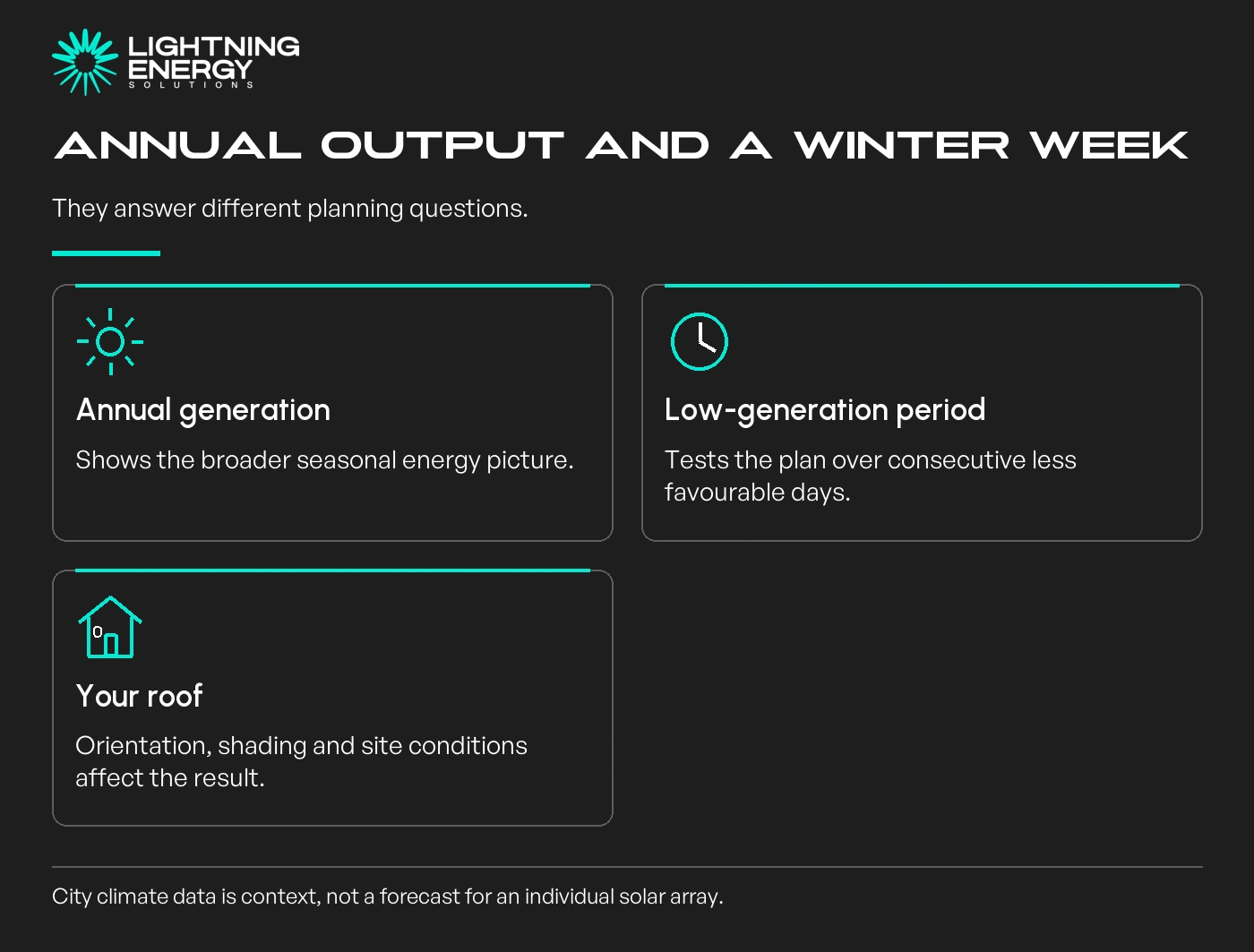
Look at your own winter generation and imports if you have them. For a proposed system, ask for a site-specific seasonal estimate and a discussion of lower-generation periods, including shading and roof orientation.
Melbourne’s historical climate records show seasonal variation in sunshine. They provide context, but a city weather station does not predict the output of an individual roof.
Bureau of Meteorology climate statistics.
Our Melbourne winter solar guide explains why the winter operating picture deserves its own review.
Keep a forecast separate from a fault diagnosis. A cloudy period can reduce generation, but an unexpected persistent change still warrants checking the system’s records and any alerts.
List heating demand alongside hot water, cooking, vehicle charging and other household consumption. Mark the times those loads operate, not only the daily total.
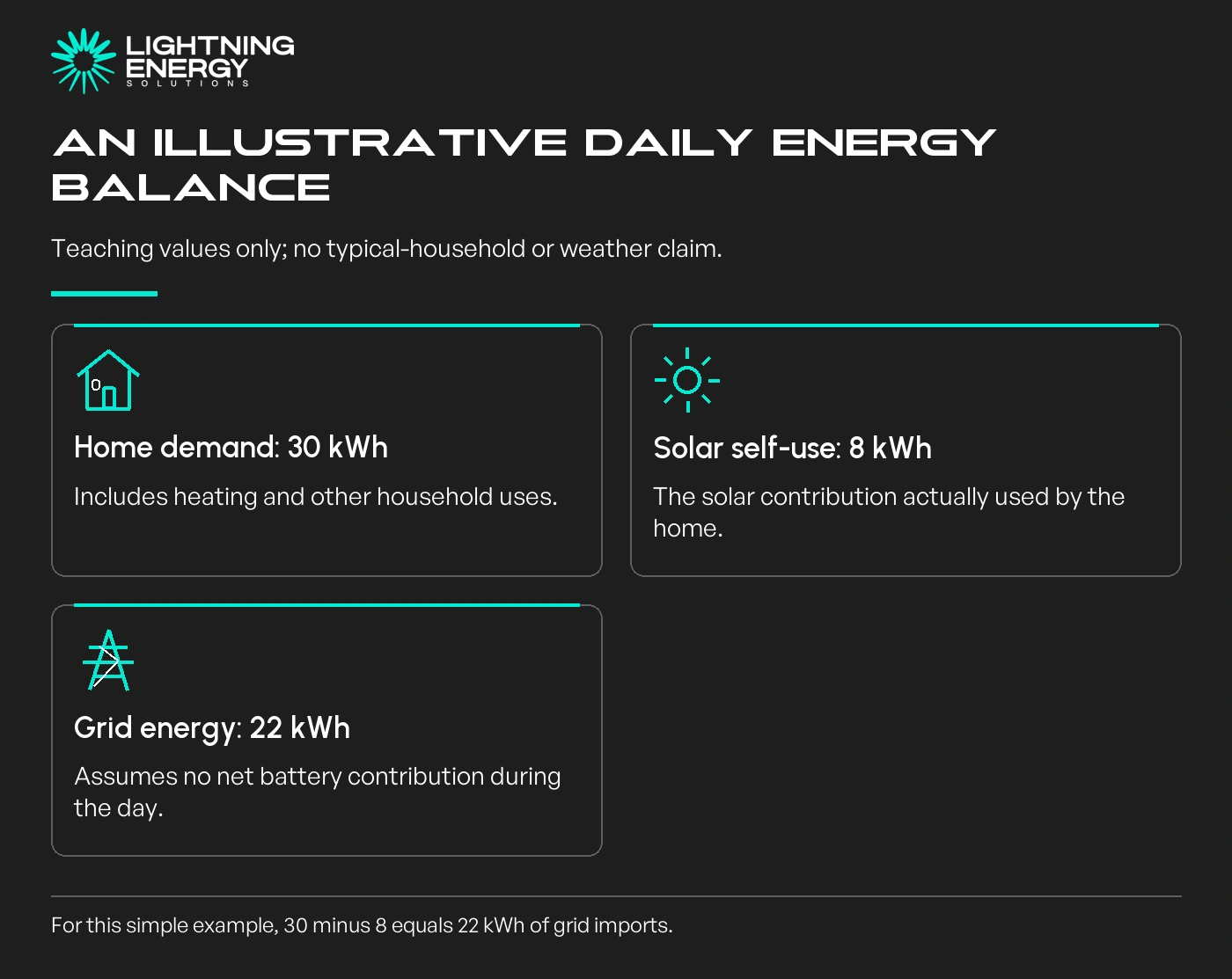
For an illustrative daily energy balance, suppose total home demand is 30 kWh and 8 kWh of solar is usefully consumed by the home. With no net battery contribution, 22 kWh must come from the grid.
These invented values are arithmetic only, not a Melbourne weather forecast or a typical household claim. They show why lower solar self-use changes imports even if comfort requirements stay similar.
For your own solar assessment, use property-specific inputs and repeat the balance over several days. A battery that starts charged may help initially without covering the same gap indefinitely.
Allocate expected imports to the relevant tariff periods. A total weekly kilowatt-hour estimate can hide whether much of the demand falls in more expensive periods on your plan.
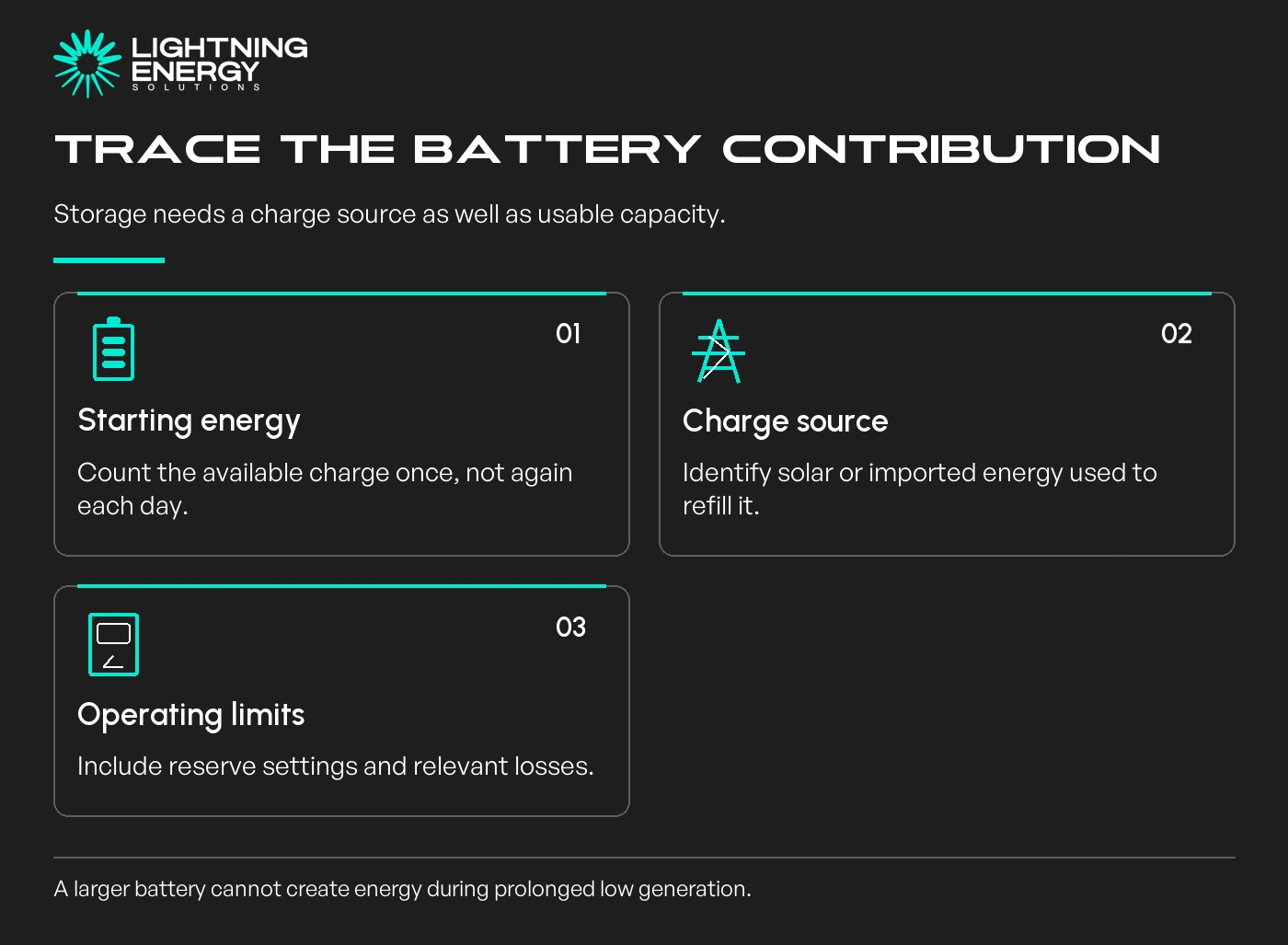
If a battery is part of the design, ask how its usable energy, reserve setting, charge source and conversion losses affect the scenario. Do not count the same starting charge again every day.
Charging from the grid can be a legitimate operating choice where supported, but that energy still has a cost under the applicable plan. Solar ownership does not make imported charging energy free.
The government’s smart-home guidance recommends understanding household energy use before coordinating appliances and controls.
Smart-home monitoring guidance.
Do not turn a low-generation week into a reason to buy more storage without assessing how that extra storage would be charged.
Identify the rooms and times that genuinely need heating. Use normal, supported zone and schedule settings, while preserving comfortable conditions for the people at home.
Consider whether hot water or vehicle charging can be shifted without interfering with household needs. Separate flexible tasks from essential heating rather than treating every load as equally movable.
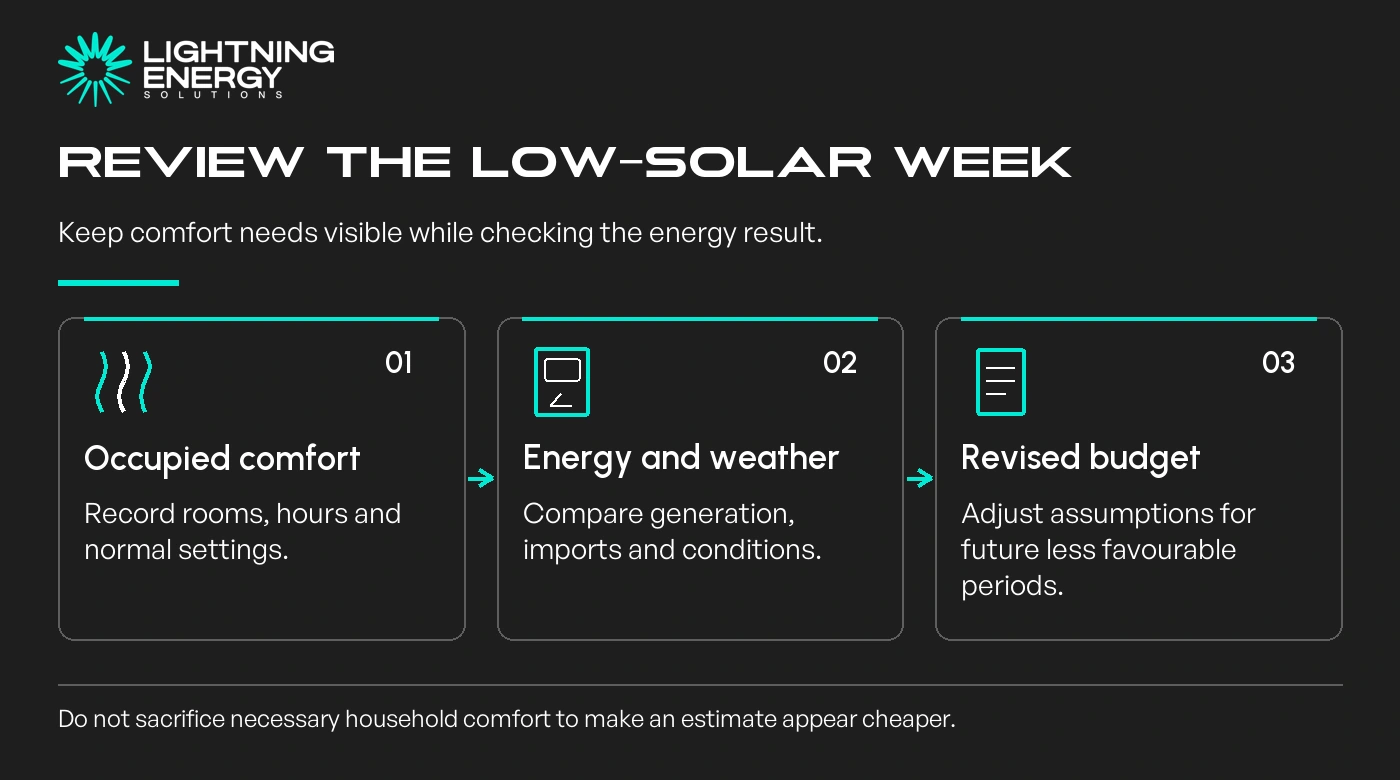
After the week, compare weather, occupied hours, settings, generation and imports. Note any extra guests or appliance use before deciding the heating estimate was wrong.
A useful budget contains an allowance for less favourable periods rather than assuming every month resembles a mild, sunny one. It should also make clear which fixed charges remain unchanged.
If the proposed plan is affordable only when generation is unusually strong, revisit the assumptions and scope before committing to additional equipment.
Bring a recent winter interval-data sample and your tariff to a whole-home energy discussion. Ask what the plan looks like during several low-generation days, including where every extra unit of heating energy comes from.
Available times
Book a consultation and we'll map solar, storage, hot water, and the rebates around your bills and your goals.
Question 1 of 6