
CO2 or R290 hot water heat pump: what should you compare?
CO2 and R290 are both low-GWP refrigerant options, but compare complete hot-water systems for winter performance, installation, controls and support.
CO2 and R290 are both low-GWP refrigerant options, but compare complete hot-water systems for winter performance, installation, controls and support.

Do not choose a hot-water heat pump on refrigerant alone. CO2 and R290 can both be used in suitable systems, but the complete product determines recovery, efficiency, noise, controls and service requirements.
Compare exact Australian models under comparable conditions. A refrigerant name cannot establish that one unspecified unit will outperform another at your Melbourne home.
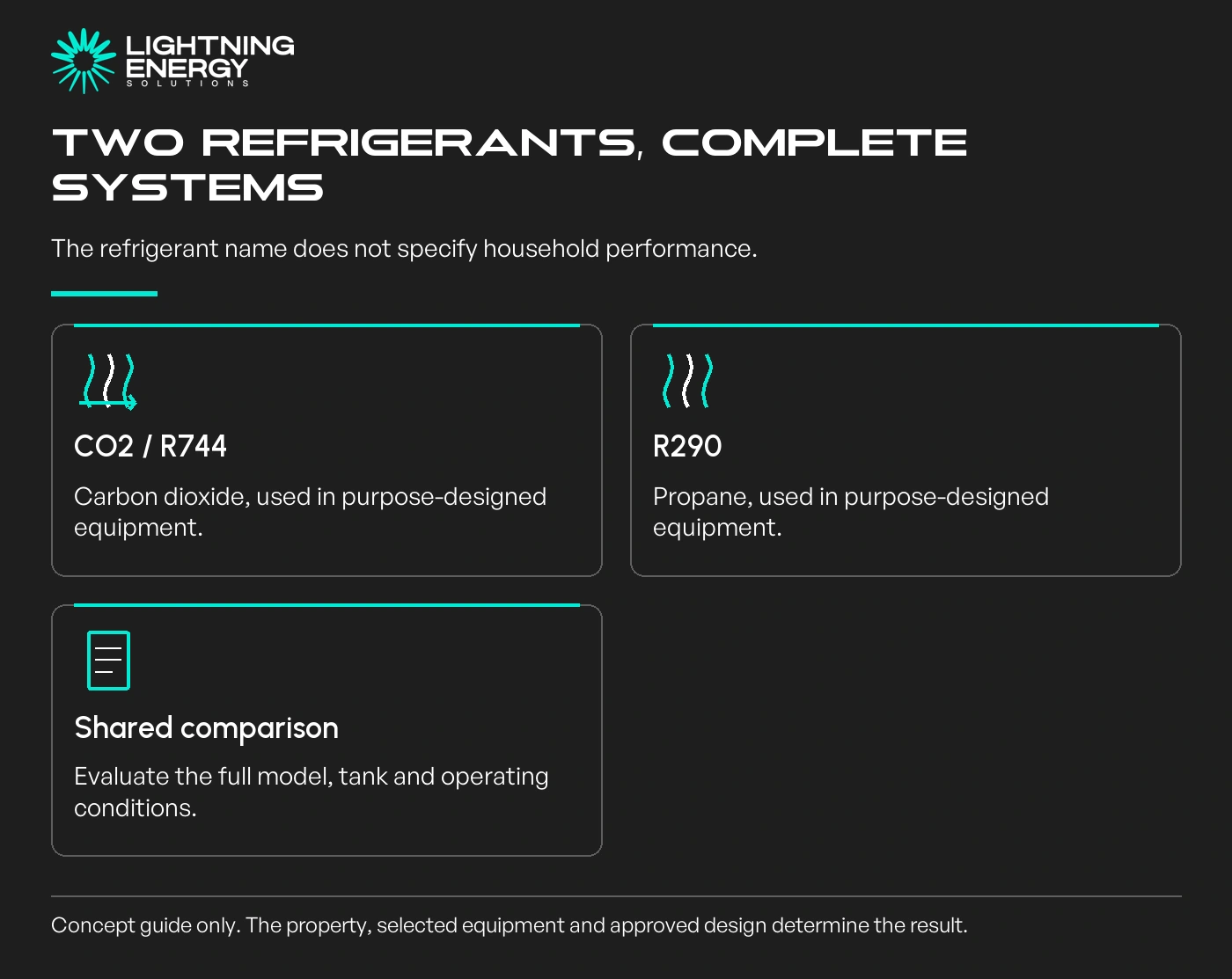
R744 is carbon dioxide, commonly written CO2. R290 is propane. Both appear in the Australian Government's reference list of non-HFC refrigerants with very low global warming potential.
See the government's refrigerant reference.
It also identifies different safety classifications; the environmental characteristic is not the same thing as an installation instruction.
R290 is flammable and requires equipment and work practices designed for that refrigerant. CO2 systems have their own pressure and equipment requirements. Neither is a refrigerant for homeowners to handle or substitute.
WorkSafe Victoria's guidance explains why competent workers and appropriate controls matter. Use the manufacturer's instructions for the actual appliance and site.
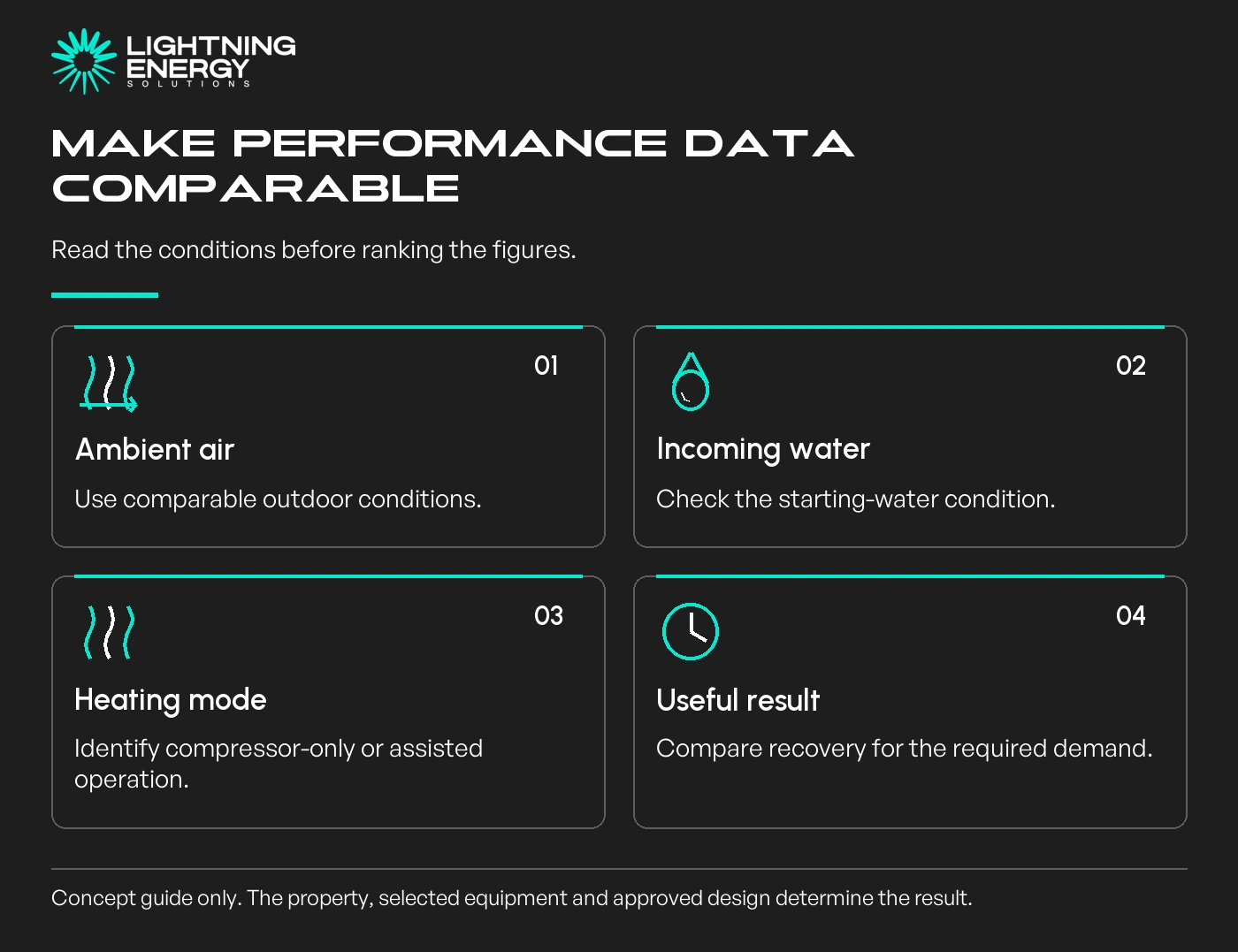
Ask for heat output, electrical input and recovery data with the test conditions stated. A warm-air efficiency headline cannot be compared fairly with another model's colder-condition result.
For example, Sanden's published specifications give ambient and incoming-water conditions alongside the GAU-A45HPD performance figures.
Do not treat those figures as a winter household prediction.
For heat-pump selection, explain the busiest hot-water use and proposed heating window. The important outcome is reliable useful water with sensible energy input.
Also identify whether a recovery claim includes resistance boosting. A compressor-only result and a combined-mode result answer different questions, even when both brochures use the word efficient.
Compare tank capacity, integrated or split arrangement, dimensions, access, clearances and service space. These practical factors can matter more than a small difference between laboratory efficiency figures.
Check the proposed outdoor location and nearby windows. Do not assume “natural refrigerant” means silent operation or that a manufacturer's sound rating guarantees neighbour acceptance.
If solar is part of the plan, ask which timer or surplus-control functions are actually supported. A product can use rooftop solar without automatically communicating with the inverter.
Our hot-water timing guide explains that distinction. Required hygiene and protective operation must remain part of the design whichever refrigerant is selected.

Ask who services the equipment locally, whether parts are available and how a future fault is assessed. Clarify the cylinder, compressor, controller, labour and travel provisions separately.
A long headline warranty may apply to only one component. It is not evidence that every part lasts that long or that every service visit is free under all circumstances.
Imagine two compliant systems that both meet the household's winter demand. One may fit the available space and support arrangements better, while another may offer more useful controls. Refrigerant alone cannot settle that choice.
You do not need to replace a functioning suitable unit just because a different refrigerant has become prominent in advertising. Compare the actual costs and benefits of a change.

Put the exact heat-pump and tank models side by side. Require comparable performance conditions, full installed scope and written operating and warranty information.
Where data is missing, mark it as missing. Do not fill the gap with a broad claim that every CO2 system is faster or every R290 system is cheaper to run.
Contact us with the competing quotes and household needs. A defensible recommendation explains why the complete system fits the home, with the refrigerant treated as one relevant feature.
Available times
Book a consultation and we'll map solar, storage, hot water, and the rebates around your bills and your goals.
Question 1 of 6