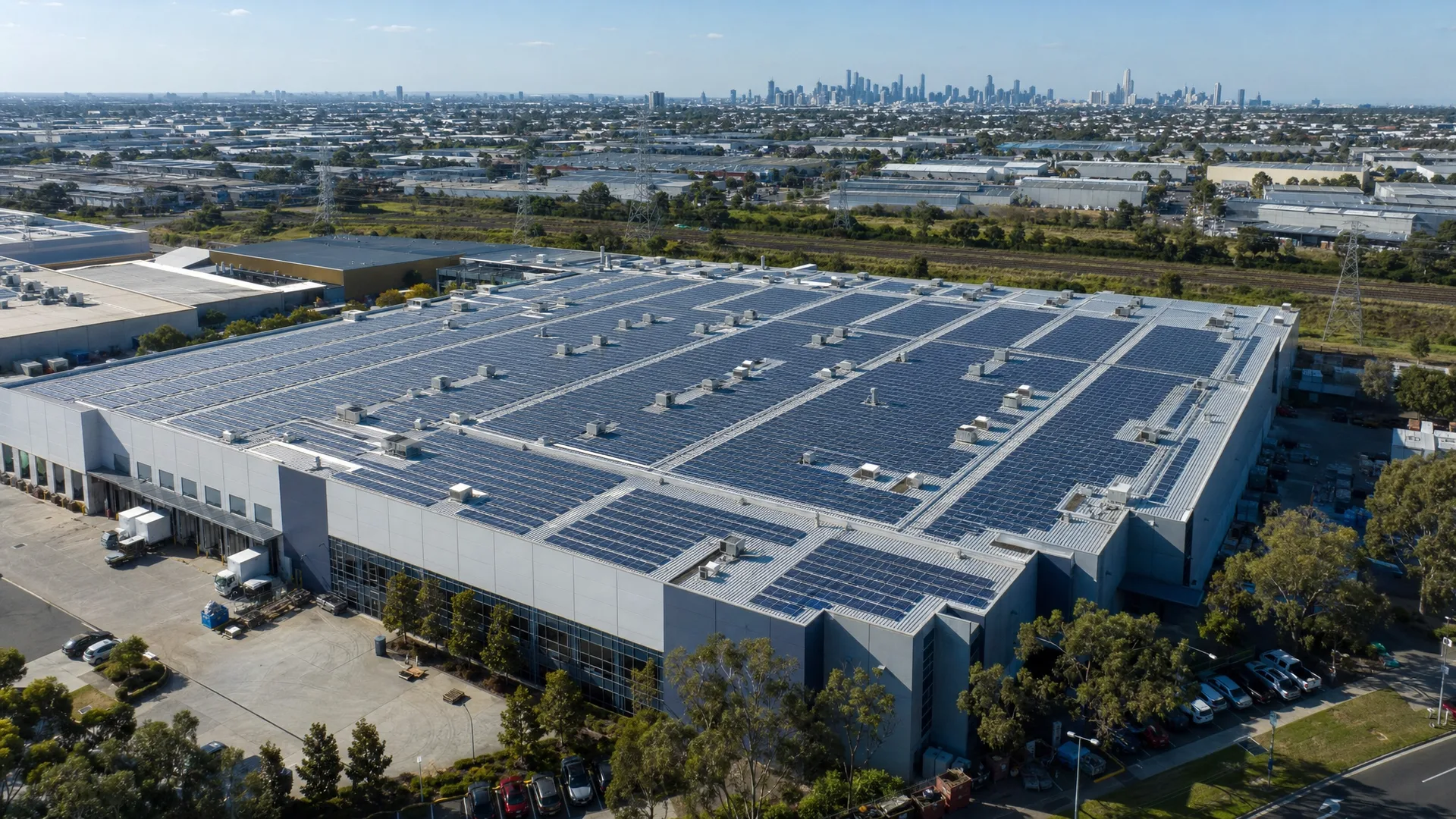
Commercial Solar Cost Victoria: 30kW, 50kW and 100kW Systems Compared
What a 30kW, 50kW or 100kW commercial solar system actually costs in Victoria once you factor in grid connection, roof condition, rebate timing and your network area, not just the headline per-watt price.
LLukeLightning Energy21 September 2026 · 8 min read
Most commercial solar quotes start with a per-watt number. It's the easiest thing to compare and the least useful thing to base a decision on.
If you're a small-business owner in Victoria weighing up a 30kW, 50kW or 100kW system, the headline price tells you almost nothing about what you'll actually pay or when you'll see it back.
What the per-kW numbers actually look like
Bigger systems are cheaper per kilowatt. That's not a sales line, it's just how commercial solar economics work: fixed costs like scaffolding, design, switchboard work and project management get spread across more panels.
Based on early 2026 pricing from multiple Victorian installers and aggregators, here's the typical per-kW range at the time of writing.
30kW systems: typically in the range of $900 to $1,200 per kW installed
50kW systems: typically in the range of $750 to $950 per kW installed
100kW systems: typically in the range of $650 to $850 per kW installed
That gap between a 30kW and 100kW system, roughly 30 to 40 percent per kW in current market conditions, is real.
It changes the sizing conversation for a growing business. If you're close to the 30kW mark and expect to grow, it's worth talking through whether to size up now.
Does this actually apply to your business?
Match the system to the roof and measured electricity use. Solar used onsite can avoid imports, while exported energy may earn a separate credit. Both belong in the financial model using the actual tariff.
Roof area: request a layout using the exact panel dimensions, access requirements, shading and structural assessment.
Usage pattern: compare interval electricity demand with estimated generation during business operating hours. Closing at 5 pm does not mean a business lacks daytime demand.
Tariff: assess imports, exports and any demand charges separately. A battery requires its own financial assessment.
Lease duration, landlord consent, roof suitability and electricity demand can all affect a commercial project. A flat roof alone does not establish that solar is unsuitable; the mounting design and structural assessment matter.
The rebates that actually apply, and how they stack
There are two separate rebate mechanisms at play here, and most articles only mention one. Getting both right is where the real value sits.
Check the current federal eligibility rules for a system of the proposed capacity. Under the existing small-scale threshold, systems up to and including 100 kW can qualify when the other requirements are met.
The deeming period is stepping down from 6 years to 5 years in 2026. That reduces the certificate value baked into new systems going forward, as confirmed on the Clean Energy Regulator's STC calculation page.
Use the project’s postcode and applicable installation date in the regulator’s STC calculation. Do not apply one location’s rating to every Victorian commercial project.
Separately, Victoria has its own Commercial and Industrial Solar PV discount under the Victorian Energy Upgrades scheme. It's been live since 29 September 2025, covering systems between 30kW and 200kW.
The VEU discount is project-specific. Request the certificate calculation for the proposed system, the certificate price used and any fees; one indicative dollar amount is not applicable to every eligible installation.
One practical point for anyone sizing near the 30kW line: inverter capacity requirements under the VEU scheme can affect equipment selection and total cost. We'll confirm the exact requirement for your project when we scope the install.
What the headline price actually hides
This is where most of the real cost variation between two quotes for the 'same' system size actually comes from. It's rarely just the panels.
Grid connection and network application fees, which vary by distribution area and can add weeks to the timeline before switch-on
Switchboard and metering upgrades, a common hidden line item that doesn't show up in per-kW pricing at all
Roof condition and structural assessment, especially on older commercial roofs that need engineering sign-off before panels go up
Battery add-ons, if you're managing demand charges rather than chasing the residential-style savings story
Inverter capacity requirements tied to VEU compliance, particularly relevant for systems sitting near the 30kW threshold
A commercial battery can serve different purposes, including shifting energy use or managing demand where the tariff and load pattern support it. Assess its operating case and incentive eligibility separately from the solar system.
Grid connection: the part that actually varies by location
This is really where 'cost by city' plays out for commercial jobs. It's less about which suburb you're in and more about which distribution network owns the poles and wires.
Your distribution network determines connection fees and timeframes. We'll confirm which network serves your site and what its current process looks like when you get in touch.
Connection timeframes after formal application typically range from 4 to 8 weeks, depending on your network and whether switchboard or structural upgrades are needed.
That timeline varies between networks. CitiPower and Powercor processes differ from Jemena and United Energy, and regional sites can face longer lead times due to local electrician availability rather than the technical process itself being harder.
These are ballpark figures based on current conditions, and they shift throughout the year. If you want the exact application fee and timeline for your network area and system size, get in touch and we'll walk through it with you when we scope the install.
The pending change everyone's asking about
There's a proposal to expand federal STC eligibility to systems between 100kW and 1MW from 1 October 2026. I want to be really clear: it is not law yet, and you shouldn't base a purchasing decision on it today.
Based on how commercial solar economics work, I'd suggest not building your budget around a rebate that hasn't passed.
Compare the proposed project under the rules applying to its actual installation date. Do not choose an unsuitable capacity solely to fit an assumed incentive boundary.
What I'd actually recommend
Compare 30 kW, 50 kW and 100 kW options using interval demand, roof constraints and the connection offer. The best choice depends on usable generation and complete installed cost, rather than the size category alone.
A 30kW system makes sense when your roof or budget genuinely caps you there, not as a default starting point.
A 100kW system makes sense when your usage clearly supports it and you're not banking on the pending federal expansion to make the numbers work.
Is now the right time?
Honestly, yes, if you're sizing under 100kW. The STC deeming reduction means waiting doesn't help you there, and the Victorian VEU discount is live and stackable right now.
If you're seriously considering a system over 100kW purely to catch the pending federal expansion, that's a bet on legislation that hasn't passed.
I'd rather size the project on today's rules and treat any future change as a bonus, not a plan.
Two quotes for the same size system can both be legitimate even with a substantial gap. The variance typically reflects roof condition, switchboard upgrades, equipment brands and connection-fee timing.
When you spot a significant difference between quotes, ask what's driving it. I've covered how to spot genuine warning signs in what dodgy solar installers really cost you.
For the inverter sizing and compliance side of things, particularly relevant for systems near the 30kW threshold, our inverter explainer covers the technical detail without the sales pitch.
If you're a homeowner rather than a business owner reading this by mistake, the residential version of this comparison, covering 6.6kW, 10kW and 13kW systems, is over in our Melbourne, Sydney and Adelaide solar cost breakdown.
Book a consultation and we'll map solar, storage, hot water, and the rebates around your bills and your goals.
Loading consultations…
Lightning EnergyPlan your next energy upgrade.
⚡
Hi, I’m Lightning Energy’s project guide. I’ll ask a few practical questions, explain what usually matters for your project, and help you decide on a useful next step — no guesswork or sales pressure.
First, what kind of property are we planning for?