
Comparing Solar Electricity Plans Beyond the Headline Feed-in Tariff
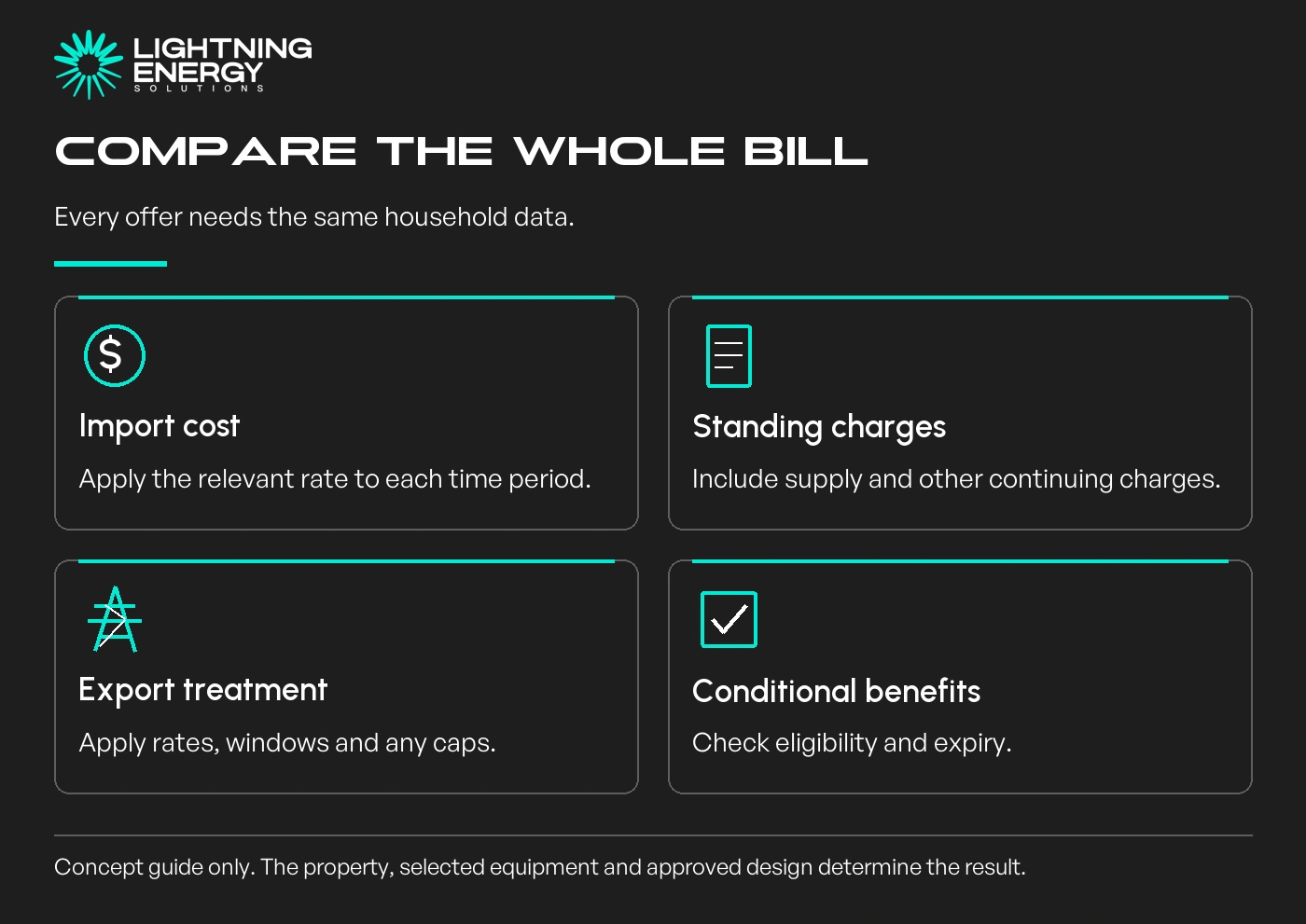
Compare solar electricity plans using the whole bill, including import rates, supply charges, export credits and any conditions attached to free-hour offers.
Compare solar electricity plans using the whole bill, including import rates, supply charges, export credits and any conditions attached to free-hour offers.

The best solar electricity plan is the one that suits your whole bill. A higher feed-in tariff can look attractive while a different import rate, supply charge or condition changes the overall result.
Start with your current bill and available interval records. Keep one copy of each offer’s dated terms so you can compare the same period of household use under each proposal.
This matters for an existing system as well as a new solar installation. The equipment and the retail agreement are separate decisions that need to work together.
List usage charges, daily supply charges and any demand charge. Then record how exported electricity is treated, including time windows or volume thresholds where they apply.
The Government tariff guide distinguishes these components and explains why the highest feed-in tariff is not necessarily the best plan.
Government explanation of electricity tariffs.
Avoid comparing only the advertised headline. A discount may apply to a specific part of the bill, while an introductory benefit may have conditions or an expiry date.
Imagine an illustrative household with modest daytime imports and substantial evening use. A generous midday offer may do little for them if their important purchases happen outside its window.
Another household with a necessary daytime load could reach a different result. The answer comes from applying each plan to the same demand records, rather than deciding from the offer’s name.
Use Victorian Energy Compare as the official comparison destination, and check the retailer’s current terms before agreeing to a change.
If you plan to move a load, calculate both cases. Keep the current routine as the baseline and make the changed schedule visible, especially if it requires new equipment or daily attention.
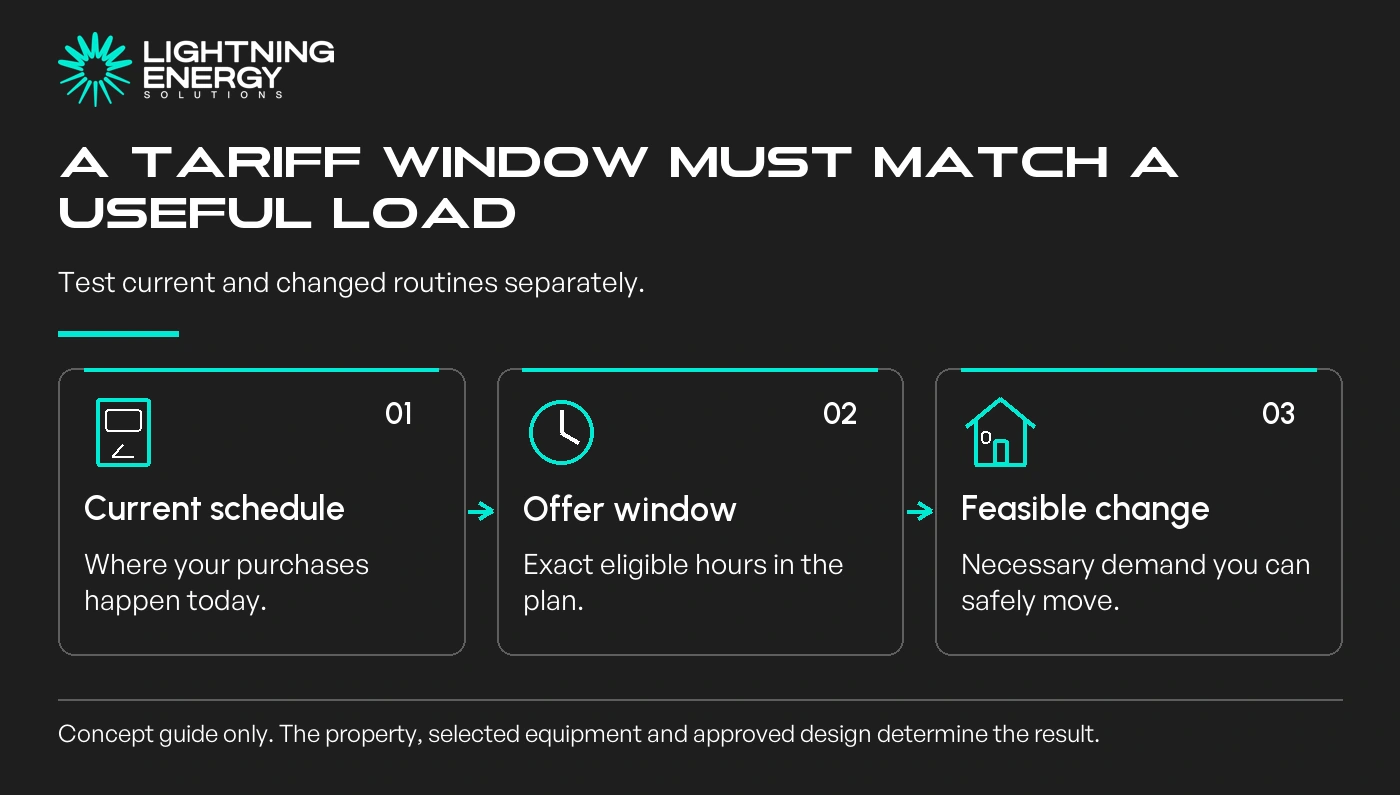
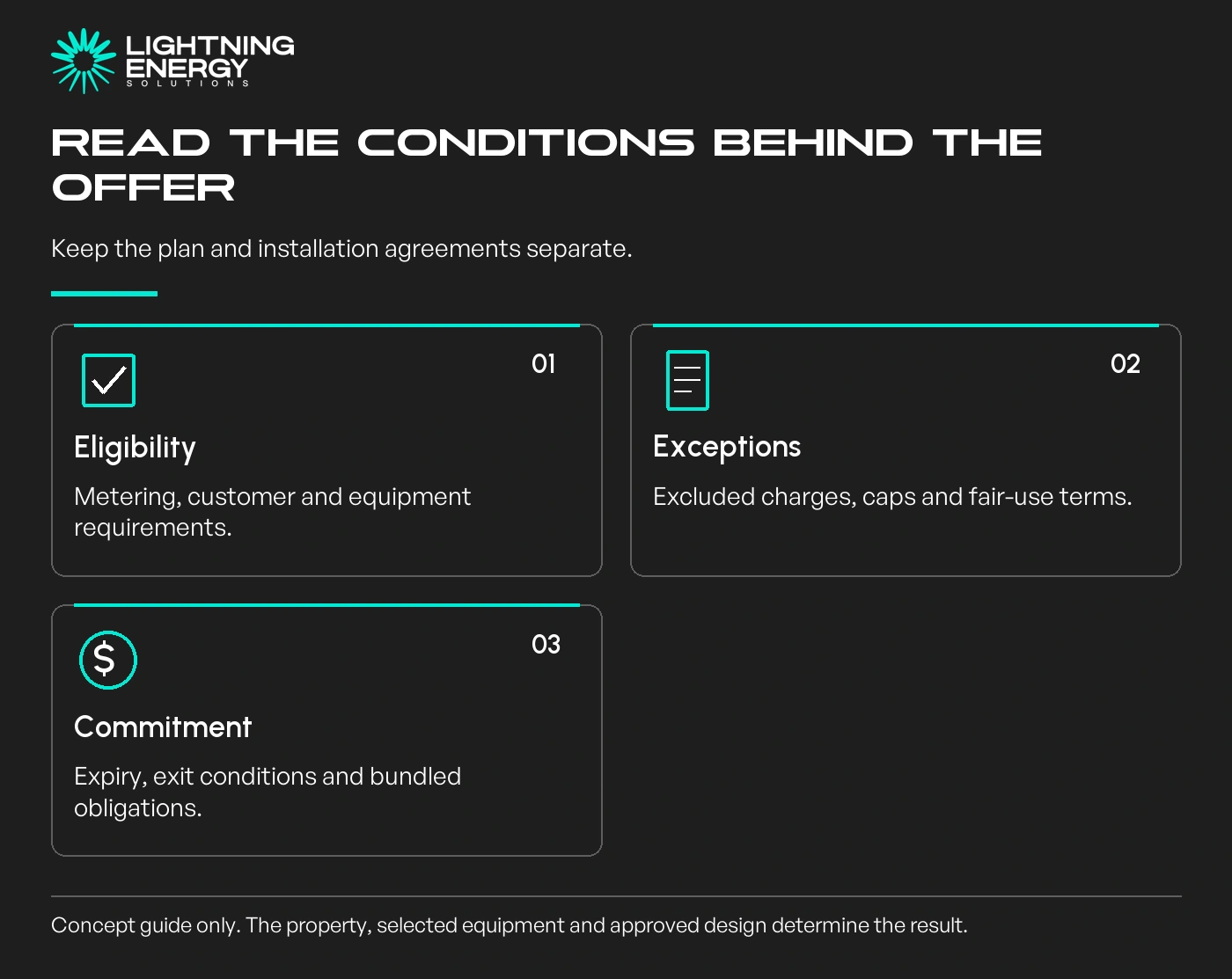
For an offer with free or discounted hours, check the eligible customer type, metering, time window, excluded charges and any fair-use conditions. Do not assume the phrase covers the entire bill.
If an electricity plan is promoted alongside an installation, ask whether accepting it affects the equipment price, financing or contract obligations. Request separate documents for the separate commitments.
The ACCC advises buyers to examine long-term agreements and the implications of being tied to an energy supplier.
ACCC solar purchase and agreement guidance.
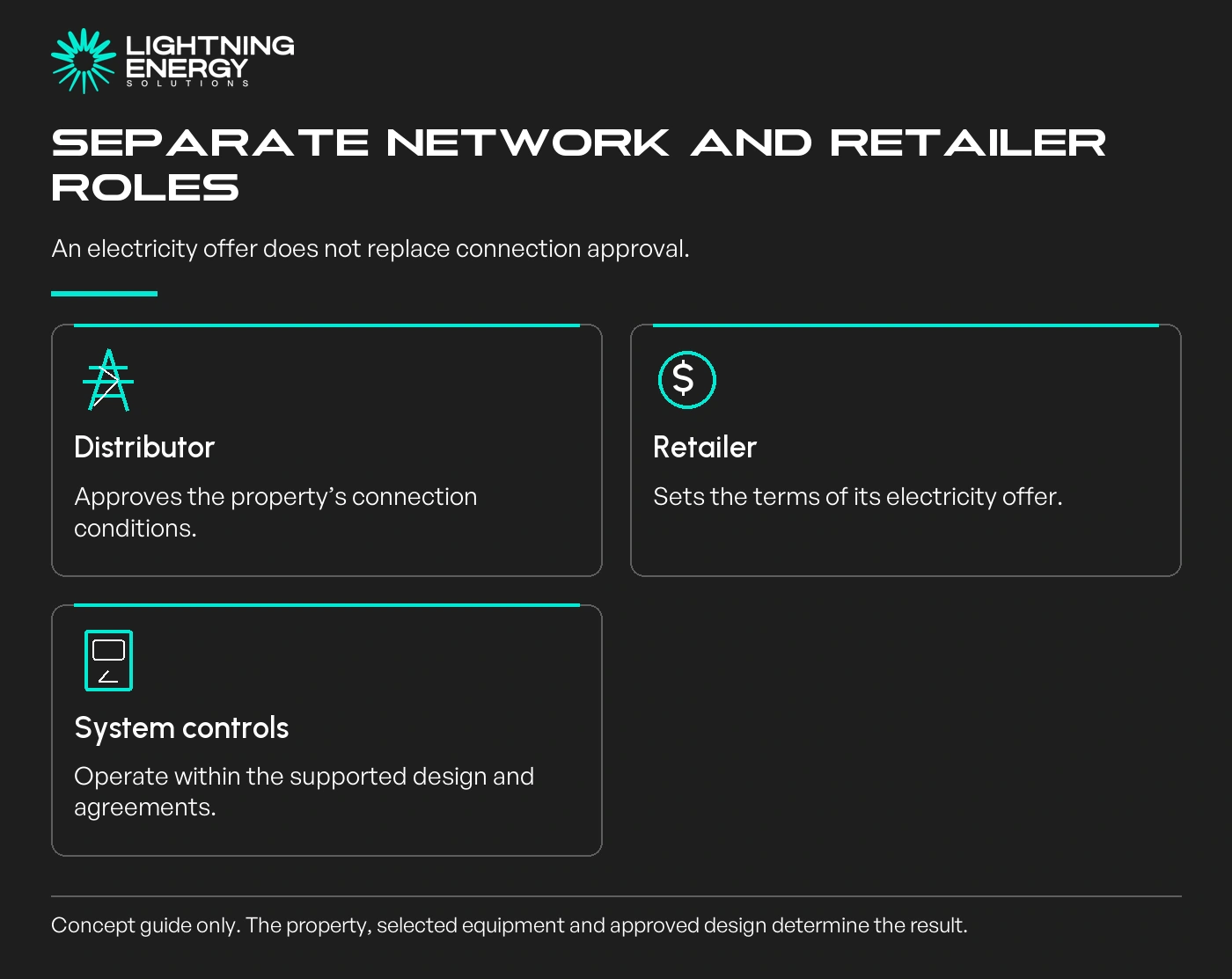
Your approved export limit constrains what the installation can send to the grid. A retail offer does not by itself change that approval.
Compare battery charging and discharging with the plan. Check separate VPP control terms before assuming stored energy remains available for household use.
For a new solar system, the old bill is a starting point rather than a perfect forecast. Ask which imports are expected to be displaced and what uncertainty remains around exports.
Do not buy extra equipment solely to qualify for an attractive tariff without assessing that equipment separately. An offer can change, and a complicated schedule may be inconvenient to maintain.
Record when introductory terms end and review the first full bill after switching. Confirm that imports, exports and charges match the agreed plan before drawing conclusions about the solar system.
Talk to Lightning Energy about the operating assumptions in your solar design. Bring the actual retail offer so the calculation reflects the terms you would receive, including its limits and conditions.
Available times
Book a consultation and we'll map solar, storage, hot water, and the rebates around your bills and your goals.
Question 1 of 6