
SAJ HS3 Battery Review: What Australian Buyers Should Check
A documented look at Australian SAJ HS3 single-phase models, modular capacity, backup questions and the EV-charging and warranty details buyers should confirm.
A documented look at Australian SAJ HS3 single-phase models, modular capacity, backup questions and the EV-charging and warranty details buyers should confirm.

SAJ’s HS3 brings inverter and battery functions into a modular all-in-one system. For an Australian buyer, the useful question is which exact configuration is being quoted and what the installed package actually includes.
This is a specifications-based review, not a hands-on test. We have checked SAJ’s Australian single-phase datasheet and support material. We have not measured efficiency, noise, backup performance or long-term reliability.
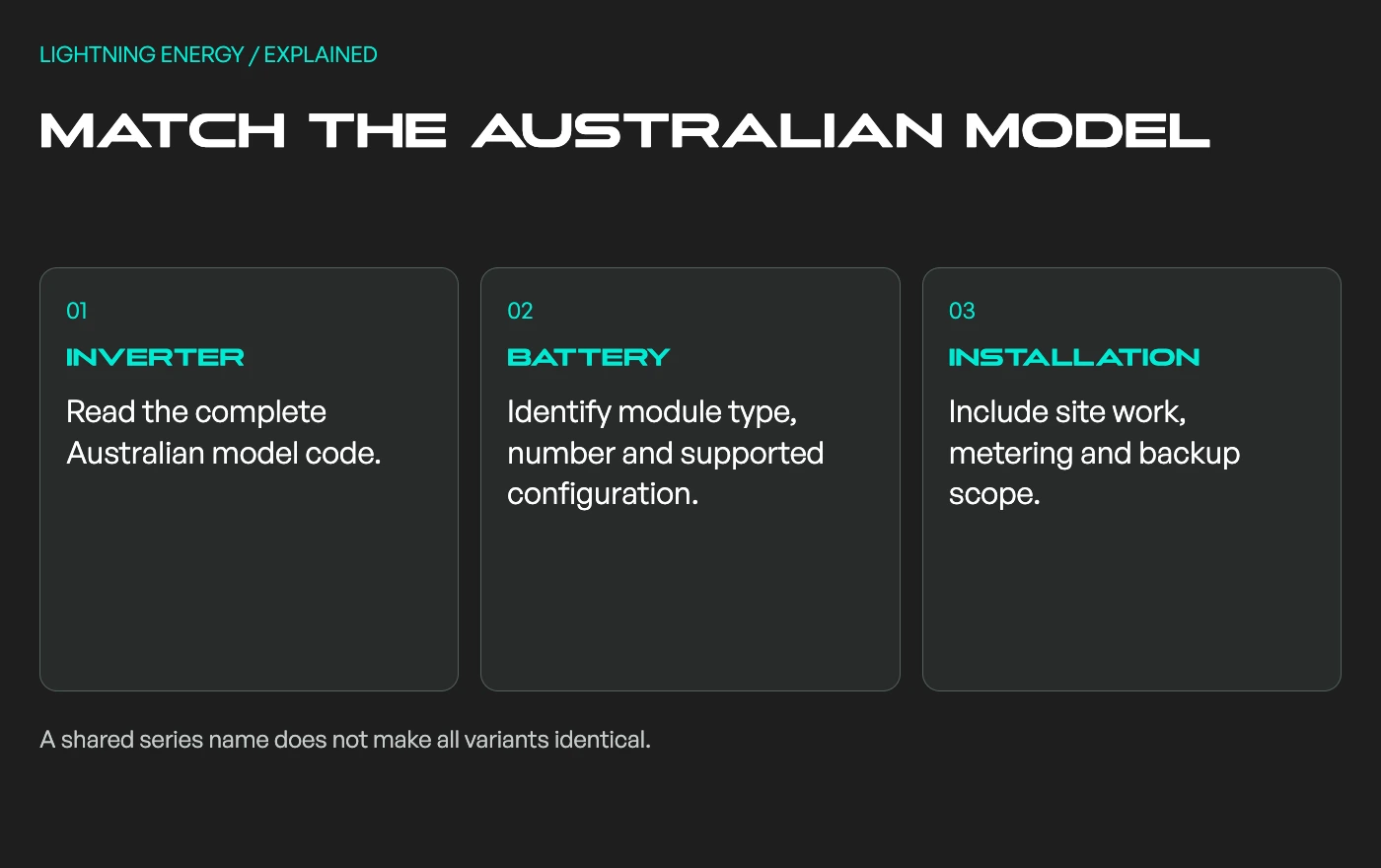
The Australian document reviewed lists HS3-5K-S2-W-PX-AU and HS3-6K-S2-W-PX-AU. These are single-phase variants; do not carry their ratings across to a three-phase system with a similar name.
It specifies 4,999 W and 6,000 W rated on-grid AC power respectively, with two solar MPPTs. The document also describes LFP battery modules and configurations from 5 to 50 kWh of rated energy.
The inverter and battery module depth is listed as 170 mm. A slim product still needs a compliant installation position, access and clearances; the equipment dimensions are not the entire installed footprint.
Australian HS3 single-phase datasheet.
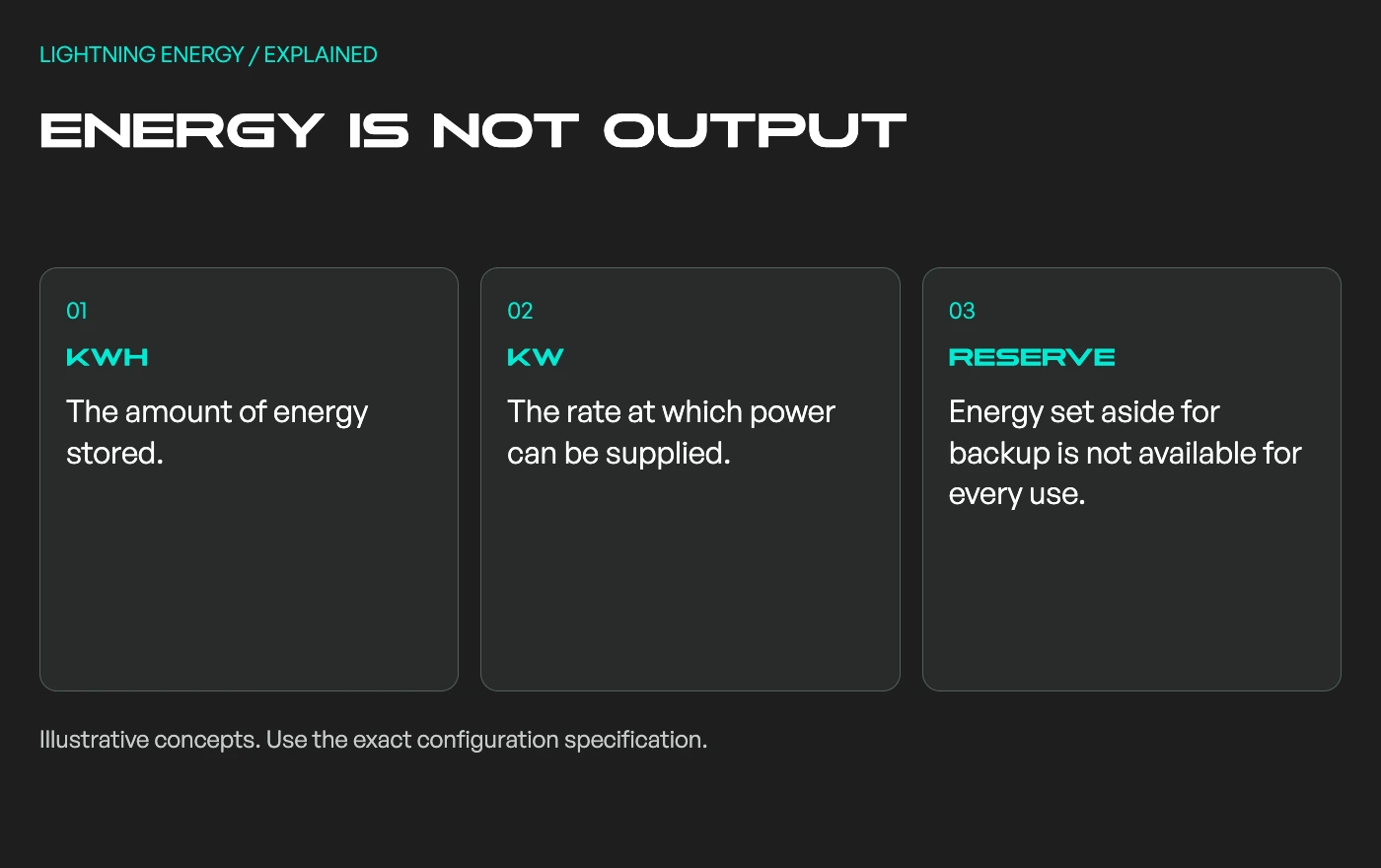
Storage capacity describes how much energy can be held. Inverter output describes how quickly energy can be supplied. Adding battery modules does not automatically increase the inverter’s continuous output rating.
Ask for usable energy and available charge/discharge power for the quoted module count. Then allow for reserve settings, losses and operating conditions when estimating the energy available to your home.
For example, a household planning overnight heating needs a different assessment from one mainly wanting fridge and lighting backup. Start with measured consumption rather than the biggest stack a brochure can show.
Our battery overview explains these sizing questions. A useful quote should connect the equipment to your loads and daily routine.
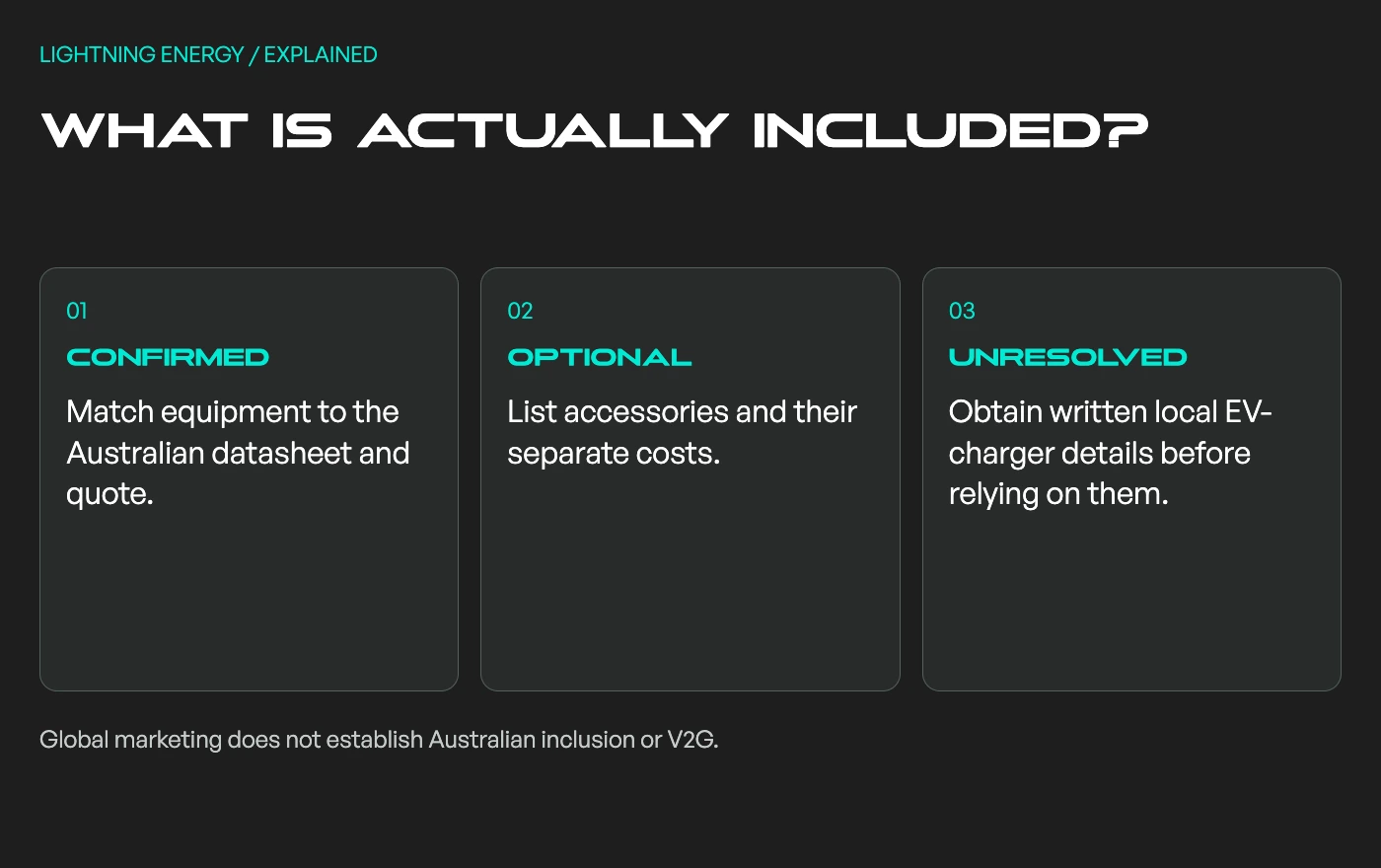
SAJ’s global HS3 marketing describes an EV AC charger among the integrated functions. The Australian single-phase datasheet reviewed does not specify an included EV charger or its charging rating.
That documentation gap matters. We are not treating EV charging, DC charging or bidirectional charging as a confirmed included feature of these Australian model codes. Ask for the exact accessory and local documentation in writing.
SAJ’s global HS3 overview and Australian product range are useful context.
If vehicle charging matters, compare the proposal with a separately specified EV charger. Do not infer V2G capability from an ordinary charging feature or the words all-in-one.
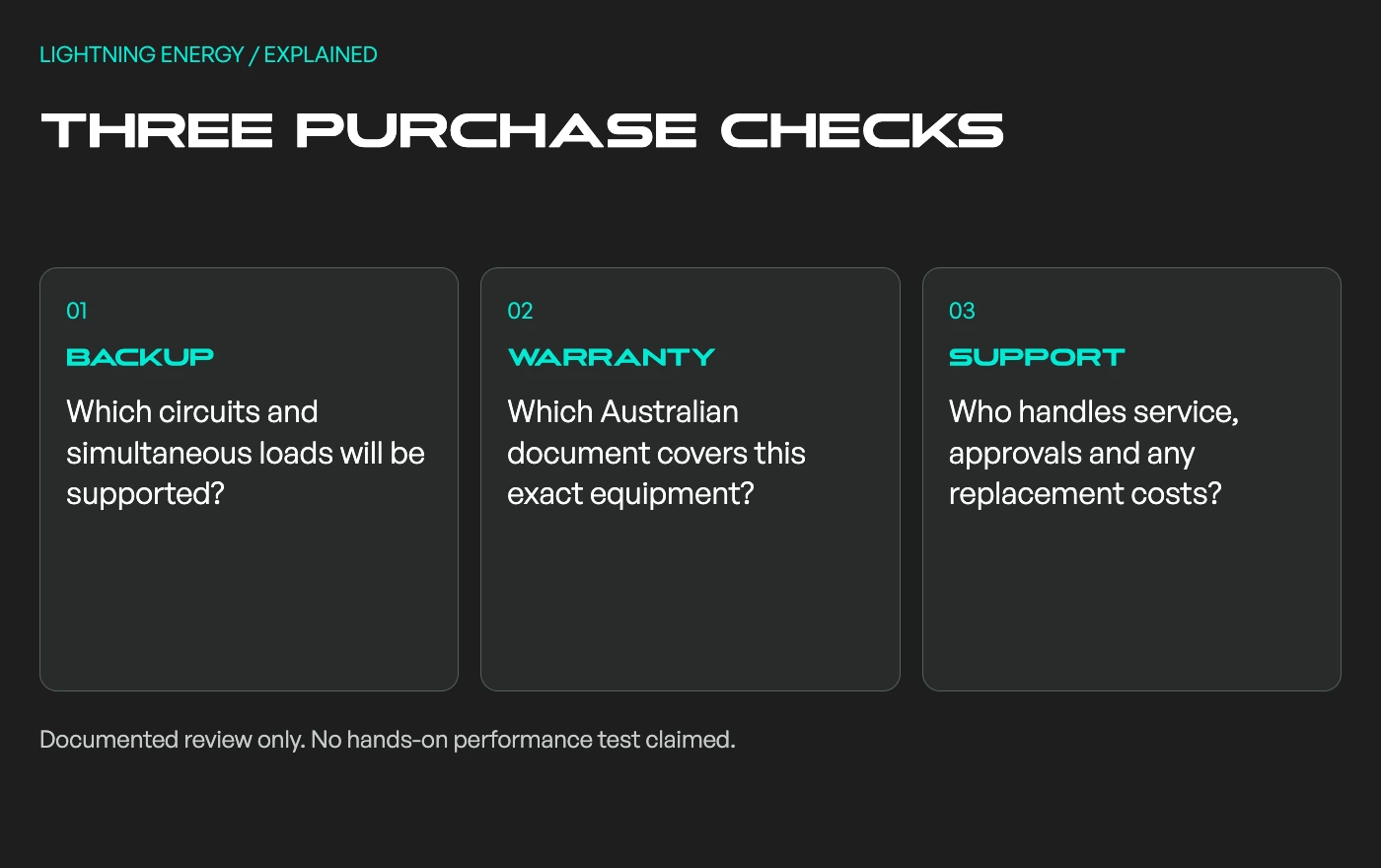
A backup output specification does not mean every circuit will be supplied during an outage. Ask which loads are connected, their simultaneous demand and how solar operates during a grid failure.
The datasheet directs readers to the warranty policy rather than stating a universal warranty period.
SAJ’s support portal lists multiple regional and product documents. Request the Australian policy explicitly covering your HS3 and battery modules.
SAJ Australia warranty resources. Check labour, freight, retained capacity, throughput and required registration rather than relying on an overseas HS3 warranty.
We have not assigned a warranty score because the exact Australian HS3 purchase policy needs confirmation. Also request the local claims contact and the installer’s process if a component needs replacement.
Have the installer confirm current product approval and network requirements for the exact configuration. The presence of an Australian datasheet is not, by itself, proof of rebate eligibility for every proposed installation.
The documented modular layout and slim depth make the HS3 worth considering where the proposed configuration fits the site. Its value depends on the complete installed price, support and documented capabilities.
The unresolved purchase details are equally relevant: supplied EV equipment, configuration-specific performance and the applicable Australian warranty. Get those settled before comparing it as a complete package against another brand.
For another modular-system perspective, read our GoodWe ESA guide. Compare equivalent storage, output, backup scope and installation work rather than brand headlines.
Bring the HS3 model codes and itemised quote to a battery discussion. This review was checked on 15 October 2026 and makes no claim of hands-on testing or guaranteed savings.
Available times
Book a consultation and we'll map solar, storage, hot water, and the rebates around your bills and your goals.
Question 1 of 6
