
Does a 16 kW Air Conditioner Use 16 kW of Electricity?
A 16 kW air conditioner rating describes heating or cooling output, not constant electricity demand. Read a real model example and a simple kWh calculation.
A 16 kW air conditioner rating describes heating or cooling output, not constant electricity demand. Read a real model example and a simple kWh calculation.

No. A “16 kW air conditioner” normally refers to thermal capacity, not a constant 16 kW electrical draw. Find the separate electrical-input figures for the exact indoor and outdoor model pair.
The distinction matters for bills, solar planning and electrical work. A capacity label answers how much heat the equipment can move under stated conditions; it does not tell you everything about its power supply.
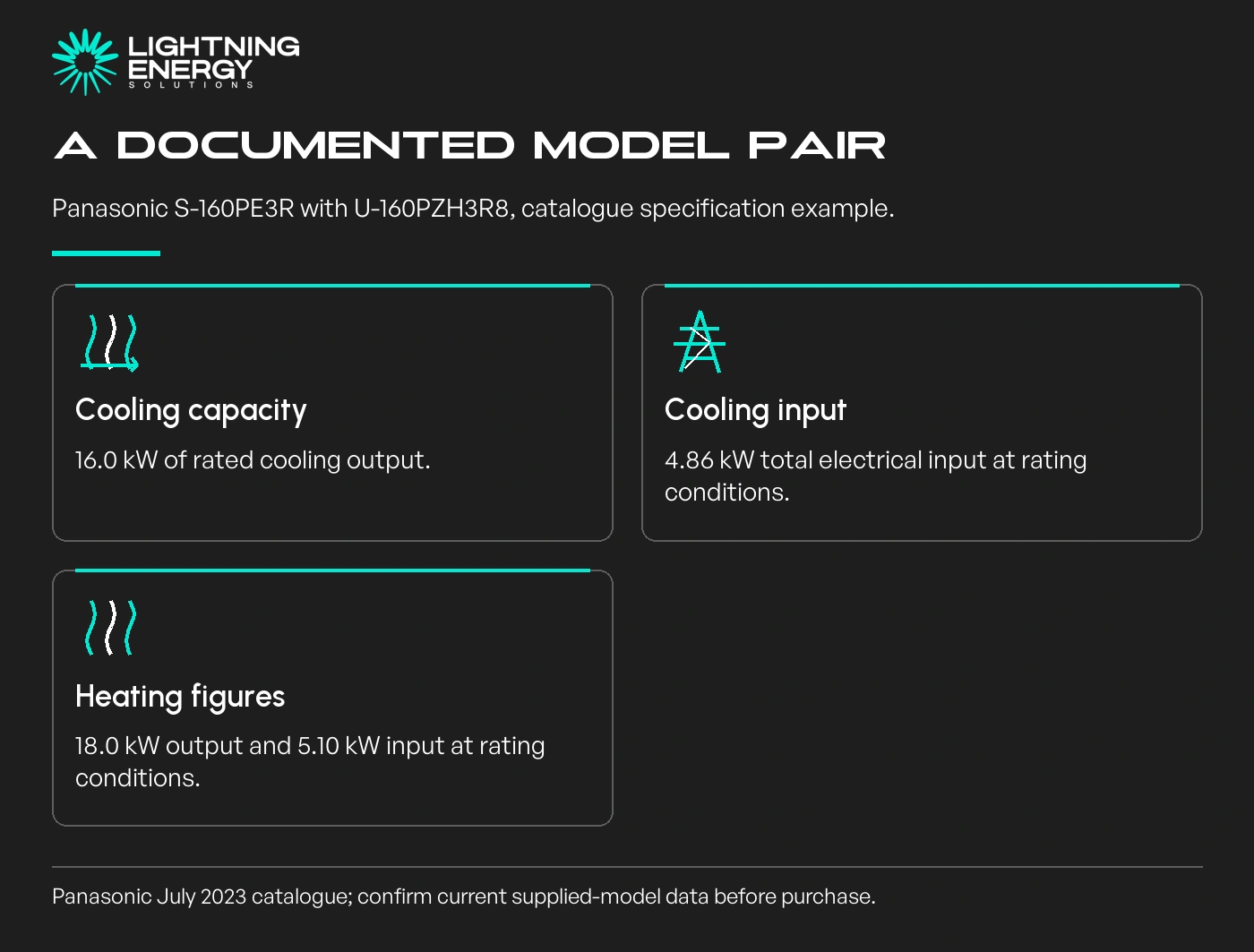
Panasonic’s Australian catalogue lists the S-160PE3R indoor unit paired with the U-160PZH3R8 outdoor unit at 16.0 kW cooling capacity and 18.0 kW heating capacity.
For that pairing, the table gives total power input of 4.86 kW in cooling and 5.10 kW in heating under its rating conditions. Those figures are different from the advertised capacity.
Panasonic’s Australian catalogue.
This is a document-reading example, not a recommendation that the model suits your house. The catalogue is dated July 2023; confirm the current specification and exact supplied combination before ordering.
Our air conditioning team can help identify the matching documents when two quotations use different model suffixes or describe only a product family.
Reverse-cycle equipment transfers heat rather than relying only on converting electrical energy directly into heat. In heating mode it moves heat from outside into the home.
The government explains reverse-cycle heating.
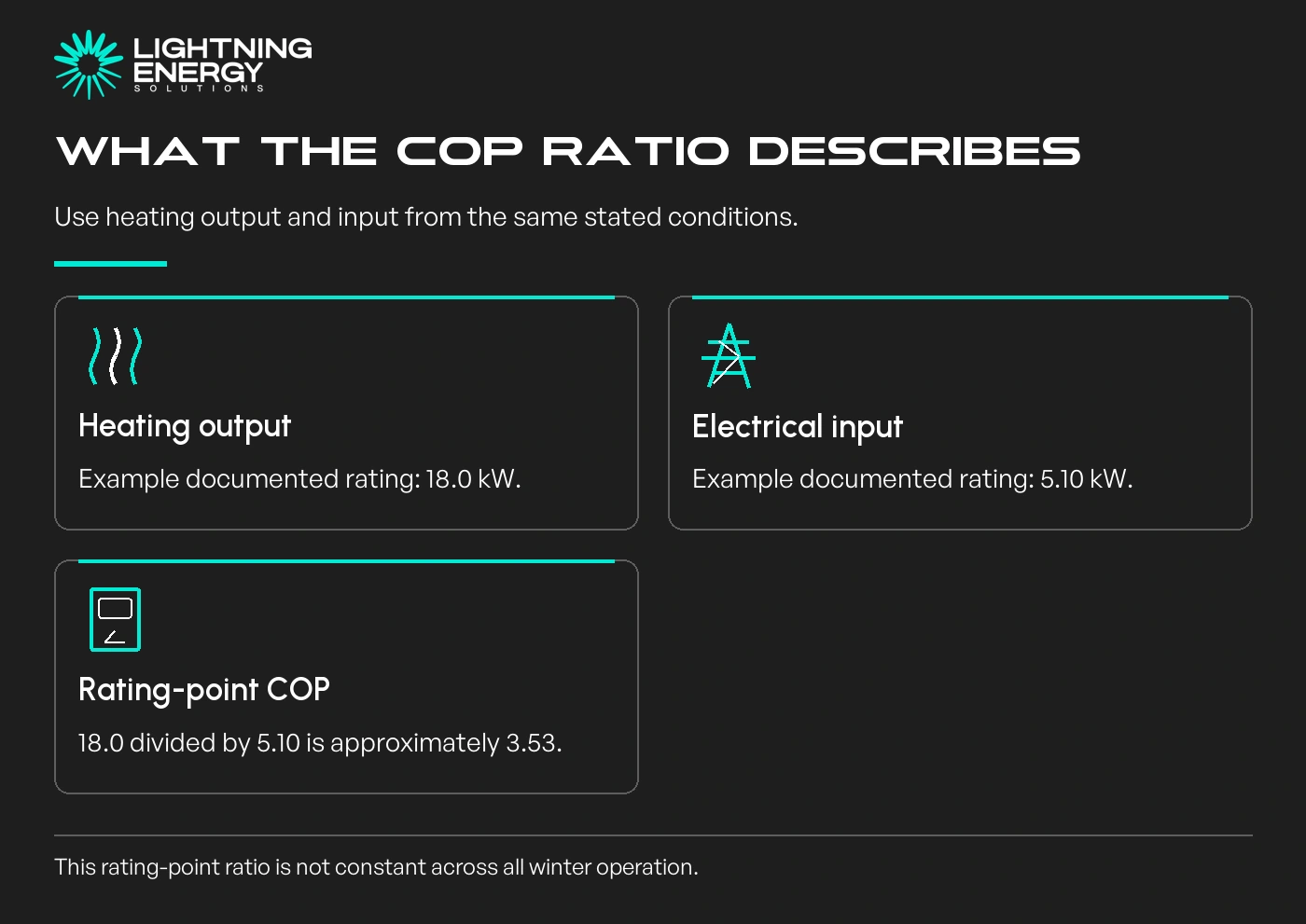
Dividing the example’s 18.0 kW heating output by its 5.10 kW rated input gives approximately 3.53. That is the rating-point COP, not a promise that this ratio stays constant all winter.
Operating conditions, settings and the load change. The running demand of an inverter system therefore should not be treated as either its headline thermal capacity or one unchanging brochure input figure.
Ask for relevant seasonal and cold-condition performance when comparing equipment for Melbourne. A single ratio cannot replace the assessment of the rooms being served.
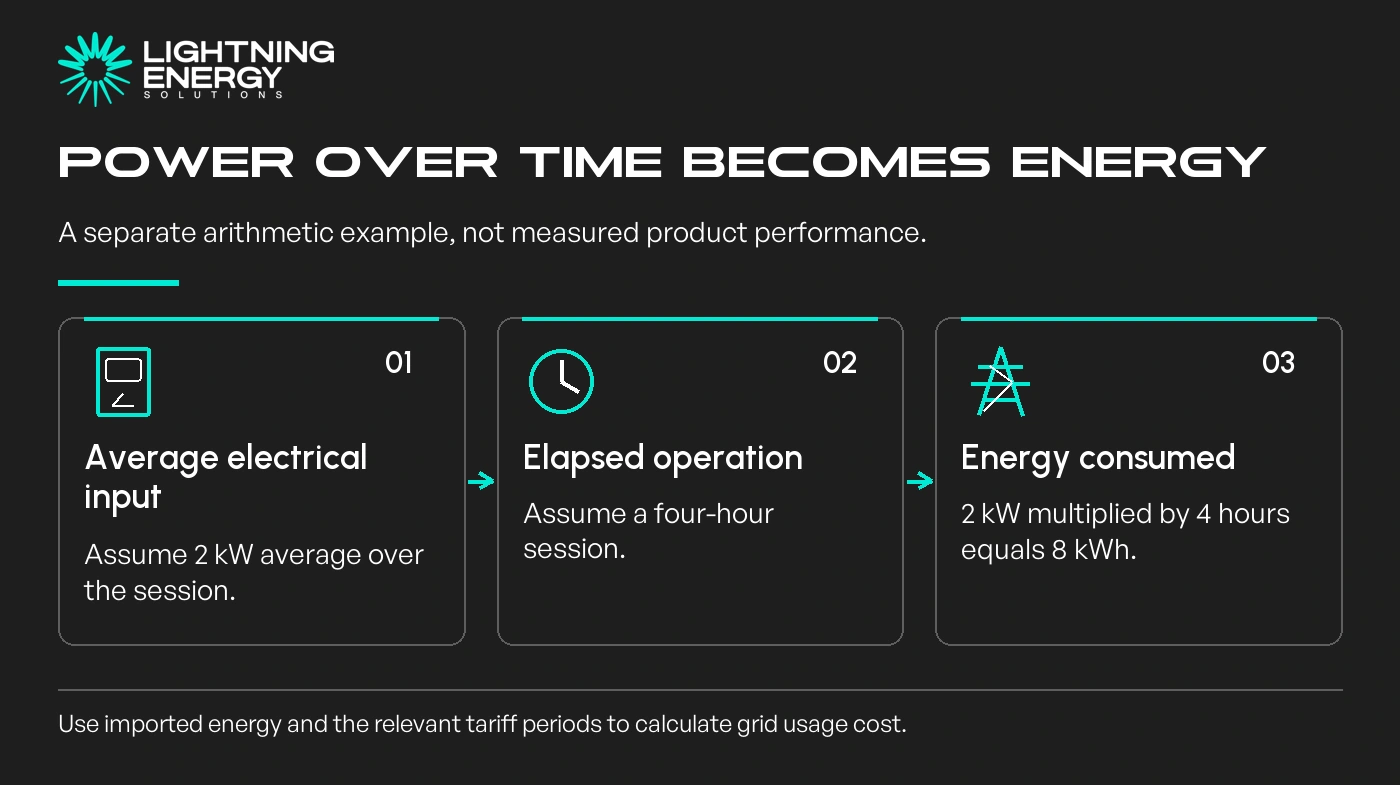
For a separate arithmetic example, suppose the measured average electrical input over four hours is 2 kW. Energy used is 2 × 4 = 8 kWh.
These teaching numbers are not measured results for the Panasonic model. The word “average” matters because the equipment’s demand may vary during the session.
Apply the appropriate tariff to imported energy in each billing period. If solar contributes, separate energy supplied by the array from grid imports rather than charging every kilowatt-hour at the import rate.
With a home battery, stored-energy use and losses also belong in the energy balance. A battery changes when energy is supplied; it does not make the air conditioner’s thermal output its electrical input.
A whole-house monitor includes other appliances. Use suitably measured appliance data or a clearly stated estimate when attributing electricity to air conditioning alone.
Rated input helps explain operation, but it is not the complete information needed to select cables, protection or supply arrangements. Installation limits and other household loads must also be assessed.
Ask a licensed electrician to use the exact model’s current installation documentation. Do not size a circuit by dividing the advertised 16 kW by a household voltage.
The electrical supply guide separates appliance requirements from whole-home demand and network work.
Before buying, request four clearly labelled figures or documents: heating and cooling output, rated electrical input, applicable maximum or installation requirements, and relevant seasonal performance.
If your concern is an unexpectedly high bill, collect actual use and tariff data before assuming a larger capacity label is proof of excessive electrical consumption.
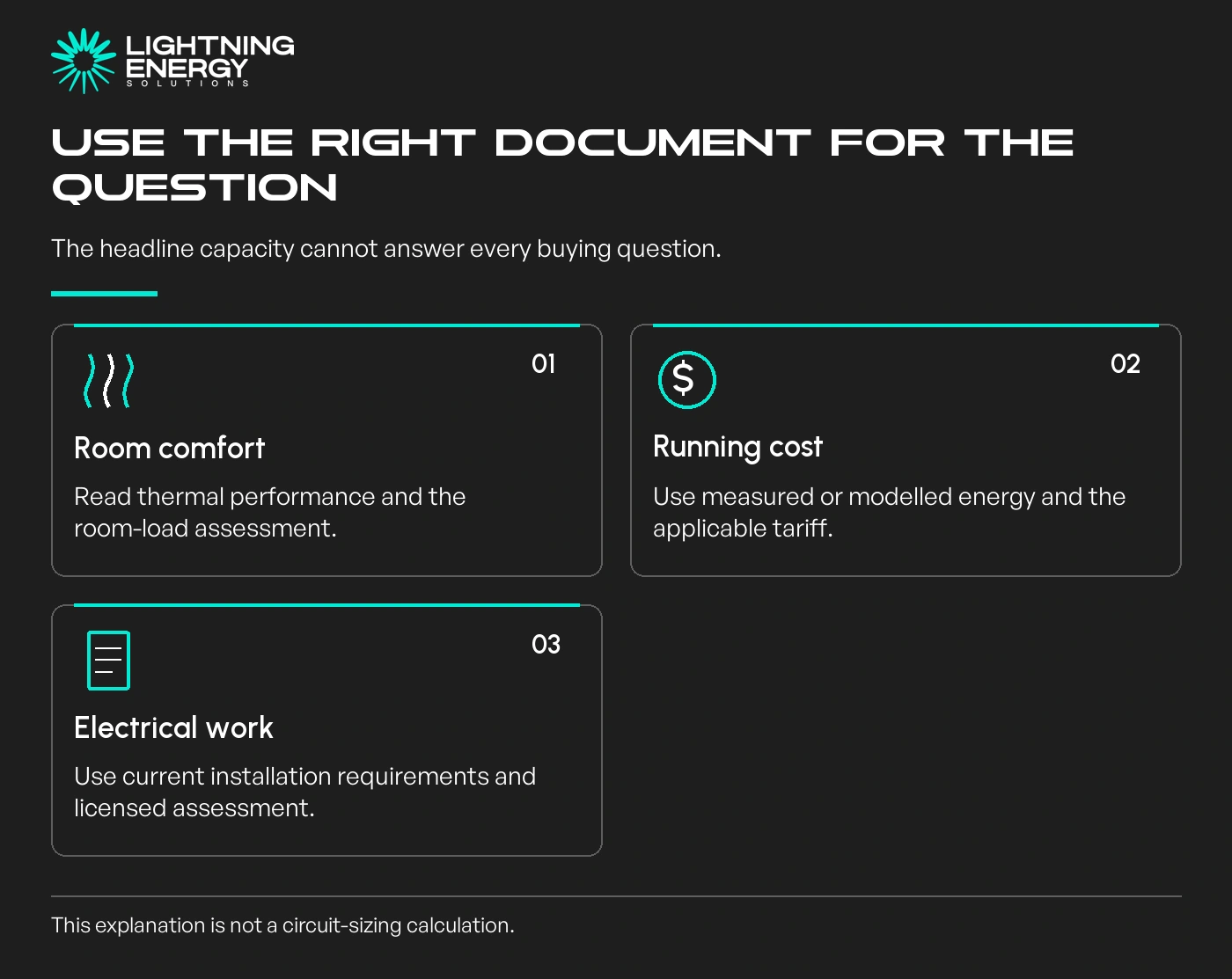
Keep the thermal rating, electrical demand and energy over time in separate columns. That small distinction makes a quote easier to question and prevents a misleading running-cost calculation.
Available times
Book a consultation and we'll map solar, storage, hot water, and the rebates around your bills and your goals.
Question 1 of 6