
Does quiet mode slow down heat pump water heating?
Quiet mode can change hot-water recovery on some heat pumps. Check the model’s manual, heating window and noise conditions before making it the default.
Quiet mode can change hot-water recovery on some heat pumps. Check the model’s manual, heating window and noise conditions before making it the default.

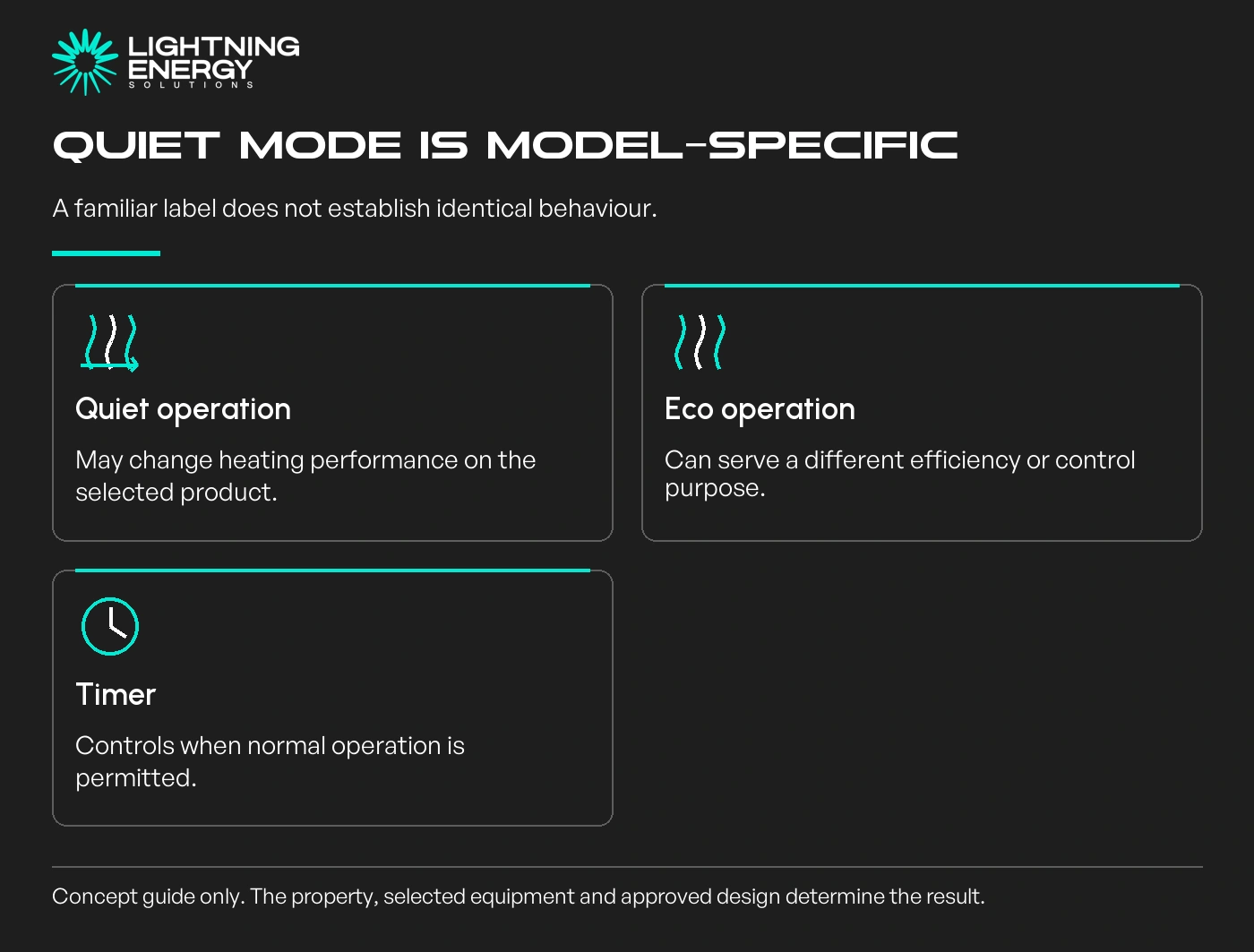
Quiet mode can slow water heating on some heat pumps, but its effect is model-specific. Confirm that the feature exists on the installed equipment and read what it changes before making it the everyday setting.
The useful comparison is adequate hot water and acceptable noise over the whole operating period. A lower sound level during a longer cycle is not automatically the best result for every household or location.
Rinnai's Enviroflo S 5.0kW split-system manual states that quiet operation can lengthen water-heating time and increase the chance of running short of hot water.
It also says that this quiet function does not apply during booster operation or thermal sterilisation. Those are specific features of the documented product, not rules for every heat pump.
Read the Rinnai manual, page 29.
The warning illustrates why the exact model's operating guide matters more than a generic assumption about a button labelled quiet or eco.
When choosing heat-pump hot water, ask the supplier to explain normal and reduced-noise performance together. A quiet-mode sound claim without its operational consequences is incomplete.
Where a mode reduces available heating output, restoring the same amount of heat can take longer. The actual result also depends on incoming-water temperature, ambient conditions and the amount of water drawn.
A longer heating cycle does not alone prove higher electricity use. Power draw and efficiency may change too, so energy needs to be measured or assessed for the particular operating mode.
Likewise, a mode called eco is not necessarily a noise-control mode. It may change heat-source selection, temperature behaviour or timing instead. Confirm the manufacturer's definition.
Our hot-water timer guide explains the separate role of a heating window. Quiet operation inside an already restrictive window can leave less opportunity for recovery.
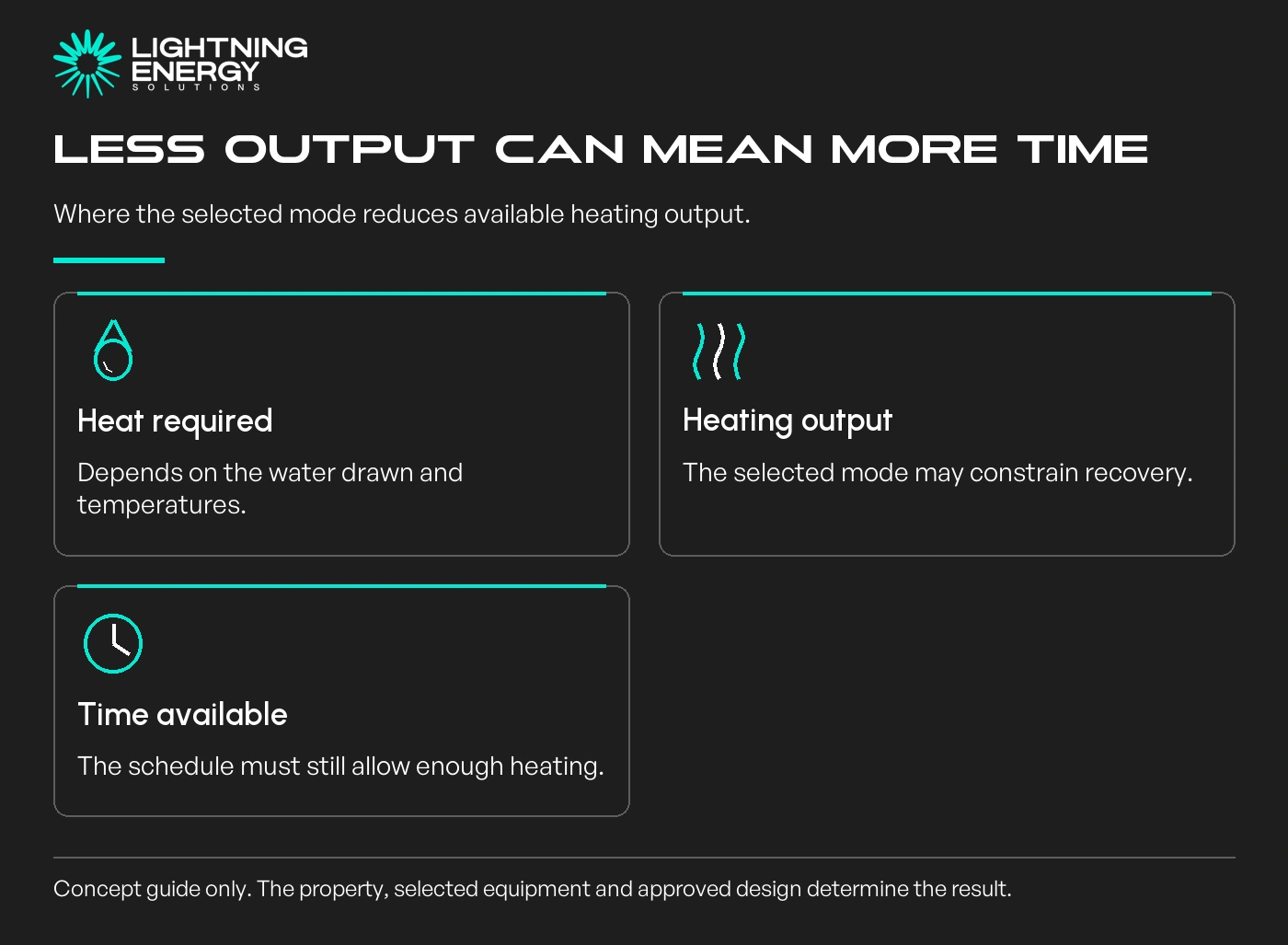
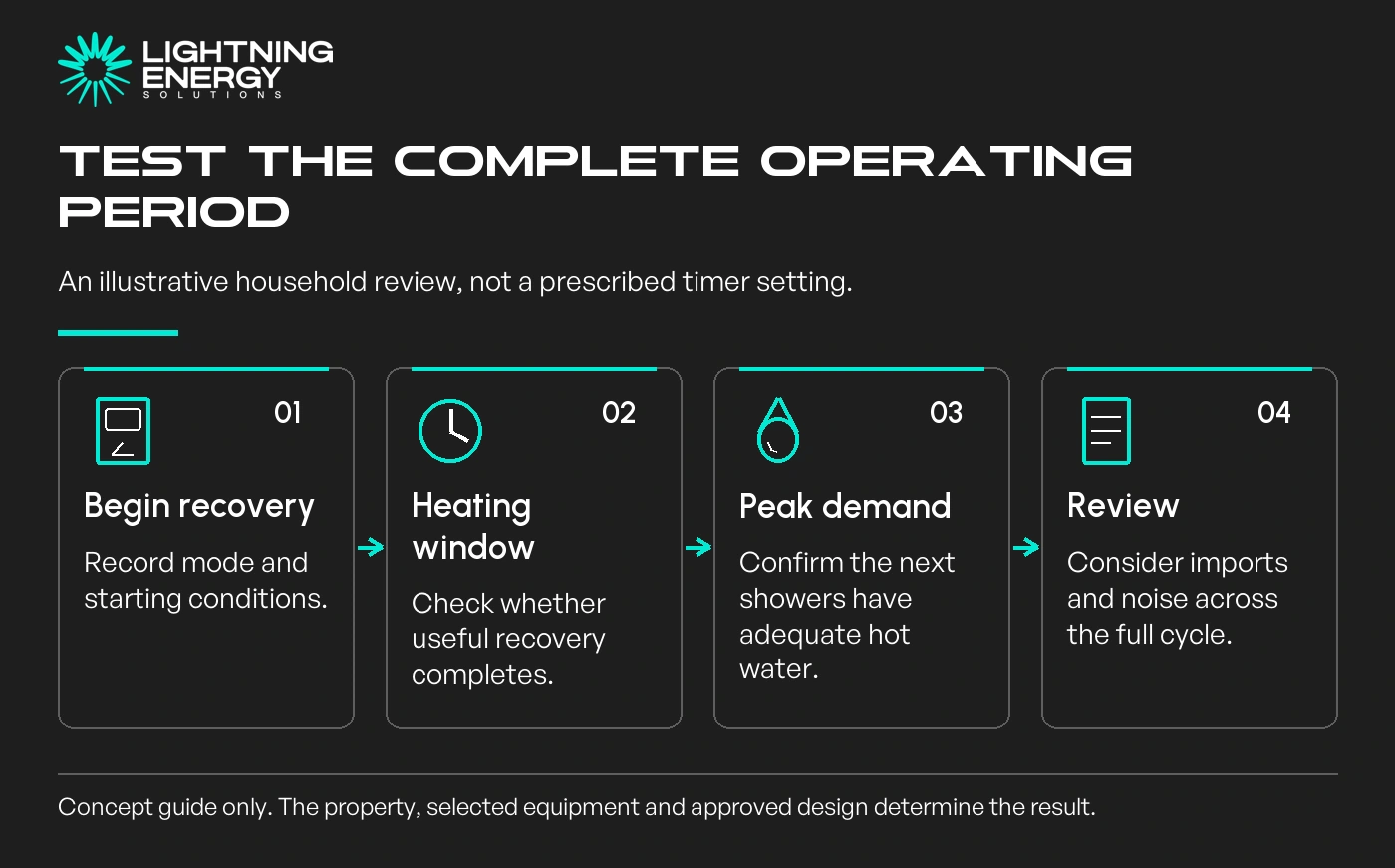
Imagine a household needing several showers before work. If its system finishes normal recovery comfortably but does not finish within the same window in quiet mode, the setting needs review.
An installer may assess a different supported schedule, normal daytime operation or another appropriate configuration. Do not compensate by disabling hygiene functions or changing protected temperature settings.
For homes with solar, a longer cycle may extend beyond the strongest generation period. Compare actual imports and hot-water availability, not only the sound while standing beside the unit.
A comfortable result on a mild, low-demand day should also be checked against relevant winter conditions and the home's usual peak use. Avoid planning around only the easiest operating case.
Quiet mode is not a substitute for an appropriate location, clear airflow or correct mounting. An unusual rattle or vibration may need maintenance rather than a lower operating setting.
EPA Victoria's residential guidance explains that noise can be unreasonable depending on audibility, timing and circumstances.
A manufacturer's quiet-mode label is not a compliance certificate.
If the system must leave quiet mode for normal required functions, the site still needs to accommodate that behaviour. Do not rely on a promise that the outdoor unit will always remain at its lowest rating.
Consider nearby bedrooms and the duration of operation when discussing the options. Reducing sound level but extending an intrusive cycle is a trade-off that deserves practical assessment.
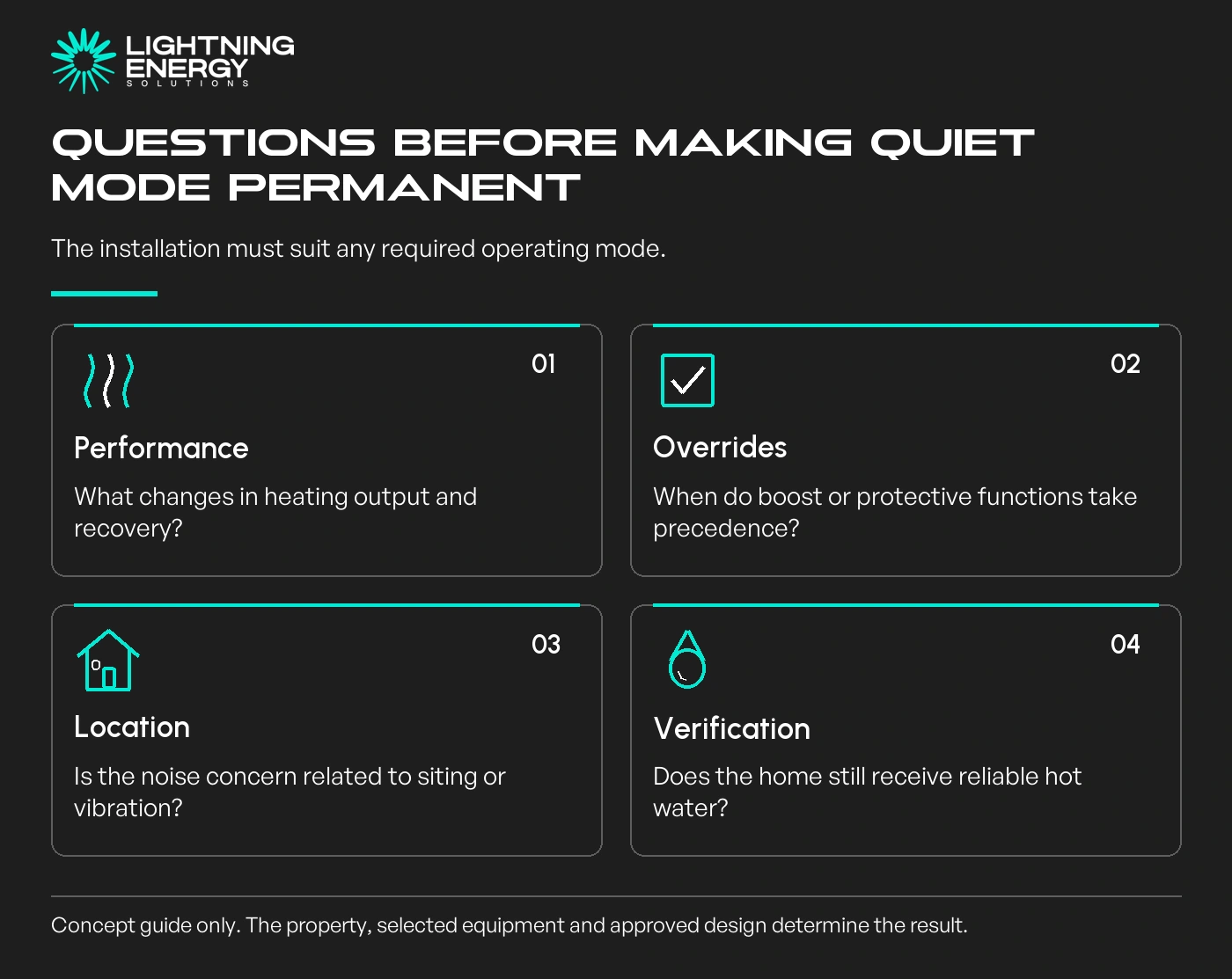
Ask which operating parameters change, whether heating performance is reduced and which functions can override the mode. Request any relevant manufacturer data and a clear explanation of the recommended schedule.
After a supported adjustment, record cycle timing, hot-water availability and any reported noise concern. Keep weather and demand differences in mind when comparing days.
If the system already meets household needs quietly in its normal mode, there may be no reason to change it. If quieter operation is needed, check that the chosen setting still provides reliable service.
Contact us with the model, current mode and the times when noise or shortages occur. The right solution should address both the sound and the hot water, rather than improving one while overlooking the other.
Available times
Book a consultation and we'll map solar, storage, hot water, and the rebates around your bills and your goals.
Question 1 of 6