
Does your heat pump need a longer heating window in winter?
A heat-pump timer may need review in winter. Check recovery, morning demand and the selected model before extending or restricting its heating window.
A heat-pump timer may need review in winter. Check recovery, morning demand and the selected model before extending or restricting its heating window.

Your heat pump may need a longer permitted heating window in winter, but do not assume that every system must run longer on the clock. Check whether it completes the required heating and supplies the next period of demand.
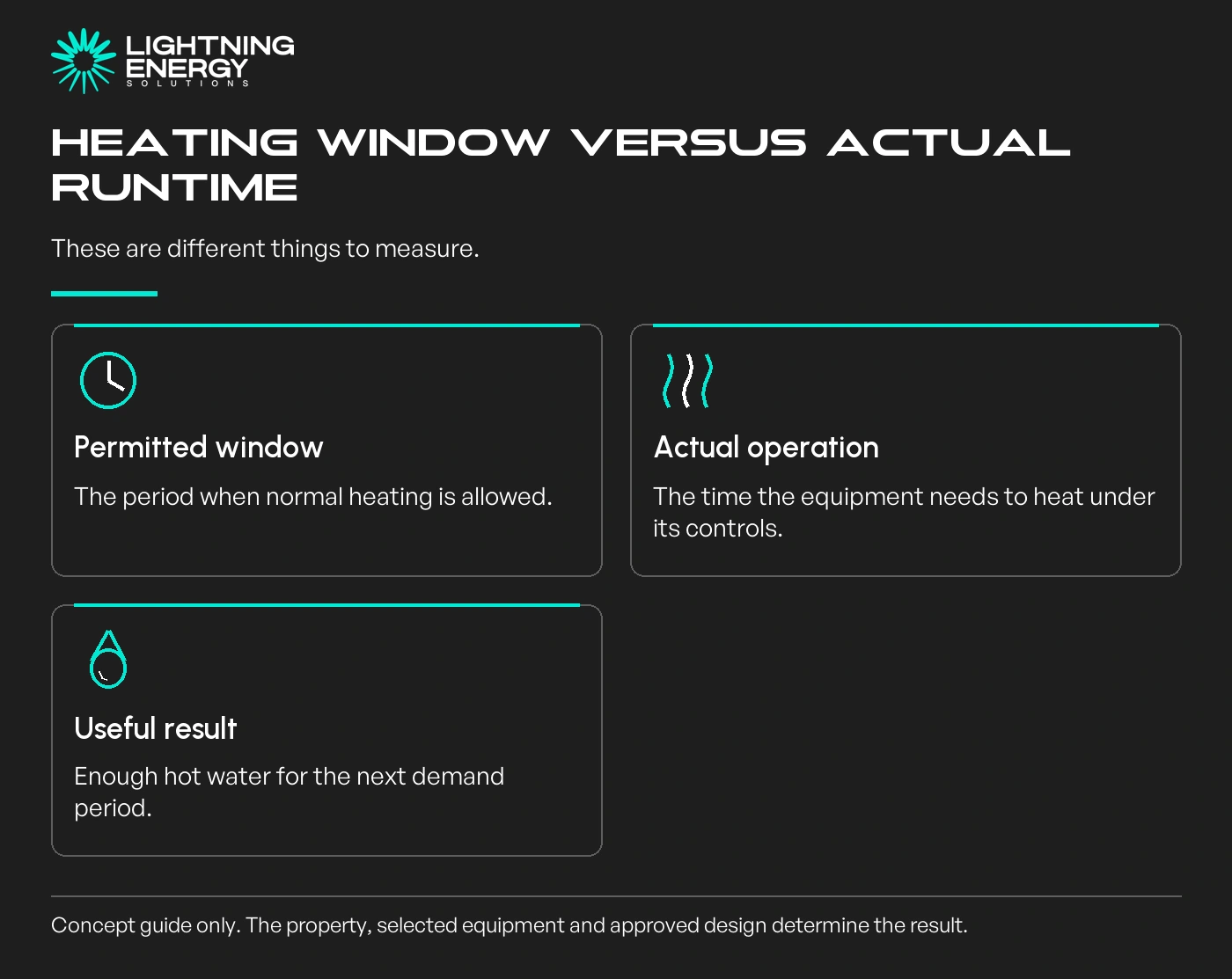
A heating window is permission to operate. It is not necessarily the time the compressor will run continuously, because the thermostat and other controls also influence operation.
Colder air and incoming water can alter the work needed to restore the tank. Household demand may also change, while the useful solar generation window becomes shorter.
A timer that worked through summer can therefore become too restrictive. Equally, a suitably sized system may continue to meet demand without a change; monitor the result before rewriting every setting.
Solar Victoria's heat-pump planning guide explains why cold conditions and supported timing deserve attention.
Use the selected manufacturer's instructions for actual operating limits.
Do not judge the system only by whether it runs on a cold afternoon. The useful questions are whether it reaches the required condition and leaves adequate hot water for the next showers.
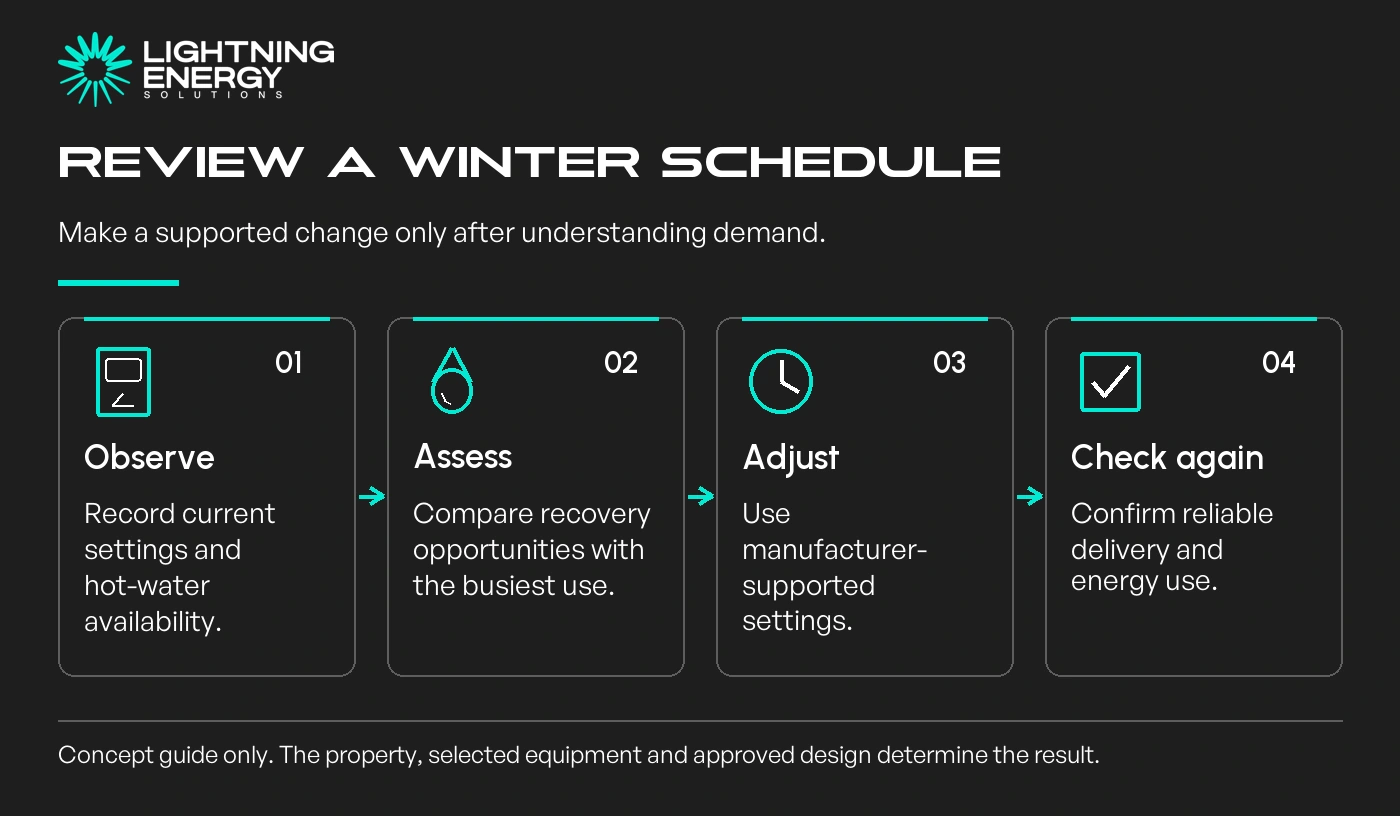
Note the timer settings, displayed mode and when the compressor operates. Record whether hot water becomes insufficient at a repeatable time, particularly before or after the permitted heating window.
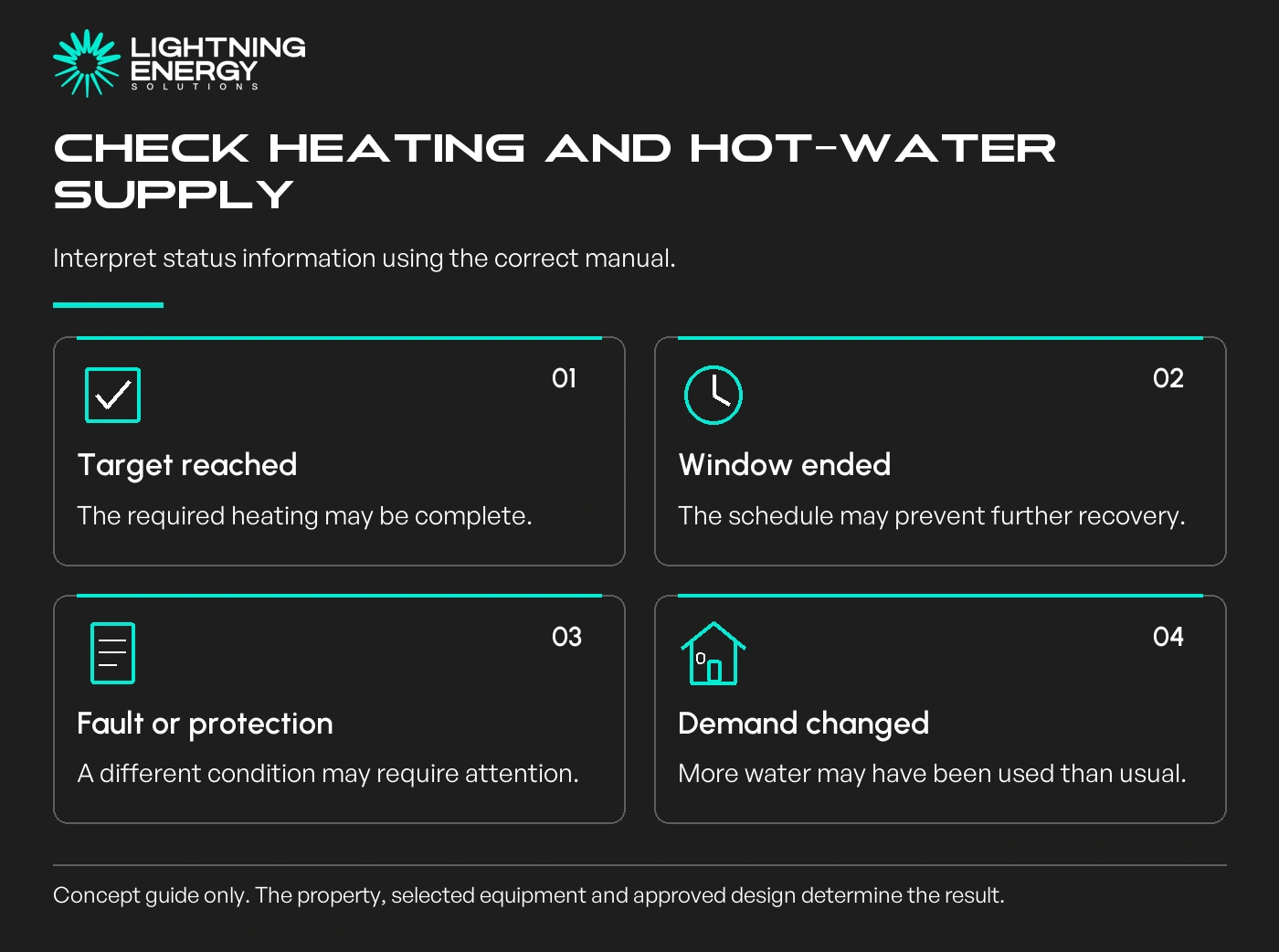
A unit that stops because its target is reached presents a different situation from one prevented from continuing by the schedule. Your installer can help interpret the model's status information.
Temperature bars can also be misleading if assumed to represent litres remaining. Haier's model-specific controller guide, for example, describes its display bars as temperature indicators.
Haier's Australian documentation provides the relevant manuals. That example should not be applied to the display of a different brand or model.
Imagine a household with sufficient evening water but repeated cold final showers the next morning. An installer might review recovery opportunities, demand and stored capacity before recommending a changed schedule.
Possible adjustments depend on the equipment. A wider main window or an appropriate additional period may help, but neither replaces investigation of a fault, inadequate capacity or a plumbing problem.
Our hot-water timer guide explains the balance between daylight operation and reliable delivery. Preserve the product's hygiene and protective functions.
Do not use an external switching routine that prevents the unit from carrying out required functions. A supported user setting is different from cutting power whenever clouds arrive.
Extending a window does not mean the unit consumes its maximum power throughout that whole period. It allows the controls to run when necessary within the selected configuration.
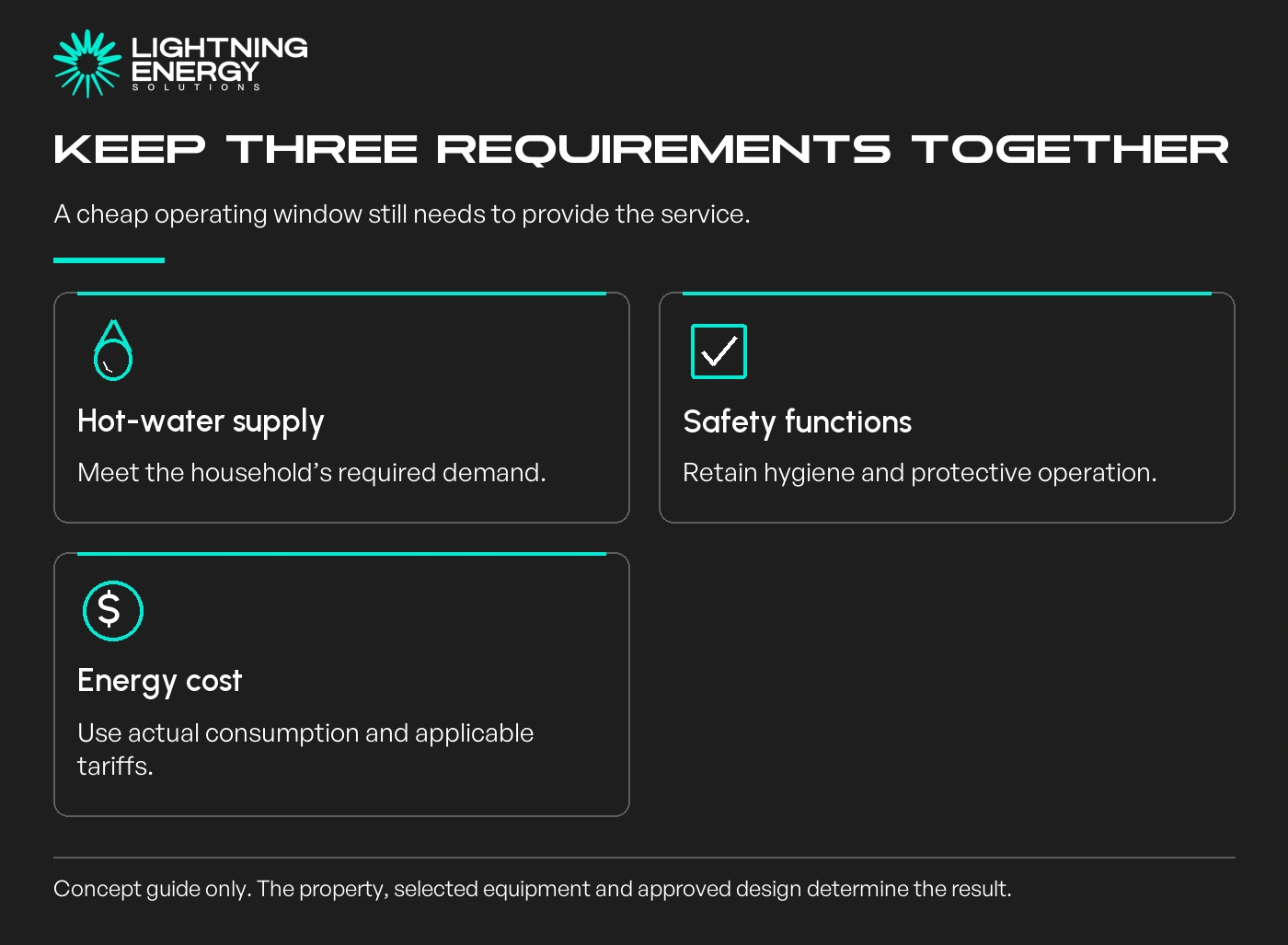
Nevertheless, operation outside a solar-rich or cheaper tariff period may change cost. Compare actual energy use and the relevant prices, not merely hours allowed on the timer.
Government smart-home guidance describes scheduling as one tool. It also recognises that hot-water temperature and hygiene must remain part of the operating plan.
A system that repeatedly needs intervention to provide ordinary household showers deserves a proper review. Do not accept an elaborate daily manual routine as the only answer without understanding the cause.
For several representative days, record hot-water use, available heating periods, weather and any fault messages. Note a power interruption or clock change that could have altered the schedule.
Share the record with the installer and ask whether the unit completed its intended cycles. After an approved change, check the next morning's result as well as electricity use.
If hot water remains reliable and the system completes recovery, you may not need a longer window. The objective is sufficient useful heating, not operating for a prescribed number of hours.
For help assessing an existing heat-pump system, contact us with the model and current settings. Keep winter changes specific to the equipment and household.
Available times
Book a consultation and we'll map solar, storage, hot water, and the rebates around your bills and your goals.
Question 1 of 6