
Does your switchboard have room for an all-electric home?
Check switchboard space, condition, circuits and supply limits before adding electric appliances, and distinguish necessary board work from a wider mains upgrade.
Check switchboard space, condition, circuits and supply limits before adding electric appliances, and distinguish necessary board work from a wider mains upgrade.

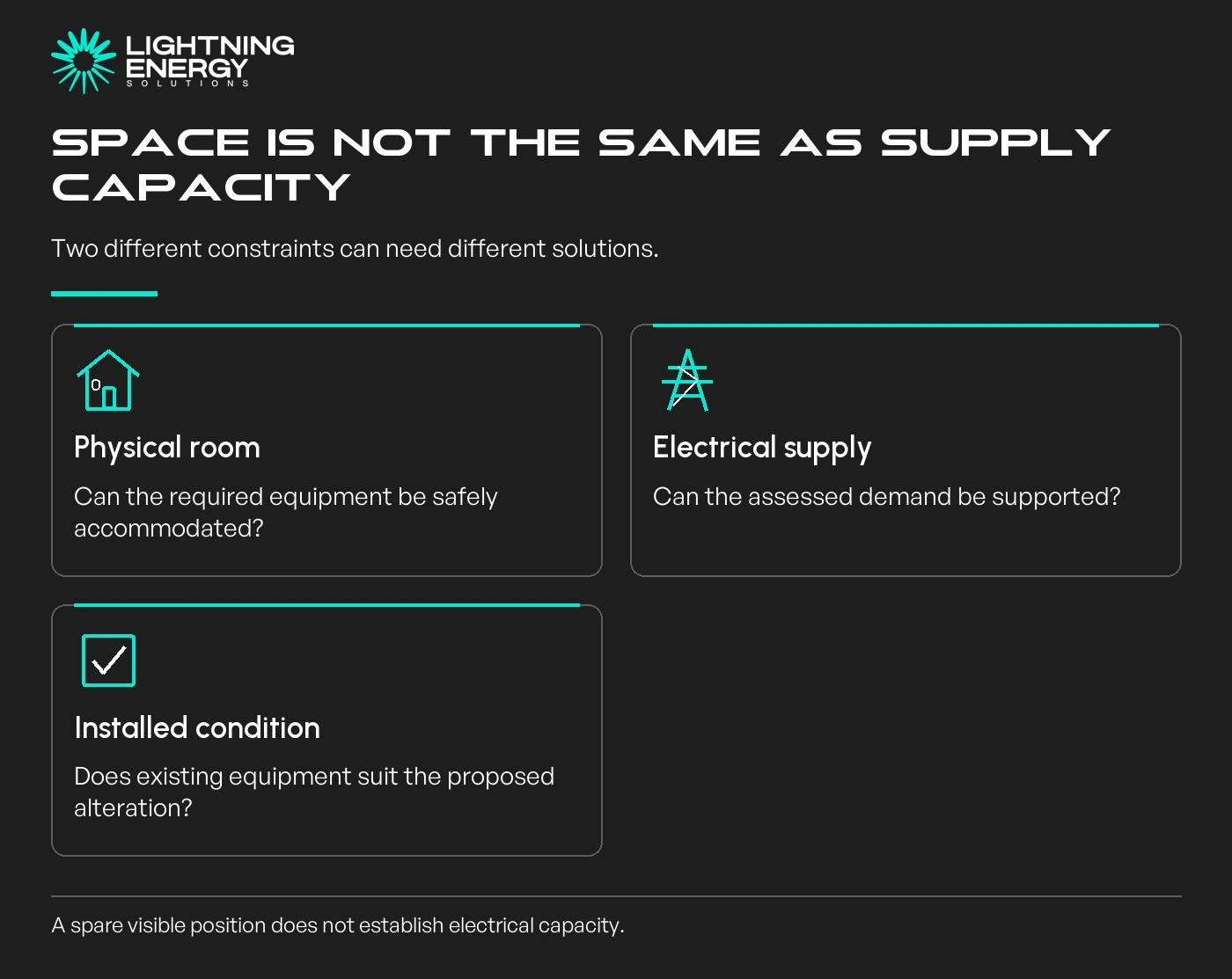
A switchboard can look full without the home necessarily needing a larger network connection. It can also have spare spaces while the existing supply or equipment needs attention.
Ask an electrician to assess physical space, electrical condition, circuit protection and supply capacity separately. A photo of the outside can help begin the discussion, but it cannot replace the required on-site assessment.
The switchboard houses equipment that distributes and protects the home’s electrical circuits. Visible room for another device does not establish that the supply can support another large load.
Conversely, a crowded enclosure can create a layout or equipment problem even where the assessed demand fits the available supply. The proposed solution must identify the actual constraint.
The home electrical planning guide explains the distinction between appliance circuits, mains and network supply.
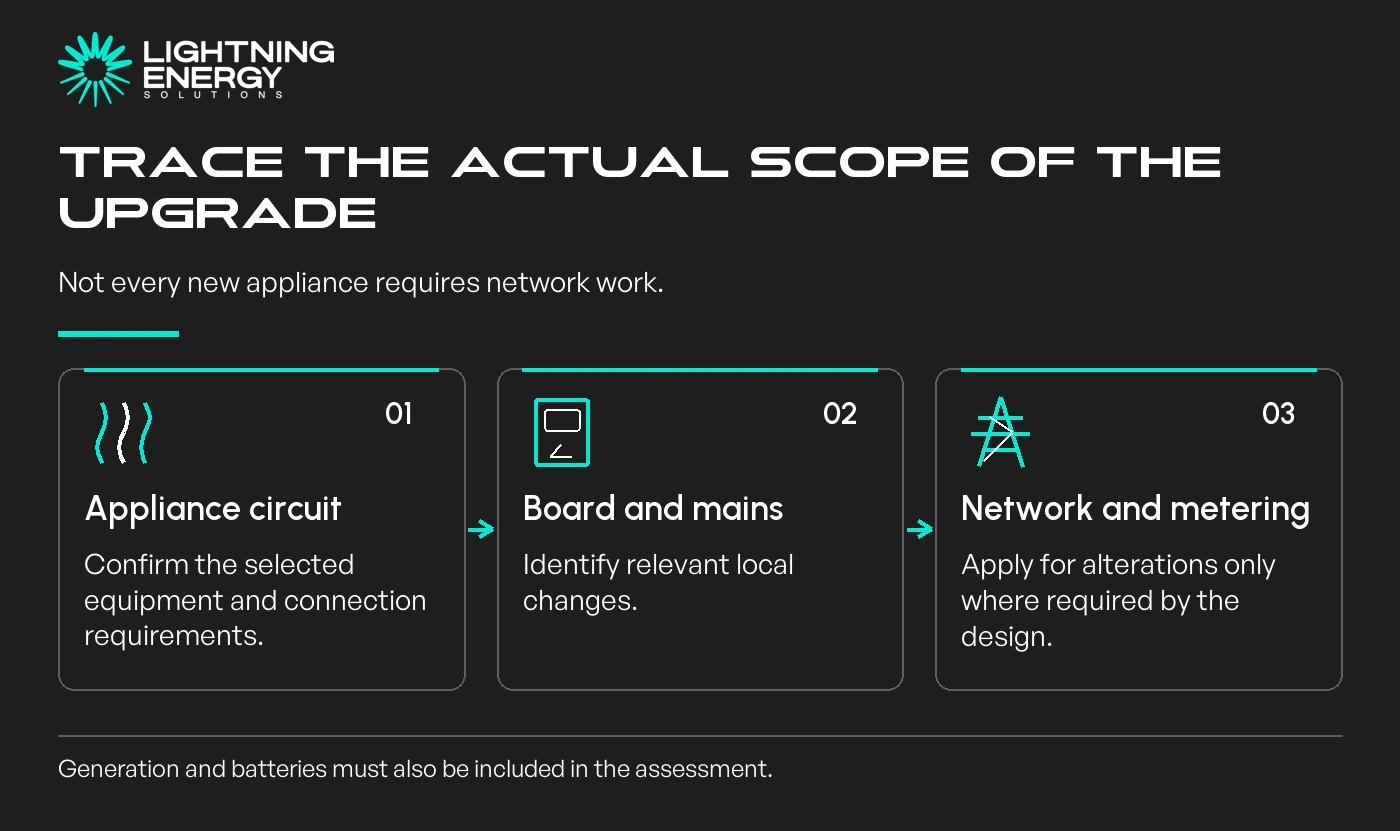
For an illustrative home adding induction cooking, the assessment might identify new circuit and board work while leaving the network connection unchanged. Another property can require a broader supply alteration.
Do not remove covers to count available spaces or inspect wiring. Share only safely accessible labels and external photos requested by the contractor.
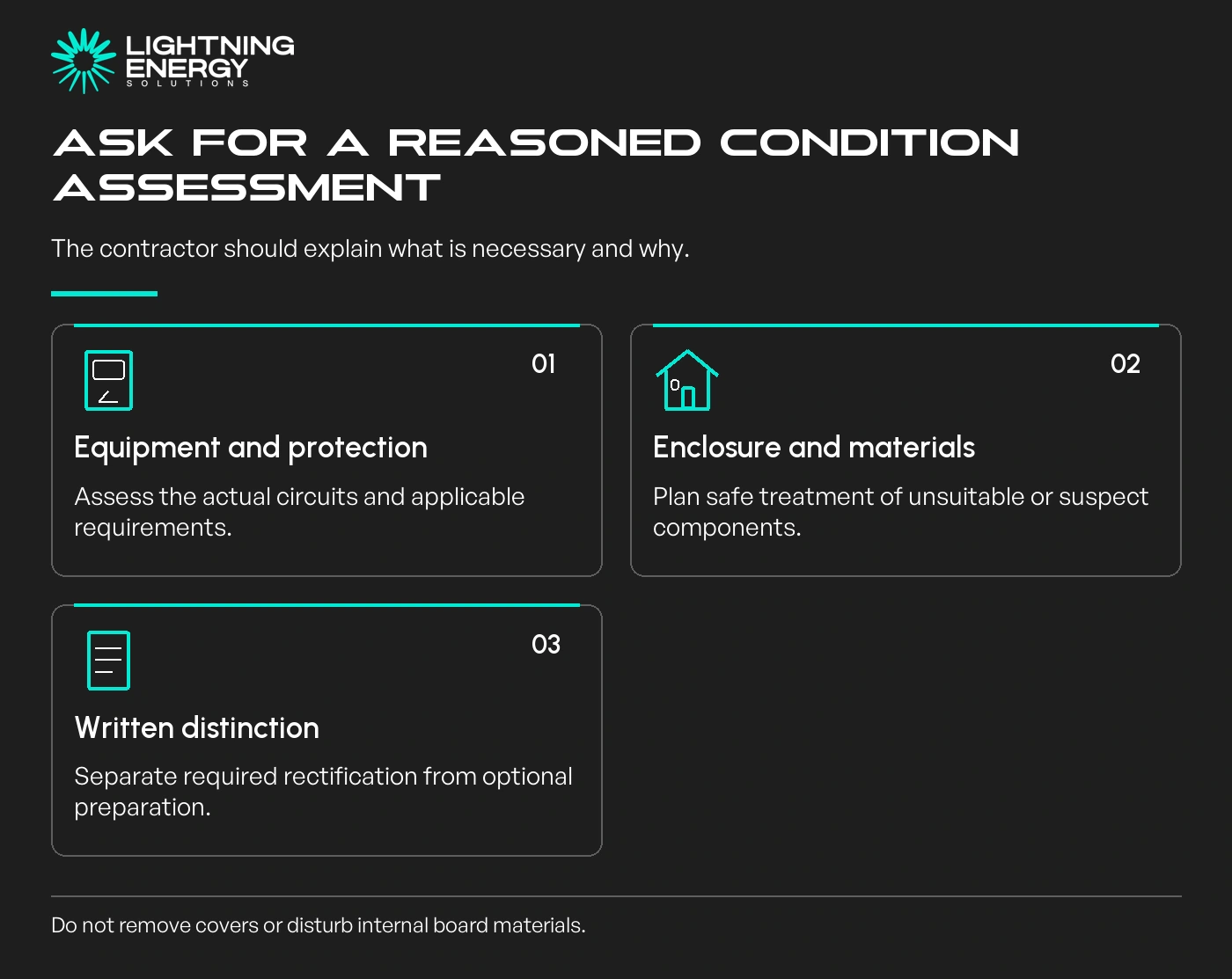
Ask the contractor to explain any unsafe or unsuitable existing equipment and the work required to address it. Age or appearance alone should not be the sole explanation for a replacement quote.
Existing circuit arrangements, protective devices, earthing and enclosure suitability can affect the scope. The electrician must assess the applicable requirements for the actual alteration.
If suspect materials or damaged equipment are present, let the contractor plan the appropriate safe response. Do not drill, clean or disturb internal board material in preparation for the visit.
A quote should distinguish necessary rectification from optional rearrangement or future spare capacity. Ask for that distinction in understandable written terms.
Consumer Affairs Victoria recommends understanding a tradesperson’s quoted work and recording how changes or concerns will be handled.
Provide the electrician with planned heating, cooking, hot water and EV equipment, along with existing or proposed solar and battery systems.
Record the exact models where known and likely simultaneous use. A heating-output rating is not the same as electrical input, and a battery does not remove the need to assess the grid-connected installation.
Ask whether the proposal involves only internal circuits, a mains change, altered metering or a network capacity or phase application. Those are different pieces of work with different dependencies.
CitiPower and Powercor’s guidance explains the registered contractor’s role in applying for relevant supply alterations.
Distributor alteration guidance.
For equipment planned later, identify sensible preparation without guaranteeing compatibility with every future product. Document the assumptions so they can be reviewed when that purchase becomes definite.
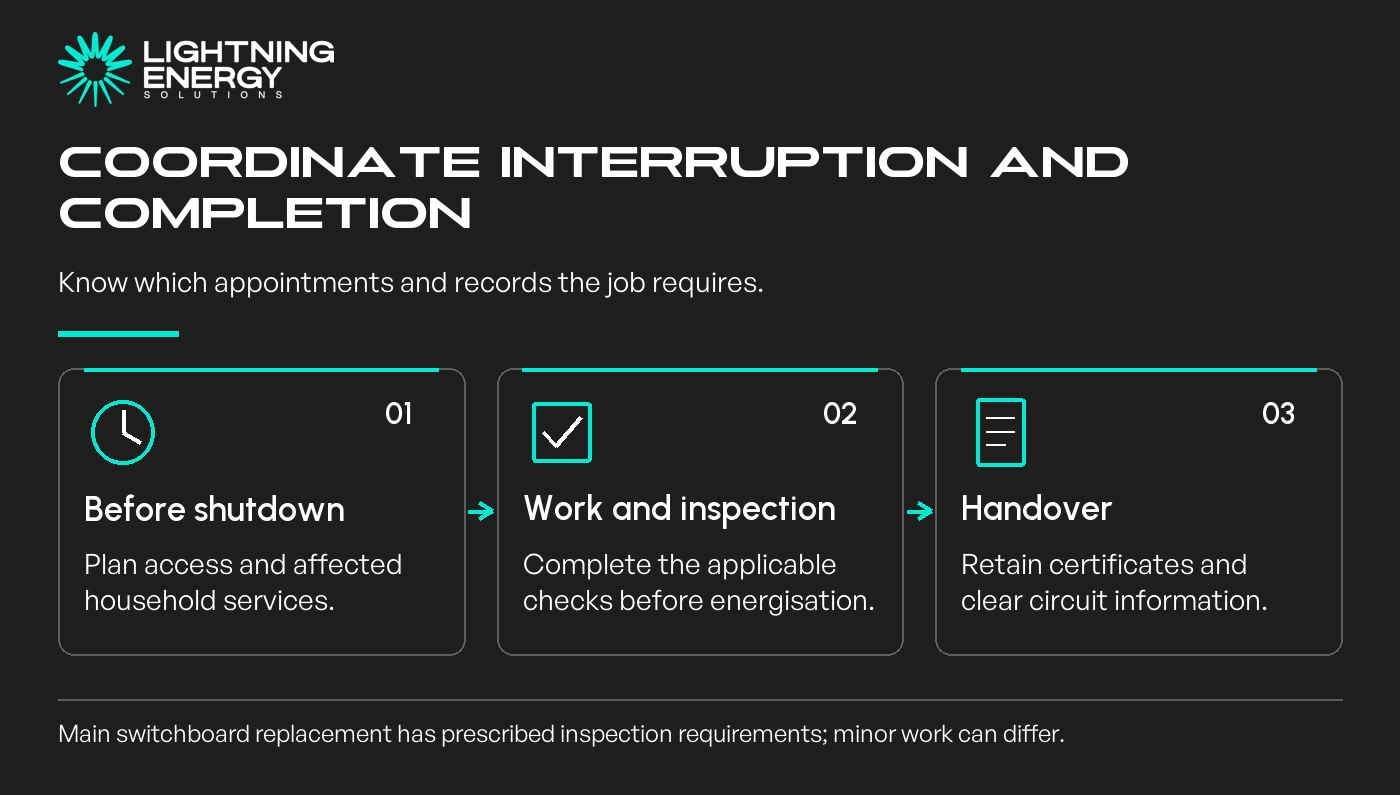
Ask how long the property is expected to be without electricity and who coordinates the required appointments. Identify household services that need preparation during the interruption.
Energy Safe Victoria explains that prescribed work such as a main switchboard replacement must remain disconnected until the required inspection has occurred.
Do not apply that description indiscriminately to every minor circuit job. Ask which certification and inspection requirements apply to the particular scope.
Keep the Certificate of Electrical Safety and relevant records, with clear circuit identification and any supported owner instructions. Ask the contractor to explain the installed result without opening equipment yourself.
Avoid paying for a larger board purely because it is described as future-proof. The useful outcome is a compliant, maintainable installation with a clear reason for each part of the work.
Send the planned appliance list and safely accessible board details when you request an assessment. Ask the quote to separate space, safety, circuits and supply so the recommended work is understandable.
Available times
Book a consultation and we'll map solar, storage, hot water, and the rebates around your bills and your goals.
Question 1 of 6