
Ducted Air Conditioning Handover: What to Test and Record
Use a ducted air conditioning handover to check equipment, zone operation, controller training and documents, with a clear list of any unresolved work.
Use a ducted air conditioning handover to check equipment, zone operation, controller training and documents, with a clear list of any unresolved work.

A ducted handover should show you how the installed system works in the rooms you will use. Collecting a controller manual is not enough if zones are confusing or the agreed scope remains unfinished.
Ask for time to review the installation with the installer and record any unresolved items. Some seasonal performance questions may need a later check under appropriate conditions.
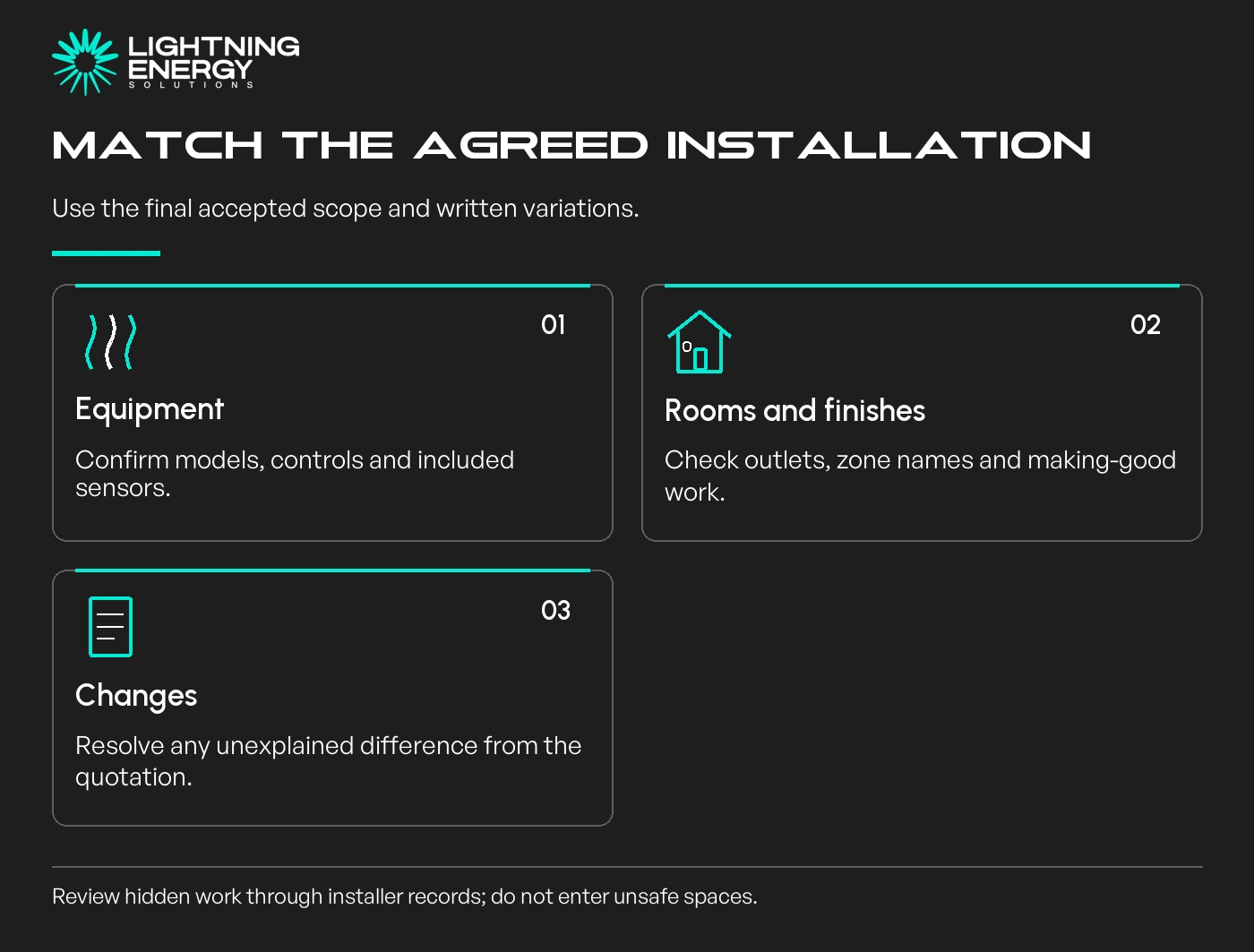
Confirm indoor and outdoor model numbers, controls, included sensors and the final zone names. Use the accepted quotation and any agreed variations as the reference.
Walk through the rooms to check outlet locations, visible finishes and the agreed removal or making-good work. Ask the installer to explain any difference before treating the job as complete.
For an illustrative household, “bedrooms” on the controller might mean three rooms grouped together rather than three independent zones. Confirm that this matches the agreed design.
Our ducted packages are developed into a property-specific scope. That final scope, not a promotional image, is the useful handover checklist.
Keep accessible label photos and the installer’s equipment list. You do not need to climb into the roof or remove covers to verify hidden work yourself.
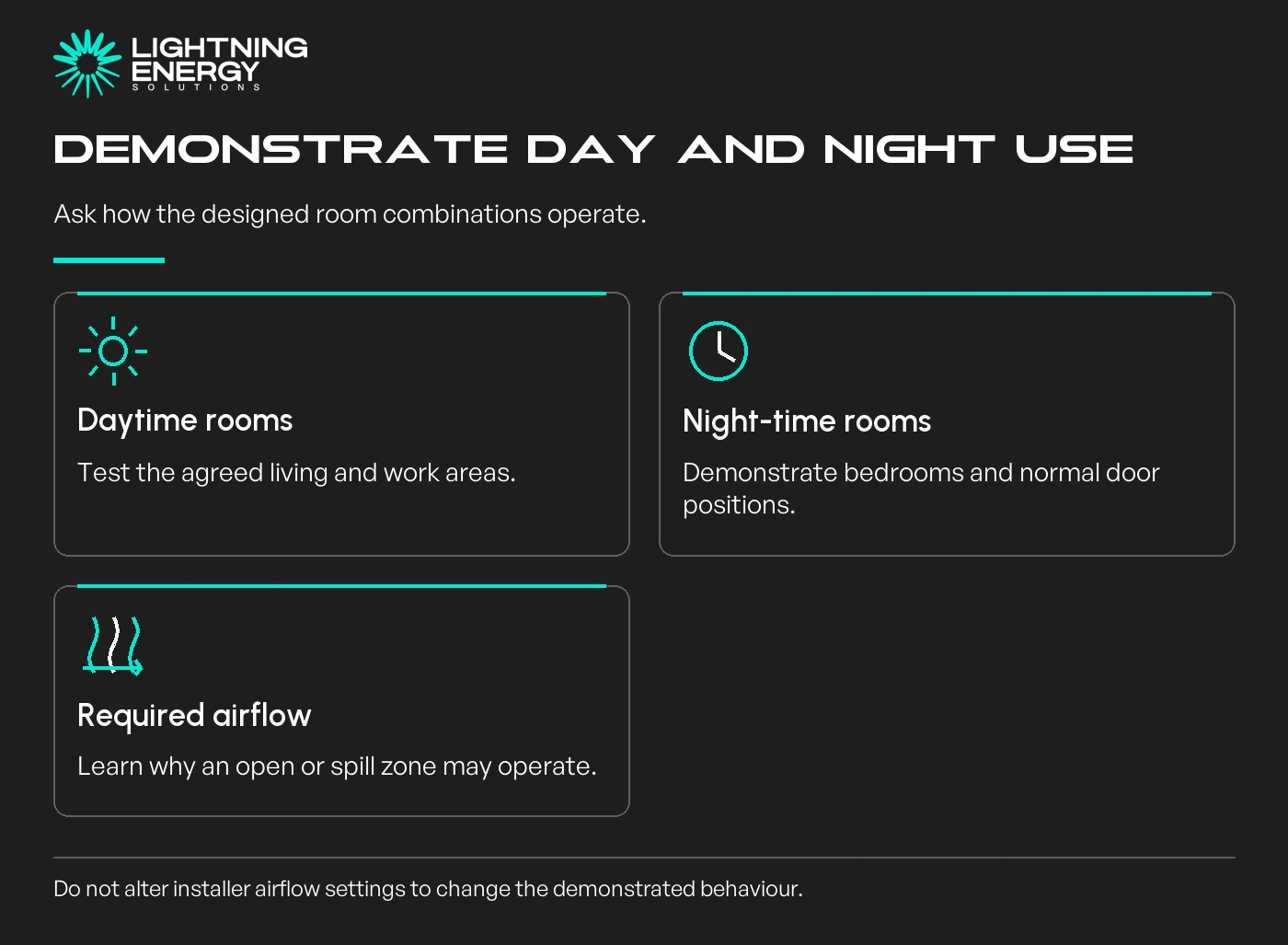
Ask the installer to demonstrate normal day and night zone combinations. Learn which rooms share control, where temperatures are sensed and why a required open or spill zone may operate.
AirTouch’s installer manual describes settings for groups, sensors and spill arrangements. Those are commissioned design choices, not settings to experiment with in the installer menu.
AirTouch commissioning information.
Ask what normal airflow and sound should be like at each outlet. Report an unexpected whistle, rattle or markedly weak room rather than trying to correct it by closing other outlets.
The air conditioning design should account for return air as well as supply. Ask how normal bedroom-door positions fit the commissioned arrangement.
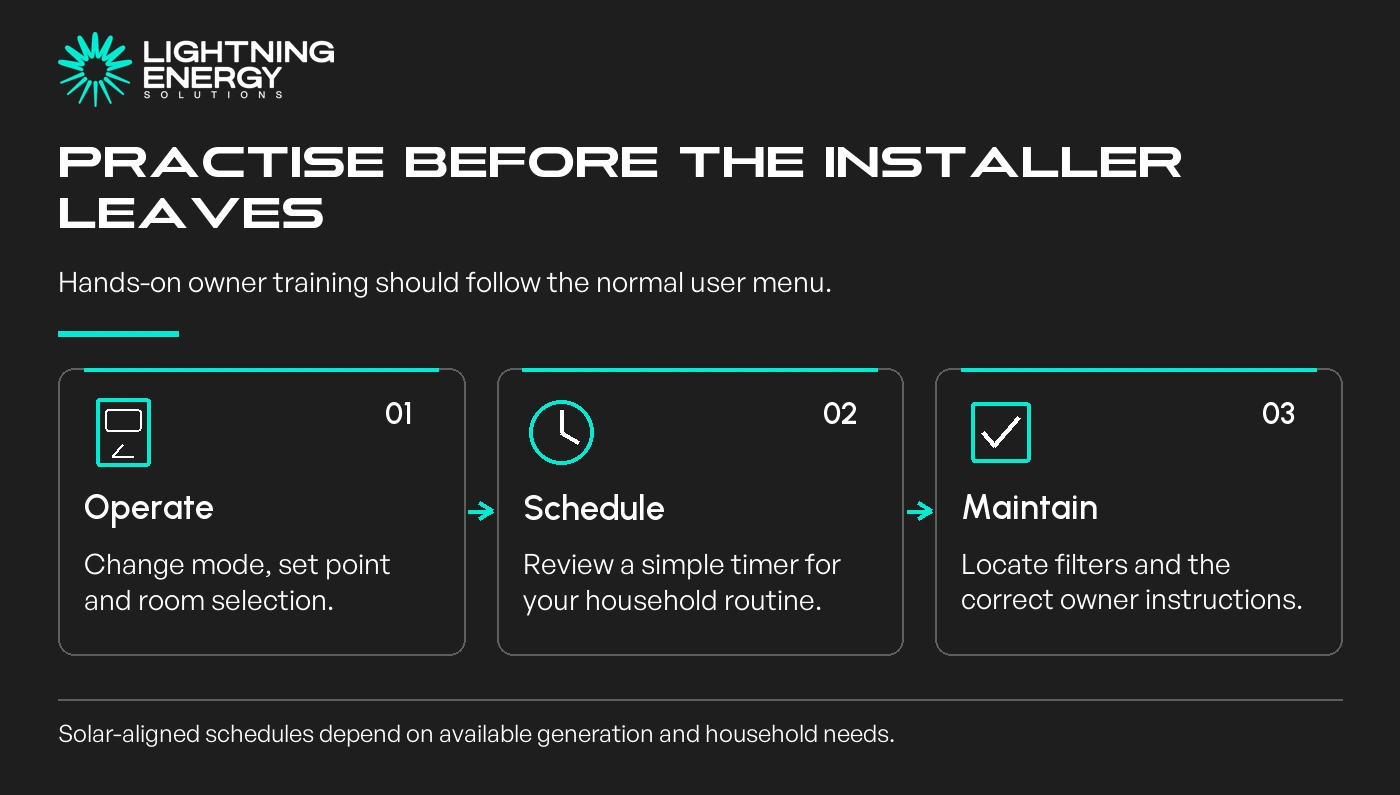
Use the controller yourself while the installer is present. Change mode, set temperature, operate zones and create or review a simple schedule relevant to your routine.
If an app is included, confirm it is connected to an account you control. Test the promised remote functions and ask what remains available if the internet is unavailable.
Locate the filter and obtain the model-specific cleaning instructions. Ask which tasks are safe for an owner and which require professional service; do not assume every filter is washable.
Have the installer explain normal winter defrost and startup behaviour using the actual manual. Knowing what a routine pause looks like can prevent unnecessary setting changes later.
Coordinate schedules with your solar system only where useful generation is available. Handover should not promise that a timer will make all heating or cooling free.
Request manuals, warranty information, model and serial numbers, commissioning records and the certificates required for the work. Keep the accepted scope and variations with them.
Electrical installation work requires a Certificate of Electrical Safety. Inspection requirements depend on the type of electrical work undertaken.
Energy Safe Victoria’s certificate guidance.
The Building and Plumbing Commission also explains plumbing compliance certificates. Ask the responsible licensed practitioner which documents apply to this installation.
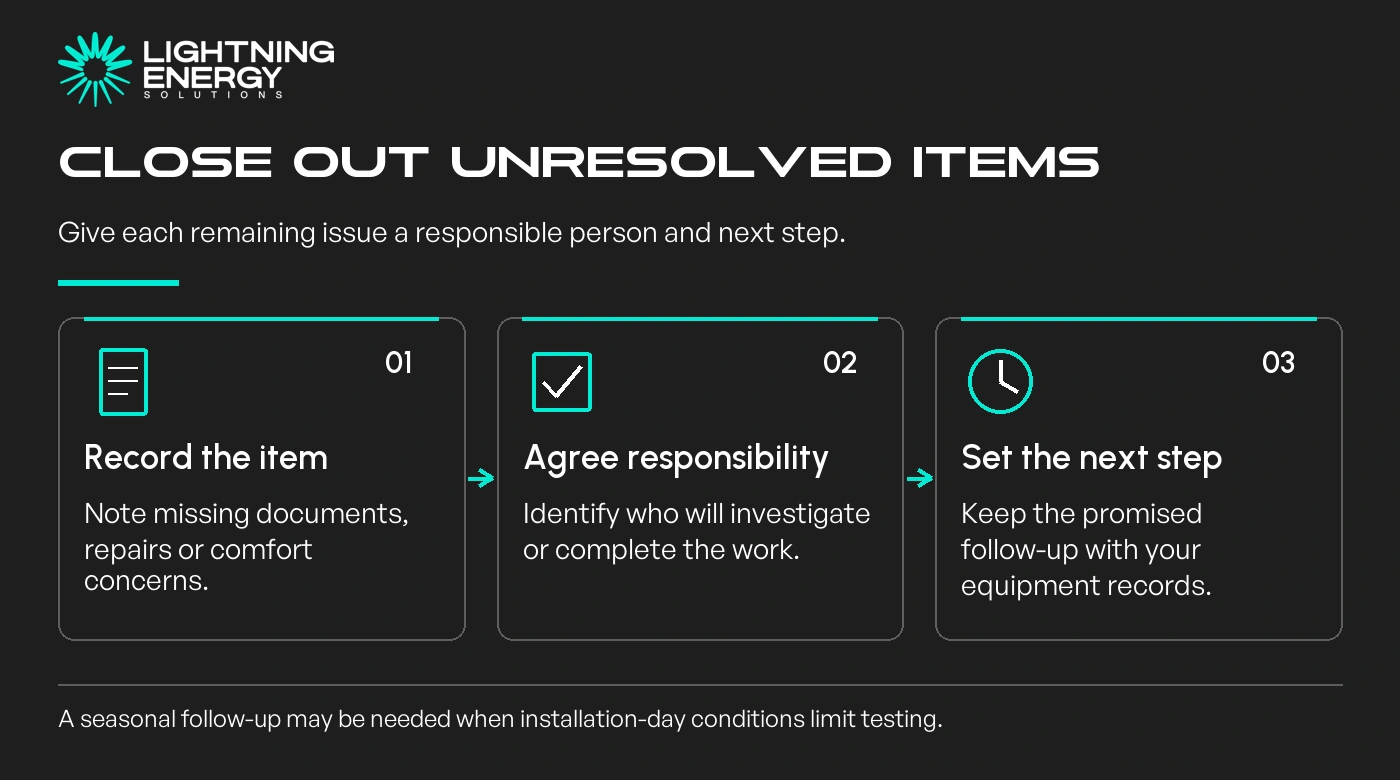
Record unfinished repairs, missing documents and any comfort concern with the responsible person and next step. Do not let an informal “we will come back” become the only record.
If weather prevents a useful seasonal demonstration, agree how the system will be reviewed later. That is different from assuming every room has been proven comfortable in all conditions on installation day.
Keep a short handover list and contact the installation team promptly with unresolved issues. Good training and clear records help you use the system confidently and report any later concern accurately.
Available times
Book a consultation and we'll map solar, storage, hot water, and the rebates around your bills and your goals.
Question 1 of 6
