
Ducted Room Sensors: What They Can and Cannot Fix
Room sensors can improve temperature feedback, but they cannot repair poor airflow or heat loss. Learn what to check before adding ducted controls.
Room sensors can improve temperature feedback, but they cannot repair poor airflow or heat loss. Learn what to check before adding ducted controls.

Room sensors tell a compatible control system what is happening in the rooms where they are installed. They can improve the information used for control, but they cannot repair a crushed duct or stop heat escaping through a draughty room.
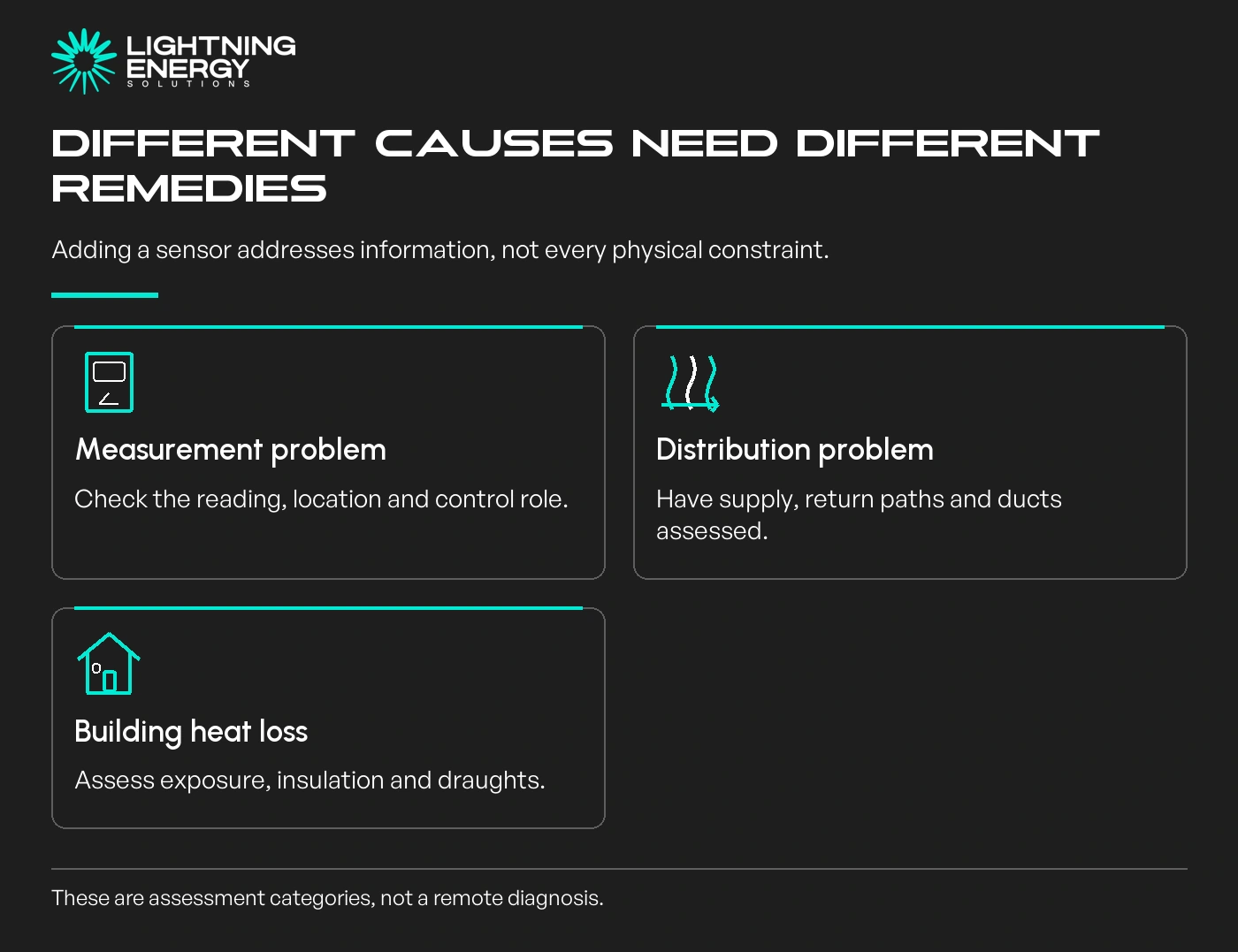
Before adding sensors, identify whether the problem is temperature measurement, distribution or the building itself. Those faults can feel similar from the sofa.
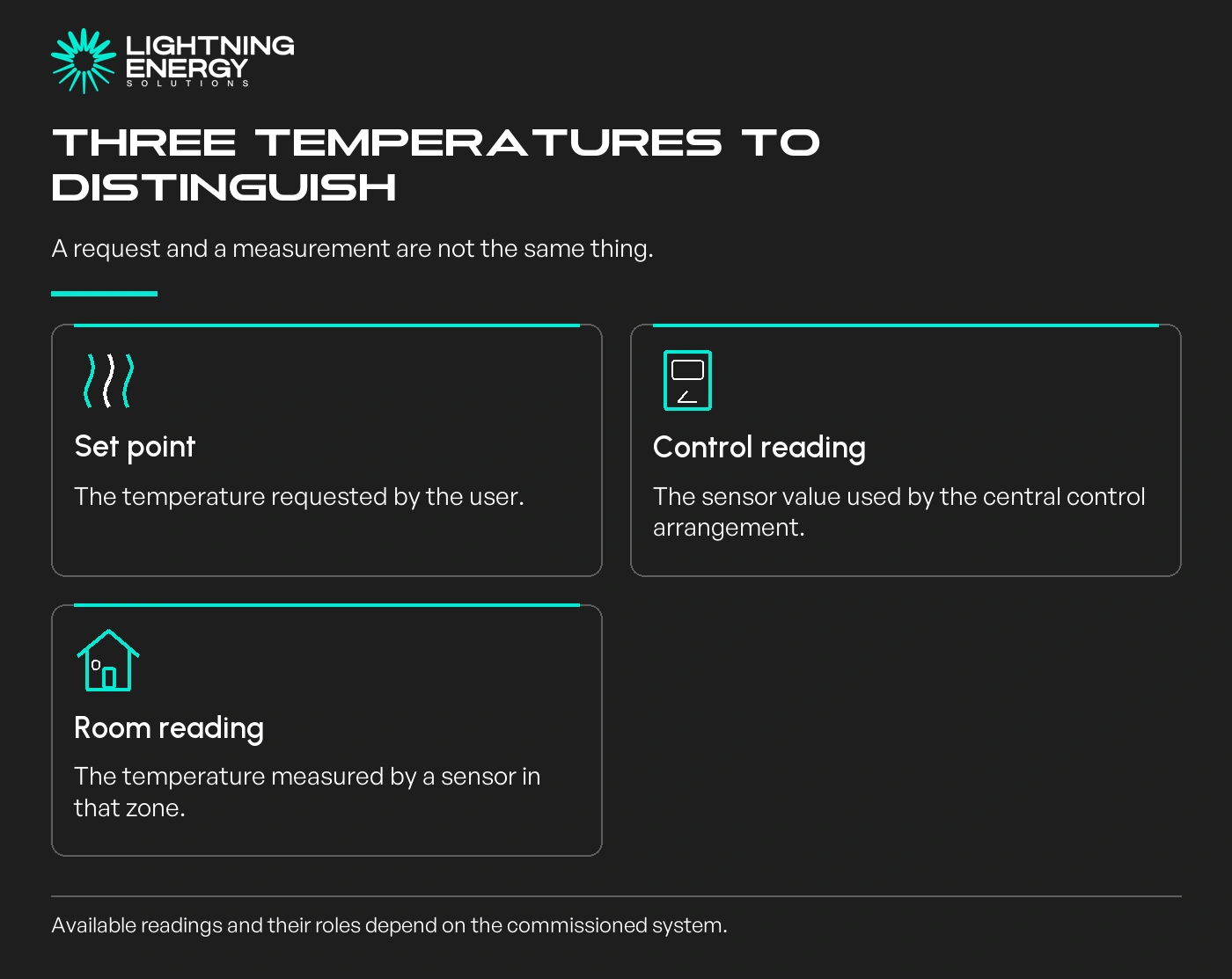
A set point is the temperature you have requested. A measured temperature is a sensor’s reading. Confusing those two numbers can make a normal controller display appear to report an impossible room temperature.
Ask which sensor controls the central unit and where that sensor is located. It may not be measuring the bedroom that feels cold, even though the controller is used to turn that bedroom zone on.
AirTouch’s display guidance distinguishes the set point, control-sensor reading and individual wireless zone readings.
AirTouch’s control and display documentation.
When discussing air conditioning controls, ask the installer to show those readings in ordinary use. You should not need to alter installer settings to work out what a displayed number means.
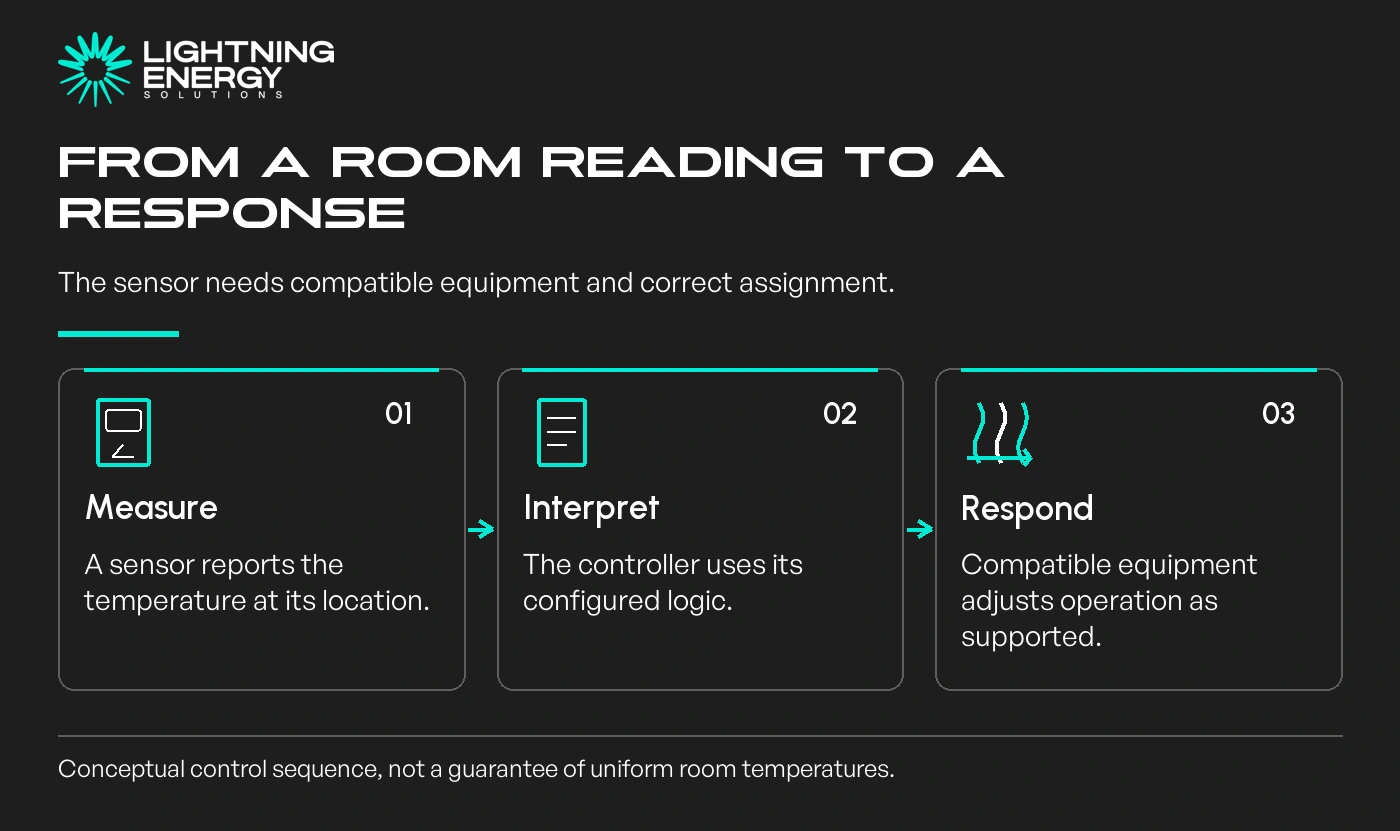
With compatible equipment and correct commissioning, a room reading can inform how air is directed to a zone. The useful benefit is more relevant feedback about that space, not a guaranteed temperature everywhere.
AirTouch describes its Intelligent Temperature Sensors as an add-on for monitoring and controlling individual zones. Confirm the sensor generation and its supported role in your installation.
Ask how the controller behaves when rooms have different needs. Does a zone reduce airflow after reaching its target? Which reading controls the main unit? What happens when all active rooms are satisfied?
Those questions matter more than the number of sensors in the box. An incompatible sensor or incorrectly assigned room name cannot deliver the intended control.
Imagine an illustrative bedroom that stays cold while its sensor correctly reports the low temperature. The missing information may no longer be the problem. The room may need an airflow or building assessment.
Ask the installer to consider the supply route, return path, duct condition and room heat loss. A correctly measured temperature cannot add capacity that is unavailable or air that is not reaching the room.
Conversely, a sensor in an unrepresentative location can give the controller a poor picture of occupied-room comfort. Ask the installer to assess placement rather than moving it experimentally around the house.
Fit this diagnosis into your home improvement sequence. Insulation work and control changes address different parts of the comfort problem.
Do not buy additional sensors as the automatic first response to every cold-room complaint.
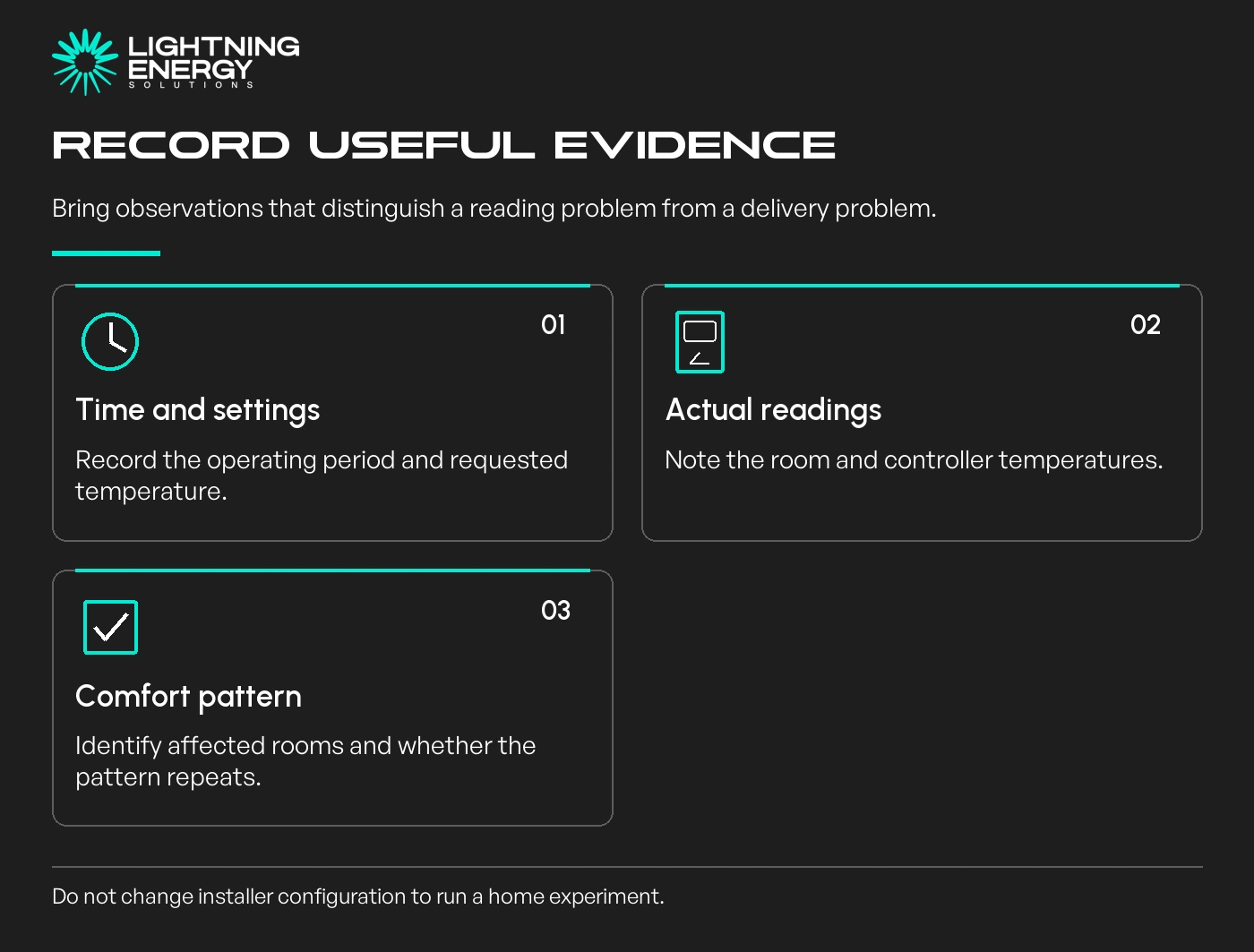
Record the affected room, time, set point, displayed temperature and whether other rooms feel comfortable. Keep the observation consistent across a few comparable periods rather than changing several settings at once.
AirTouch notes that a zone may stop receiving air after reaching its target, while persistent failure to operate can need installer investigation.
AirTouch’s zone-operation guidance.
If you later coordinate heating with solar, first confirm that the basic room controls behave as intended. Scheduling an unresolved comfort problem earlier does not diagnose it.
Ask for zone names, sensor locations, supported modes, normal spill behaviour and owner maintenance requirements in the handover. Keep a copy so future servicing starts from the agreed configuration.
If the existing rooms are comfortable and the central control already suits your routine, extra sensors may offer little practical value.
Request a controls assessment around a defined comfort problem before choosing accessories.
Available times
Book a consultation and we'll map solar, storage, hot water, and the rebates around your bills and your goals.
Question 1 of 6